
The Only American AWD Sports Car With A Manual Transmission
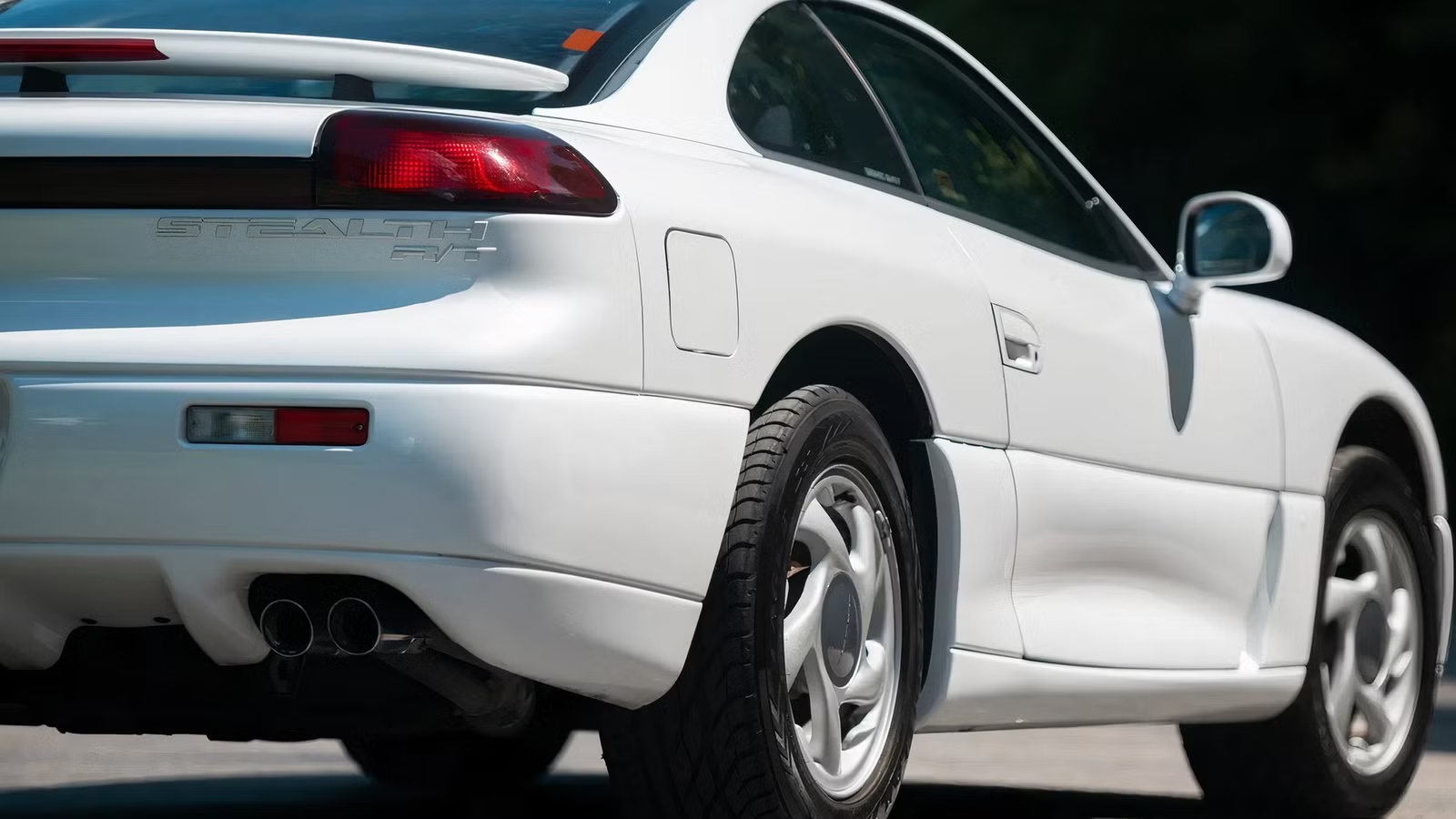
When enthusiasts talk about turbocharged all-wheel-drive performance cars, the conversation usually starts in Europe or Japan — the Audi Quattros and Lancia Integrales of the ’80s, the Subaru Imprezas and Mitsubishi Evos of the ’90s. America, meanwhile, was busy doing what it did best: big-displacement V8s, rear-wheel drive, and an automatic gearbox. But buried in Dodge’s early-’90s lineup was something genuinely surprising — a turbocharged, all-wheel-drive sports car with a proper manual transmission, and it came with a fascinating backstory.
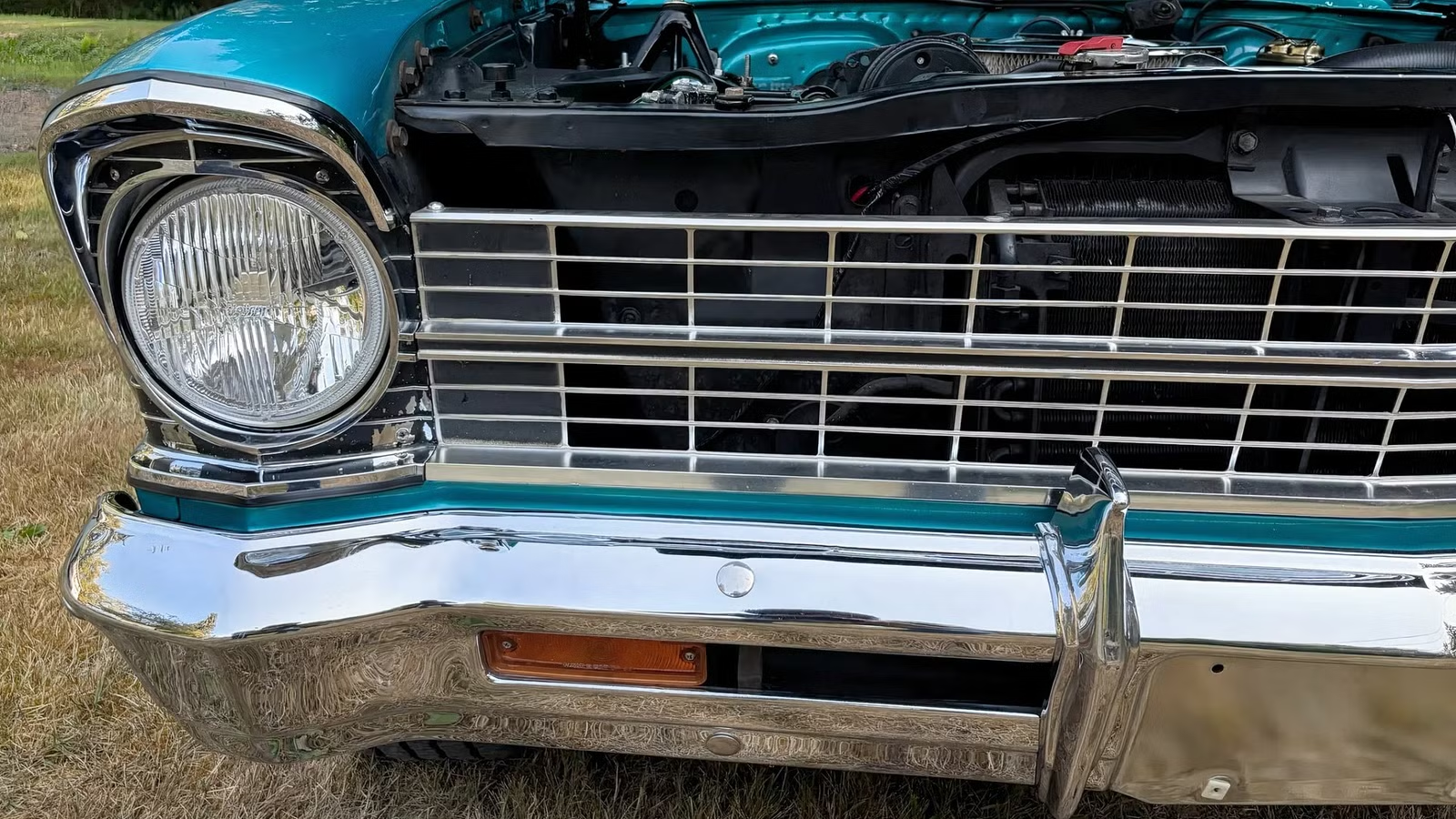
This is a car that went heavy on both power and hyphens, with four-wheel-drive, four-wheel-steer, and twin-turbocharging — features that were groundbreaking for the time. The company that produced this tech-laden machine didn’t stick with such forward-thinking ideas for long, eventually returning to building some of the most recognizable muscle cars of the modern era. We’re taking a closer look at the only American AWD sports car ever offered with a manual gearbox.
The Dodge Stealth Is The Only American AWD Sports Car With A Manual Transmission
Chrysler and Mitsubishi had been working together since the ’70s, when Japanese manufacturers were making inroads into the American market. Chrysler went as far as buying a 15% stake in Mitsubishi Motor Corporation in 1971 and began selling rebadged Galants in the USA under the Dodge Colt name. By 1985, the two companies had formalized the arrangement as Diamond-Star Motors, with a shared factory in Illinois, though Dodge eventually sold its stake back to Mitsubishi in the early ’90s.

That didn’t stop the two companies from working together, however. In 1990, Mitsubishi Motors launched the iconic 3000GT (sold as the GTO in Japan) with groundbreaking technology including full-time AWD, active suspension, and active aerodynamics. Dodge wanted a piece of the action and, using much of the 3000GT’s hardware, created the Stealth R/T Twin Turbo.
The Dodge Stealth R/T Was Quicker (And Cheaper) Than A BMW M3
There were two other Stealth model options available, also. The lineup started with the base six-cylinder Stealth, with a not-too-impressive 164 horsepower and 185 lb-ft of torque, and the ES version which produced 222 horsepower. But the showstopper was the Stealth R/T Twin Turbo.
Sharing its hardware with the top-flight VR-4 version of the Mitsubishi 3000GT, this was a Dodge sports car that packed a twin-turbocharged, twin-intercooled DOHC 3.0-liter V6.
Output stood at 300 horsepower and 307 lb-ft of torque, all channeled through a Getrag close-ratio five-speed manual gearbox. The Stealth R/T Twin Turbo could hit 60 mph in just 5.2 seconds. To put that into context, a 1988 BMW M3 — which cost almost $5,000 more three years earlier — reached the same speed nearly two seconds slower. The contemporary 1992 E36 M3 managed 60 mph in 5.4 seconds.
A Closer Look At The Dodge Stealth
Dodge Stealth R/T Twin Turbo Specs
|
Engine |
Twin-turbocharged DOHC 3.0-liter V6 |
|
Power |
300 hp |
|
Torque |
307 lb-ft |
|
0 – 60 mph |
5.2 seconds |
Source: Dodge
The Dodge Stealth Was Ahead Of Its Time
The Stealth was fitted with the same full-time all-wheel drive and four-wheel steering systems found in the pioneering Mitsubishi 3000GT. Like the Mitsubishi, the Stealth featured an electronically controlled, dual-mode fully independent suspension, allowing the driver to switch between Sport and Tour settings at the push of a cabin button. It’s no wonder Dodge promoted the Stealth as “the most advanced production sports car on the road” — though the caveat, of course, was that the Mitsubishi 3000GT offering the same technology was sold in America simultaneously.
One thing that wasn’t so advanced, however, was the weight. At 3,794 lb, the Stealth tipped the scales close to a BMW 735i of the era. Its looks weren’t exactly subtle either, with swooping bodywork and various vents throughout, and the ride height and wheel-arch gaps gave it a stance closer to an SUV than a sports car.
Major 1994 Update
In 1994, the Stealth was refreshed with new bumpers and fixed headlights replacing the original pop-up units. The updated car also gained a six-speed gearbox, and the twin-turbo engine was bumped to 320 hp with torque rising to 315 lb-ft.
The Stealth R/T Twin Turbo could complete a quarter-mile in under 14 seconds and reach a limited top speed of 155 mph. Production ended in 1996, while the Mitsubishi 3000GT soldiered on until 2000. The Dodge Stealth name may yet return, however, in SUV form.
The Mitsubishi 3000GT Continued To Evolve After The Stealth Was Gone

Highlights Of The Mitsubishi 3000GT and Dodge Stealth Over The Years
- Launched in 1990 with groundbreaking tech such as full-time AWD suspension and active aerodynamics.
- Dodge Stealth launched a year later in the USA using the 3000GT’s hardware
- Second-gen versions launched in 1994 with a mild refresh
- The last Dodge Stealth rolled out of the factory in 1997
- Third-generation 3000GT continues with styling updates until 1999
The Mitsubishi 3000GT has always divided opinions. Mitsubishi fans have called the 3000GT a “lead sled” on account of its weight. Others argue that the car finally deserves some respect and have called for a spiritual successor.
Whatever your opinion, this JDM classic — we at HotCars happen to love the 3000GT — and the Dodge Stealth now make for a compelling piece of period ’90s kit. Another measure of the 3000GT’s success is simply how long it stayed in production.
The 3000GT Was In Production For Almost A Decade
The top VR-4 version of the 3000GT was built across three separate generations between 1991 and 1999, whereas the Stealth R/T Twin Turbo survived for two generations. For the second-generation 3000GT, launched in 1994, Mitsubishi introduced a Spyder variant with a folding hardtop. The third-gen VR-4s, which arrived in 1997, gained a curved rear spoiler and a revised front bumper. By 1999, the aging Mitsubishi had acquired a substantial rear wing that suited the era’s taste for extravagant Japanese car styling.
Buying A Dodge Stealth Today

Dodge Stealth R/T Twin Turbo Prices Today (Good Condition)
- 1991 Dodge Stealth R/T Turbo – $18,400
- 1992 Dodge Stealth R/T Turbo – $18,400
- 1993 Dodge Stealth R/T Turbo – $18,400
- 1994 Dodge Stealth R/T Turbo – $16,300
- 1995 Dodge Stealth R/T Turbo – $16,300
- 1996 Dodge Stealth R/T Turbo – $16,300
Source: Hagerty
Production numbers are hard to come by officially for the Dodge Stealth, although specialist websites put the total at 65,303 units.
Suffice it to say, the Stealth wasn’t a particularly rare car. Entry-level examples are inexpensive as a result — a base 164-horsepower car from 1991 can be found for around $5,100. The twin-turbo models, however, command considerably more.
Interestingly, even though the earlier cars had less power, they command more cash. From 1991 to 1993, a Dodge Stealth R/T Twin Turbo in good condition is valued at around $18,400 according to Hagerty, while examples from the final three model years come in at approximately $16,300. For comparison, an early 1991 Mitsubishi 3000GT is valued at around $28,100 in good condition. This no-reserve Dodge Stealth R/T Twin Turbo we found sold for less than $10,000. Here is a more in-depth look at 3000GT pricing.
Sources: Dodge, Hagerty.

Related posts

Latest Post


No Comments