-
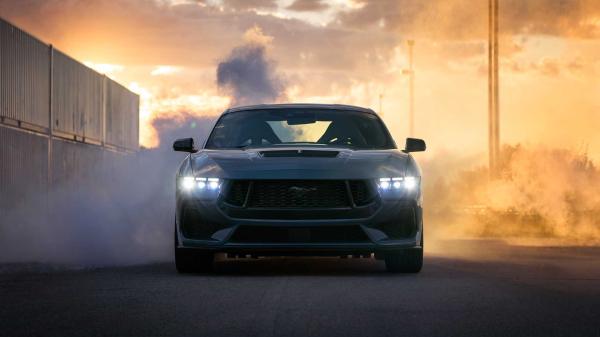
2024 Ford Mustang front shot Ford -
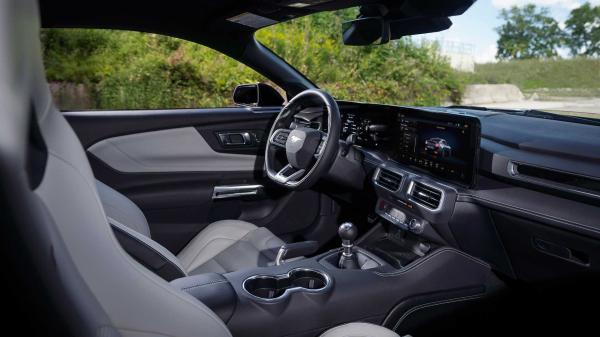
2024 Ford Mustang cabin Ford -
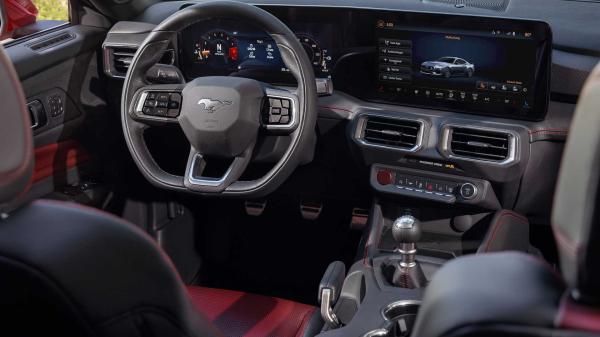
2024 Ford Mustang interior shot Ford

The Last Manual Naturally Aspirated V8 You Can Buy In 2026
7 minutes reading
Tuesday, 27 Oct 2026 22:00 0 8 autotech
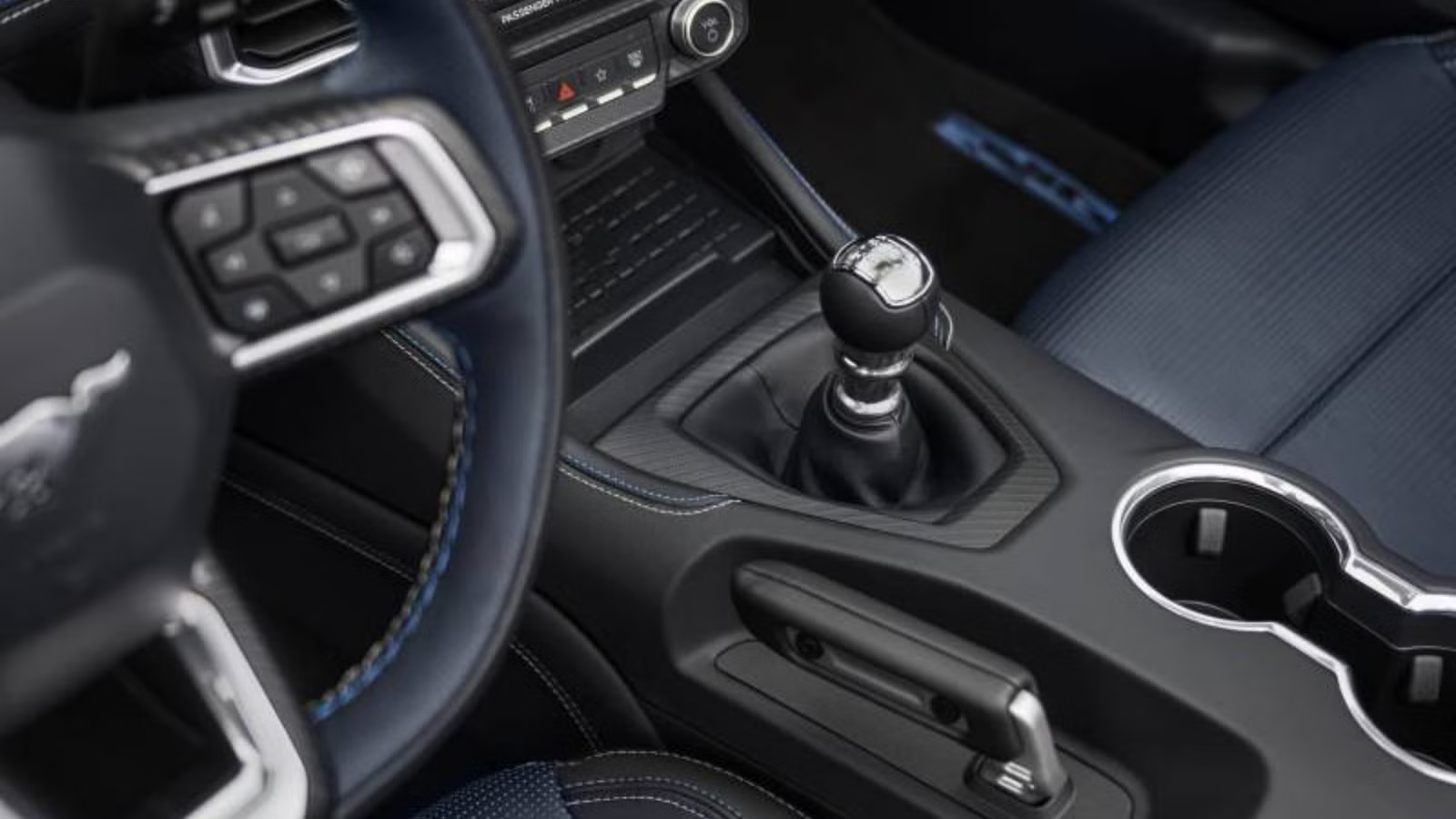
The modern automotive landscape has shifted dramatically, leaving purists with fewer choices every passing model year. While forced induction and high-tech gearboxes have claimed dominance over performance statistics, they cannot replicate the pure, raw soul of an atmospheric eight-cylinder paired with a three-pedal setup. For those seeking pure third-pedal engagement, drivers can still find forced-induction manual heavyweights like the supercharged Cadillac CT5-V Blackwing, or high-revving, smaller-displacement six-cylinder masterclasses like the Porsche 911 GT3.

92 autotech
Meanwhile, traditional rivals like Dodge have fully pivoted into electrification with their next-generation muscle car lineup. Yet, for drivers seeking the classic combination of an uncompromising, naturally aspirated V8 paired with a stick shift, the field has narrowed down to a single contender in 2026. What remains is an altogether distinct driving experience, one that is rapidly vanishing from showroom floors.
The Death Of The Analog V8 Sports Car
How Emissions Regulators Killed The V8 Before Buyers Could
The demise of the conventional V8 sports car was not caused by a lack of driver demand, but by shifting regulatory pressure and environmental policy. Around the globe, stringent tailpipe emission limits and aggressive fleet efficiency mandates forced manufacturers to reassess heavy, large-displacement engines, adopt downsized engine blocks, and pursue aggressive hybridization. Legendary long-standing nameplates were steadily phased out or re-engineered.

106 autotech
The Chevrolet Camaro ended its production run, leaving behind generations of atmospheric Small Block history. Dodge vaulted straight into the electrified era, replacing traditional V8 powertrains with twin-turbo inline-sixes and full battery-electric setups. As a result, the naturally aspirated V8 went from a standard option in American performance lineups to an endangered species almost overnight.
The Rise Of Automatic Dominance

Concurrently, the manual transmission faced its own battle against modern engineering. As performance metrics moved toward benchmark lap times and sub-three-second 0-60 mph sprints, manual gearboxes simply could not keep up with the millisecond shift times of modern dual-clutch and multi-speed torque-converter automatics.
Furthermore, advanced driver-assistance systems (ADAS), adaptive cruise control, and automated emergency braking integrate far more seamlessly with automatic transmissions. Demand among casual buyers plummeted, giving manufacturers a clear financial rationale to drop the manual option entirely. Across luxury and mainstream performance brands alike, the clutch pedal was systematically discarded in favor of paddle shifters and software-managed gear selection.
Unveiling The Last Standing Icon: The 2026 Ford Mustang GT
How The Mustang GT Became The Last Car Standing In A Shrinking Segment

Amidst this sweeping industry transformation, one vehicle continues to hold the line: the seventh-generation (S650) Ford Mustang GT, introduced in 2024. Standing alone in its segment, the Mustang GT remains the only brand-new automobile on the market in 2026 that allows buyers to combine a naturally aspirated eight-cylinder engine with a six-speed manual gearbox.
Rather than abandoning its mechanical heritage or converting entirely to forced induction, Ford doubled down on the classic layout. The 2026 Mustang GT does not rely on complex battery packs or turbochargers to deliver excitement. Instead, it offers a refined, modernized incarnation of the iconic rear-wheel-drive American coupe formula.
The 5.0 Coyote V8: 486 Horsepower With No Turbo, No Hybrid, No Compromise

Underneath the aluminum hood lies the latest iteration of Ford’s proven engineering: the 4th-Gen 5.0-liter Coyote V8. Featuring a dual-intake and dual-throttle body induction system, this atmospheric engine generates up to 486 horsepower and 418 pound-feet of torque when equipped with the active valve performance exhaust.
Because it lacks turbochargers to muffle the engine note or delay power delivery, the Coyote revs freely up to its 7,500 RPM redline. Bolted directly to this V8 is a Getrag six-speed manual transmission equipped with standard rev-matching technology, offering drivers full mechanical authority over a high-revving, free-breathing engine.
Driving Experience: What Makes The Manual V8 Irreplaceable
Why Every Gear Change In A Manual V8 Demands Skill — And Rewards It

Driving a naturally aspirated V8 with a manual transmission is an immersive physical exercise that modern automatic sports cars cannot replicate. The driver is actively involved in every phase of the vehicle’s momentum, modulating the clutch pedal, timing the shift gate, and managing traction through left-foot control.
Every gear change requires deliberate input, establishing a direct feedback loop between the driver’s hands, feet, and the rear tires. While paddle shifters offer undeniable speed and convenience on a track, they turn the driver into an operator pressing buttons. A manual V8 demands skill, rewards precision, and provides a level of engagement that software algorithms cannot mimic.
Linear Power Delivery Vs. Forced Induction
Beyond the manual shifter itself, the naturally aspirated engine architecture creates a distinct power delivery profile. Modern turbocharged engines produce massive down-low torque, but their power delivery can feel abrupt, often tapering off near the top of the rev range. By contrast, a naturally aspirated engine delivers its power in a linear, predictable crescendo.
As the engine’s RPM rises, power builds continuously toward the top end, encouraging the driver to hold gears longer and work through the full tachometer. This predictable throttle response allows for precise chassis modulation mid-corner without the sudden torque spikes typical of forced induction, creating a pure harmony between driver input and engine output.
The Future Value And Legacy Of A Dying Breed
Collector Appeal And Resale Dynamics

As the automotive industry accelerates toward electrification and automation, analog performance cars are seeing unprecedented demand on the secondary market. Vehicles that represent the “last of their kind” historically experience strong value retention and long-term appreciation. Enthusiasts and collectors actively seek out analog cars that offer mechanical engagement over disposable digital tech.
The seventh-generation Ford Mustang GT occupies a unique position in collector history: as the final naturally aspirated manual V8 car of its era, its long-term desirability is practically guaranteed. While high-tech EV sports cars risk rapid technological obsolescence, an atmospheric manual V8 remains timeless.
Ford’s Decision To Keep The Manual GT Alive Is A Statement, Not Just A Product Choice

Ford’s decision to keep the manual GT in production for 2026 is more than a simple product strategy; it serves as a love letter to automotive purists. In a market dominated by synthetic exhaust notes pumped through interior speakers, autonomous drive modes, and seamless automatic shifts, the naturally aspirated V8 stands as a monument to mechanical authenticity.
It caters directly to drivers who prioritize the sound, feel, and involvement of driving over outright zero-to-sixty times. By offering this configuration in 2026, Ford ensures that traditional sports car culture remains accessible on showroom floors for at least one more generation. The 2026 automotive landscape offers incredible feats of engineering, from hyper-efficient hybrid powertrains to lightning-fast dual-clutch automatics. Yet, amidst all this progress, something vital has been lost in translation: the raw, unadulterated connection between driver and machine.
While rivals have turned to turbochargers, superchargers, or electric motors, the seventh-generation Ford Mustang GT stands alone as the final sanctuary for the naturally aspirated, manual V8 layout. It is a triumphant, unfiltered celebration of combustion performance. For those who still measure a car’s greatness by driver involvement rather than digital screen real estate, there has never been a better, or more urgent, time to grab the shifter, drop the clutch, and experience a true analog icon.
Sources: Ford, Porsche, Dodge, AUTO.AE, Edmunds, CarBuzz

Related posts




Latest Post

3 minute ago
0 autotech


No Comments