
Why Honda’s J35 V6 Became The SUV Engine Tuners Trust Most
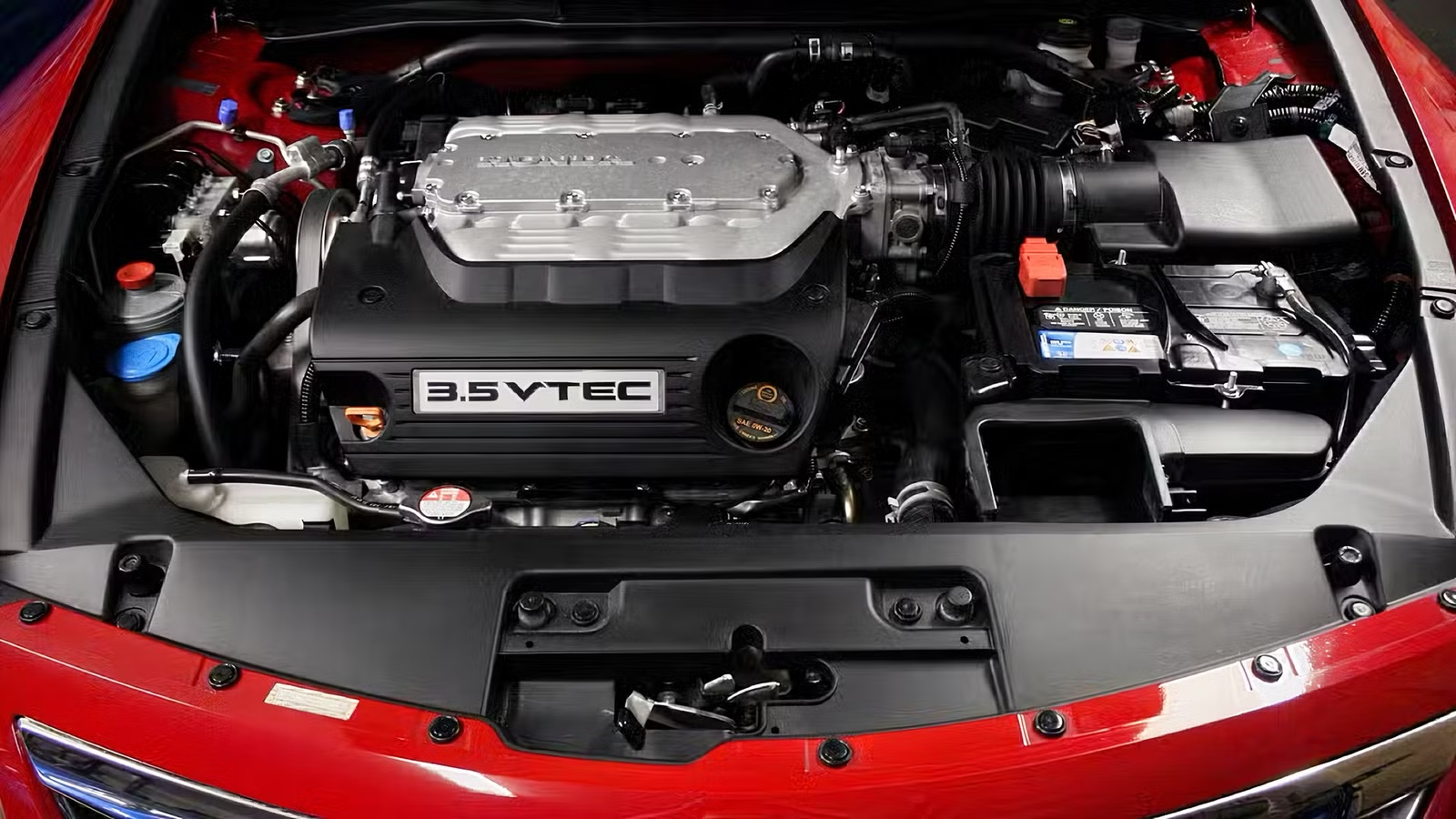
Since its arrival in the U.S., Honda has built its reputation on engineering discipline. Despite this, the J35 V-6 engine receives less attention than smaller inline-four units. The Japanese brand’s 3.5-liter engine has made its way into family crossovers, trucks, SUVs, and minivans across multiple generations.
The J35 V-6 has earned a reputation for reliability, often exceeding 200,000 miles. High-mileage builders, used-vehicle shoppers, and expedition modifiers select this powertrain for predictable operation under demanding conditions. Understanding the internal mechanical design reveals why this engine remains a prime choice for all high-mileage utility builds today.
The Honda V-6 That Often Gets Overlooked
Honda introduced the J-series V-6 architecture in the late 1990s to power its growing fleet of larger vehicles. Today, the J35 displacement variant powers popular models including the 2026 Honda Pilot, the Odyssey minivan, and the Ridgeline. It was previously available in previous-generation Accord sedans and coupes. Honda’s four-cylinder engines like the B-series and K-series are typically more appreciated by fans, thanks to their high-RPM performance.

The Honda J35 has always been an engine that has not benefited from aggressive marketing campaigns. It generates substantial torque at low engine speeds, making it an ideal option for utility vehicle owners who prioritize consistent towing capability and load-carrying capacity. Honda designs the J35 to handle heavy vehicle curb weights while maintaining smooth power delivery.
Intelligent Design Keeps Things Simple

Honda designed the J35 to provide reliable daily service without demanding exotic fuel grades or aggressive maintenance intervals. Used-vehicle buyers identify the engine as a practical option because Honda installs this engine across millions of production vehicles over several decades. Parts availability remains abundant in auto supply stores and salvage yards nationwide.
The J35 architecture forgoes complex turbocharging systems in favor of natural aspiration. This design choice reduces under-hood thermal stress and simplifies routine maintenance procedures. Owners who monitor fluid levels and replace worn parts find that the J35 outlasts many competing engine designs.
The J35’s Evolving Cam Configuration

The mechanical structure of the J35 relies on a high-strength pressure-cast aluminum alloy cylinder block with cast-iron cylinder liners. This construction keeps the overall engine weight low while preserving structural rigidity under load. A single overhead camshaft (SOHC) configuration operates four valves per cylinder through roller rocker arms. Honda engineers opted for the SOHC architecture to reduce the total size of the cylinder head assembly. This compact packaging allows the large-displacement V-6 to fit into transverse engine bays easily.
Honda incorporates its Variable Valve Timing and Lift Electronic Control system (VTEC) into the single overhead camshaft layout. The SOHC VTEC system optimizes intake valve opening duration and lift based on engine speed. At lower RPMs, the profile yields maximum fuel efficiency and smooth idling characteristics. At higher engine speeds, a secondary camshaft lobe engages to increase airflow and maintain power delivery to the redline. This mechanical system uses oil pressure to lock rocker arms together without complex electrical actuators.
Engineers differentiate specific generations within the J35 family through distinct cylinder head designs and management features. The J35Z1 variant features a traditional non-VCM or early Variable Cylinder Management (VCM) configuration depending on chassis application. Both feature standard VTEC across the cylinder banks. The J35Z2 variant introduces updated VCM hardware designed to shut down specific cylinders during light cruising conditions.
Both variants retain forged steel crankshafts, high-strength connecting rods, and durable aluminum pistons. The engine uses a timing belt rather than a timing chain. This timing belt cushions torsional vibrations between the crankshaft and camshafts, which protects internal components from sudden impact shocks. High-grade bearings and robust oil passages ensure proper lubrication on critical surfaces during heavy operation.
The VCM Issue That Plagued The J35

Honda designed the VCM system to improve fuel economy metrics. This system uses hydraulic actuators to disengage the intake and exhaust valves on specific cylinders during highway cruising. When engine load requirements drop, the engine control unit shuts off fuel delivery and deactivates valve motion on three or two cylinders. The engine then operates as a three-cylinder or four-cylinder unit to conserve gasoline.
While VCM reduces fuel consumption during steady highway driving, the system introduces mechanical challenges over extended mileage. Disabling specific cylinders creates an imbalance in cylinder wall temperatures and internal crankcase pressure. Oil control rings on deactivated cylinders gradually accumulate carbon deposits due to reduced operating heat.
These stuck piston rings allow engine oil to pass into the combustion chamber. This oil consumption fouls spark plugs, causes engine misfires, and degrades catalytic converters over time. Additionally, the active engine mounts fail prematurely because they continuously vibrate to counteract the uneven firing impulses of deactivated cylinders.

The enthusiast and tuning community addresses this design limitation through aftermarket VCM disabling devices. These electronic devices connect to the coolant temperature sensor circuit. The device slightly alters the temperature signal sent to the engine control unit, keeping the registered coolant temperature just below the activation threshold for VCM.
As a result, the engine operates continuously on all six cylinders. Disabling VCM restores consistent cylinder temperatures, prevents piston ring carbon buildup, and stops oil consumption. Vehicles with disabled VCM systems demonstrate far longer spark plug life and superior engine smoothness over hundreds of thousands of miles.
An Engine That Clears 200,000 Miles With Ease

Online owner forums for Honda Ridgeline trucks and Honda Pilot crossovers document numerous examples reaching extreme mileage milestones. Owners routinely report reaching two hundred thousand, three hundred thousand, and even four hundred thousand miles on original engine internals.
Expedition builders and overlanding enthusiasts now actively purchase second-generation Honda Pilots and first-generation Ridgelines for off-road conversions. Builders install suspension lifts, skid plates, and heavy all-terrain tires onto these platforms. The J35 engine handles the additional weight of camping gear, roof tents, and steel bumpers without overheating or suffering mechanical failure. Even Honda Odyssey minivans receive high-clearance modifications for rural travel due to the sheer durability of this 3.5-liter V-6.

Achieving extreme longevity with a J35 requires strict adherence to a preventative maintenance schedule. Owners must replace the rubber timing belt, water pump, and hydraulic belt tensioner every one hundred thousand miles or seven years. A broken timing belt causes the pistons to strike the valves because the J35 uses an interference engine design. Routine oil changes every five thousand miles with high-quality synthetic fluid prevent restriction of oil passages and valvetrain wear.
Owners must also adjust mechanical valve clearances every one hundred thousand miles. The solid rocker arm assembly gradually tightens over time, which leads to tight exhaust valves and potential valve burning if neglected. Replacing the engine coolant regularly prevents aluminum corrosion inside the block and radiator. Servicing the automatic transmission fluid at thirty-thousand-mile intervals protects the drivetrain components attached to the engine. Executing these basic maintenance items guarantees that the J35 operates reliably across decades of service.
Things To Keep In Mind When Tuning

Modifiers evaluating used midsize utility vehicles frequently compare the Honda J35 against the Nissan VQ35DE and Toyota 2GR-FE engines. The Nissan VQ35DE produces responsive throttle reaction and strong peak horsepower. However, early and mid-generation VQ35DE engines suffer from timing chain guide wear, rear main seal leaks, and severe oil consumption via failing piston rings and oil gallery gaskets. Repairing internal timing chain components on a VQ35DE requires expensive shop labor. Consequently, long-term maintenance costs for high-mileage Nissan platforms escalate quickly.
The Toyota 2GR-FE V-6 offers high reliability and exceptional horsepower output across many Toyota and Lexus vehicles. It utilizes a timing chain design that avoids periodic replacement intervals. However, early 2GR-FE engines suffer from oil cooler hose leaks that cause sudden oil loss and total engine failure. Furthermore, servicing water pumps or timing cover oil leaks on the 2GR-FE requires full engine removal due to tight engine bay clearances.
The Honda J35 presents a superior balance of accessibility, durability, and low operational cost. Changing a J35 timing belt requires basic hand tools and standard garage equipment without pulling the engine from the bay. The SOHC head design contains fewer moving parts than the dual overhead camshaft layouts of Toyota and Nissan V-6 engines. While the J35 yields slightly lower peak horsepower than the 2GR-FE, its flat torque curve fits utility applications perfectly. Builders choose the J35 because routine servicing remains straightforward and component longevity stays predictable. The J35 delivers uncompromised reliability for builders who prioritize distance over top-end power.
Sources: Honda, MotorReviewer, the NHTSA, RepairPal, and SAE International.

Related posts



Latest Post


No Comments