
The Five-Year-Old British Sports Car That’ll Have You Forgetting About The Porsche 911
Consistently increasing MSRPs and strict dealer markups leave many prospective sports car buyers priced out of showrooms in 2026. Given this, it may be worth considering the pre-owned market if you want top-end performance without a six-figure price tag.

Selecting a lightly used, high-tier performance model yields precision dynamics, prestige engineering, and raw driving engagement that outshines most contemporary entry-level offerings. A compelling German pre-owned alternative proves that pinnacle driver-focused thrills remain attainable without buying brand new.
The Current State Of Sports Cars In 2026
The American sports car market in 2026 remains resilient. The Porsche 911 is one of the clearest examples of this trend. Higher interest rates and elevated acquisition costs constrain broader auto sales, yet performance vehicles maintain steady growth. The coupes specifically dominate the category with over half of market share, while convertibles capture a dedicated niche.

Special edition models are proving to be highly profitable for the brand as well. Technologies like carbon-fiber construction, active aerodynamics, complex hybrid integration, and high-output battery cooling originate in sports cars before filtering down to mass-market vehicles.
Lotus’s Niche Presence In The U.S.

Lotus established its presence in the U.S. when North American importer Kjell Qvale began bringing early lightweight models to American shores during the 1960s. Over the following decades, Lotus transitioned from a boutique track-car constructor into a legendary engineering benchmark, cementing its status with motorsport-dominant designs like the Elise and Exige.
As of 2026, Lotus Cars operates as a specialized performance division under Geely, expanding its portfolio from traditional sports cars into high-performance electric utility vehicles such as the Lotus Eletre. This corporate evolution broadens the brand’s global customer base while maintaining its core reputation for obsessive weight reduction, race-bred vehicle dynamics, and exotic positioning.
The 2021 Lotus Evora GT Is The Ultimate Analog Sports Car

When new, the 2021 Lotus Evora GT served as the flagship performance offering in the brand’s American lineup. The British manufacturer positioned it above previous iterations, bridging raw track capability with everyday usability. Featuring an extruded aluminum chassis bonded with epoxy and an available lightweight carbon fiber package, it delivers unfiltered steering feedback and mid-engine balance. When new for the 2021 model year, the Evora GT started at $96,950 before destination charges and optional extras.
Trade-in and private-party valuations generally range from $55,000 to $68,000 depending on exact specifications. Meanwhile, retail listings tracked by major automotive marketplaces typically span between $71,900 and $97,898 based on mileage, vehicle condition, and optional equipment packages such as the carbon pack or titanium exhaust.
Lotus’s Supercharged Toyota-Sourced V-6 Engine

The 2021 Lotus Evora GT features a mid-mounted, supercharged and intercooled 3.5-liter V-6 engine sourced from Toyota. This powertrain generates 416 horsepower at 7,000 RPM and 317 pound-feet of torque at 3,500 RPM with the manual transmission, or 332 lb-ft with the automatic gearbox. The car uses a rear-wheel-drive system paired with either a standard six-speed manual transmission featuring an exposed mechanical linkage or an optional six-speed paddle-shifted conventional automatic transmission.
With the manual gearbox, the Evora GT accelerates from 0 to 60 MPH in 3.8 seconds. Automatic variants achieve similar sprint times, while lightweight option packages shave fractions of a second by reducing total vehicle mass. Manual variants cross the standing quarter-mile mark in roughly 12.4 seconds at 111 MPH. Both transmission options allow the 2021 Evora GT to achieve a manufacturer-claimed top speed of 188 MPH.
The Evora’s Brilliance Lies In Its Suspension

The 2021 Lotus Evora GT utilizes an unequal-length control arm independent suspension configuration at both the front and rear, featuring specialized coil springs, gas dampers, and anti-roll bars tuned for track-focused agility. Stopping power comes from a high-performance braking system equipped with AP Racing four-piston fixed calipers clamping internally vented and cross-drilled rotors measuring 13.8 inches up front and 13.1 inches at the rear.
Base models fitted with standard configurations carry a curb weight of approximately 3,175 pounds, which drops further when optioned with carbon fiber access panels and titanium exhaust systems. Thanks to the transverse mid-engine layout positioning the V-6 unit directly behind the passenger cabin, the Evora GT achieves favorable weight distribution, optimizing chassis responsiveness, high-speed stability, and cornering grip.
A Minimalist Driver-Centric Interior Hub

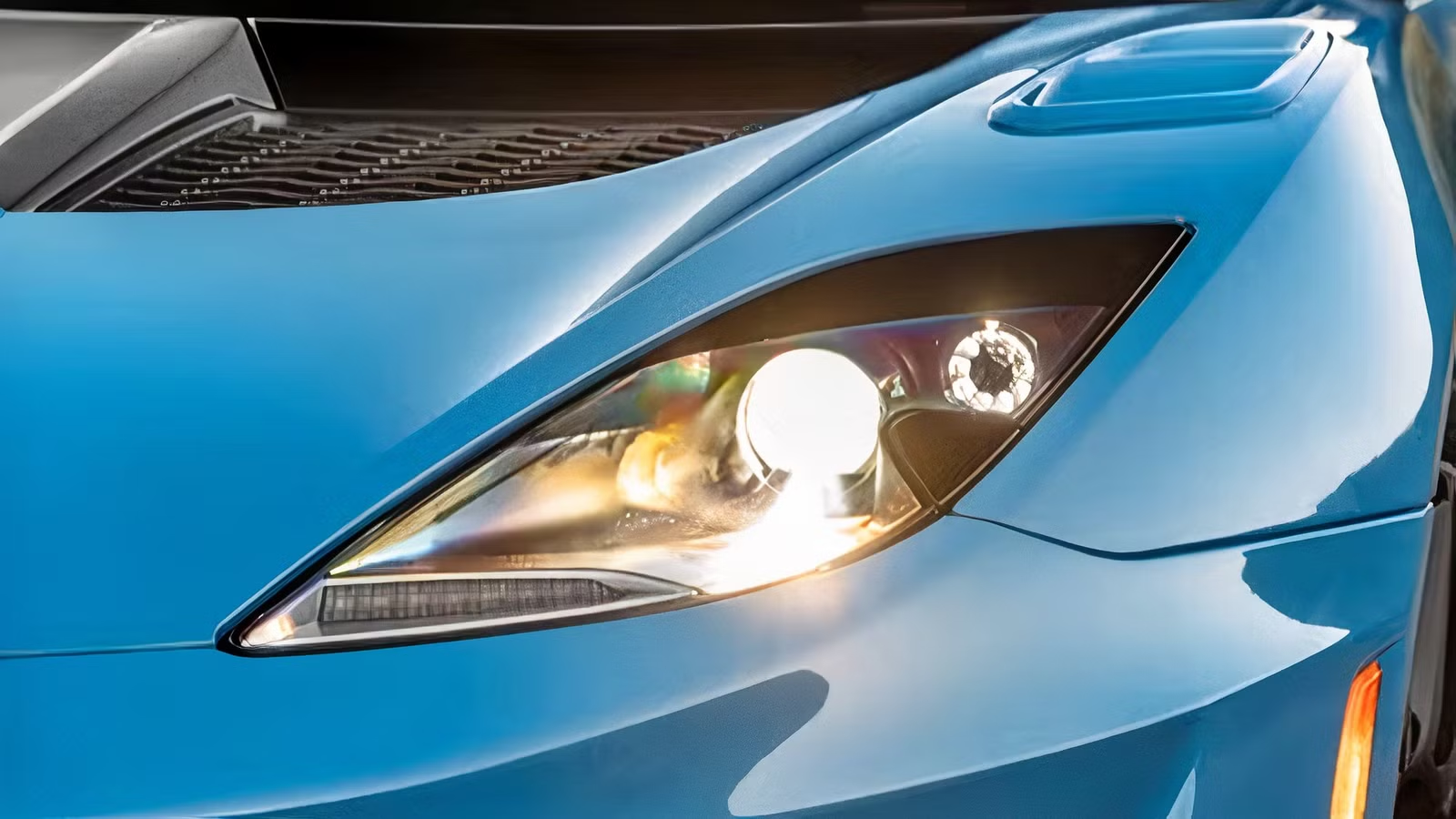
Standard cabin equipment for the 2021 Lotus Evora GT includes manually adjustable Recaro sport seats wrapped in leather and Alcantara, air conditioning, rear parking sensors, and a rearview camera. Entertainment and connectivity consist of an Alpine infotainment system featuring a 7.0-inch touchscreen display, Apple CarPlay and Android Auto integration, and Bluetooth connectivity. Owners also receive USB inputs, AM/FM radio, and a basic multi-speaker sound setup. Because the cabin prioritizes mass reduction, driver assistance features are sparse, omitting complex active safety systems in favor of direct mechanical feedback. Exterior lighting relies on projector headlights with integrated LED daytime running lights alongside power-heated side mirrors.
The optional Carbon Pack is found on many enthusiast-spec models, bundling a carbon fiber front splitter, roof panel, and tailgate to shed crucial pounds. Other performance-oriented additions include a titanium sports exhaust system that reduces weight and amplifies the supercharger sound, plus colored brake calipers and contrast interior stitching. Buyers could select between a strict two-seat (2+0) layout or a tiny 2+2 rear seating configuration intended primarily for luggage or small children. Premium upgrades were limited mostly to enhanced material trims, Alcantara steering wheel options, and upgraded multimedia head units.
Maintenance Blends Toyota Reliability With Exotic Packaging

Lotus specifies a routine maintenance schedule for the Evora GT, adhering to intervals of every 10,000 miles or 12 months. Standard annual service includes a synthetic oil and filter change, tire rotation, and safety check. Intermediate maintenance occurs every two years or 20,000 miles, requiring brake fluid flushes and cabin filter swaps. The supercharged 3.5-liter V-6 engine uses a timing chain and requires standard spark plug replacements at major intervals. Because the mechanical core originates from Toyota, powertrain upkeep is remarkably straightforward compared to traditional exotic rivals, though tight engine bay packaging can increase labor times for complex repairs.
Standard annual oil changes average $300 to $600 at specialized service centers, while major services can scale higher due to specialized body panel removal procedures required to access certain engine components. Owners typically budget between $1,000 and $2,500 annually for scheduled maintenance, high-performance tire replacements, and consumable track-day items.
Some Common Issues Can Present Themselves

The supercharged V-6 engine and Toyota-derived gearboxes exhibit exceptional mechanical durability, but known technical quirks exist across the platform. Exterior body panels require careful parking habits because front overhang clearance is minimal. Drivers pushing the car hard on track days should monitor brake wear and tire temperatures closely given the immense grip provided by the factory Michelin Pilot Sport Cup 2 rubber. Manual gearboxes can occasionally exhibit stiff linkage operation when cold, while interior trim pieces may develop minor rattles over rough pavement due to the rigid aluminum chassis construction.
The 2021 Lotus Evora GT maintains a clean safety recall record with the NHTSA, carrying zero official manufacturer recalls. The platform remains free of widespread systemic mechanical flaws, allowing owners to experience high-end exotic performance without typical reliability sacrifices.
Sources: Lotus, Edmunds, J.D. Power, Motor Reviewer, and iSeeCars.

Related posts



Latest Post


No Comments