
Rünge’s Flat-Eight Crate Engine Fits Classic Porsche 911s
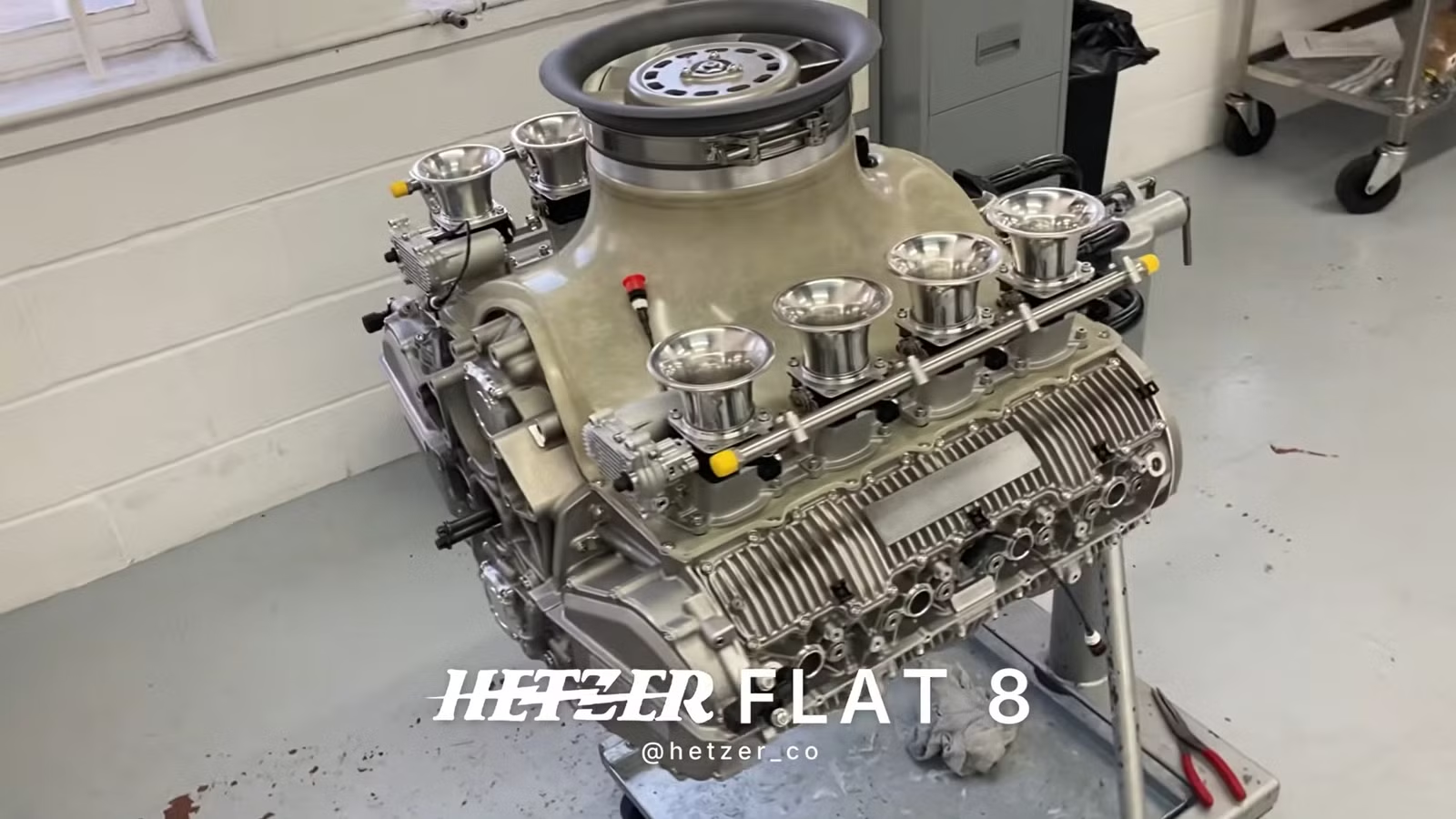
Rünge Engineering just wrapped dyno testing on a bespoke flat-eight engine built to drop straight into a classic air-cooled 911, and the sound alone is reason enough to pay attention. The Minnesota coachbuilder’s new mill revives a layout Porsche hasn’t put in a street car since the 917, the endurance racer that still defines the brand’s competition legacy more than five decades later.

The engine displaces 5.3 liters across 32 valves, with dual overhead cams per bank and a 12:1 compression ratio, all air-cooled in the tradition of the G-body cars it’s designed to fit. Rünge says it’ll bolt into any 1974 to 1989 911, meaning owners of those cars can now chase genuine flat-eight pedigree without touching a water pump or reworking a firewall.
Why The Flat-Eight Layout Still Matters
Porsche built flat-eight race engines decades ago, most famously in the 917, the car that won Le Mans outright in 1970 and 1971 and turned Porsche into an endurance-racing powerhouse almost overnight. The layout never made it into a production road car. Every street-going 911 since has run a flat-six, so an air-cooled flat-eight sized to drop into a G-body chassis is new territory for the aftermarket, not a reissue of something Porsche once sold to the public.

That’s what makes Rünge’s project different from the usual crate-engine pitch. This isn’t a built-up flat-six with more displacement or a turbo kit bolted on. It’s a distinct architecture that references 917 engineering directly, delivered in a format regular 911 owners can actually put under their own decklid.
What The Dyno Run Reveals, And What It Doesn’t
Rünge’s dyno footage doesn’t show anything dramatic happening on screen, but the audio does the work. The engine’s note reads closer to a vintage endurance racer than anything that’s shared a 911 engine bay in the last 50 years, which tracks with the flat-eight’s unusual cylinder count and the open-air crackle that air-cooled Porsche engines are known for.
Horsepower and torque figures aren’t out yet. Rünge says those numbers, along with pricing, are coming in December 2026. Given the builder’s past bespoke engine work has run as high as $250,000, a flat-eight crate motor announced with this much fanfare likely won’t come cheap. Until the December reveal, displacement, valve count, and compression ratio are the only hard numbers on the table, and that’s exactly what owners weighing a build should hold onto for now.
A Rare Swap Option For G-Body Owners

Crate engines for classic 911s usually mean a built flat-six, a turbocharged conversion, or in rarer cases a modern water-cooled swap that trades the air-cooled character for more power. A confirmed bolt-in flat-eight doesn’t really have a direct competitor in that space right now. For G-body owners who want their car to keep its air-cooled identity while adding something no other 911 on the block can claim, this is about as unique as the crate-engine market gets.
Rünge built its name on old-school coachbuilding, hand-forming metal bodies over wooden bucks rather than churning out production parts, so a flat-eight crate motor fits the shop’s pattern of going after projects most builders wouldn’t attempt. Whether the December horsepower numbers justify the price tag is still an open question, but the engineering ambition behind it isn’t.
December will tell the full story on power and cost, but the hook here doesn’t need a dyno sheet to land. A flat-eight that traces back to the 917, built to bolt into a car you can buy on the classifieds today, is the kind of swap vintage 911 owners have never had on the table before.

Related posts






Latest Post


No Comments