
2027 Hyundai Elantra Interior And Exterior Picture Gallery
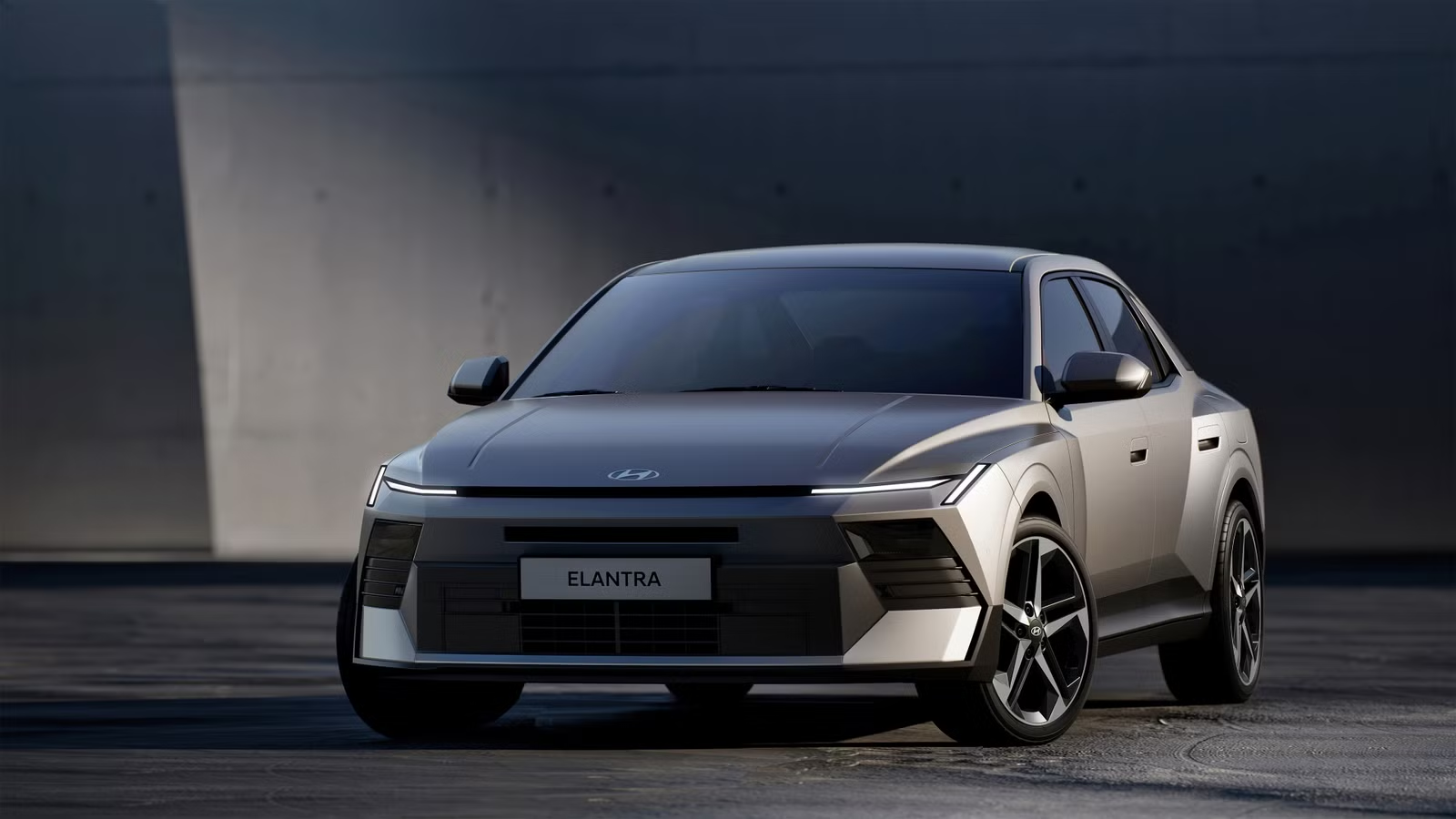
Hyundai has pulled the wraps off the eighth-generation Elantra at the 2026 Los Angeles Auto Show, and the 2027 Elantra and 2028 Elantra Hybrid clearly aim to be more than an ordinary compact sedan. The redesign brings Hyundai’s Art of Steel design language to the segment, with wide, muscular fenders, a long hood, and classic three-box proportions. The car is also bigger: it’s 3.4 inches longer and 1.2 inches wider than before, and Hyundai says it has best-in-class rear-seat space that approaches what you’d find in a midsize car.

Hyundai hasn’t announced pricing or an on-sale date yet. Even so, the new Elantra looks set to raise the bar for what buyers can expect from an affordable sedan.
20

The new Elantra has a much roomier cabin than before. Rear legroom is now 39.1 inches, rear headroom is 37.7 inches, and rear shoulder room is 56.5 inches. Hyundai says that’s the most rear-seat space in the class, putting it close to midsize territory.
19

Slimmer front seat frames help free up room in the back without weakening the structure. Hyundai says the second row works for adults and for both front- and rear-facing child seats. Rear-seat passengers also get their own air vents, and a 60/40 split-folding seatback is available.
18

On the dashboard, every Elantra gets a 12.9-inch Full HD touchscreen running Hyundai’s new Pleos Connect system. It’s built on Android Automotive OS and has an interface that feels a lot like a smartphone. Wireless Apple CarPlay and Android Auto come standard, along with Bluelink connected services and a Wi-Fi hotspot.
17

Buyers can also add Gleo AI, a cloud-connected voice assistant built on a large language model. It understands context and can handle several commands in one request. It can also tell whether the driver or a passenger is speaking, so everyone in the car can use it.
16

Not everything has moved onto a screen. Under Hyundai’s “Eyes on the Road, Hands on the Wheel” approach, the most-used audio and climate controls keep physical buttons and knobs. SEL Sport and Limited trims also add a 9.9-inch Slim Information Display in front of the driver.
15

There are plenty of places to charge devices. Two front USB-C ports share up to 100 watts, a separate 27-watt USB-C port handles data, and two 27-watt USB-C ports serve the rear seats. All of that is standard. Depending on trim, buyers can get one or two wireless phone chargers.
14

The Limited trim adds more upscale features. These include H-Tex seat upholstery, heated and ventilated front seats, a power driver’s seat with memory, ambient lighting, a power moonroof, and Digital Key 2 Premium. Dual-zone automatic climate control comes standard from the SEL Sport up.
13

Limited buyers also get a 12-speaker Bang & Olufsen sound system. To make the cabin quieter, Hyundai added an acoustic windshield to every trim, along with improved sealing around the mirrors and upgraded carpeting. The goal is a cabin that’s more refined and less noisy on longer drives.
12

The 2027 Elantra is the first compact sedan to wear Hyundai’s Art of Steel design language. Next to the outgoing car, it looks tougher and more sculpted, swapping the old sharp creases for wide, muscular surfaces.
11

Hyundai design chief SangYup Lee says the team went back to classic sedan proportions and then pushed them forward. That shows in the wide fenders, long hood, and clean three-box profile, which give the car an athletic stance that’s unusual for the class.

Related posts





Latest Post


No Comments