
The Yamaha-Tuned Lexus V8 Sedan Bowed Out In 2025 With A 500-Unit Ultimate Edition
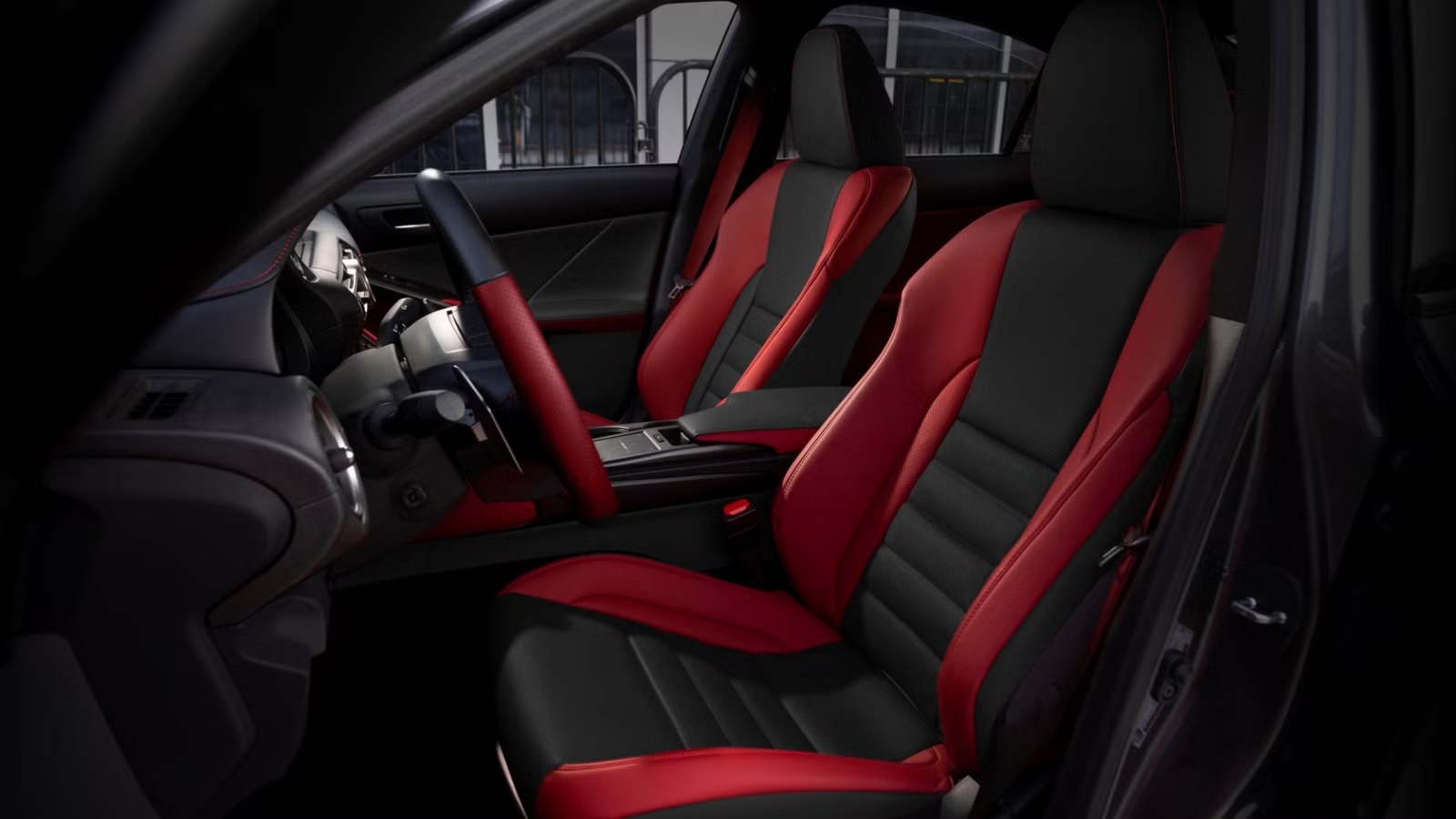
Park it outside a country club and nobody looks twice. Lexus spent more than two decades building a compact sedan that wears a suit, blends into traffic, and asks for very little attention. One version broke that rule in the engine bay. Under a mildly raised hood sat a naturally aspirated V8 with cylinder heads shaped by Yamaha, a company better known for motorcycles and pianos, with a bloodline that runs straight to a GT3 race car. In 2025, that engine ran out of road in its smallest home, and Lexus sent it off with a strictly limited farewell.
A Luxury Sedan Hiding A Racing Pedigree

The tells are subtle enough that most drivers miss them completely. A raised bulge runs down the center of the hood, four exhaust outlets stack in pairs at the rear corners, and forged wheels fill the arches. Beyond that, the shape matches the four-cylinder and V6 versions sold to commuters by the thousand.
That restraint was the whole point. Rivals in the compact luxury class spent the past decade shrinking displacement and bolting on turbochargers, then batteries. Lexus kept building an eight-cylinder sedan with no forced induction at all, and by the end of its run it stood as one of the last naturally aspirated V8 luxury sedans on sale in America.
Where Yamaha Fits Into The Lexus Performance Story


Yamaha Motor has worked with Toyota on engines since the 1960s, and this job came with a very specific brief. Toyota already had a smooth, efficient V8 doing duty in its flagship hybrid. It was refined and quiet. It was nowhere near sharp enough for a car meant to wear the F badge.
According to Yamaha’s own technical review of the project, the two companies chased three goals: power that keeps building with revs, crisp throttle response, and a sound worth hearing. Yamaha took charge of the cylinder heads, the part of any engine where those three qualities are won or lost.
The Lexus IS 500 And Its Yamaha-Tuned 2UR-GSE V8

The car is the Lexus IS 500 F Sport Performance, and the engine is the 2UR-GSE. It displaces 4,969 cc, uses an aluminum block with dual overhead cams and four valves per cylinder, and makes 472 horsepower and 395 lb-ft of torque in IS 500 tune. Every bit of it goes to the rear wheels through an eight-speed automatic.
The story starts with the 2008 Lexus IS F, the first production Lexus to carry the F performance badge. There, the same V8 made 416 hp and 371 lb-ft, revved to 6,800 rpm, and pushed the sedan to 60 mph in 4.2 seconds in independent testing. Between those two sedans, versions of the engine also powered the Lexus RC F, Lexus GS F, and Lexus LC 500.
How Yamaha Reworked The Cylinder Heads

Yamaha straightened and smoothed the intake ports, gave them an oval entry, and fitted a smaller port injector that intruded less into the airflow. The payoff was an 11% higher intake flow coefficient than the 2UR-FSE in the LS hybrid, with the work aimed squarely at breathing at high rpm.
Titanium intake valves cut valvetrain inertia, and a single high-flow intake manifold replaced the base engine’s switching design. A dedicated scavenge pump pulled oil out of the heads during hard cornering, which is race-car thinking in a luxury sedan. When Yamaha revised the engine for the RC F, compression climbed from 11.8:1 to 12.3:1 and the exhaust valves went titanium as well.
The 2UR Engine Family’s Link To The RC F GT3 Race Car

The Lexus RC F GT3 starts from the production 2UR block and enlarges it to 5.4 liters, according to Toyota’s racing division. Output sits around the 500 hp mark, with the exact figure capped by Balance of Performance rules in each series it contests.
The biggest change sits underneath. The race engine ditches the street car’s oil pan for a dry-sump system, which holds oil pressure steady under long, heavy cornering loads and lets engineers mount the V8 much lower in the chassis. Teams rebuild each one after roughly 6,200 miles, about twice per IMSA season. The street car shares the architecture, not the internals, which is exactly why it still idles politely at a drive-thru.
The 500-Unit Ultimate Edition That Closed The Chapter

Lexus revealed the IS 500 Ultimate Edition on May 19, 2025, limited to 500 cars for North America, with 40 of those earmarked for Canada. Red Brembo six-piston front calipers clamp 14.96-inch ventilated rotors, about an inch larger than the standard car’s rotors. Matte black forged BBS wheels sit under an exclusive light metallic gray called Wind, and Lexus described the whole package as “an ode to this storied nameplate’s history and legacy.”
Pricing started at $71,495, roughly $7,500 above the IS 500 F Sport Performance Premium. That premium looks modest against how well the regular car holds value, too. A lightly used 2025 IS 500 Premium sold for $61,425 at auction in December 2025, about 96% of its original sticker.
The Ultimate Edition becomes the send-off for a strange, brilliant idea: a buttoned-up compact sedan with Yamaha-designed heads and a GT3 race car in the family tree. Nobody else in the class built one quite like it, and the IS has now stepped out of that game too.
Sources: Hagerty, Lexus.

Related posts



Latest Post


No Comments