
GM Went All-In On EVs But America Wants Hybrids
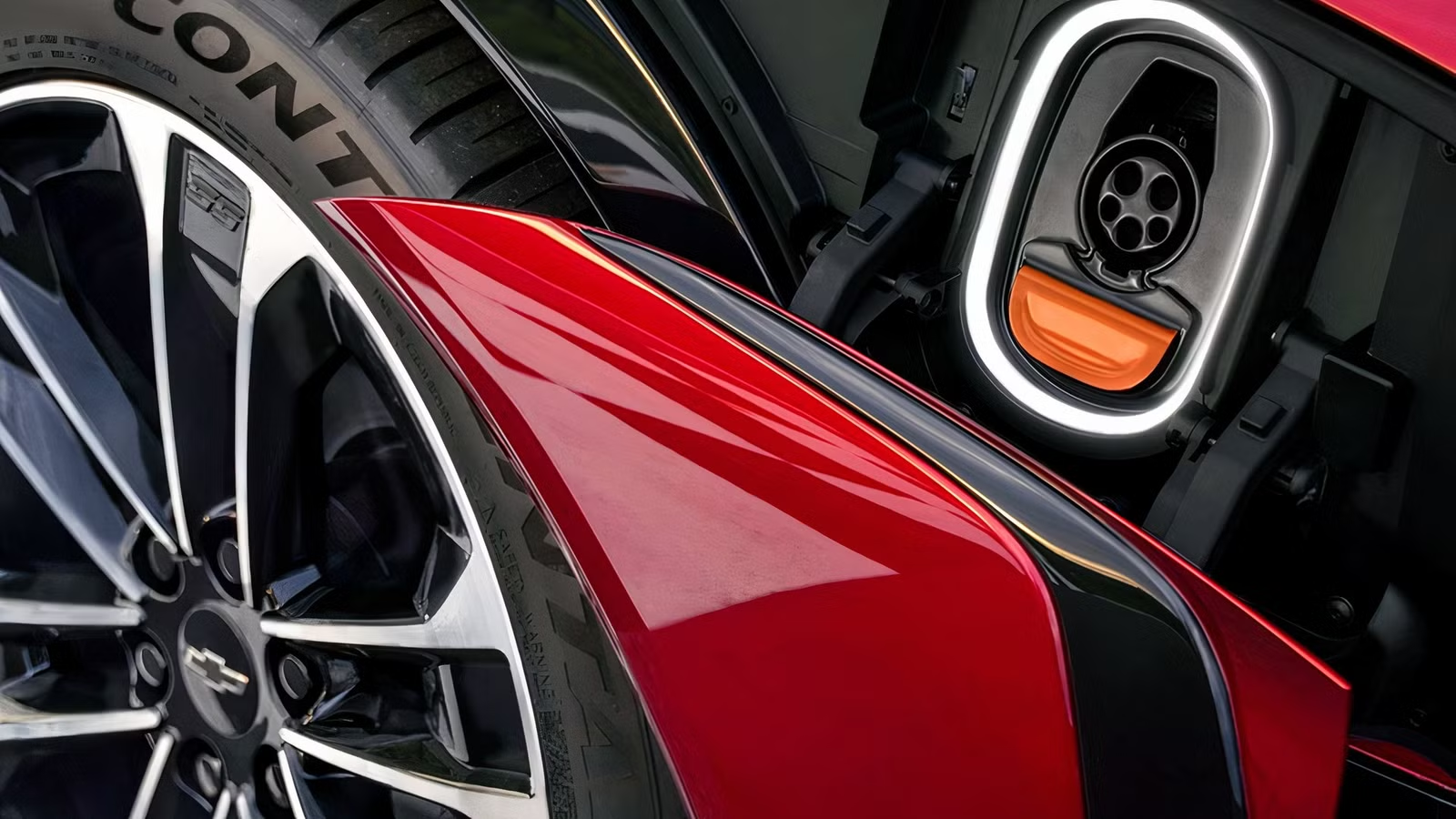
At a time when electric vehicles were primed for takeoff, General Motors made one of the auto industry’s biggest bets on an all-electric future. While Japanese and Korean companies continued expanding ICE offerings, enhancing many of their engines with electrification, GM decided to take on Chinese makers and poured resources into battery-electric vehicles. At the time, the strategy looked overwhelmingly logical. Today? …

With the current American administration pulling back from EVs and pushing harder toward fossil fuels, GM is caught in a sort of limbo with a full roster of electric vehicles and conventional ICEs in segments that seem to be forging a different path. At the fork where ICE and EV split, GM is ill-equipped to take the more profitable middle (hybrid) path.
How America’s Powertrain Split Left GM Stranded In The Middle
America’s powertrain transition was once considered black and white—there was the overwhelming dependency on fossil fuels and there were a bunch of alternatives, with electrification rising above other alternatives as the industry sped through the 2010s. The idea was to transition drivers away from finite resources and funnel them toward renewables, with electricity viewed as the best candidate because we can generate it in abundance.

The road between fuel and electricity is no longer a laneway, though, but more of a multi-lane highway, with fossil fuel still speeding along the fast lane and EVs occupying the steady stream of traffic in the right lane. Electrified gasoline-powered vehicles are navigating the middle lane, and gaining speed.
Fossil Fuels Still Power 76% Of New Sales, But That’s Not Where GM’s Gap Is

The internal-combustion engine remains the foundation of the new-vehicle market in the US. Despite the current energy climate, gasoline and diesel continue to power a vast majority of vehicles—76 percent of the new-vehicle marketplace in the second quarter of 2026, according to the Energy Information Administration (EIA)—and particularly the large trucks that have been the backbone of the industry in America. Fossil fuels are still regarded as must-haves for hauling, long-distance travel and quick refueling.
EVs Stalled At 6% — Half The Market Share GM Bet Its Future On

After a beehive of activity around the middle of the 2010s, the market for EVs has not moved as quickly as many automakers anticipated. Some companies like Volvo went all-in on EVs, while others like Subaru took their time in adopting the technology. It was once predicted that the 2025–2030 gap would see EVs take over the automotive marketplace, but EVs represented just six percent of light-vehicle sales in the second quarter of 2026, down from seven percent the previous year, according to the EIA.
Hybrids Are The Middle Ground And Becoming The Mainstream

Hybrids address a serious consumer concern, especially in today’s economic climate: cutting fuel consumption without overhauling the day-to-day routine of vehicle ownership. Conventional hybrids accounted for a record 16 percent of the US market (which also includes mild hybrids) over the second quarter of 2026, according to the EIA, and plug-in hybrids accounted for another 1.4 percent.
GM’s Hybrid History
Corporation’s Hybrid Market Share Went From A Peak Of 5% To Virtually Nil

Let’s start by saying that GM isn’t failing. Far from it. The corporation remains America’s sales leader and finished 2025 with 2,853,299 deliveries, about six percent of which were EVs (about even with the overall market saturation of 5.2 percent). That represented a year-over-year increase of 48 percent, and established GM as the number-two seller of EVs in the country. However, the only hybrid model on the corporation’s roster is the Chevrolet Corvette E-Ray, with only 3,153 produced in 2025 (GM doesn’t break down model sales by variants).

The conventional hybrid market accounted for about 15 percent of sales in 2025 (with plug-ins adding 1.6 percent), according to the EIA, while GM’s overall market share was 17 percent. GM’s current share of the hybrid market is virtually non-existent, down considerably from its peak hybrid years in the early- to mid- 2010s, when it held a five percent share of the overall market. The question is whether GM’s current market share might be higher if it offered more hybrid powertrains, which are increasingly in demand.
GM Was Offering Hybrids Before Hybrids Were Cool

GM developed sophisticated hybrid technology well before the EV movement got rolling, including an early mild hybrid and a hybrid program with two German heavyweights. Back around 2005, GM first introduced a Honda Insight-like parallel hybrid system in its full-sized Chevrolet Silverado and GMC Sierra pickups, consisting of a starter/generator integrated into the transmission.
GM Built Hybrids For Regulators, Not Buyers — And It Showed

GM’s initial strategy was to address the fuel consumption of its gas-guzzlers to help reduce its corporate fuel economy average (CAFE). From there, it evolved into smaller products, starting with Saturn’s Green Line (compact Vue SUV and midsize Aura sedan), and further evolved into the eAssist mild hybrid system of 2012 (in Buick and Chevrolet vehicles up to 2019).
GM Paved The Road To Plug-In Vehicles

GM also developed a full two-mode hybrid system, in partnership with BMW and DaimlerChrysler, for its 2008–2013 full-size trucks—Cadillac Escalade, Chevrolet Silverado and Tahoe, and GMC Sierra and Yukon—while working on plug-in hybrids such as the 2011 Chevrolet Volt (initially marketed as an extended-range EV), and 2014 Cadillac ELR coupe and 2017 CT6 sedan.
GM Does Not Lack Hybrid Expertise, Just Hybrid Presence

The strategy to fully embrace EVs meant GM was moving on from hybrid powertrains, in effect relegating them to transitional technology. CEO Mary Barra called hybrids an “interim solution” at a conference in 2019, adding that “customers aren’t generally interested in hybrids.”
That decision perhaps set the stage for other manufacturers, such as Mercedes-Benz and Volvo, to go fully electric by 2030, but it went counter to the plans of others, like Hyundai and Toyota, who maintained that ICEs still had a purpose, but with electrified enhancements. Today, Toyota holds about 50 percent of the hybrid market and Honda and the Hyundai Group each hold about 17 percent.
GM Embraced EV Technology But Always Kept Focus On Its Core Products

GM did, however, stay the course in keeping its electrification plans focused on core products, which are products American consumers love to buy. Despite a lack of middle ground between ICEs and EVs, GM’s truck franchises remain formidable, holding about 42 percent of the American full-size pickup market and 69 percent of the full-size SUV market. It also holds about 17 percent of the ICE market and 13 percent of the EV market.

Even the lowest of those are good numbers, but there is just one hybrid vehicle in GM’s lineup, and it’s a niche vehicle—the Corvette E-Ray—making GM’s hybrid market share roughly two 100ths of a percent. All that having been said, GM is planning to expand its hybrid portfolio, again with eyes on its core products.
The Missing Middle Is Where Rivals Are Growing

A buyer looking for a compact SUV (the fastest-growing segment in the market, at 21 percent) from Chevrolet has the choice of an ICE or an EV, but no hybrid. Three of the top-five sellers in the segment—Honda CR-V, Hyundai Tucson, Toyota RAV4—all have hybrid options, and none have EV variants. The other two are the Chevrolet Equinox and the Nissan Rogue.
A consumer shopping for a compact SUV may not be rejecting GM’s design or technology, but simply wants a powertrain GM does not sell. The same could be said for a consumer looking for a compact electric SUV, with GM having a known nameplate, while competitors do not. The difference is that the hybrid compact SUV segment is growing rapidly, whereas the compact electric SUV segment is declining.
GM Plans A Future With Hybrids

As early as 2023, GM stated intentions to reoffer hybrid options, again in its core models. Barra stated in 2024 that GM PHEVs would arrive in 2027 but still sees them as bridge vehicles toward EVs. GM currently markets PHEVs in China but has stated it will not import those vehicles into the US market (which isn’t cost-effective in today’s tariff landscape).
The strategic decision to offer PHEVs, rather than just conventional hybrids, serves both as a chance to expand choice for consumers, and to continue the push toward plug-in vehicles. GM acknowledges, as do many industry watchers, that many PHEV owners don’t plug their vehicles in, treating them more like conventional hybrids that take advantage of engine and brake charging during driving.
GM To Draw On Hybrid Experience From Global Markets

GM President Mark Reuss has stated the company will use technology and borrow know-how from their Chinese ventures to create dedicated vehicles for North America. In China, GM currently produces PHEV versions of the Chevrolet Equinox and Cadillac XT5, with both nameplates having traction in the US.

GM’s Chinese presence also features a Buick Electra E7, a crossover whose size fits in between the US-market Buick Envision and Enclave, and the Wuling Starlight L, a three-row midsize crossover that would slot in just below the Cadillac XT6. Both would have established direct competitors in the Mitsubishi Outlander PHEV and Volvo XC90, respectively.
Hybrid Trucks And SUVs Still Make The Most Sense For GM

Compact and midsize crossovers may be more strategically sound because Toyota and Honda have already normalized hybrids in those segments, but GM’s diehard customers are still its truck owners, so it makes sense to hybridize full-size pickups and SUVs. The new pickups are due before the end of 2026, but Reuters says GM may not have a hybrid ready to launch for a year or two after that.
The 2027 Chevrolet Silverado and GMC Sierra pickups will be in showrooms anytime now, but they’ll launch with the traditional small-block V-8s, the exclusive Duramax Turbodiesel, and an enhanced turbocharged “four.” The consequential question then becomes not whether GM can build a hybrid, but whether it can market one quickly enough to (a) take advantage of the growth in the marketplace, and (b) before the US administration changes and pivots back to EVs.
GM Didn’t Get It Wrong With EVs, But It Does Need To Pivot

GM’s EV gamble was neither a mistake nor irrational. At the time, the corporation correctly recognized that electrification would transform the automobile marketplace and invested accordingly. Its fairly extensive current EV lineup proves that the seeds bore fruit. In the last couple years, the U.S. administration has resodded the field, but it isn’t all bad for GM.
GM has managed to stay relevant and pretty much maintained market share because gasoline vehicles remain essential and EVs have mostly held their form, though adoption and conversion has slowed. But GM’s position could be stronger if it had made the transition from traditional ICEs to hybrid powertrains, much in the same way that Toyota has been converting all its ICEs to hybrid versions. In 2023, GM concentrated its resources on the destination (EVs). Three years later, it realizes it has to reroute to get there.
Sources: GM, Reuters, GM Authority, J.D. Power

Related posts



Latest Post


No Comments