
Kawasaki Built A 1,286cc Six-Cylinder Motorcycle To Challenge Honda’s CBX
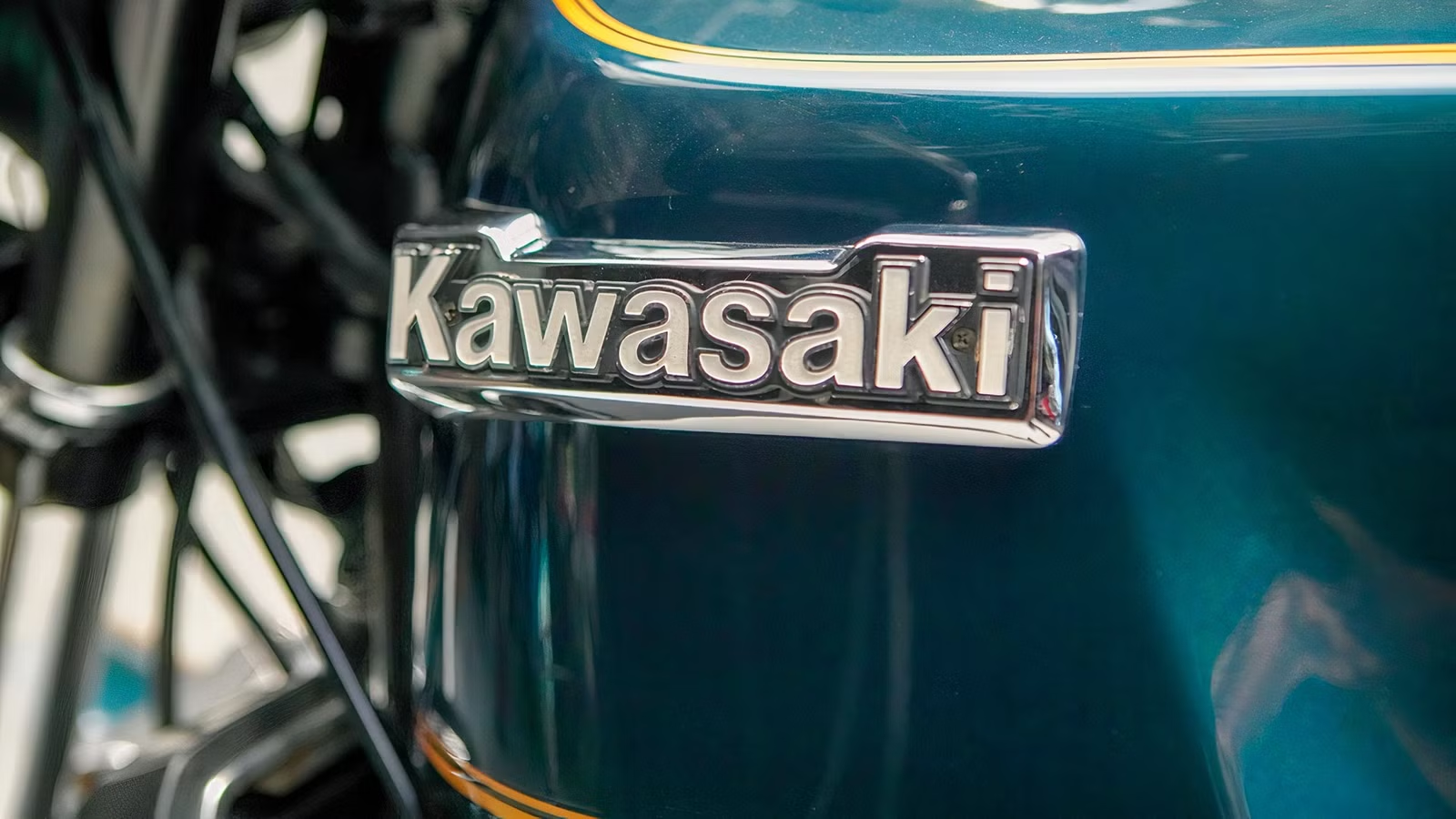
The late 1970s were an extraordinary time for motorcycle engineering. Japanese bikemakers were competing to build bigger, faster, and more sophisticated motorcycles, and adding cylinders became another way to demonstrate engineering superiority. Honda had already made waves with its six-cylinder CBX1000, but Kawasaki wasn’t interested in letting its rival have the final word. Its answer was a massive 1,286cc inline-six with liquid cooling, shaft drive, and enough performance to challenge the biggest motorcycles of the era. However, this wasn’t Kawasaki’s attempt to build a faster sportbike. It had a rather different idea of what a six-cylinder motorcycle should be.
Japan’s Six-Cylinder Motorcycle Rivalry Was About More Than Horsepower

The late 1970s saw Japanese bikemakers pushing motorcycle engine technology into increasingly ambitious territory. Four-cylinder engines had become commonplace in large-capacity motorcycles, but six-cylinder configurations offered another opportunity to stand out. They promised smoother power delivery, impressive performance, and a mechanical presence that few conventional motorcycles could match.
Honda was among the first major bikemakers to bring this idea to the mainstream with its 1,047cc CBX1000, introduced in 1978. Its air-cooled DOHC inline-six produced a claimed 105 HP and was heavily influenced by Honda’s experience with six-cylinder Grand Prix racing engines. It was designed as a performance motorcycle, with its engine and high-revving character taking center stage.
Kawasaki had a different interpretation of the formula. Rather than simply building a larger sportbike, they wanted to create a powerful, refined motorcycle capable of covering long distances comfortably. The company had already established its performance credentials with the Z1 and subsequent Z-series models, so a six-cylinder flagship would take its engineering ambitions in a new direction.

There was another bikemaker too. Italian manufacturer Benelli had introduced the 750 Sei in 1974. The competition was becoming an interesting battle of philosophies, with each manufacturer approaching the same fundamental engineering configuration differently.
The Kawasaki KZ1300 Was A Six-Cylinder Touring Motorcycle With Serious Performance

Kawasaki introduced the KZ1300 in 1979, giving the world one of the largest and most mechanically ambitious Japanese production motorcycles of its time. Its 1,286cc liquid-cooled, DOHC inline-six produced a claimed 120 HP at 8,000 rpm and 85.6 lb-ft of torque at 6,500 rpm. That made it considerably more powerful than the Honda CBX1000, on paper at least.
The engine used a 62mm bore and 71mm stroke, with two valves per cylinder and three twin-throat Mikuni carburetors supplying fuel to all six cylinders. A five-speed transmission sent power to the rear wheel through a shaft final drive.
The performance was impressive for a motorcycle of its size. Despite weighing around 710 pounds, the KZ1300 could cover the quarter-mile in around 11.96 seconds at 114.35 mph and reach a claimed top speed of close to 142 mph. The Honda CBX1000 was quicker through the quarter-mile, but Kawasaki built the KZ1300 with different priorities.
Its long-distance capabilities, substantial torque, and smooth inline-six engine made it more of a high-performance grand tourer than a conventional superbike. It was an unusual interpretation of the six-cylinder formula, and one that gave Kawasaki a distinctive flagship motorcycle.
The Kawasaki KZ1300’s Inline-Six Was An Engineering Exercise In Excess

Building a 1,286cc inline-six motorcycle engine presented several engineering challenges. The most obvious was packaging. Six cylinders arranged across the frame naturally create a wide engine, but Kawasaki used liquid cooling to keep the design more compact. It also helped maintain consistent operating temperatures, reduce mechanical noise, and improve refinement during extended rides.
The engine itself was considerably more complicated than the four-cylinder units commonly found in Japanese superbikes. Its six combustion chambers, 12 valves, dual overhead camshafts, and three twin-throat carburetors required more components and careful calibration. Kawasaki also incorporated a crankshaft harmonic damper to manage torsional vibrations generated by the large engine.
Unlike a conventional chain-driven superbike, the KZ1300 used an enclosed driveshaft to transfer power to the rear wheel. This reduced routine maintenance and suited a motorcycle intended to cover substantial distances. Its substantial clutch assembly and the torque generated by the engine also influenced Kawasaki’s decision to use a shaft final drive.
The chassis was equally substantial, with a steel double-cradle frame, telescopic forks, twin rear shock absorbers, and dual front and a single rear disc brake. They gave the KZ1300 the hardware needed to handle its considerable mass and performance.
The Kawasaki KZ1300 Outlived The Honda CBX And Became A Touring Icon

The KZ1300’s story didn’t end with its original A-series models. Kawasaki continued developing the platform, eventually introducing fuel injection in 1983. The engine also found a new home in the ZN1300 Voyager, a fully equipped touring motorcycle with a fairing, luggage, and additional touring equipment.
This was arguably where the six-cylinder engine made the most sense. Its smooth power delivery, substantial torque, and shaft drive suited long-distance riding considerably better than aggressive sportbike applications. The Voyager continued until 1989, giving the underlying six-cylinder platform a production life of close to a decade.
When it arrived in 1979, the Kawasaki KZ1300 carried an original price tag of $4,695 in the US. It was an expensive proposition, reflecting its position as Kawasaki’s flagship and the engineering complexity of its liquid-cooled inline-six. It was considerably more than an ordinary Japanese superbike, but buyers got a motorcycle that offered an unusual combination of six-cylinder performance, touring comfort, and mechanical sophistication.
The KZ1300 is also relatively accessible in today’s classic motorcycle market. Hagerty’s valuation puts a 1979 example at approximately $6,333 to $8,733. Exceptional, low-mileage examples can command considerably more, with a 1982 example selling for 17,000 on Bring a Trailer.

Related posts
Latest Post


No Comments