
The BRZ’s Simplicity Is Becoming Its Own Selling Point Against EVs Like The IONIQ 5 N
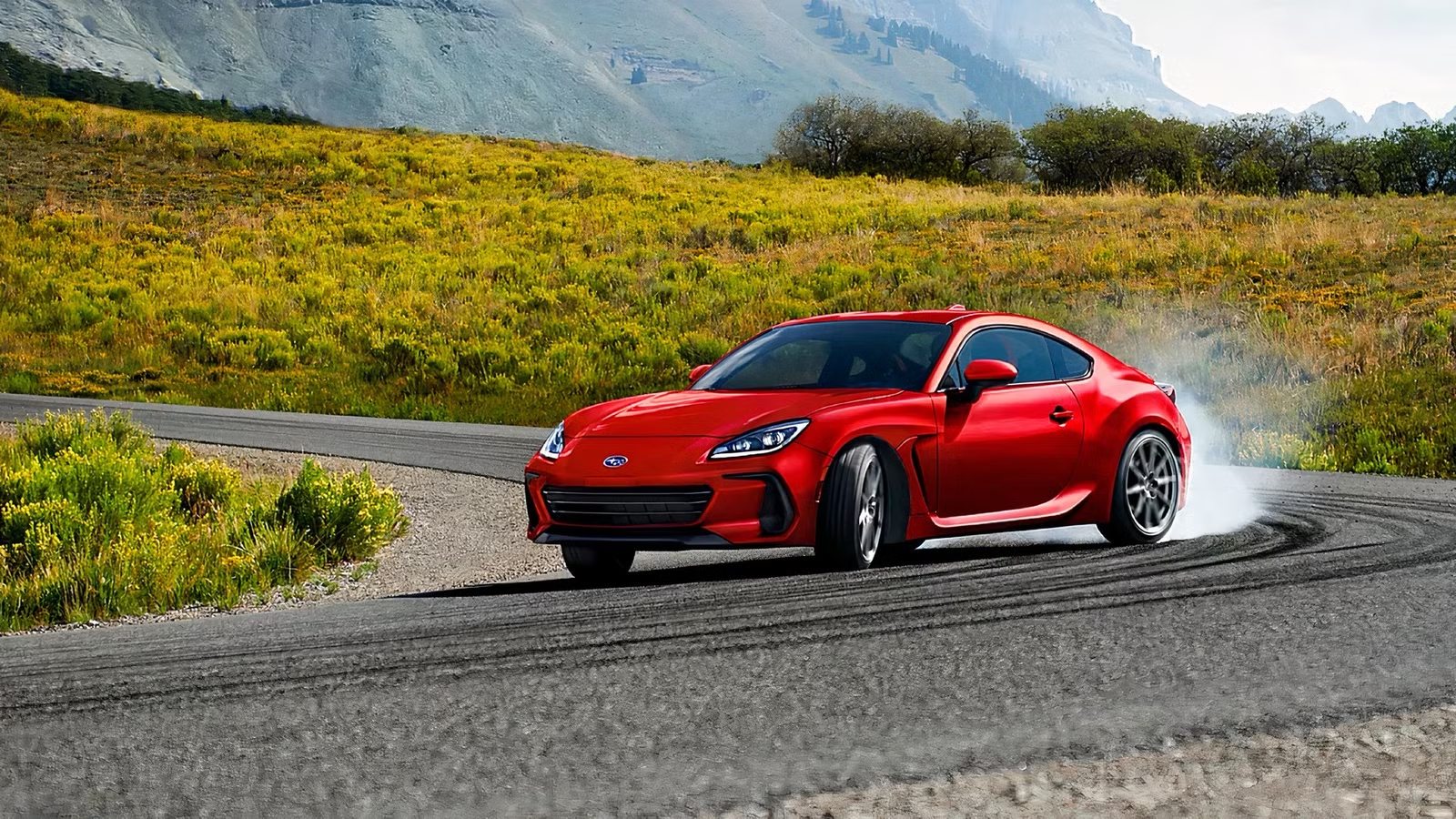
Yahoo just put the Hyundai IONIQ 5 N and the Subaru BRZ side by side, and on paper it isn’t close. The IONIQ 5 N makes 650 horsepower and 516 lb-ft of torque from its dual motors. The BRZ makes 228 horsepower and 184 lb-ft from a naturally aspirated flat-four. But the video published this week isn’t really a shootout, and treating it like one misses the point entirely.

What the comparison actually surfaces is a growing split in what “driver’s car” even means in 2026. The IONIQ 5 N engineers its engagement: fake gear shifts, synthetic exhaust noise piped through the speakers, a drift mode that manages torque vectoring so the car feels like it’s misbehaving even when it isn’t. The BRZ doesn’t simulate anything. It’s a 228-hp coupe with a six-speed manual, unassisted-feeling steering, and a curb weight light enough that the numbers on the spec sheet stop mattering as much as they should.
Why The BRZ Keeps Getting Cited As The Control Group
The 2026 BRZ starts at $37,055 with destination included, and most examples still leave the factory with three pedals. Subaru’s 2.4-liter boxer four is the same engine architecture that’s powered the car since the ZN8 generation arrived, and it still doesn’t need a turbo, a hybrid assist, or a battery pack to make its case. That’s the whole pitch: a compact, rear-drive layout, low curb weight, and steering that talks to the driver’s hands because there’s no electronic layer translating the message.


That mechanical honesty is exactly what gets lost in the IONIQ 5 N’s approach, however impressive the execution is. Hyundai’s engineers didn’t fake the N’s capability, the car is legitimately quick and the software-driven feedback is a genuine engineering achievement, but it’s still an achievement built on making a 2.2-ton EV feel like something it structurally isn’t. The BRZ never has to pretend.
The Price Gap Says As Much As The Spec Sheet

The IONIQ 5 N starts north of $65,000, nearly double what a well-optioned BRZ costs. That gap isn’t incidental to the comparison, it’s central to it. For the price of one IONIQ 5 N, a buyer could put a BRZ in the garage and still have money left for a track day habit. Subaru’s coupe has also picked up a Consumer Reports Recommended Model nod, and Subaru itself has held Consumer Reports’ Best Overall Automotive Brand title two years running, credentials that speak to reliability and value rather than outright performance, but they matter to the audience cross-shopping these two philosophies.

That’s the case for the BRZ as a control group rather than a competitor. It isn’t trying to out-power anything. It’s holding a fixed point so enthusiasts have something to measure the EV performance era against.
What This Means For The Future Of Driver’s Cars

EV performance is only going to get more capable, and cars like the IONIQ 5 N prove software can manufacture genuine excitement even without a combustion engine underneath it. But the BRZ’s continued relevance, more than a decade into its production run and still selling on the same low-power, manual-first formula, suggests engagement built from mechanical simplicity isn’t going away just because horsepower numbers keep climbing elsewhere.

For shoppers weighing the two, the choice isn’t really about which car is faster. It’s about whether driver satisfaction has to be synthesized or whether it can still come from a light chassis, a stick shift, and an engine that doesn’t need a computer to tell it how to feel exciting.

Related posts



Latest Post


No Comments