
Yamaha’s 95-HP XS1100 Hit 11-Second Quarter-Miles Before Honda’s Six-Cylinder CBX Arrived
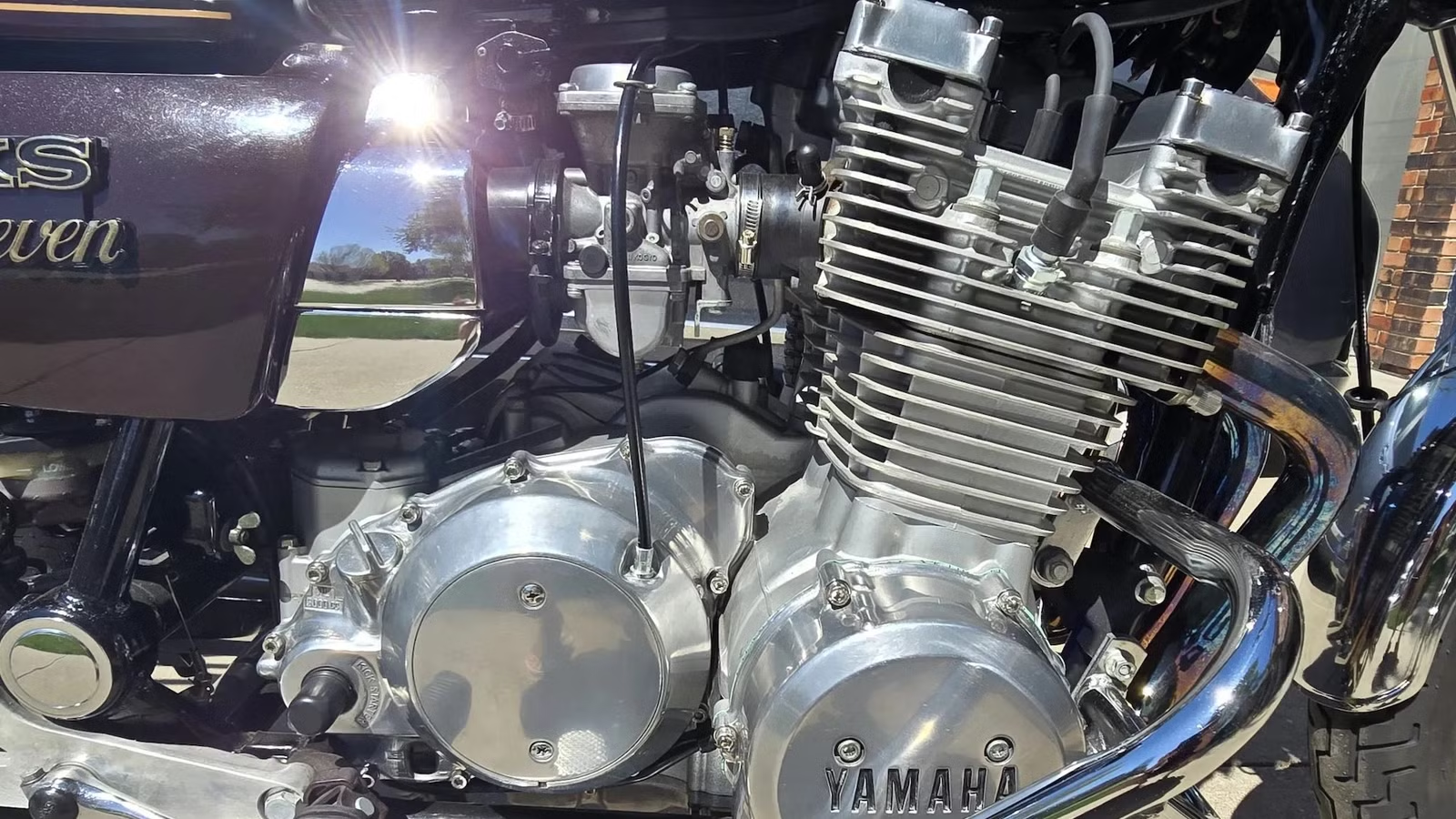
Honda set the cat amongst the pigeons when they launched the CB750 in 1969. It was the world’s first superbike, and all the other manufacturers were scrambling for some form of answer through the 70s. Yamaha’s initial retort came in the form of a 750cc triple, which was good, but outgunned. A couple of years later, they finally released an inline-four, and it was something of a monster.
The Yamaha XS Eleven Lived Up To Its Name
Quarter Mile Time: 11.78 Seconds

By 1978, every Japanese manufacturer had an inline-four superbike sitting on their dealer floors. Yamaha was the last of the big four to get an inline-four to market, but once the XS1100 (Eleven) arrived, it certainly didn’t disappoint. With 95 horsepower on tap, it was one of the most powerful motorcycles on the market for that model year.
The overall power was actually less impressive than the way it produced its power. With the vast majority of its torque available from around 3,000 RPM onwards, it was able to surge off the line faster than most of its contemporaries, and hustle to the quarter mile mark in a mere 11.78 seconds. It was the very first 11-second bike straight from the factory, yet rarely gets credited for that.
One of the reasons for this is the simple fact that it was desperately hard to replicate this feat, with most outlets reporting a time of over 12 seconds. But, with a skilled (not to mention light) pilot at the helm, and quite possibly a slight tailwind, the 11.78 second time is most certainly credible.

The XS1100 Is Anything But Nimble
Dry Weight: 564 Pounds

With a dry weight of 564 pounds, the XS Eleven was a heavy bike for the time, and still is heavy by almost any measure. Factor in decades-old suspension and brake components, and a chassis that was already outdated way back in the 70s, and you have a bike that simply does not like to corner. Refreshing the suspension and fitting modern rubber will obviously help, but this was never intended to be a dynamic handling motorcycle.
All these bigger UJMs were designed for the growing touring market. The big four Japanese manufacturers had already cottoned on to the fact that most riders were using their bikes as long-distance tourers thanks to how comfortable and reliable they were. Handling was not a selling point, but power was. Yamaha didn’t need to reinvent the wheel, they simply needed a bike that was more powerful than the Honda Gold Wing, which was quickly becoming the most popular tourer on the market by the late 70s.
Honda Takes Center Stage With An Even More Powerful Inline-Six

For a brief moment, the XS Eleven was the biggest, most powerful, and fastest motorcycle in the world. Its smooth power delivery and shaft drive were both desirable attributes at the time, but Honda hit back almost immediately with a bike that offered even smoother performance.
The CBX1000 offered buttery-smooth performance thanks to its enormous inline-six engine, which also just so happened to be more powerful. With 105 horsepower, the CBX stole the XS Eleven’s thunder before it was even possible to market, or thoroughly test its true performance potential. Its potential top speed of 135 MPH was rendered moot, because no matter which way you sliced it, the CBX was faster.
The CBX was faster than anything else that had come before, and it was also wider! Just like the XS, the CBX was more of a tourer and did not offer much in the way of handling prowess. Both of these models only enjoyed a relatively short four-year production run, and only the CBX is really seen as historically significant thanks to its unique engine.
The UJM Era Enters Its Twilight

By the early 80s, when both the XS Eleven and the CBX were already old news. Big, powerful UJMs were waning in popularity as consumers turned to motorcycles with more sporting potential. While fast, these bikes looked old-fashioned when compared to some of the semi-faired bikes that were already on the market back then.
Motorcycles like the Suzuki Katana (pictured above) and the Kawasaki GPz900 captured the imagination, offering more modern designs and more dynamic performance. The touring market also became a degree more competitive, with BMW and Harley-Davidson offering a wide range of alternatives by the early 80s. The revival of Harley-Davidson in the early 80s also hastened the demise of the big bore UJMs. A tariff on all motorcycles with a displacement of over 700cc was introduced in 1983 to help them get back on their feet. Bikes like the Gold Wing, which were already being made in the US, were exempt, but other models lost their value proposition almost overnight.
While this particular tariff didn’t last long, it forced Japanese manufacturers, in particular, to rethink certain strategies, and move in a different direction. By the middle of the decade, fully-faired sport bikes were the next “big thing,” and big bore UJMs like the XS Eleven were all but forgotten.
Source: Cycle World Magazine (February 1978)

Related posts



Latest Post


No Comments