
The Cruiser That Turns Everyday Riding Into A Weekend Event
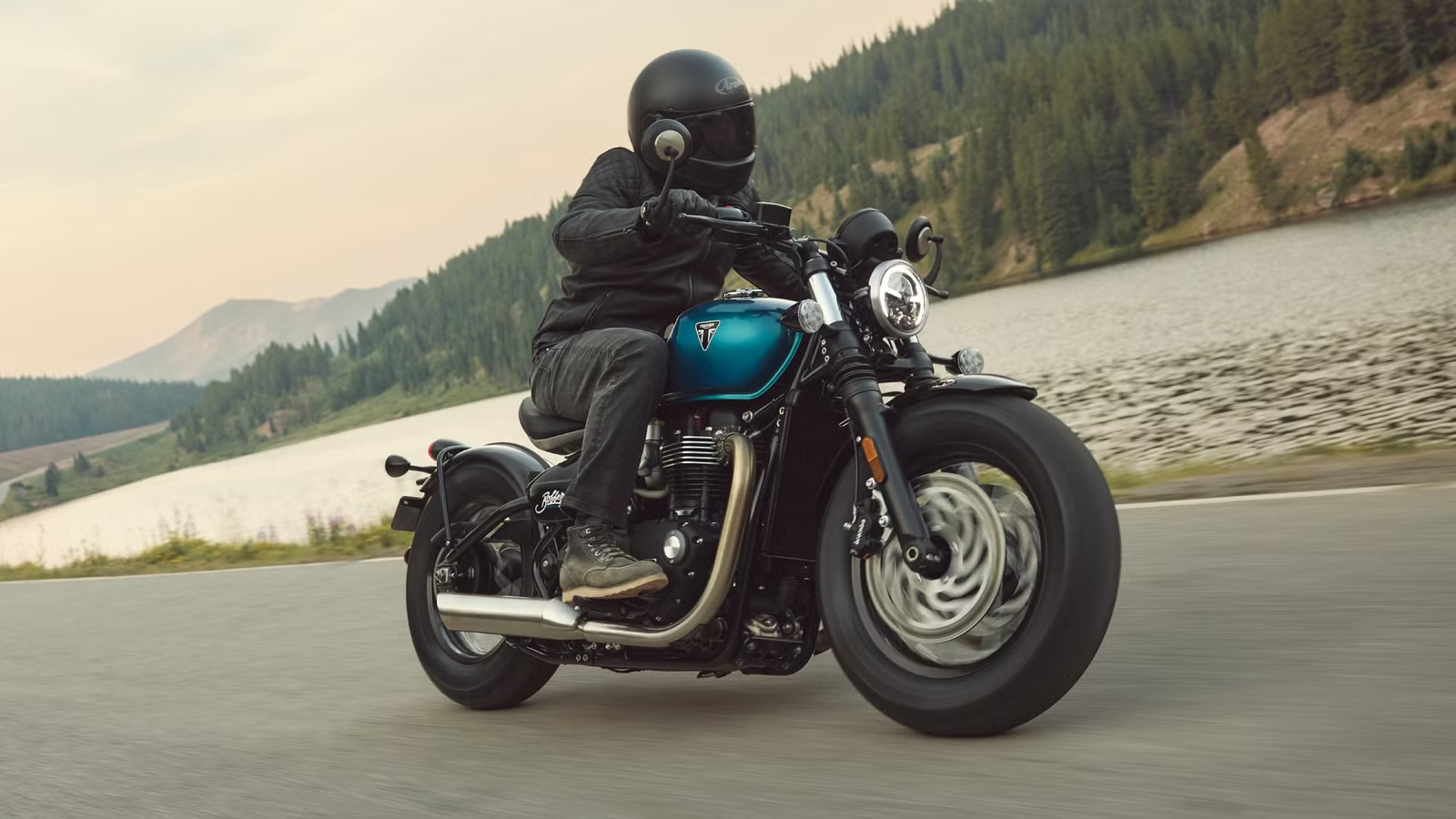
Just about every mainstream motorcycle brand makes some sort of cruiser option for their riders these days. That’s especially true in the North American market. And that’s because cruisers, thanks to Harley-Davidson, and to a lesser extent Indian Motorcycle, seem to be an evergreen category of bikes. They just never seem to go out of style, especially in America. But not all cruisers are made alike. There’s a small, special breed of bikes that amp up performance, style, and smiles-per-gallon like no other.

Nowhere is that more apparent than with the Triumph Bonneville Bobber. Introduced in 2017 as part of Triumph’s Modern Classic lineup, the British brand’s engineers took the essence of what made the Bonneville T120 so great, and stripped out the rest, to honor the spirit of custom bobbers that came before it. The resulting machine was unapologetically meant for solo riding, had a meaner, lower stance, and looked like nothing on the road at the time. This was a cruiser meant to make your everyday boring commute into a thrilling adventure.
How A WWII-Era Custom Tradition Became Triumph’s Most Enduring Modern Bike
Riders have been customizing their bikes ever since someone strapped a gasoline engine to a bicycle frame back before any of us were even born. But the practice really kicked into high gear when GIs returned home from World War II. Having ridden Harleys, Indians and even confiscated BMWs all over the Western Front, these returning soldiers missed the thrill of the ride. And pretty soon, they got down to the business of chopping and bobbing any bikes they could get their hands on.

And thus, the bobber was born. At the heart of the bobber is a stripped-back cruiser, with a chopped or completely removed front and rear fenders, with any other unnecessary parts removed as well. And unlike its European counterpart, the Café Racer, the bobber never seemed to have gone out of style.
The One Modern Classic That Outlasted The Rest Of Triumph’s Lineup

Before Triumph introduced the Bobber, it had already been pushing out modern classics with the 865cc engine. The likes of the Bonneville, Thruxton and original Scrambler were growing in popularity, and Triumph would continue to iterate on those models with future versions like the Twin, the Street Cup and the Speedmaster. Most of these models came and went, but the Bobber seems to have struck a nerve with the riding public. And it has been in continued production even as classics like the Thruxton had gone into the dustbin.
Muscular Power Courtesy Of A Bonneville 1200cc Engine

Triumph has two versions of its liquid-cooled Bonneville engine. The 270 degree firing order parallel twin, in both the 900cc and 1200cc sizes, has a deep burble that is reminiscent of a V-Twin. The Bobber is equipped with the larger, 1200cc version, and that brings a solid amount of performance to the table. The retro cruiser delivers a respectable 77 horsepower. And torque figures aren’t too far behind, with 78 pound-feet at 4,000 rpm. And while Triumph doesn’t share the top speed of this model, it’s hard to imagine it being particularly slow with those figures. Triumph also claims a 51.7 mpg on the Bobber, which makes it an ideal choice for everyday riding.
Soulful Noise Is Your Everyday Soundtrack

The Triumph Bobber weighs in at 552 pounds fully fueled, but the center of gravity is slung low, as is the seat, which sits at 26.9 inches high. The other specs for the bike are on par with everything else that Triumph produces in the Modern Classic lineup. The clutch has a slip assist built in. There’s a six-speed gearbox buried underneath, which is a welcome upgrade from some of the 900 models, which only have five-speed transmissions. The instrument cluster is a quaint analog speedo that has an inset LCD digital display.
Perhaps the best feature of the bike is not the hardware, but the feeling it gives you when you rev the throttle. The deep burble of the 270-degree parallel twin sounds like no other comparable engine on the market. And when the sound exits through the twin brushed stainless steel pipes, even the stodgiest V-Twin fan can’t help but admire it.
Reasonably Priced Yet Premium European Fit And Finish
The starting price for the Triumph Bobber is currently $14,795. It’s comparable to Triumph’s other cruiser, the Speedmaster. But the Speedmaster has a more traditional cruiser look, made specifically for those riders thinking of getting a European version of a Harley-Davidson. And if you want a cheaper version of the Bonneville, there’s the T120 and T100, as well as the Speed 900 and the Scrambler 900. So, for that price, the Bobber had better deliver.
The good news is that it does. None of the other Triumph Modern Classic models have the custom bobber look straight out of the factory. And because it was made by Triumph from the get-go, you get the premium fit and finish right out of the gate. That’s what differentiates the Triumph brand from something like Royal Enfield. Sure, RE has similar-looking models in its lineup that are less expensive to own. But you get what you pay for. And you can certainly tell the difference when you park a $15,000 Triumph Bobber next to a RE’s closest approximation, the Shotgun 650. The materials, the finish, and the care taken in the Bobber’s construction all speak to its premium quality.
A True Factory Bobber Unlike Any Other

Royal Enfield’s Shotgun isn’t the only bobber alternative on the market. And truthfully, it’s not a true apples-to-apples comparison with the Triumph Bonneville Bobber. However, there are two specific models that come tantalizingly close.

The Harley is priced on par with the Triumph, at $14,999. It’s also more powerful, with 98 horsepower and a substantial 120 pound-feet of torque. And there’s certainly something to be said about the heritage of the brand, though Triumph can confidently say it’s just as old, if not older. Where the Harley falls short compared to the Triumph Bobber is the weight. At 646 pounds, the Street Bob enters territory where it becomes a chore to lift it off its sidestand.
The Indian Scout Sixty Bobber Costs $5K Less and Feels Like It

The Indian Scout Sixty Bobber is the flip side of the competitor coin. It is the cheaper version of the factory bobber, coming in at just under $10,000. It also has a lower seat than the Triumph, comparable engine specs (85 horsepower and 65 pound-feet of torque), and weighs approximately the same (536 pounds). It looks and feels modern, robust, and solid in its construction. But the overall impression, especially when compared with the Triumph and the Harley, leaves you with an indefinable hollow feeling.
While technically proficient, it’s a soulless machine made to capitalize on the popularity of the Indian Scout, which is itself a lesser iteration of a much better bike, the Victory Octane. So it’s truly ironic that a British brand like Triumph was able to build the best tribute to the bobber, a custom motorcycle style created and popularized in America so many decades ago.
Sources: Triumph, Harley-Davidson, Indian, Royal Enfield

Related posts

Latest Post


No Comments