
Yamaha Built A Factory Café Racer Single Decades Before The Honda GB350
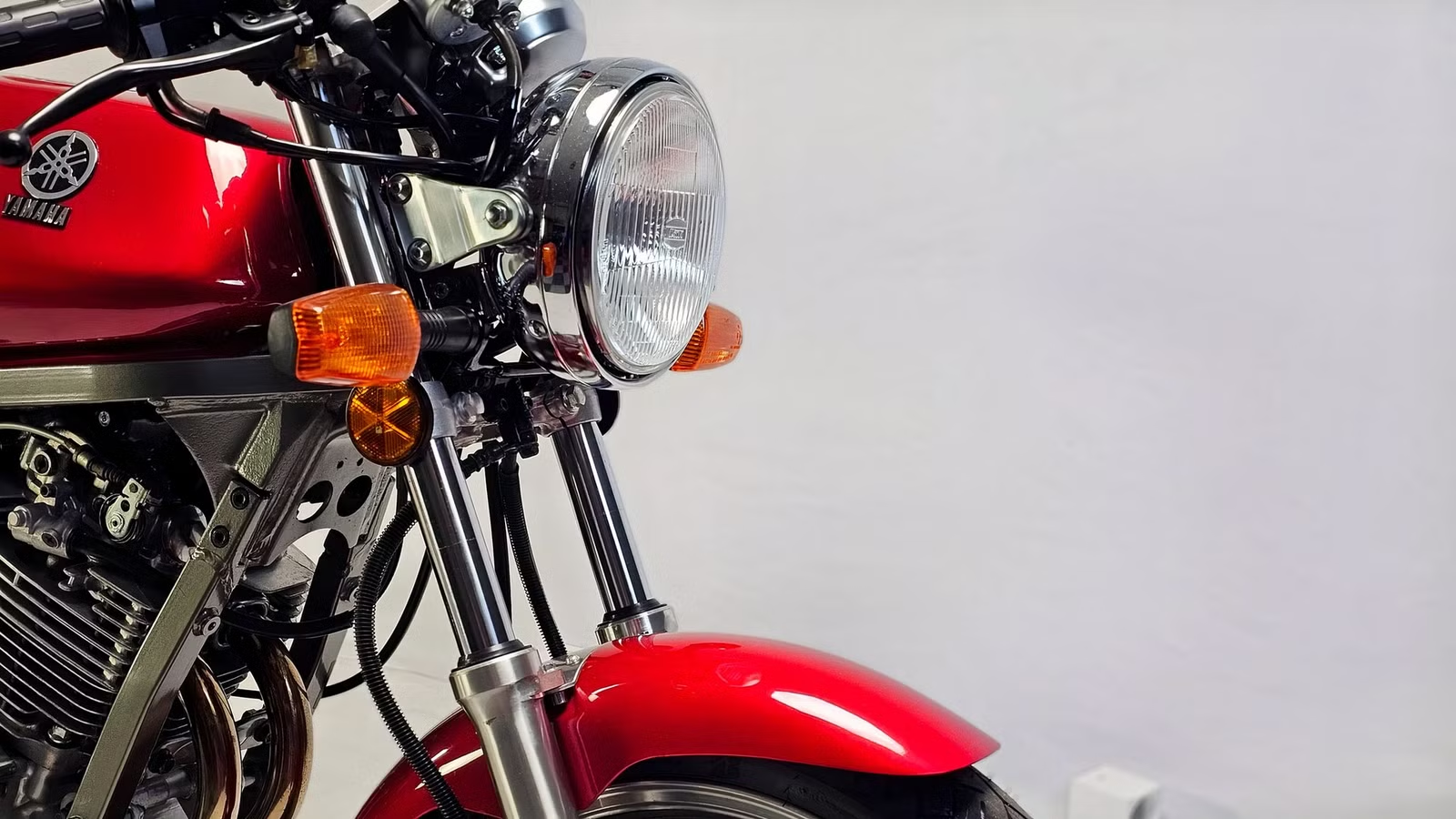
Yamaha made an unusual bet in the mid-1980s. At a time when American buyers were gravitating towards increasingly powerful multicylinder motorcycles, Yamaha introduced a minimalist café racer powered by a large air-cooled single. It had classic proportions, a lightweight chassis, and enough performance to make everyday riding entertaining. However, there was a problem. Yamaha priced it above another motorcycle in its own showroom that offered more power and the convenience of an electric starter. The resulting commercial failure was short-lived in America, but the motorcycle’s reputation has improved considerably with age.
Yamaha’s Factory Café Racer Arrived Before The Retro Revival

By the mid-1980s, the café racer was no longer just a home-built response to slow British roadsters. Yamaha had taken the idea into production form, giving a big single-cylinder motorcycle the visual identity of a stripped-down special. The recipe was deliberate: a compact fuel tank, a slim seat, clip-on-style handlebars, alloy wheels, and a clean, purposeful stance.
This was not a standard motorcycle with a few nostalgic accessories added for effect. Its proportions and riding position were part of the design, while the single-cylinder engine gave it a character that a high-revving inline-four could not reproduce. Yamaha also used a counterbalancer to make the large thumper more civilized.
The result was an unusually focused road bike at a time when the American market was judging middleweights by cylinder count, horsepower, and convenience. The Yamaha café racer’s appeal depended on riders valuing feel and handling over outright speed. That was a narrow audience in 1986, but the same priorities would later become selling points for the retro-single category. You could say that Yamaha had built a motorcycle ahead of its time.

The Yamaha SRX600 Made A 595cc Single Feel Special

The motorcycle was the Yamaha SRX600, sold in the United States for the 1986 model year alone. Its air-cooled, four-valve, 595cc single was derived from the XT600, but Yamaha added a counterbalancer and its YDIS dual-carburetor arrangement. A slide-operated carburetor handled lower engine speeds, while a constant-velocity unit joined in as revs and demand increased. Like two inlet ports, the engine also had two exhaust ports, often leading people to confuse it with a twin-cylinder motorcycle. The engine was rated at 41 HP and 34 lb-ft of torque sent through a five-speed gearbox.
Period performance was respectable. The SRX600 could cover the quarter-mile in around 14 seconds, while its estimated top speed was 106 mph. Wet weight was close to 387 pounds. The motorcycle features twin front discs and a rear disc, 18-inch alloy wheels, a box-section frame and twin rear shock absorbers. The kick-only starting system felt pedestrian, especially as electric starters were becoming the norm on larger street motorcycles. It did get Yamaha’s automatic decompression system, which made the big single easier to kick over. The SRX600 was priced at $2,599 in 1986, which positioned it as a deliberate enthusiast purchase, not a budget alternative.
Yamaha’s Cheaper Radian 600 Made the SRX600 A Hard Sell

The SRX600’s biggest problem was not only that American riders preferred multi-cylinder motorcycles. It was that Yamaha was asking the same buyers to pay more for the SRX600, which looked slower on paper and took more effort to start. Yamaha’s own YX600 Radian cost $2,399, undercutting the single by $200, while offering an electric starter and a 598cc inline-four with substantially stronger performance. In a showroom comparison, the Radian made the SRX look like an expensive compromise.
The SRX’s 41-HP output and around 14-second quarter-mile time were enough for fun back-road riding, but they could not compete with the Radian’s stronger acceleration from its 66 HP and 38 lb-ft motor. Buyers did not have to leave Yamaha’s showroom to find a faster, easier-to-live-with alternative.
The lack of an electric starter added another hurdle. A committed enthusiast might enjoy the kickstarter ritual, but a buyer shopping for a 600cc motorcycle was bound to view it as an inconvenience. The SRX’s small audience, modest performance, and premium pricing worked against it. Yamaha sold the SRX600 in America for just one model year. It continued to sell in other markets, but its American fate was sealed.
The SRX600 That Was Ahead Of Its Time, Is Now A Cult Classic

The SRX600’s reputation changed as the market rediscovered the appeal of uncomplicated motorcycles. Its worldwide production reached roughly 19,000, but the American version remained a one-year run. That scarcity, combined with its distinctive styling and unusually focused character, helped turn it into a cult classic.
The modern Honda GB350 is a useful point of comparison. It is not a direct performance competitor, and its smaller engine serves a different purpose. However, its appeal rests on a similar set of ideas: simple mechanical character, classic proportions, and an engaging ride rather than headline-grabbing speed. The SRX arrived decades before this latest retro-single wave, without the benefit of a market ready for it.
Collectors are now willing to pay for the qualities Americans once overlooked. In July 2026, a 1986 example showing just 930 miles sold on Bring a Trailer for $6,500. That is an impressive price for a motorcycle that originally cost $2,599. It goes on to show that the motorcycle’s identity has become its strength.

Related posts


Latest Post


No Comments