
The 1970s Muscle Car That Scared Detroit Into Canceling It
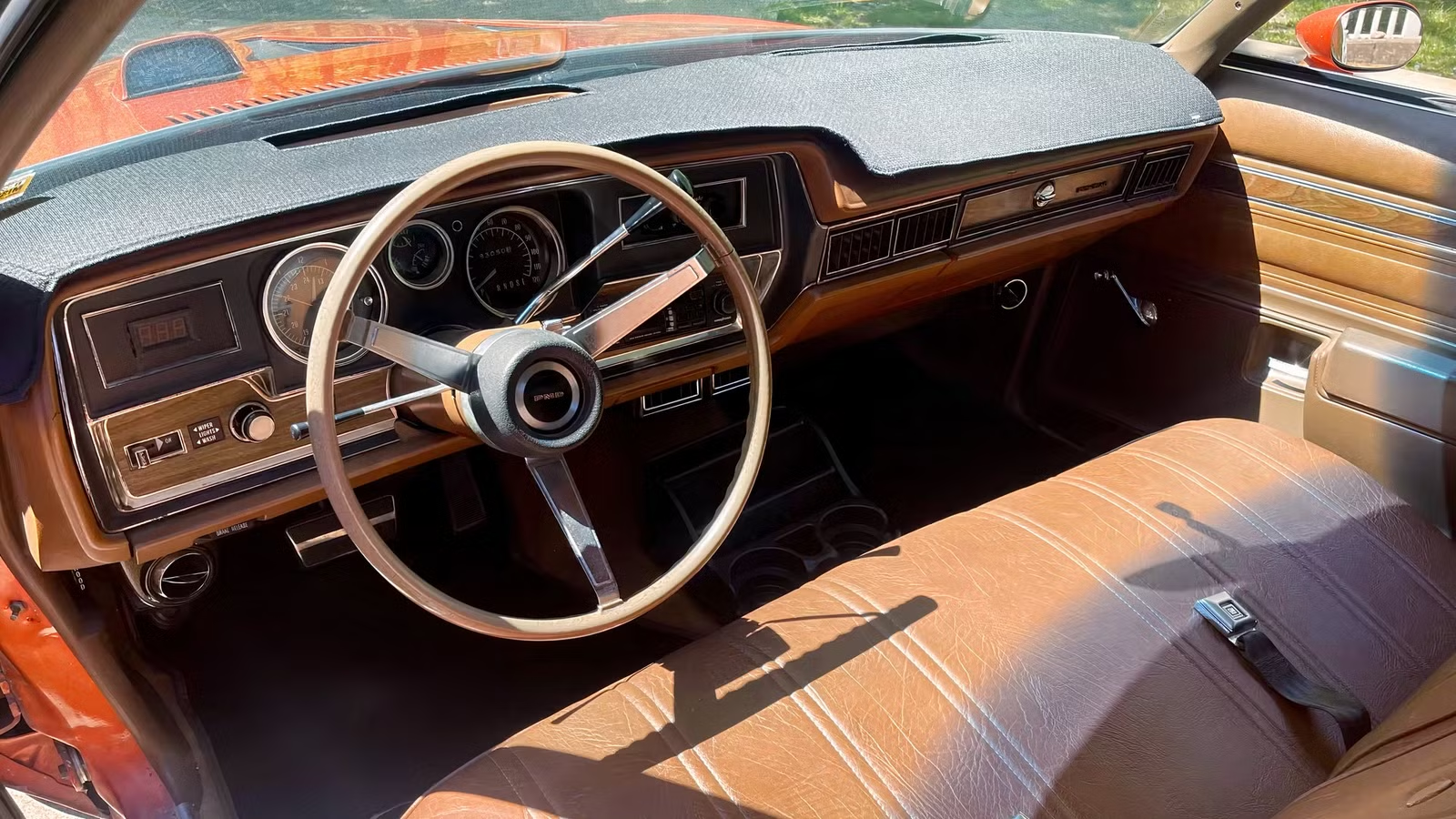
Few what-ifs in American muscle car history sting quite like this one. The early 1970s were supposed to be the end of the road for serious performance — insurance companies were piling on surcharges, federal emissions rules were tightening their grip, and the corporate suits who signed off on engine programs had grown deeply allergic to big-horsepower headlines. Yet Pontiac‘s engineers hadn’t gotten the memo. They had a race-bred 455 in development, and for a brief, tantalizing window, they came within reach of dropping it into a mid-size platform that would have been genuinely outrageous.

You might have guessed already that things didn’t go according to plan. But the program didn’t die because the engine was flawed or the chassis couldn’t cope. It stalled because the world around performance had shifted beneath Pontiac’s feet. What could have been the most ferocious mid-size of the decade became a ghost program — whispered about by enthusiasts whenever the Super Duty 455 comes up in conversation.
The 1973 Pontiac GTO SD-455 That Nearly Made It
The car at the center of this story was the 1973 Pontiac GTO. Pontiac explored installing the Super Duty 455 into the redesigned 1973 GTO, which by then had been reduced to an option package on the LeMans A-body. The badge still carried weight, but the platform had grown heavier and more comfort-focused. Slipping a reinforced 455 under that hood would have completely transformed the car’s personality overnight.

In 1973, the GTO returned to being an option package rather than a standalone model. It was available on the LeMans and LeMans Sport Coupe, marking a clear departure from the more distinct, earlier GTO identity. Standard power came from a 400 cubic-inch V8 rated at 230 horsepower, paired with a three-speed manual, four-speed manual, or three-speed automatic. Buyers could step up to a 455 cubic-inch V8 producing 250 horsepower, but only with the three-speed automatic. Total 1973 GTO production reached just 4,806 units, underscoring how far the nameplate had fallen from its late-1960s peak — and setting the stage for how radical an SD-455 version would have seemed.
It’s important to note that the 1973 LeMans GTO did offer a 455 cubic-inch V8, but it wasn’t the Super Duty version. The optional 455 was rated at 250 horsepower, and only 544 buyers checked that box. That option brought extra displacement, but it lacked the reinforced internals, race-bred hardware, and brute character of the SD-455. The Super Duty would’ve been an entirely different animal.
Think about it. Engineers already had the hardware, the Super Duty program was underway for the Firebird line, and the 455 in question was far from a standard emissions-era V8. Putting the Super Duty version in the mid-size would have made the 1973 GTO the most powerful intermediate muscle car on sale. In a year when competitors were dialing things back, Pontiac could’ve cranked the volume up so loud they broke the dial altogether.

Sadly, the idea never reached full production approval. The result was a legitimate internal program that simply stopped short of the showroom. In muscle car terms, that makes the 1973 GTO SD-455 one of the most tantalizing almost-cars of the era.
The Engine That Would Have Changed Everything

|
Engine |
Power |
Torque |
0-60 MPH |
|---|---|---|---|
|
7.5-liter V8 |
310 hp |
395 lb-ft |
5.8 seconds |
|
*Specifications shown for the 1973 Trans Am SD-455 |
|||
The Super Duty 455 was more than just another big-cube V8 with a catchy name. Pontiac engineered it with durability and real-world performance in mind at a time when most engines were being softened to satisfy new regulations. It was built to handle sustained stress and deliver genuine torque where it mattered most.
Officially rated at 310 net horsepower and 395 lb-ft of torque in 1973 specification, the SD-455 didn’t scream on paper. In practice, it carried a well-earned reputation for outperforming its conservative rating. The focus was on building an engine that could absorb repeated hard use without coming apart — and it was also, by any honest measure, ridiculously capable.

|
Model |
0-60 MPH |
1/4 Mile |
|
1973 Firebird SD-455 |
5.4 seconds |
13.54 seconds |
|
Chevelle SS 454 LS6 |
6.1 seconds |
13.44 seconds |
Hot Rod’s 1973 test showed a factory Trans Am with the Super Duty 455 V8 posting a 13.54-second quarter-mile time, just a tenth off the pace of Chevy’s most powerful muscle car ever — the 1970 Chevelle SS with the 454 LS6 V8, which ran 13.44 seconds.
Internally, the engine featured a reinforced block with thicker main webbing and four-bolt main caps. Pontiac equipped it with forged connecting rods and a strengthened rotating assembly designed to hold up under heavy loads. This was a bottom end built to survive — not just survive warranty claims, but survive enthusiastic driving.
Up top, round-port cylinder heads drawn from Pontiac’s performance development programs helped the engine breathe more efficiently than typical street setups of the era. The result was a 455 that felt robust, confident, and ready for more than casual cruising. In a mid-size GTO, that combination would have felt like a direct callback to the brand’s glory years.
Why GM Pulled The Plug

The big question, then: why cancel it? The early 1970s were simply not friendly to high-performance branding. Insurance surcharges for high-displacement muscle cars had become a serious deterrent — buyers who could afford the sticker price sometimes balked at what it cost to insure the thing. A mid-size equipped with a reinforced 455 would have drawn immediate attention from insurers already looking to penalize performance models.
Emissions regulations had also tightened in 1973 and beyond. Automakers were adjusting compression ratios, cam profiles, and overall tuning strategies to meet federal standards. Large-displacement engines required careful calibration to stay compliant. Even when technically feasible, they carried political and financial risk in the eyes of corporate leadership.
Complicating matters further, the SD-455 itself required additional calibration work before launch. Pontiac revised the cam profile and updated emissions hardware to satisfy regulatory expectations, which delayed production into mid-1973. Expanding that already sensitive program into a second body style would have increased certification exposure at a time when management preferred restraint over headlines.
Low Profile

Within General Motors, the Super Duty 455 program demanded extra engineering effort and specialized components. It was easier to justify that investment in a focused performance halo car like the Firebird than in a broader mid-size offering. Expanding the Super Duty’s reach to the GTO would have amplified scrutiny at a time when executives preferred to keep their heads down. In the end, caution prevailed. The GTO continued with its standard 400 cubic-inch V8 and the optional 250-horsepower 455, while the Super Duty 455 stayed confined to the Firebird line.
The Firebird Got The Super Duty Glory

Although the mid-size GTO never received the SD-455, the engine did make it to production in the Firebird Trans Am and Formula did. In those cars, it quickly and firmly established itself as one of the most respected engines of the early-1970s performance era.
And it was extraordinarily rare in its first year. Only 295 SD-455 cars left the factory in 1973, split between 252 Trans Ams and just 43 Formulas. The remaining 1,001 examples arrived in 1974. That limited production immediately cemented the engine’s exclusivity and helps explain why surviving examples command such strong attention today.
The Trans Am, in particular, became Pontiac’s final true performance halo car of the period. With the Super Duty 455 under its shaker hood, it carried the division’s reputation through a time when many competitors had retreated from serious muscle. The Formula offered the same core engine package in a slightly subtler wrapper.
What Could’ve Been

On the whole, what the passage of time has proven is that the engine was solid, and the hardware earned its legend. The only missing piece was the mid-size application that could have given the GTO one last defining moment.
In hindsight, the almost-built Super Duty GTO marks a genuine turning point. Pontiac’s engineers were prepared to deliver something outrageous — something unapologetically muscular in a cautious era. Corporate reality stepped in, and the opportunity vanished. For enthusiasts, the 1973 GTO SD-455 remains a tantalizingly frustrating reminder of how close Detroit came to one more rebellious swing before the muscle car era fully shifted into a new phase.
Pontiac Really Was Onto Something

If anyone still doubts how serious the Super Duty 455 was, the market has already settled that debate. A 1973 Pontiac Firebird Formula 455 in concours condition now sits at a whopping $154,000, with excellent examples at $126,000 and good-condition cars hovering near $98,000. For reference, a new Chevrolet Corvette ZR1 starts around $180,000. Make of that what you will.
The Trans Am Super Duty tells a similar story. It carries an average sale price of $94,000, with top sales reaching $156,000 and recent transactions landing as high as $140,000. Even the lowest recorded sales still come in at $39,000, which says plenty about the floor these cars have established.
Now imagine those same numbers attached to a 1973 GTO SD-455. A mid-size Super Duty with that engine pedigree and that backstory would likely sit in the same six-figure territory today, if not higher. Pontiac built the engine, and the buyers proved its value. The only thing missing, sadly, was the GTO that almost carried it.
Sources: HotRod, Hagerty, Classic, Hemmings.

Related posts





Latest Post


No Comments