
This 1200cc Cruiser Was A Factory Dragster Yamaha Sold To Anyone
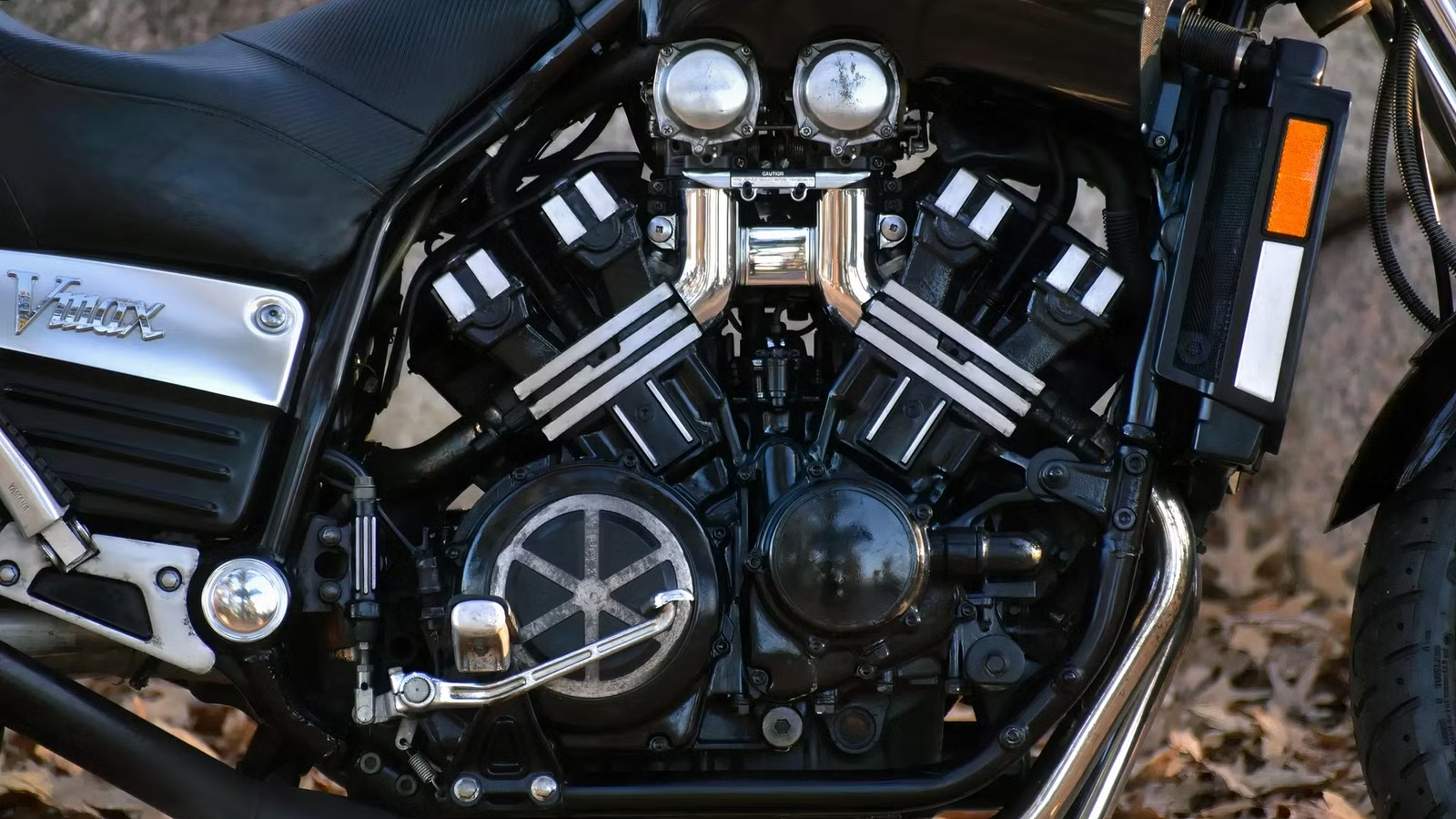
By the mid-1980s, insurers had motorcycle manufacturers backed into a corner. Every big-displacement performance bike got treated like a liability nobody wanted to underwrite, and the entire industry braced for a crackdown that threatened to strangle anything with real horsepower. Yamaha looked at that climate and built the opposite of caution. What rolled out of the factory wasn’t a concept or a limited homologation special reserved for racers with connections. It sat on a showroom floor, price tag attached, ready for anyone with questionable judgment and a loan approval.
The Era That Made It Possible
The mid-1980s were rough on anything built purely for speed. Insurance companies had started slapping punishing surcharges on high-performance motorcycles, the motorcycle press was writing eulogies for the entire performance segment, and manufacturers everywhere hedged their bets toward safer, tamer machines. Nobody particularly wanted their name attached to the bike that got blamed for the next round of rate hikes.
Yet 1985 still had one foot in the wild west. The crackdown was looming, not fully enforced, and a narrow window remained open for something extreme to slip through before regulators and actuaries caught up. Building a genuine outlier in that climate took either serious confidence or a total disregard for consequences. Whichever it was, Yamaha went for it anyway.
A Manufacturer Builds Something The Crackdown Should Have Killed


Instead of retreating, one manufacturer doubled down on a V4 engine architecture that had already proven itself in a full-dress touring bike, then set about making it considerably meaner. The touring version was built for comfort and highway miles, not straight-line violence, yet the hardware underneath had far more potential hiding inside it than anyone had previously bothered to unlock.
What emerged from that project wasn’t a subtle evolution. It was a purpose-built muscle machine wearing minimal bodywork, dripping with drag-strip attitude, and packing a mechanism nobody else in the segment had attempted. The engineering wasn’t aggressive purely for a marketing headline, either. It fundamentally reshaped how the engine delivered power once the revs climbed, and that alone should have been enough to spook Yamaha’s legal department.
The Yamaha V-Max Was A Dragster You Could Walk In And Buy

The bike in question is the Yamaha V-Max, and Yamaha built it around a 1,198cc, 70-degree V4 sharing its basic architecture with the Venture Royale touring bike, then reworked the cams, pistons, and valve sizing to chase raw output instead of comfort. Yamaha claimed 143 horsepower for the production machine, a figure some period sources rounded up to 145, and the factory backed that number with quarter-mile runs in the 10-second range that ordinary riders could replicate straight off the showroom floor. It launched in 1985 with a base price near $5,299, a genuinely steep number for the era, yet still cheaper than most of what could actually keep pace with it.
None of that would matter without a mechanism to make the claim believable, and that’s exactly where this bike separated itself from every other muscle cruiser fighting for the same customer. Nothing else on a dealership floor in 1985 combined that kind of factory-claimed output with genuine walk-in availability, no waiting list, no racing pedigree required, just a signature and financing.
How Paired Carburetors Actually Worked

Yamaha built the engine around a system it called V-Boost, and the mechanism itself was refreshingly mechanical rather than electronic. Below 6,000 rpm, each cylinder breathed through its own dedicated carburetor, keeping throttle response crisp and predictable at everyday speeds. Past that threshold, a set of butterfly valves inside the intake manifold opened and linked the carburetors in pairs, letting each cylinder draw fuel and air through two carburetors instead of one.
That paired carburetor setup, not any kind of cylinder pairing, is what unlocked the engine’s genuinely wild top end. Airflow effectively doubled right when the engine wanted it most, and the power delivery went from strong to alarming in the span of a few hundred rpm. Riders who kept the throttle pinned past that threshold often described the sensation as the bike waking up a second time mid-pull, which is about as accurate a description as any dyno chart could offer.
Numbers That Still Shock

Yamaha’s claimed 143 hp was always a crankshaft figure, and crankshaft numbers rarely survive contact with a dyno fully intact. Independent testing at the rear wheel landed closer to 120 hp once drivetrain losses were accounted for, a gap that period road testers noted openly rather than treating it as some kind of scandal. Even at that real-world number, the V-Max still made more usable power than nearly anything else parked in the same showroom.
That distinction matters, because plenty of retellings conflate the two figures, and getting it backwards undersells how genuinely potent this machine was in period testing. A 120 hp rear-wheel figure on a mid-1980s cruiser wasn’t just competitive. It was borderline unfair against bikes built to look tough rather than actually behave that way once the light turned green.
How Rivals From The Era Measured Up

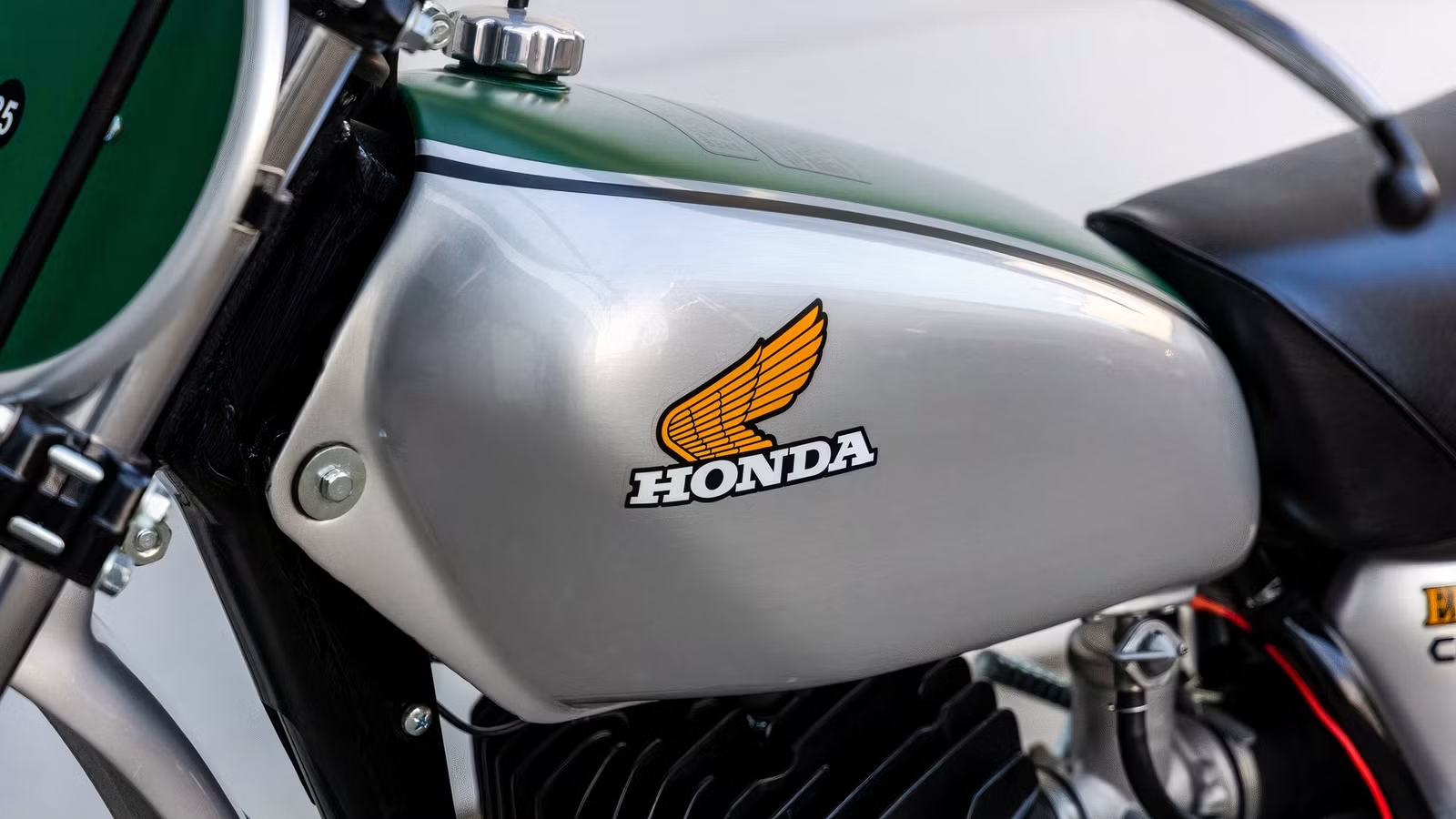
Honda’s V65 Magna, the bike most directly credited with starting the muscle-cruiser format, claimed 116 horsepower from its 1,098cc V4 but measured closer to 93 horsepower at the rear wheel in period testing. Suzuki’s Madura chased the same formula with a 1,165cc V4 claiming 117 horsepower, yet it dyno tested at roughly 89 horsepower, noticeably behind both of its Japanese rivals despite the larger displacement on paper.
Kawasaki took a different approach entirely, dressing an existing inline-four platform in drag-strip styling rather than engineering something purpose built. None of these machines matched the V-Max on rear-wheel output, and within a few years, most of them had quietly vanished from Yamaha’s own competitive set, unable to keep pace with a bike that never bothered pretending to be anything other than what it was.
Why Collectors Hunt The First Generation

Yamaha only built the V-Max in its original form for two years before pulling it from the 1987 lineup entirely, a decision driven by unsold 1986 inventory rather than any lack of demand for the bike itself. That gap makes 1985 and 1986 models genuinely distinct from everything that followed, since the bike returned for 1988 largely unchanged but carrying a full year’s absence that collectors still treat as a meaningful dividing line.
Later production years brought incremental updates rather than dramatic changes, from revised forks to a digital ignition system, but none of that erases the appeal of owning a bike from the two years when the V-Max first proved the concept could work at all. For collectors chasing the genuine article rather than a well-preserved later example, the 1985 to 1986 window remains the one that matters most, production gap and all.
Sources: Motorcycle Classics, Mecum, Bring a Trailer.

Related posts

Latest Post


No Comments