
Why Harley’s $6,000 Sprint Could Be Its Most Important Motorcycle In Decades
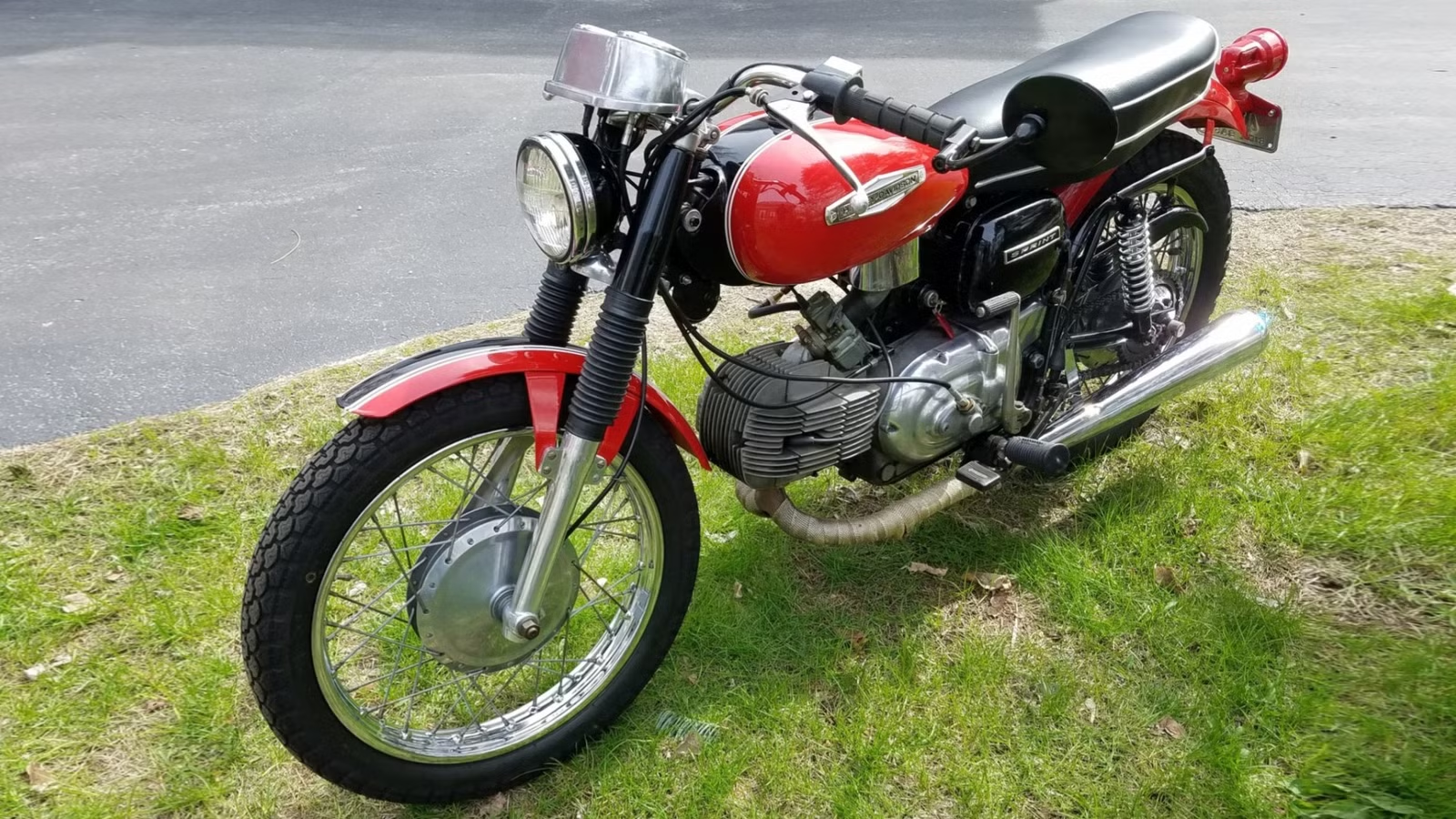
Harley-Davidson has introduced faster, more powerful, and far more expensive motorcycles. But none of them may prove as important to the company’s future as the forthcoming 440 cc model expected to sell for around $6,000. While its specifications won’t rival a Street Glide or Pan America, the new Sprint represents something Harley desperately needs: an affordable way to bring a new generation of riders into the brand.
Harley Finally Confirmed It Needs A More Affordable Motorcycle

Harley-Davidson doesn’t usually talk about motorcycles that haven’t been unveiled. That’s why CEO Artie Starrs’ recent comments to Reuters were so significant. In confirming that Harley is developing a new entry-level motorcycle expected to cost around $6,000, Starrs didn’t just preview another future model. He effectively confirmed that the company sees affordability as one of its biggest challenges.

Harley has confirmed the Sprint is coming, although the company has yet to fully reveal the motorcycle. The motorcycle is expected to target a price bracket Harley has largely ignored, while rivals like Honda, Kawasaki, Royal Enfield, and CFMOTO have steadily built loyal followings among first-time riders. At around $6,000, it would become the least expensive motorcycle in Harley’s lineup by a long shot and a dramatic departure for a brand whose heavyweight cruisers and touring bikes often cost three, four, or easily five times as much.
The Real Story Isn’t The Sprint

More revealing than the motorcycle itself, however, was Harley’s willingness to discuss it before its official debut. Manufacturers rarely acknowledge products this far in advance unless they have a strategic reason for doing so. In this case, the message was clear: Harley believes attracting younger and more price-conscious riders has become essential to its long-term growth.


That’s why the biggest story isn’t the Sprint’s engine, styling, or even its projected price tag. It’s Harley-Davidson publicly acknowledging that the company needs a more affordable motorcycle, and that may prove to be the most important announcement of all.
Harley Can’t Grow If New Riders Can’t Afford To Buy One

Harley-Davidson has loyal customers willing to spend $30,000 or more on a touring motorcycle. The bigger challenge is finding the riders who will eventually become those customers. Few people buy a Street Glide or Road Glide as their first motorcycle. Most riders start with something smaller, less intimidating, and, perhaps most importantly, more affordable. That’s where Harley has struggled in recent years.

While the Street 500 briefly gave Harley an affordable entry point, the company hasn’t had a traditional Harley that captures the spirit of the old “$4,995 Sportster” in decades. The result is that many first-time riders establish their brand loyalty somewhere else. By the time they’re ready to upgrade to a larger motorcycle, Harley isn’t simply trying to win a new customer; it’s trying to steal one away from a competitor.
The First Harley May Matter More Than The Next Harley

That’s why the Sprint isn’t really about selling thousands of inexpensive motorcycles. It’s about giving new riders a reason to begin their motorcycling journey with a Harley-Davidson instead of a competitor. Riders who enjoy their first ownership experience often stay with the same brand as they gain experience, move up in displacement, and eventually shop for larger, more capable motorcycles.
Harley isn’t trying to replace the Street Glide or Road Glide with a $6,000 motorcycle. It’s trying to create the next generation of riders who will someday buy them.
Every rider who starts on a Royal Enfield Hunter, Honda Rebel, or Kawasaki Eliminator is a rider Harley may never get back. But if the Sprint becomes someone’s first Harley instead of their first Honda, the company gains something far more valuable than a single sale; it gains the opportunity to build a customer for life.
The Sprint Fits Perfectly Into Harley’s Back To The Bricks Strategy

When Harley-Davidson introduced its Back to the Bricks strategy, the goal wasn’t simply to sell more motorcycles. The plan called for strengthening the dealer network, expanding rider training, increasing community events, and growing the number of people who choose Harley as their first motorcycle brand. Those initiatives all point toward the same objective: creating more lifelong Harley riders rather than relying on an aging customer base to keep buying premium touring bikes.

That’s where the Sprint begins to make sense. An affordable motorcycle isn’t separate from Harley’s strategy; it helps tie the entire plan together. New riders need an accessible way into the brand before they’ll sign up for rider training, attend dealership events, join local rides, or eventually trade up to larger models. Without an entry point, those efforts become much harder to translate into long-term customers.
Building Riders, Not Just Sales

Viewed through that lens, the Sprint becomes more than another addition to Harley’s lineup. It becomes the motorcycle that gives the rest of the Back to the Bricks strategy a chance to succeed. Every first-time buyer who starts on a Sprint represents an opportunity for Harley to build a relationship that could last for decades, rather than hoping to convince an experienced rider to switch brands later in life.

Harley has spent generations building some of motorcycling’s most desirable heavyweight cruisers and touring bikes. Back to the Bricks recognizes that the company also has to rebuild the first step of that journey. If Harley can give new riders a reason to choose the Bar and Shield from day one, the Sprint could become the foundation on which the rest of the company’s growth strategy is built.
What We Know About Harley’s New Sprint So Far

Harley-Davidson has revealed very little about the new Sprint beyond confirming that an affordable entry-level motorcycle is in development. That leaves plenty of room for speculation, but one thing seems unlikely: Harley won’t reinvent the wheel. The company already has a proven 440 cc platform thanks to its partnership with Hero MotoCorp and the existing X440, so developing an all-new motorcycle from scratch would add unnecessary cost, complexity, and time.

Instead, the most logical approach is to build on what already works. The X440 has already demonstrated that the platform can deliver user-friendly performance through its 27 horsepower and 28 pound-feet of torque, while also offering modern technology and at a cost that makes it attractive as the foundation for an entry-level motorcycle. Building the Sprint around that foundation would allow Harley to focus on styling, ergonomics, and brand identity rather than engineering an entirely new powertrain.
A Proven Formula For Global Motorcycles
There’s nothing unusual about that strategy, either. Motorcycle manufacturers routinely develop a platform for one market before expanding it into others. Rather than spending millions to engineer a completely new entry-level motorcycle, Harley already has a proven 440 cc foundation it can adapt for American riders while taking advantage of the engineering work that’s already been done.

That doesn’t mean the Sprint will simply be a U.S.-spec X440. Harley has every reason to give the motorcycle its own personality through distinctive styling, revised ergonomics, equipment changes, and tuning aimed at American riders. Until Harley officially unveils the Sprint, many details — including its final specifications, equipment, and pricing — remain unknown. Even so, the existing 440 cc platform provides a strong indication of where the project is headed. If Harley’s goal is to lower the barrier to entry without sacrificing profitability, building on proven engineering isn’t just the sensible choice, it’s the obvious one.
Why The Sprint Could Become Harley’s Most Important Motorcycle In Decades

The Sprint doesn’t have to become Harley-Davidson’s fastest, most powerful, or most technologically advanced motorcycle to become one of its most important. It probably won’t outsell the Street Glide or generate the excitement that surrounds a new CVO. Yet none of those things will determine whether it succeeds.

What makes the Sprint so important is what it represents. For years, Harley has watched many first-time riders begin their motorcycling journey with another brand because the company simply didn’t offer a compelling motorcycle at an approachable price. If the Sprint changes that, Harley won’t just gain another model in its lineup. It will regain something far more valuable: an entry point into the brand.
Harley Has Been Here Before

History suggests Harley understands the importance of that first step. The original Sprint helped introduce a generation of riders to the Bar and Shield during the 1960s, while the legendary “$4,995 Sportster” proved that affordability and Harley-Davidson didn’t have to be mutually exclusive. The modern Sprint has the opportunity to serve a similar purpose for today’s riders.

If the Sprint succeeds in bringing thousands of new riders into Harley dealerships, and eventually onto Street Glides, Road Glides, and other premium models, it may one day be remembered as one of the most important motorcycles the company ever built. Not because of its engine, its styling, or its specifications, but because it gave Harley-Davidson something it desperately needed: a new generation of riders.
Source: Reuters News, Harley-Davidson, Hero MotoCorp (Data is supported by experience as a certified motorcycle mechanic trained across the Big Four and Harley-Davidson, adding practical insight into industry trends, service intervals, ownership patterns, and long-term durability.)

Related posts

Latest Post


No Comments