
Toyota Hydrogen Combustion Hybrid Patent: What It Means
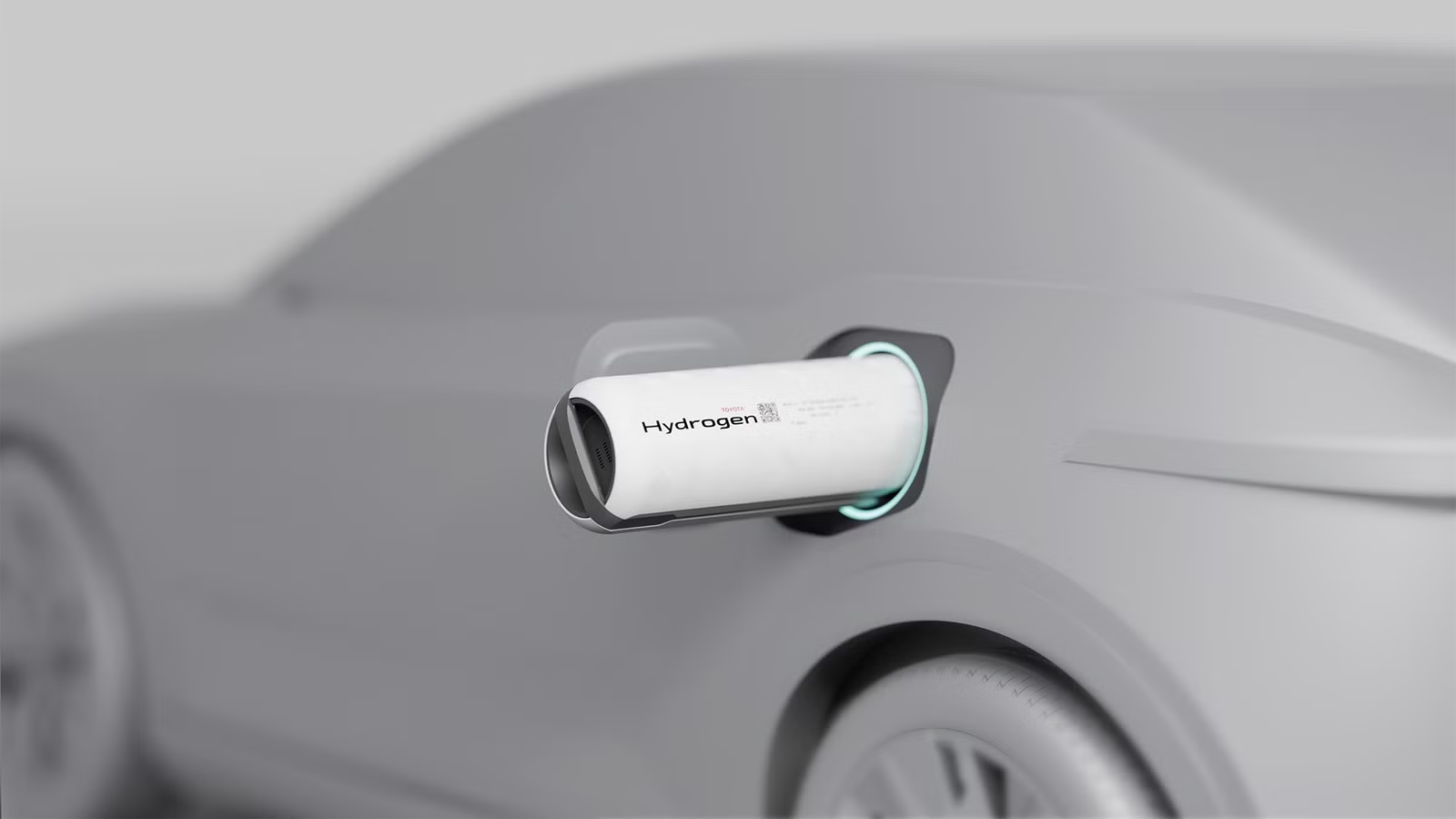
Toyota has filed a patent with the U.S. Patent and Trademark Office for a hydrogen-combustion hybrid powertrain that rethinks how a combustion engine fits into an electrified vehicle. Instead of burning gasoline, the setup runs a hydrogen engine — but not to drive the wheels. The hydrogen engine acts purely as a generator, feeding a battery and electric drive motor in a layout that mirrors what Nissan has already proven with its gasoline-burning e-Power system.

Uncovered this week by CarBuzz, the filing reveals a credible engineering path for keeping combustion character alive without the carbon footprint of fossil fuels. It also arrives at a significant moment: Toyota has separately confirmed a massive EREV rollout beginning in China in spring 2027, targeting 200,000 units that year alone. The hydrogen patent suggests the automaker is already thinking about what future flavors that generator-based architecture could run on.
How the Hydrogen EREV Architecture Actually Works
The setup Toyota has patented is a series hybrid — the same fundamental topology as Nissan’s e-Power. The combustion engine never connects mechanically to the driven wheels. Instead, it spins a generator, charges a battery, and that battery feeds a high-output electric motor that handles all the actual propulsion. Because the hydrogen engine is decoupled from the wheels entirely, it can be held at its most thermally efficient operating point regardless of what the driver is demanding at the pedal. The e-motor delivers the torque.

That architecture solves one of hydrogen combustion’s persistent problems. Hydrogen is not energy-dense enough to match gasoline in a direct-drive application — the power deficit is real, and it has historically made hydrogen engines feel underwhelming compared to equivalent displacement gasoline units. But when the hydrogen engine is only generating electricity, its output ceiling matters less. The electric motor compensates for whatever the combustion side can’t deliver, and the result is a powertrain where performance and efficiency aren’t fighting each other.
Burning hydrogen produces mostly water vapor, which is the clean-combustion headline. The caveat is that the high temperatures involved in hydrogen combustion can still generate nitrogen oxides — so it isn’t a zero-emissions proposition, but the carbon emissions are effectively eliminated.
The Packaging Fix That the Mirai Never Had

Toyota’s current hydrogen vehicle, the Mirai, mounts its fuel-cell tanks in a way that eats directly into trunk and cargo space — a compromise that has limited the car’s practicality since its launch. The new patent proposes a different layout: hydrogen tanks positioned under the floor, freeing up the cabin and cargo area. That’s the same approach BMW is taking on the next-generation iX5 Hydrogen SUV, which itself uses Toyota-developed fuel-cell technology.
The patent also details placing part of the battery pack inside the center tunnel, a packaging solution that keeps the overall footprint manageable. Because the hydrogen engine can top up the battery while the vehicle is running, the battery itself doesn’t need to be large. For reference, the third-generation e-Power system in the 2027 Nissan Rogue Hybrid uses a battery of just 1.67 kilowatt-hours — a fraction of what a full BEV requires. Toyota’s hydrogen EREV would operate on the same principle: the generator keeps the pack charged, so you’re not carrying hundreds of kilograms of cells to cover range.
What This Signals About Toyota’s Powertrain Roadmap

Toyota’s confirmed EREV push into China is the essential backdrop here. Production is scheduled to start in April 2027 at several hundred vehicles per month, scaling toward 400,000 units annually by 2028. Those vehicles will almost certainly run gasoline generators in their first iteration — but the generator-based EREV architecture is now an established pillar of Toyota’s electrification strategy, sitting alongside BEVs, PHEVs, conventional hybrids, and fuel-cell vehicles.
The hydrogen combustion patent fits neatly into that architecture as a future powertrain variant. Swap the gasoline generator for a hydrogen one, keep the rest of the system largely intact, and you have a vehicle that retains combustion character — the sound, the fueling ritual, the mechanical feel — while eliminating tailpipe carbon. For enthusiasts who find full EVs unsatisfying and fuel-cell vehicles too sterile, that’s a genuinely different proposition.
Patent filings don’t confirm production intent, and Toyota has not announced a hydrogen-combustion hybrid as a future model. Intellectual property protection is often the primary motivation for filing, and plenty of patents never reach a showroom. But the engineering logic in this one is sound, and it builds directly on technology Toyota already has in production.
The Infrastructure Problem Hasn’t Gone Away

The honest counterargument is the fueling network. Hydrogen infrastructure has been contracting, not expanding, as EV charging buildout accelerates. Some of the relatively few hydrogen stations that exist are already closing, and private passenger car use has never been the application where hydrogen economics make the most sense.
Where hydrogen combustion may find a more natural home is in motorsport or commercial trucking — applications where the duty cycle, the refueling logistics, and the performance demands align better with what the fuel actually offers. Gazoo Racing has already explored hydrogen combustion in motorsport contexts, and that’s arguably where the technology’s near-term case is strongest.
For now, the patent represents Toyota thinking several moves ahead on a powertrain architecture that’s flexible enough to accept multiple fuel types. Whether hydrogen infrastructure catches up enough to make a production version viable is a separate question — and one the market, not the engineering team, will ultimately answer.
What the filing makes clear is that Toyota isn’t treating EREV as a single-fuel concept. The generator slot in that architecture is, in principle, open. Hydrogen combustion is one candidate. Gearheads who’ve been waiting for a clean powertrain that still sounds and feels like something should be watching this space.

Related posts





Latest Post


No Comments