This Toyota Sports Car Loses Only 23% Of Its Value In Five Years
8 minutes reading
Sunday, 30 Aug 2026 14:01 0 95 autotech
The modern U.S. sports car market operates in a state of deliberate evolution. Enthusiast demand remains robust, driven by buyers seeking tactile, immersive driving experiences in an increasingly automated automotive landscape. Contemporary design direction emphasizes functional aerodynamics, sharp geometric proportions, and lighter composite structures that balance safety regulations with visual aggression.
These models are typically subject to steep depreciation rates, but there’s one defunct Japanese model line that holds an impressive amount of its value. This is despite it not having the most successful market run, which ultimately led to its global demise.
Toyota’s Gazoo Racing division operates on a simple guiding philosophy of using extreme motorsport conditions to build better road vehicles. Originally a grassroots internal project, the division grew into Toyota’s official global performance arm, uniting all racing efforts under one roof. This includes endurance championships and world rally events.
Instead of using performance badges as mere styling packages, Toyota designs GR vehicles with a track-first engineering mindset. The division subjects its prototypes to brutal endurance testing and competitive environments, utilizing the lessons learned on racetracks to refine chassis rigidity, suspension dynamics, and powertrain durability for everyday drivers. Engineers, master test drivers, and mechanics actively participate in racing series to gain hands-on insights that directly inform production.
A red and silver Toyota Supra in motionToyota
This approach balances analog driver engagement with high-level engineering. GR prioritizes mechanical feel, precise handling, and lightweight construction, ensuring that performance is deeply integrated into the structural DNA of the vehicle rather than added through superficial power figures alone. Through this philosophy, the GR division acts as an incubator for pure driving passion inside a brand historically known for mainstream practicality.
From an owner’s reputation standpoint, the 2026 Toyota GR Supra is held to a high standard, based on Edmunds consumer review results. The 2026 model year currently sits with a 4.7/5 rating, based on 21 reviews. Key strengths include its striking exterior design, poised handling, and reliability and manufacturing quality.
The Supra Represents A Strong Start For The GR Brand
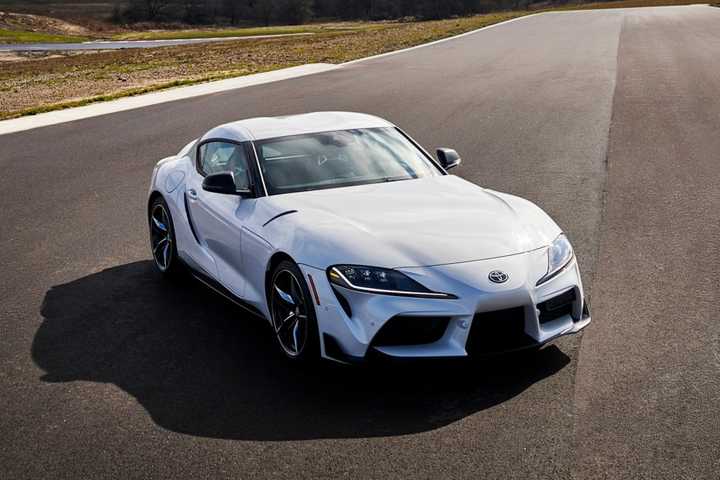
2026 Toyota GR Supra MkV Final Edition front driving shotToyota
The Toyota GR Supra rewrites the rules of performance car ownership, especially when looking at depreciation and value retention rates. Most sports coupes drop value immediately after leaving the showroom floor. Buyers treat them as emotional purchases rather than smart financial moves. The GR Supra breaks this pattern by pairing sports performance with retained value.
CarEdge data reveals a five-year depreciation rate of just 23 percent for the GR Supra. A typically equipped model retains a residual value near $45,667 after five years. Total ownership costs over this duration reach $48,547. That figure includes depreciation, fuel, financing, and an estimated $14,895 for insurance. The GR Supra acts as a blue-chip financial asset rather than a sports car that you have to spend large sums on to keep running.
This depreciation estimate places the GR Supra among the best vehicles in its class, easily outperforming the 35 percent average five-year depreciation rate across the wider Toyota lineup. Buyers preserve $45,667 of their initial expenditure, as the coupe loses just $13,687 from its average original selling price of $59,354. High retained value lowers the true cost of driving a high-performance vehicle. Combined with an estimated $1,814 in total maintenance and repair costs over that same five-year span, the GR Supra costs far less to keep on the road than typical sports coupes.
How To Keep The GR Supra In Good Shape
2026 Toyota GR Supra MkV Final Edition side shotToyota
Reliability is a noteworthy contributor to the Supra’s good value retention. Toyota maintains a manageable service structure for the GR Supra, requiring standard maintenance visits every 10,000 miles or 12 months under normal driving conditions. Minor services focus on synthetic oil and filter replacements, tire rotations, and multipoint checks, while major service milestones at 30,000 to 40,000 miles add brake fluid flushes, cabin filters, and spark plug replacements. Owners spend an average of roughly $363 annually on scheduled upkeep, with standard single oil changes costing around $150 to $275 depending on dealership labor rates.
Larger interval visits range between $700 and $1,100 as wear items require attention. To offset initial costs, Toyota includes its ToyotaCare program standard with every new purchase, covering factory-scheduled maintenance and 24-hour roadside assistance for the first two years or 25,000 miles. Factory coverage continues with a three-year and 36,000-mile basic bumper-to-bumper warranty alongside a five-year and 60,000-mile powertrain warranty that protects key mechanical engine and transmission components.
BMW’s Dependable Engines Keep The Supra Resilient
The engine bay of a Orange 2024 Toyota SupraBring A Trailer
The BMW B58 3.0-liter turbocharged inline-six engine enjoys a stellar reputation among owners and automotive journalists, frequently recognized as one of the most reliable performance engines of the modern era. Built around a rigid closed-deck aluminum block with forged internals, it easily handles substantial power while delivering excellent daily durability. Enthusiasts praise its smooth power delivery and high tuning potential. Common issues primarily revolve around plastic components aging under engine bay heat. Owners report coolant loss from brittle expansion tanks or lines, valve cover and oil filter housing gasket leaks, and occasional PCV valve diaphragm failures.
The B48 2.0-liter turbocharged inline-four engine shares the same modular design architecture and closed-deck construction as the B58, earning a similarly strong reputation for long-term dependability. It provides a vast reliability improvement over its N20 predecessor. Because it shares core hardware with the B58, it exhibits nearly identical common failure points. Plastic oil filter housings can crack and leak oil or coolant, heat management module seals degrade, and plastic cylinder head coolant lines become brittle over time. Both engines remain benchmark examples of modern German engineering when given routine maintenance.
The Various Outputs Of All Supra Models
2024 Toyota GR Supra 45th Anniversary Edition InteriorChris Chin | TopSpeed
The Toyota GR Supra offers two distinct engine configurations across its production run. The base 2.0-liter turbocharged four-cylinder engine delivers 255 horsepower and 295 pound-feet of torque. This smaller powerplant pushes the sports car from zero to 60 MPH in 5.0 seconds. The larger 3.0-liter turbocharged inline-six engine anchors the high-performance lineup. Initial 2020 models generate 335 hp and 365 lb-ft of torque. Toyota updates the six-cylinder output for 2021 and later years to 382 hp and 368 lb-ft of torque.
The automatic six-cylinder variant accelerates from zero to 60 MPH in 3.9 seconds. Versions featuring the six-speed manual transmission complete the zero-to-60 sprint in 4.2 seconds. The quarter-mile run requires approximately 12.2 to 12.4 seconds across variants. An electronic governor restricts the top speed to 155 MPH on every trim. Power flows exclusively to the rear wheels. Transmission options feature a ZF eight-speed automatic alongside a six-speed manual available exclusively for six-cylinder models. Twin-scroll turbocharging and direct fuel injection optimize throttle response across all operating ranges.
The Brilliance Of Its Balanced Suspension Configuration
2024 Toyota GR Supra 45th Anniversary Edition In MotionChris Chin | TopSpeed
The Toyota GR Supra sits on a double-joint spring-strut MacPherson front suspension paired with a five-link rear setup, featuring lightweight forged aluminum control arms to reduce unsprung weight. Higher tier 3.0-liter models come equipped with an Adaptive Variable Suspension system, which continuously adjusts damping force at all four corners based on real-time road inputs and selected drive modes. Stopping power relies on a high-performance braking system, with six-cylinder trims featuring four-piston Brembo fixed aluminum calipers squeezing 13.7-inch two-piece ventilated front discs, matched to single-piston floating calipers with 13.6-inch ventilated discs at the rear.
To transfer power to the pavement, Toyota wraps the GR Supra in staggered, vehicle-specific Michelin Pilot Super Sport tires. Base 2.0-liter variants feature 18-inch cast-aluminum wheels fitted with 255/40ZR18 front and 275/40ZR18 rear rubber. The 3.0-liter models upgrade to 19-inch forged-aluminum wheels wearing 255/35ZR19 front and 275/35ZR19 rear tires, optimizing lateral grip and dynamic stability across the chassis.
The Supra’s Unsuccessful Market Run
Toyota GR Supra MkV Final Edition CabinToyota
The commercial arc of the fifth-generation Toyota GR Supra concluded with a sharp contrast between market demand and production realities. Peak U.S. sales occurred early in the generation’s run, reaching 6,830 units in 2021 before volume dropped to roughly 2,600 to 2,900 units annually across subsequent model years. While low-volume sales alone put pressure on the platform, its ultimate demise stemmed from partner constraints rather than a lack of enthusiast interest.
Built alongside the BMW Z4 at the Magna Steyr assembly plant in Graz, Austria, the Supra was tied directly to the production life cycle of its joint-architecture twin. As global demand for two-door niche roadsters softened, maintaining assembly line operations became financially unviable for both manufacturers, leading to an official end of production in early 2026. Interestingly, news of the discontinuation triggered a final rush of buyer demand. U.S. deliveries surged over 70 percent in the first half of 2026 as enthusiasts rushed to secure remaining inventory before the model permanently exited dealer lots.














No Comments