
The Inline-Four Sport Bike That Feels Surprisingly Comfortable Every Day
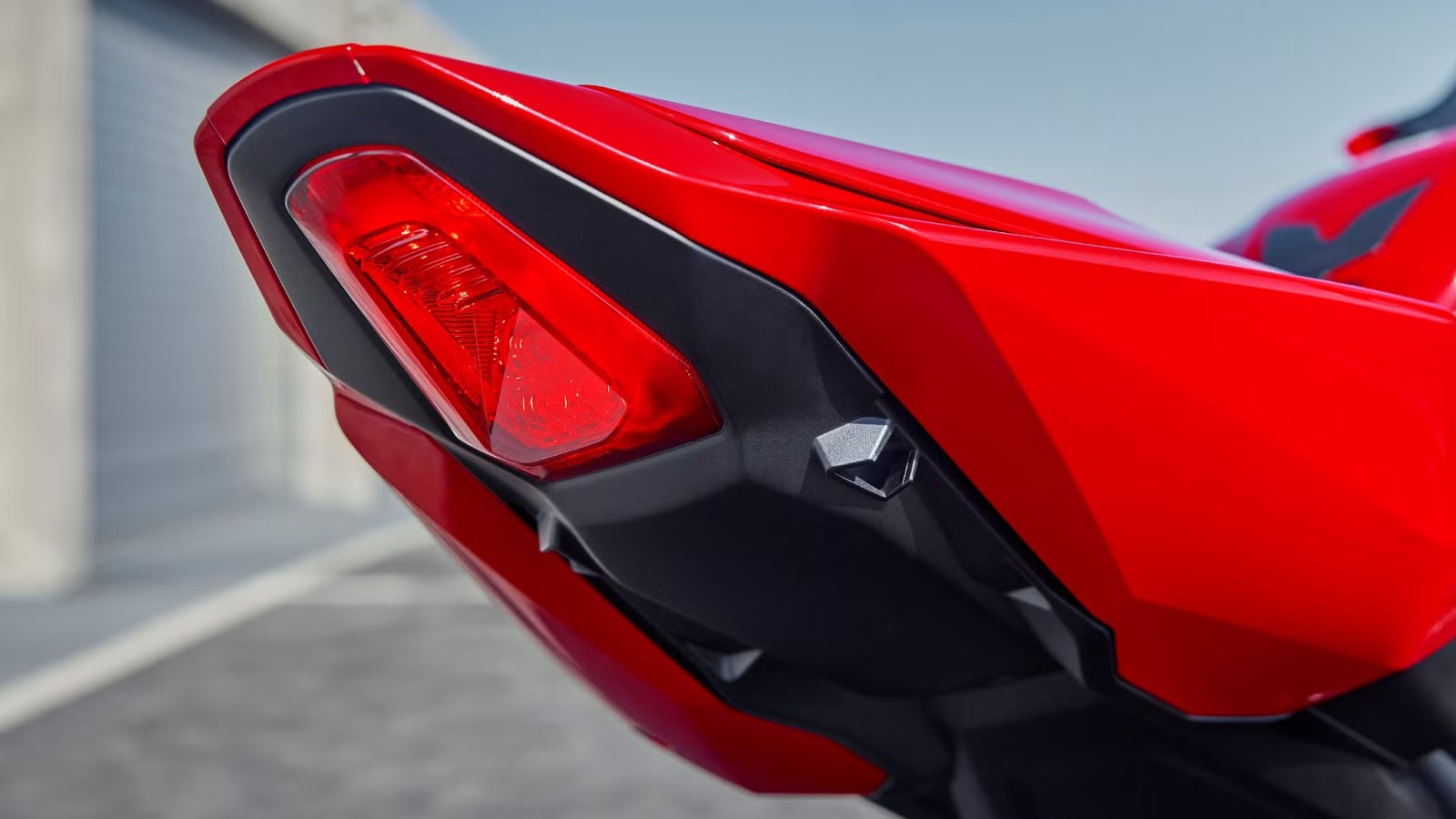
In an ideal world, an inline-four sports bike would be track-oriented with back-breaking ergonomics, homologation-spec components, and an unhealthy obsession with the racetrack. But we don’t live in an ideal world. Instead, we crave versatility and want the best of all worlds in one machine. That inevitably births some segment-defining machines, and we’re talking about one such example here. It blends the smoothness of an inline-four with naked bike-like ergonomics and effortless clutch tech. The result is an inline-four sport bike that shines in everyday riding.
The Honda CBR650R Is The Ideal Everyday Inline-Four Sports Bike

We’re talking about the CBR650R E-Clutch. This is essentially an everyday sports bike with an inline-four powerhouse in a sea of rivals using parallel-twins and inline-triples. What makes it suitable for such duties, you ask? Well, it’s a combination of an excellent platform proven over the years, along with new technologies introduced to make life easier for the rider in regular riding. At the same time, Honda has put a conscious effort into making the inline-four engine suited for such riding applications. Here’s a lowdown on the details.
The E-Clutch Is The Protagonist For Everyday Comfort

If you ride your sports bike every day, the clutch is probably your biggest foe. Most modern-day machines omit that by throwing in a quickshifter and blipper, but they usually don’t work at crawling speeds. Honda’s CBR650R has a cunning solution for that: the E-Clutch. This uses electronic actuators for the clutch to enable clutchless upshifts and downshifts, while also enabling you to roll off to and from a stop without using the physical lever.
The result is a really practical sports bike for regular riding. And when you encounter your nearby twisties, you can simply use the physical lever to take control should you want that. Honda explains, “In situations where the driving force changes, such as starting, shifting and stopping, electronic control technology provides instantaneous, fine-tuned optimum clutch control, enabling smooth starting/shifting/stopping without the need for the rider to operate the clutch lever.”
The Four-Cylinder Engine Is Tuned For Daily Riding, Too


While at it, the inline-four’s tune will make your life better. This isn’t a screamer in the traditional sense and spreads the horsepower in the mid part of the rev range. The result is a tractable and smooth power delivery that doesn’t require chasing the redline. As for numbers, the 649cc powerhouse is good for 94 horsepower and 46.5 pound-feet, with a top speed of 155 miles per hour should you keep it pinned.
Simple Underpinnings Join Hands With Non-Committed Ergonomics

Similar to the engine, the CBR650R isn’t committed in terms of underpinnings or ergonomics. The chassis uses steel for construction, joined by Showa separate-function forks up top and a Showa monoshock at the back. Only the rear is adjustable. Elsewhere, 17-inch cast alloy wheels house dual 310 mm rotors and the rear has a 240 mm disc. Simple Nissin calipers bite all three.
A special shoutout goes to the ergonomics. Honda has designed the riding triangle to be relaxed by sports bike standards, with the clip-ons being slightly high and footpegs low. The saddle height is also very accessible at under 32 inches. This is still capable of doing some solid lap times around a track, but the CBR600RR is more suited for that. After all, you’ll have to muscle around 466 pounds of weight in corners. Quite high by middleweight sports bike standards.
All The Necessary Features Are Present

Once aboard, the cockpit follows the overall theme. A TFT instrument cluster is present as the centerpiece, giving you all the necessary information, a few display modes, and smartphone connectivity as standard. This is also the gateway for adjusting electronic aids like traction control, dual-channel ABS, and the E-clutch we mentioned above. These are all basic without any six-axis IMU help.
The Rivals Can’t Match The CBR650R’s Versatility


All those things help the CBR650R offer a package its rivals can’t match. The closest rival is the Triumph Daytona 660, promising similar performance and ergonomics. But it misses out on two key things: the E-Clutch and the buttery inline-four experience. So you’ll get more vibrations here, while the clutch action might become troublesome in traffic.
Other than this, you’re only left with parallel-twin bikes that are truly suitable for everyday riding but lack in multiple areas. For instance, the Kawasaki Ninja 650 comes close to the CBR’s comfort, but it has 30-odd HP less and is essentially the same bike you got over a decade ago. From the Suzuki camp, the GSX-8R bridges the performance gap with its 83-HP parallel-twin engine and offers excellent comfort. But it is still 10 HP short, and there’s no E-Clutch.
A Recent Price Cut Sweetens The Deal For The CBR

For the final nail in the coffin (of its rivals), the CBR650R has become cheaper in 2026. The price drops from $9,899 to $9,199, making it more competitively priced than ever before. That makes it the cheapest inline-four sport bike money can buy, while also being cheaper than its triple-cylinder arch-rival from Britain. So you’re getting a thoroughly capable machine at a shockingly low MSRP.
Source: Honda Powersports

Related posts

Latest Post


No Comments