
Honda’s Flying Bottle Cap Recall Is Back, And This Time The Replacement Part Was Defective Too
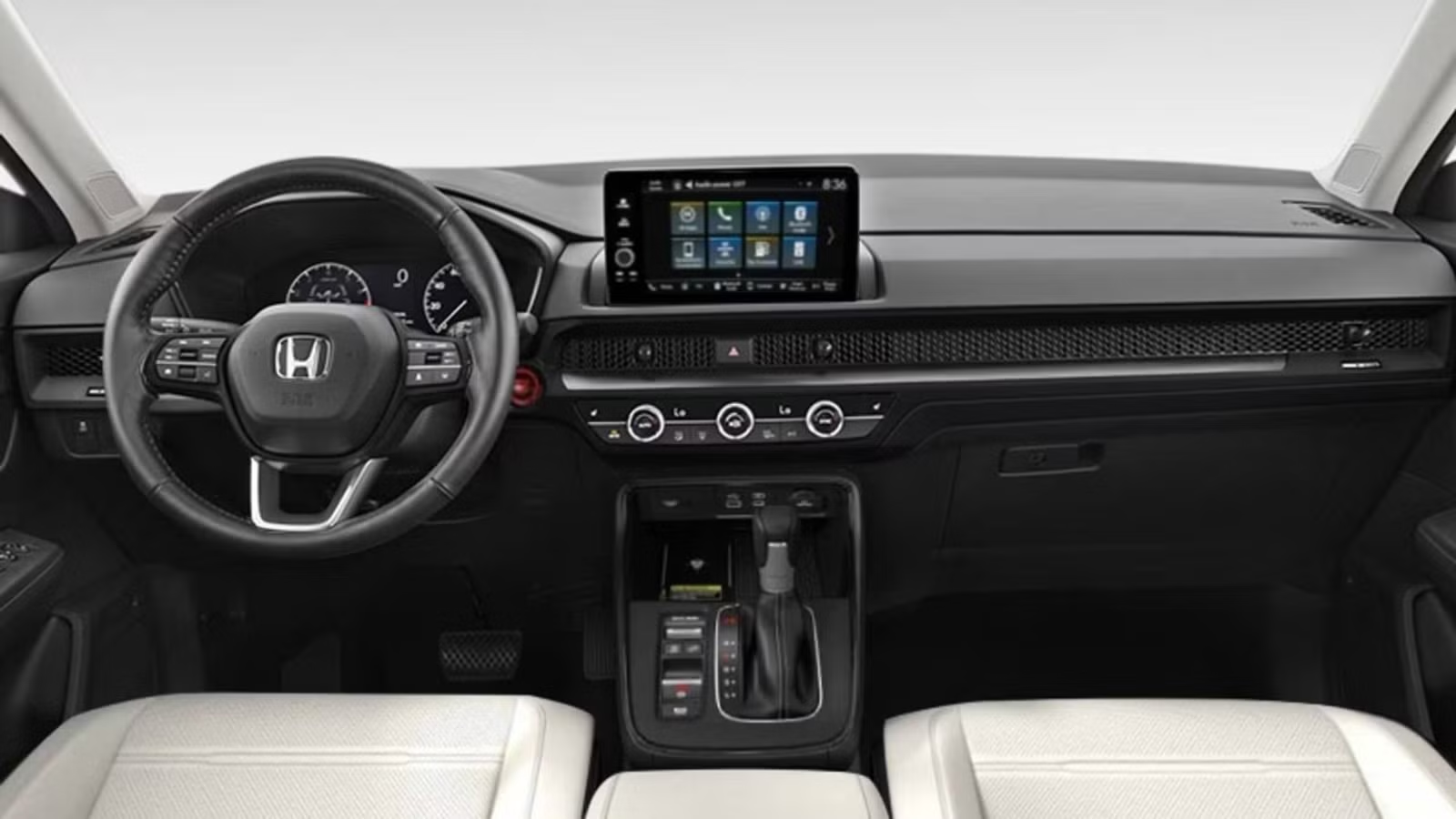
Honda is sending thousands of Accord and CR-V owners back to dealerships for a recall fix that was supposed to be completed months ago. The automaker filed a new recall on October 8 covering 4,804 vehicles previously repaired under a June 2026 campaign involving tire-repair kits whose bottle caps could detach under pressure. Some owners received the same defective parts again.

Honda says supplier TEK Corporation failed to separate faulty bottles from corrected replacements, allowing defective components to be shipped as fixes. Affected owners will receive notification letters starting November 16, with dealers replacing the faulty parts free of charge.
What Happened And Who’s Affected
The original June 2026 recall covered more than a million Accords and CR-Vs in the U.S., plus 118,000 vehicles in Canada. The defect involves the tire-repair kit’s nozzle and one-way valve. If improperly connected to a tire, pressure can build inside the sealant bottle. Should the relief valve fail, the bottle cap could detach forcefully and injure someone nearby.

The new recall, filed under NHTSA campaign number 26V663, affects 4,804 previously repaired vehicles: 2,745 CR-V Hybrids, 2,058 Accord Hybrids, and one 2025 CR-V Fuel Cell EV. Affected model years include 2023–2026 Accord and CR-V Hybrids and 2025–2026 CR-V Fuel Cell EVs.
Why The Fix Failed The First Time

According to Honda’s recall filing, TEK Corporation lacked adequate controls for separating defective nozzles from corrected replacements. Old and new components became mixed in its warehouse, allowing faulty parts to reach dealerships.
A Honda dealership discovered the problem on July 3, prompting Honda and TEK to investigate which vehicles received incorrect replacements.
The latest replacement nozzle eliminates the one-way valve entirely, preventing the pressure buildup behind the original defect. Dealers were notified around October 9, while owner notifications begin November 16. Affected VINs become searchable through Honda’s and NHTSA’s recall lookup tools starting October 17.
A Repeat Recall Is A Bigger Problem Than The Original Defect

While the original defect involved an unusual failure risk, sending defective components back to owners after an attempted repair raises broader questions about supplier quality control.
No injuries have been reported under either campaign. However, Honda estimates approximately 1% of the affected vehicles contain the defect, meaning some owners who believed their vehicles were repaired could remain exposed to the same risk.
Until the issue is resolved, owners using these tire-repair kits should point the sealant bottle away from their bodies when connecting the nozzle.
Owners of affected Accord Hybrids, CR-V Hybrids, and CR-V Fuel Cell EVs who previously received recall repairs should check their VIN through Honda’s or NHTSA’s recall lookup tools rather than assume the original repair was successful.

Related posts




Latest Post


No Comments