
The Worst Corvette Ever Made Makes Us Appreciate the ZR1-X
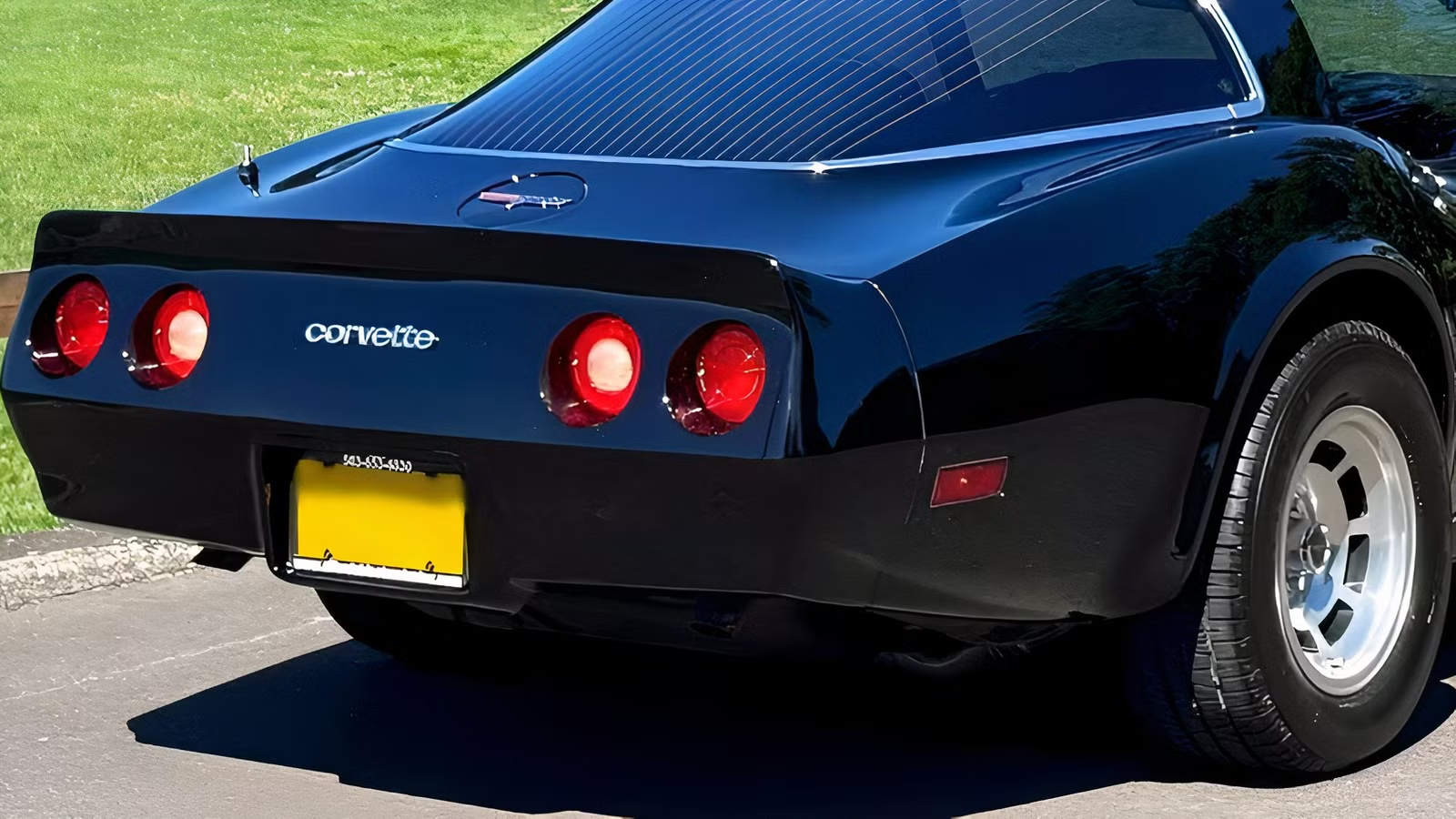
Today, the mid-engine C8 Chevy Corvette is the bar-none cost-to-performance king of the world. When you lay out the MSRP against the speed and power each trim carries from the base Stingray to the ZR1-X, what you get for the money isn’t matched by anything in the world. Well, 46 years ago, the opposite was true. You paid a lot of money for a car that was outclassed by imports at a fraction of the price, all while the rest of the auto industry laughed at it.
The C3 Corvette: Kneecapped by Federal Regulations
If you want proof that regulators didn’t give a flying you-know-what about whether the cars coming out of Detroit had any street appeal in the late ’70s and early ’80s, look no further than the character arc the C3 Corvette went through in its tumultuous life. At the start back in 1968, it launched as a fire-breathing monster packing huge 427-cubic-inch big-block V8s and looks that could make grown men start swooning. By the end of the 1970s, the new restrictions had choked the life out of America’s sports car, transforming it into a heavy, anemic cruiser that was a shell of its former self.
The C3’s historic downward spiral started in 1970, the year the 427 V8 was shown the door. By 1974, the federal mandate for 5-mph impact bumpers killed the iconic chrome nose for the sake of making it marginally safer. Soon after, the switch to unleaded fuel and the addition of catalytic converters strangled engine output, and the implementation of net horsepower over gross power only made the numbers look even weaker. Before long, a global oil crisis that had absolutely nothing to do with engineering at all forced automakers to prioritize fuel economy over raw speed.

For some context, a base 1968 Corvette came standard with a 327-cubic-inch V8 pushing 300 gross horsepower, and could easily be optioned well past the 400-horsepower mark. Fast forward to the dawn of the 1980s, and you’d be lucky if a ‘Vette managed even half of that. Well, in one state in particular, the problem was even worse than that.

California: The Nanny State Castrates the Corvette

By 1980, the situation reached rock bottom for buyers living under the Golden State’s notoriously strict environmental laws. In the birthplace of CARB, the epicenter of the environmentalist movement in the United States and of ruthless environmental regulators, America’s premier sports car was stripped of its dignity just so it wouldn’t be ripped from dealerships and crushed.
Here, and only in California, the Corvette’s already anemic 350-cubic-inch L48 and L82 V8s were deemed too harmful to the state’s smog emissions and therefore illegal to sell. Left scrambling for a compliant replacement, engineers had to completely abandon their legendary performance powerplants for an outsourced commuter engine. The engine in question? That’d be the 305-cubic-inch LG4 V8, the same found in mundane fare like the Chevy Monte Carlo and Caprice, the Pontiac Parisienne and Bonneville, plus the Oldsmobile Cutlass Supreme and the second-generation Buick Regal.
In its Corvette outfit, the LG4 sported a restrictive factory exhaust, low compression, and early computer-controlled carburetor tech that allegedly bridged the gap between carburetion and fuel injection. In the end, it did neither particularly well. Looking back, it feels like California would’ve gladly made GM shove a V6 or a four-cylinder under a Corvette’s hood if regulators thought they could get away with it, or even fit it with a pair of bicycle pedals. That becomes blatantly obvious when you realize how much power it made.
1980 California-Spec C3: An Abomination, Not a Sports Car

In a move that would only make a CARB executive happy, Chevrolet handed California buyers a $50 credit on the window sticker of the 1980 “Cali special” Corvette. Effectively, it was an apology for having to kneel to the state’s draconian emissions laws, lest they be banned from selling Corvettes there at all. This perfect storm of regulatory tragedy yielded a pathetic 180 horsepower, and the engine was exclusively bolted to a sluggish three-speed automatic transmission.
The resulting performance was downright embarrassing, yielding a zero-to-60 time of roughly nine and a half seconds that allowed average family station wagons and imported economy cars to beat America’s sports car off the line. For some context, a well-driven Datsun 280ZX with a 2.8-liter straight-six was almost half a second faster to 60 with a five-speed manual gearbox. Other cars that could keep up included the rotary-powered Mazda RX-7 and even the four-cylinder Porsche 924, mostly because both were considerably lighter. In every way imaginable, the ‘Cali special 1980 Corvette was the absolute lowest point in the car’s nearly 75-year history.It was a humiliation ritual designed to show who the boss really was at California’s sports car dealerships, and a signifier that American OEMs didn’t have the slightest clue how to make power while satisfying the most basic emissions control laws. In the end, Chevy wound up selling just over 3,200 of these California-spec cars through its dealership network in the state. Even then, it’s hard to imagine customers not deleting EGR hardware and the thin-walled exhaust manifolds, throwing on a mechanical four-barrel carb with aluminum heads, long-tube headers, and a true dual exhaust to undo everything California forced upon America’s sports car. If we had to guess, many buyers duly did so.
45-Plus Years of Perspective

Looking back at this smog-choked relic makes the sheer force of the upcoming C8 ZR1-X feel like a miracle. Today’s automotive engineers face exhaust emissions restrictions that would’ve made a 1980s CARB board of directors feel all warm and fuzzy inside, and yet a ZR1-X makes nearly seven times the power of that 1980 “Cali special.”
TheZR1-X’s 186-horsepower electric front axle alone makes more power. If GM were so inclined to remove the electronic governor, a ZR1-X would probably beat a C3 305 on electric power alone.
Source: Chevrolet, Mecum Auctions, Auto Hunter Auctions

Related posts





Latest Post


No Comments