
The Fastest Used Sports Cars That Are Still Affordable In 2025
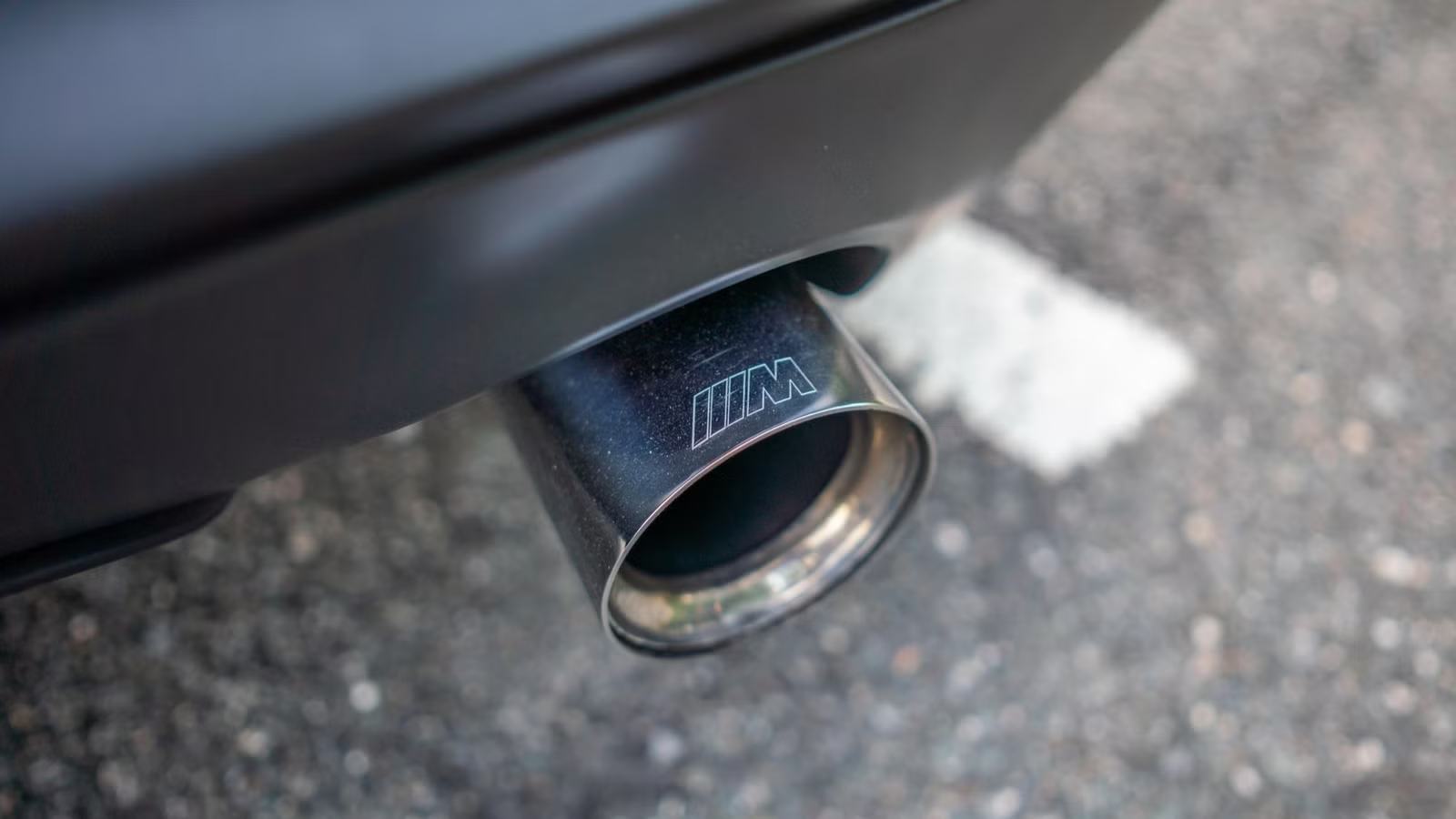
Used sports car prices have never been more brutal. What once counted as an attainable weekend warrior has quietly crept into exotic territory, and the trend shows no sign of reversing. The E46 BMW M3 is a perfect example: a car that enthusiasts once scooped up in solid shape for under $20,000 now trades in the mid-$30,000 range for a clean manual example, according to Classic.com. The market has moved, and it has moved fast.

But affordable speed isn’t dead — you just have to know where to look. We set out to find performance cars that deliver serious thrills for less than $30,000, with a minimum zero-to-60 mph target of 5.0 seconds. With those ground rules in place, here’s what you could be driving. A few of the picks might genuinely surprise you.
2014 Jaguar F-Type (V6)
Average Market Value: $29,814
|
Engine |
 55 autotech Horsepower |
Torque |
0-60 MPH |
|---|---|---|---|
|
3.0-liter supercharged V-6 |
340 HP |
332 LB-FT |
5.0 seconds |
The Jaguar F-Type is already a sports car that most enthusiasts forgot existed. We’d argue they should remember. For the 2014 model year, the base F-Type came equipped with a 3.0-liter supercharged V6 making 340 horsepower and 332 lb-ft of torque. Even in this spec, 0–60 mph times came in right at 5.0 seconds.
The 2014 base model is the only F-Type you can currently get for an average of under $30,000, but if you’re willing to spend a bit more, the V6 “S” model boosts power to 380 horsepower, giving you a welcome dose of extra performance. The only transmission option available is an eight-speed automatic, but at under $30,000, this F-Type is still a steal.
2008 BMW Z4 M Roadster
Average Market Value: $25,825

|
Engine |
Horsepower |
Torque |
0-60 MPH |
|---|---|---|---|
|
3.2-liter naturally aspirated straight-six |
330 HP |
262 LB-FT |
4.9 seconds |
The BMW Z4 never quite lived up to the roadster fame that a car like the Miata did, but the Z4 has its own compelling case to make. For starters, the Miata has only ever come from the factory with a four-cylinder. In the Z4, a straight-six was always available. And unlike the ultra-rare, high-performance Mazdaspeed Miatas, the Z4 consistently received the full M-Division treatment, with examples that are far easier to find on the used market.
Our choice is the 2008 Z4 M Roadster. BMW fitted a 3.2-liter naturally aspirated straight-six producing 330 horsepower and 262 pound-feet of torque, paired with a six-speed manual. Though they might not be quite as “pure” as the Mazda, the Z4 M delivers all the sweet sounds and drop-top speed you could ask for. In a 0–60 mph run, the Z4 M crosses the line in just 4.9 seconds.
2005 Chevrolet Corvette
Average Market Value: $25,367

|
Engine |
Horsepower |
Torque |
0-60 MPH |
|---|---|---|---|
|
6.0-liter V8 |
400 HP |
400 LB-FT |
4.2 seconds |
Forget about the Z06s and ZR1s for a minute, and let’s appreciate the base model C6 Corvette. For this sixth-generation car, the entry-level option on the spec sheet was already wildly powerful. The base 6.0-liter V8 produced 400 horsepower and 400 lb-ft of torque, and could be had with a six-speed manual or four-speed automatic.
And like all of the cars on this list, it wasn’t just a one-trick pony. Since the 1980s, Corvettes have been some of the best-handling sports cars on Earth, and the C6 was no exception. In skidpad tests, the Corvette could hold 0.98 G around the corners, besting the then-new Porsche 911 Turbo S Cabriolet by 0.04 G. In a 0–60 mph run, the Corvette tied the twin-turbo V12-powered Mercedes-Benz SL65 AMG with a 4.2-second sprint, all while costing roughly $140,000 less.
2003 Mercedes-Benz SL55 AMG
Average Market Value: $24,522

|
Engine |
Horsepower |
Torque |
0-60 MPH |
|---|---|---|---|
|
5.4-liter V8 |
493 HP |
516 LB-FT |
4.5 seconds |
Speaking of the Mercedes-Benz SL, our next pick is the slightly less potent sibling of the SL65 — the SL55 AMG. AMG took the basic 5.0-liter V8 from the SL500 and worked their magic on it: the displacement was bored out to 5.4 liters, fitted with double valve springs, reprofiled cams, a larger intake, and a freer-flowing exhaust. Oh, and they supercharged it.
The result was 493 horsepower and 516 pound-feet of torque, allowing the big Benz to sprint from 0–60 mph in a brisk 4.5 seconds. As with most Mercedes of the era, the only transmission available was an automatic — a five-speed unit here. Regardless, at an average market value of $24,522, the SL55 AMG remains a compelling horsepower-per-dollar proposition.
2016 BMW M235i
Average Market Value: $22,715

|
Engine |
Horsepower |
Torque |
0-60 MPH |
|---|---|---|---|
|
3.0-liter turbocharged inline-six |
330 HP |
320 LB-FT |
4.4 seconds |
As we noted with the Corvette, not every great sports car wears the top-trim badge. The same logic applies to the F22 BMW 2 Series. While the average BMW M2 from this generation commands around $40,000, the sportier lower-trim 2 Series models represent outstanding value. For this pick, we’ve chosen the 2016 M235i.
Under the hood sits a 3.0-liter turbocharged inline-six making 330 horsepower and 320 lb-ft of torque, with your choice of a six-speed manual or eight-speed automatic transmission. Because it carries the M Performance package, you also get M-tuned suspension, interior upgrades, and a sport exhaust option — all combining for a 0–60 mph time of just 4.4 seconds. At an average of $22,715, it’s one of the strongest value propositions on this entire list.
Porsche Cayman S (987.1)
Average Market Value: $22,673

|
Engine |
Horsepower |
Torque |
0-60 MPH |
|---|---|---|---|
|
3.4-liter flat-six |
295 HP |
251 LB-FT |
5.0 seconds |
The Porsche Cayman S still meets our performance threshold, but if you prize driving feel over outright power, this one is hard to beat. The 987.1 Cayman is the first generation of the Cayman nameplate, and while it shared its platform with the convertible Boxster, it brought meaningful differences of its own. Suspension components were stiffer, and the fixed hardtop roof shifted the weight distribution favorably.
There are many things we love about the Porsche Cayman, but what you really need to know is that the Cayman S is a near-perfect fast and affordable sports car. We’ve gone with the PDK automatic here because manual examples typically exceed $30,000 on average — and the automatic still delivers a wonderful experience. With its 3.4-liter flat-six producing 295 horsepower and 251 lb-ft of torque, the Cayman S reaches 60 mph in exactly 5.0 seconds.
Pontiac GTO (5th Gen)
Average Market Value: $22,027

|
Engine |
Horsepower |
Torque |
0-60 MPH |
|---|---|---|---|
|
5.7 or 6.0-liter V8 |
355/400 HP |
365/400 LB-FT |
5.3/4.7 seconds |
The fifth-generation GTO was the last true performance hurrah for the Pontiac brand — and what a send-off it was. The subtly styled GTO was available with either a 5.7 or 6.0-liter V8, making 355 horsepower and 365 pound-feet, and 400 horsepower and 400 pound-feet, respectively. Both engines could be paired with either a six-speed manual or a four-speed automatic transmission.
Even though these cars have climbed in value in recent years, they remain an underrated pick for most buyers, and average prices are still within reach for muscle car enthusiasts. Performance does vary by engine: the 6.0-liter hits 60 mph in 4.7 seconds consistently, while the 5.7-powered GTOs typically land in the 5.0–5.3-second range. Both technically qualify, but the 6.0 is the one to seek out if straight-line performance is the priority.
2001 Ford Mustang SVT Cobra
Average Market Value: $18,213

|
Engine |
Horsepower |
Torque |
0-60 MPH |
|---|---|---|---|
|
4.6-liter V8 |
320 HP |
317 LB-FT |
4.8 seconds |
Before “Ford Racing” became the high-performance division for Ford, it was called Special Vehicle Teams, or SVT. That team created one of the coolest Mustangs ever built: the SVT Cobra. The mid-cycle refresh of the SN95 Mustang was known as the New Edge, and it’s this specific body style we’ve chosen for the list.
The 2001 SVT Cobra sported a 4.6-liter V8 producing a solid 320 horsepower and 317 pound-feet of torque. It’s worth noting this is not the supercharged “Terminator” Cobra from 2003 and 2004 — those typically trade above $30,000 on average. But the 2001 SVT Cobra’s 4.6-liter does its job admirably, dispatching 0–60 mph in a quick 4.8 seconds.
2014 Audi S5
Average Market Value: $18,083

|
Engine |
Horsepower |
Torque |
0-60 MPH |
|---|---|---|---|
|
3.0-liter supercharged V6 |
333 HP |
325 LB-FT |
4.6 seconds |
Shifting direction entirely, we arrive at our second-to-last pick: the 2014 Audi S5. Up until 2012, the S5 carried a 4.2-liter V8, but we’ve chosen the 2014 model with the 3.0-liter supercharged V6. Why? Even though the 354-horsepower V8 was a sonorous treat, the V6 does everything the V8 can — just more efficiently. Despite making less power at 333 horsepower and 325 lb-ft of torque, the V6 is actually quicker in a straight line, reaching 60 mph in 4.6 seconds versus the V8’s 4.9-second run.
Plus, choosing the newer car typically means fewer miles on used examples, more up-to-date technology, and more straightforward maintenance. The V6 models also retained a six-speed manual option, so there’s no sacrifice in driver engagement. At an average of around $18,000, the S5 punches well above its price.
2011 BMW 335i
Average Market Price: $15,205

|
Engine |
Horsepower |
Torque |
0-60 MPH |
|---|---|---|---|
|
3.0-liter turbocharged inline-six |
300 HP |
300 LB-FT |
4.8 seconds |
You might be wondering why we’ve singled out the 2011 335i specifically. Here’s the reasoning: the 2011 model year marked BMW’s transition from the twin-turbo N54 engine to the single-turbo N55 — a 3.0-liter six that gained 32 horsepower over its predecessor (300 hp vs. 268 hp). Whichever engine you prefer from a reliability standpoint, the N55 cars are the quicker ones.
The N55’s 300 hp and 300 lb-ft of torque rocket the 335i to 60 mph in 4.8 seconds, while N54-powered cars typically manage around 5.0 seconds in stock form — a small gap from the driver’s seat, but a real one. Notably, both the N54 and N55 are famously tunable; 500-horsepower tunes are surprisingly accessible for either engine. At an average price of around $15,000, the 2011 335i remains one of the best performance bargains on the used market.
Sources: Classic.com.

Related posts


Latest Post


No Comments