
The V-Twin That Has Earned A Reputation For Going The Distance
There was a time when a V-twin meant a motorcycle had character. However, V-twins are slowly being replaced by parallel-twin engines with a 270-degree crank. These parallel twins try to replicate the V-twin rhythm in a smaller, lighter, and cheaper package. And this now means that V-twins are getting rarer. Japanese brands are now leaning towards offering 270-degree crank parallel twins, while European bike makers are eyeing V4s for more performance.

However, American manufacturers chose to prioritize V-twins and have kept them alive. Harley-Davidson and Indian keep building such engines, and riders keep buying them. And keeping the heritage intact is not the sole reason people buy V-twins.
The Design Philosophy Behind V-Twins That Clock Six Figures
The secret starts with how a V-twin is put together. Two cylinders sit at an angle, connected at the bottom with one crankpin – canceling out the push and pull movement of each other. That balances out the forces and keeps the shaking to a minimum without much fuss. As the shaking is kept to a minimum, there is less stress on the bolts and bearings that hold the engine together.

V-twins usually produce most of their grunt down low, so they feel smooth and strong early on without being revved hard. All of these mean that the engine isn’t strained, and the internal components are working smoothly. This reduces internal wear and load on the engine, which increases the longevity of the engine.

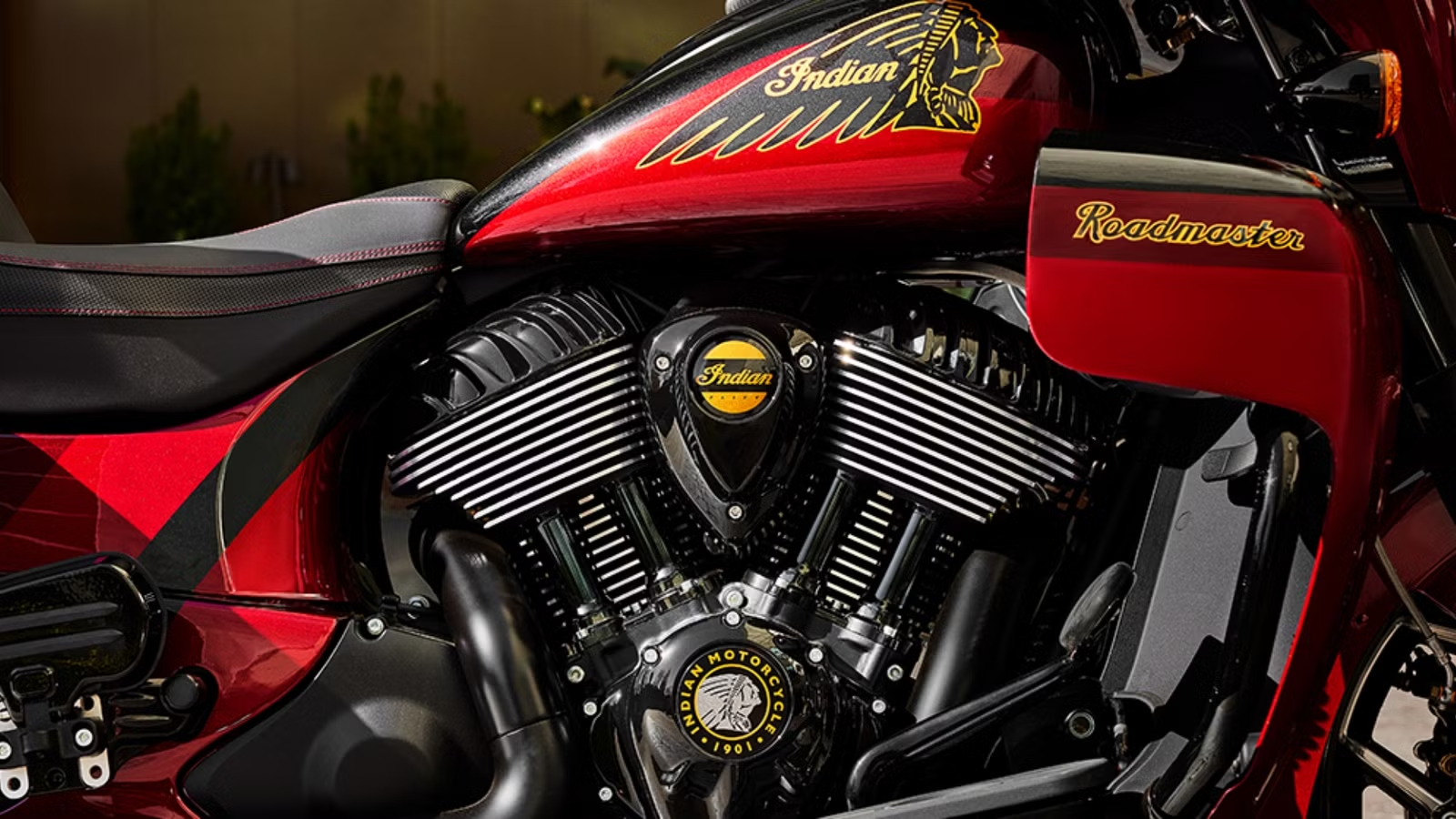
Air-cooled American V-twins further enhance this formula, allowing for an even better long-term ownership experience. Harley-Davidson’s Milwaukee-Eight range and Indian’s own big V-twins are proof that simplicity is the key to longevity. These rely on sheer displacement instead of high revs, and so all the muscle is made at low-crank speeds. There’s no radiator, hoses, or water pumps to malfunction. Here’s one such American V-twin that is built to go the distance.
Indian’s Thunderstroke 116 Goes The Distance Without Much Fuss

Indian has a handful of engines in its catalog, but the Thunderstroke 116 is one with the record to back it up. This is a 1,890cc air and oil-cooled engine that grew out of the Thunderstroke 111, which was first introduced back in 2013. Since 2019, the Thunderstroke 116 has been in production, and owners have had years to rack up some serious miles on it. Plenty have surpassed 100,000 miles on basic servicing and maintenance.
Meanwhile, Harley has spent the last few years reworking its engine lineup, and its newer engines have a lot to prove. But Indian has kept the 116 on sale and refined it along the way, and it is paying off. By keeping things simple, the Thunderstroke 116 is an engine which can clock six figures on the odometer without much fuss, and real-world ownership reviews have proven that.
From The Chief To The Roadmaster — Here’s Where The 116 Lives

Indian offers the engine across a fair chunk of its heavier lineup, and if you want to get your hands on one, you’ve got a buffet to choose from. If you want a cruiser, the Chief Dark Horse, Bobber Dark Horse, Sport Chief, Super Chief and the new 2026 Chief Vintage get this engine with 120 pound-feet of torque.
The touring bikes with the full 126 pound-feet of torque are the Dark Horse trims, the Chieftain Limited and the whole Roadmaster range. At the top of the range sits the 125th Anniversary edition priced at $43,000. Indian also sells the same architecture as a big-bore upgrade for 111-powered Chiefs. The one bagger that skips it is the Challenger, which uses the PowerPlus 112 liquid-cooled engine.
What Makes The Thunderstroke 116 Keep On Going For Thousands Of Miles

The Thunderstroke 116 lasts because Indian built it around low stress rather than big numbers for the spec sheet. It makes a claimed 126 pound-feet of torque, with peak torque arriving at a very low 2,900 rpm. Indian doesn’t publish a horsepower figure, but independent dyno runs show about 85 horsepower at the wheel.
That is quite modest for an engine this large, and the motor makes this power without much stress. Along with the way the engine makes its power and torque, the engine has a few things working in its favor to ensure that the engine can clock lots of miles without much trouble.
Built On A Proven Foundation — Why Indian Evolved The 111 Instead Of Starting Over

Open the engine up, and you’ll notice that there are only a few things inside to go wrong. Air and oil handle the cooling, so no need for complicated hosing, a radiator, coolant and water pumps. The 49-degree V-layout keeps the two cylinders nicely balanced, so you get less vibration and less wear.
Indian built the 116 on top of the older 111 instead of designing an all-new engine. The big change was a new cylinder head that flows more air. It also has a long 4.449-inch stroke and a compression ratio of 11:1, which are set up for strong low-end pull. Indian has kept things as simple as they can get, and that is why the engine lasts.

The valves are just as simple. Pushrods work two valves per cylinder. There are no overhead cams and no extra valves to look after. Self-adjusting hydraulic lifters handle the valve clearance, so there’s no valve service to book.
And with a redline of just 5,400 rpm with the peak torque kicking in at 2,900 rpm, the engine doesn’t really need to be revved out to get going. This relaxed state of tune not only ensures effortless initial performance, but it also reduces the wear and tear of internal components as opposed to a highly strung engine.
This Is A V-twin Made To Support Long-Term Ownership

On the Indian Motorcycle Forum, one member took his Roadmaster past 100,000 miles without ever opening up the engine or the transmission. Another rider posted about clocking over 446,000 miles with no engine work. And another owner of three Thunderstroke-powered bikes in his garage, including a 2014 with 95,000 miles and a 2017 with 60,000 miles, mentioned similar feedback.
A used Roadmaster with nearly 80,000 miles can still find buyers, because they see the mileage as a good sign instead of a warning. Ownership reviews like these prove that the Thunderstroke 116 was built to clock six figures without much fuss.
Source: Indian Motorcycles

Related posts

Latest Post


No Comments