
The Long-Lasting Motorcycle That Rarely Needs Repairs
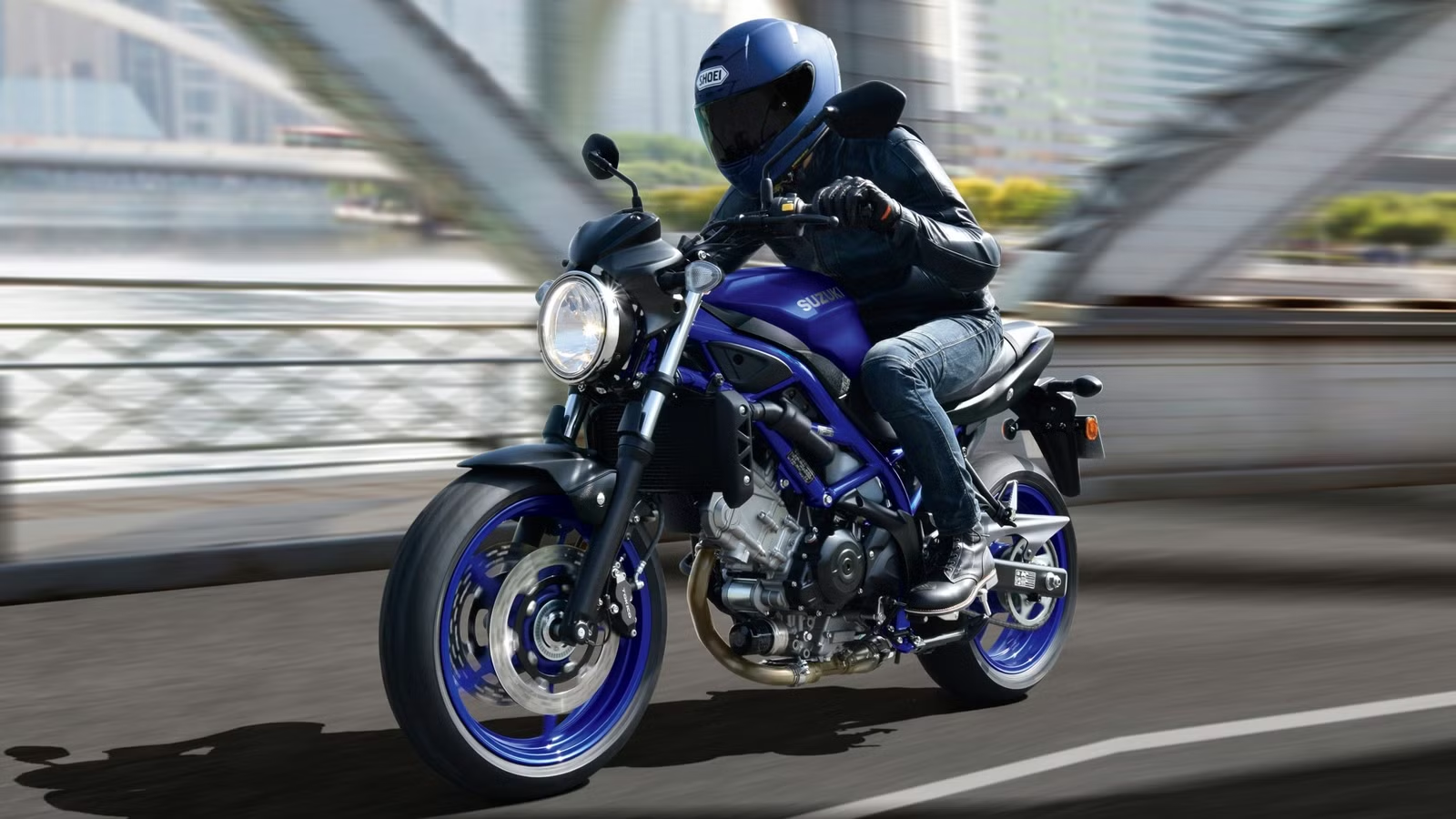
In a world where motorcycles are increasingly loaded with technology, subscription features, and eye-watering price tags, there is something quietly radical about a bike that simply works — every time, for years on end. The best motorcycles are emotional purchases, sure, but the smartest ones earn that emotion through dependability. A bike that fires up on the first crank, never misses a beat between service intervals, and spends its life on the road rather than on a lift is rarer than it should be. One naked motorcycle has been making that case for over two decades, and it remains the benchmark for long-term reliability in its class.
The Suzuki SV650 ABS Rarely Needs Repairs And Lasts Long
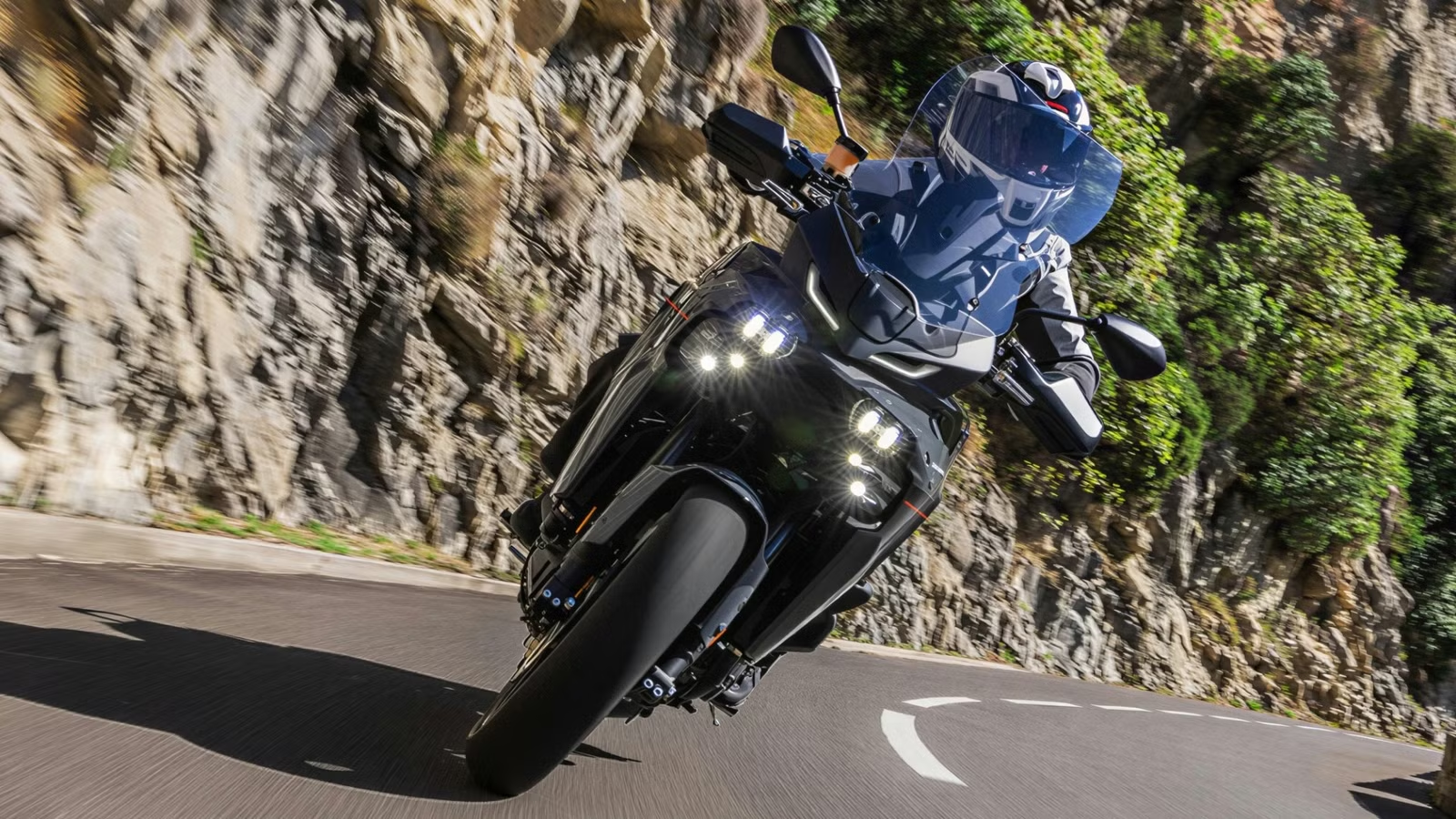
The SV650 has been around for well over two decades, starting life as a low-cost, reliable alternative to Ducati’s Monster street bike. You’ll notice shared DNA with the Italian machine — a trellis frame, a round headlamp, and a 90-degree V-twin engine all point to the same inspiration.
Suzuki SV650 ABS Price: $8,049

The SV650 has always positioned itself as an affordable alternative, and it holds that ground in a segment that grows more competitive with every passing year.
Why We Picked The Suzuki SV650 ABS
- Extremely reliable
- Still remains a lot of fun
- Appeals to a wide audience
- ABS is optional
- European looks, Japanese reliability
73 Horses Powering The Suzuki SV650


The SV650 is powered by an engine that is unique to its format: a 90-degree V-twin that is liquid-cooled and fuel-injected. This engine hasn’t seen a significant update in some time — the last meaningful revision introduced SDTV technology, which adds a second set of computer-controlled throttle valves working in tandem with the primary ones. They smooth power delivery, prevent stalling at low revs, and improve cold-start behavior.
Paired With A Six-Speed Transmission

The SV650 uses a conventional six-speed gearbox with a cable-operated clutch — no assist-and-slipper mechanism or hydraulic actuation here. Power reaches the rear wheel via a chain drive. The bike’s extensive aftermarket support means a hydraulic clutch conversion is straightforward for riders who find the cable pull too heavy.
An Update Might Be Coming

This engine remains genuinely enjoyable to use, and its long production run keeps manufacturing costs low. There are strong signs that meaningful updates are on the way to future-proof the platform. Suzuki has announced the SV-7GX, which gains significant upgrades including a ride-by-wire throttle, selectable ride modes, adjustable traction control, and a two-way quickshifter. These changes are driven largely by tightening emissions regulations, making it likely that similar technology will eventually filter down to the SV650 and the V-Strom models that share this engine family.
Suzuki SV650 ABS Engine Specifications
|
Engine Configuration |
90 degree V-twin |
|
Displacement |
645 cc |
|
Power |
73 HP @ 8,500 RPM |
|
Torque |
47.2 LB-FT @ 8,100 RPM |
|
Transmission |
6 speed, chain final drive |
Suzuki SV650 ABS Chassis

Suzuki’s decision to give the SV650 a trellis frame two decades ago was a prescient one — that architecture keeps the bike light and structurally relevant even today. Suspension is conventional telescopic forks up front and a preload-adjustable rear shock. It won’t suit every rider straight out of the box, but it’s a capable baseline. Alloy wheels, tubeless tires, and the braking package are all well-matched to the SV650’s performance envelope. ABS is available as an optional extra.
Suzuki SV650 ABS Chassis Specs
|
Chassis |
Steel trellis frame |
|
Front Suspension |
41 mm telescopic forks, 4.9 inch travel |
|
Rear Suspension |
Link-type shock, adjustable preload; 5.1 inch travel |
|
Front Tire And Wheel |
120/70 ZR17 |
|
Rear Tire And Wheel |
160/60 ZR17 |
|
Front Brakes |
290 mm discs, 4-piston calipers |
|
Rear Brakes |
240 mm disc, single piston caliper |
Suzuki SV650 ABS Features

The SV650 is a bare-bones bike, and it makes no apologies for that. It runs all-LCD instrumentation and offers ABS as an option rather than standard equipment. The non-ABS SV650 has not been refreshed since the 2023 model year, so used examples may be available at a discount for budget-conscious buyers. The SV650 ABS, meanwhile, is offered in a black and blue color combination. With an engine refresh appearing increasingly inevitable, a broader feature update for the SV650 seems likely to follow.
Suzuki SV650 ABS Competition

When the SV650 ABS arrived, the middleweight naked segment was a quiet corner of the market. Today it is anything but — options range from entry-level budget bikes all the way up to near-liter-class performers. For this comparison, we’ve kept the focus on the affordable end of the spectrum, where the SV650 competes most directly.
Japanese And Chinese Rivals

The SV650 ABS remains the only bike in this segment with a V-twin engine, while the Kawasaki Z650 is the sole representative of the 180-degree parallel-twin layout. Kawasaki has announced a new Z650 S for 2026 with an expanded feature set, though we’ve used the existing model here to keep the comparison consistent. The Honda CB750 Hornet offers a solid blend of features and performance, and the Yamaha MT-07 stays true to its lightweight, accessible philosophy. The most outright value in the group arguably comes from the priciest rival: the CFMoto 800NK, which is the second-lightest machine here yet posts a remarkably high peak power figure.
Suzuki SV650 ABS vs. Rivals
|
Suzuki SV650 ABS |
Honda CB750 Hornet |
CFMoto 800NK |
Yamaha MT-07 |
Kawasaki Z650 ABS |
|
|
Price |
$8,149 |
$7,999 |
$8,699 |
$8,599 |
$7,749 |
|
Displacement |
645 cc |
755 cc |
799 cc |
689 cc |
649 cc |
|
Power |
73 HP @ 8,500 RPM |
83 HP @ NA RPM |
100 HP @ 9,000 RPM |
73.4 HP @ 8,750 RPM |
67 HP @ 8,000 RPM |
|
Torque |
47.2 LB-FT @ 8,100 RPM |
55 LB-FT @ 7,250 RPM |
59.7 LB-FT @ 8,000 RPM |
50 LB-FT @ 6,500 RPM |
48.5 LB-FT @ 6,700 RPM |
|
Curb Weight (Wet) |
437 LBs |
422 LBs |
410 LBs |
403 LBs |
412 LBs |
Sources: Suzuki Cycles, Suzuki Global

Related posts
Latest Post


No Comments