
The Toyota V6 Recall Test That Sounds Too Strange To Be Real
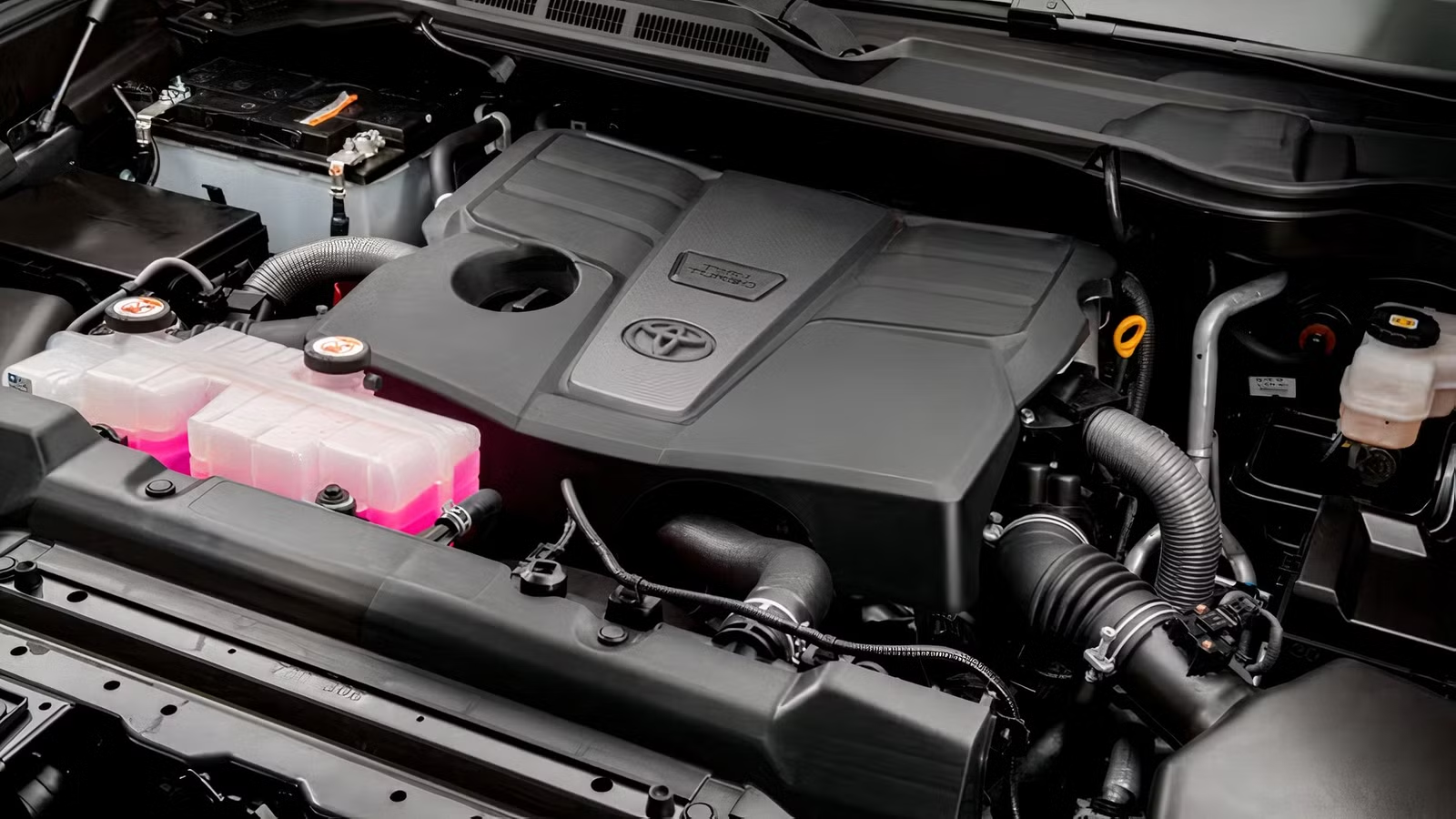
Toyota’s recall of more than 250,000 Tundra and Lexus SUVs over a potentially catastrophic V6 engine defect has been complicated from the start — and the official diagnostic procedure Toyota just detailed makes it look even stranger at first glance. Technicians are instructed to strike the engine’s crankshaft pulley with a small, specialized plastic hammer, then let software sort out whether your engine needs to be replaced.

That sounds like something out of a backyard garage, but the science behind it is legitimate. The hammer test is a precision diagnostic built on the same physics as a tuning fork, and understanding how it works tells you exactly what to expect when you bring your truck to the dealer.
What the Hammer Test Actually Measures
The recall centers on the V35A V6 engine found in 2022–2024 Toyota Tundras and related Lexus SUVs. Manufacturing debris left inside the engine during production is degrading the number one main bearing — one of the surfaces on which the crankshaft spins inside the engine block. As that bearing wears, the crankshaft loses its precise support, and the eventual result is engine failure.

The problem Toyota faced was how to assess bearing condition across hundreds of thousands of trucks without tearing every engine apart. The answer is resonant frequency. Every solid object vibrates at a predictable frequency when struck — that’s the principle behind a tuning fork. A healthy main bearing and a worn one change how the front of the crankshaft responds to an impact, and those differences are measurable. Toyota confirmed it tested numerous engines to map exactly what frequency signatures correspond to normal wear versus abnormal degradation of bearing number one.
How the Procedure Works at the Dealer

The process is more controlled than the word “hammer” implies. Before any striking happens, technicians change the engine’s fluids and check for other variables that could affect the reading. Then a small accelerometer — a sensor that measures vibration — is attached to the crankshaft bolt at the front of the engine.
The technician strikes the crankshaft pulley at the 3:00 position with the specialized plastic hammer. The hammer itself provides real-time feedback: it tells the tech whether each swing was too weak, too strong, or accidentally a double-hit. Three valid strikes are required. The software then analyzes the vibration data and combines it with the vehicle’s service history to assess the bearing’s condition. The technician’s judgment isn’t what determines the outcome — the accelerometer and software do the work. The hammer is simply the controlled input that excites the crankshaft’s resonant frequency in a repeatable way.
What Happens If Your Engine Fails the Test

If the inspection software cannot confirm that the number one main bearing is free from abnormal wear, Toyota replaces the engine under the recall — at no cost to the owner. Toyota’s position, stated directly, is that the remedy combines the hammer test data with available vehicle drive data to confirm bearing condition before making that call.
That’s the source of some owner skepticism. Toyota has maintained throughout this recall campaign that not every truck with the V35A engine actually needs a new engine, and many owners have found that hard to accept given the severity of potential failure. The hammer test is Toyota’s attempt to make the sorting process feel less arbitrary. By producing a measurable, software-analyzed result rather than relying on a technician’s visual inspection, Toyota is trying to give owners a defensible answer either way.
If Your Truck Is Already Showing Symptoms, Don’t Wait for the Test

The hammer diagnostic is a predictive tool — it’s designed to catch bearing degradation before it becomes catastrophic. It is not a diagnostic for trucks that are already in trouble. Toyota is explicit on this point: owners whose vehicles are experiencing engine knocking, rough running, or a no-start condition should contact their Toyota or Lexus dealer immediately rather than waiting for a scheduled inspection appointment.
Those symptoms indicate the bearing may have already failed or be on the verge of failing, and the hammer test isn’t the right tool for that situation. If your Tundra or Lexus is running fine and falls within the recall’s covered range — campaign 25TA14 covers 2022–2024 Tundras, with broader coverage extending to related models — the test is the path forward. Dealers will schedule the inspection, and the result will determine whether your engine gets replaced or gets cleared.
The contrast between Toyota’s reputation for bulletproof reliability and a recall that involves hitting engines with a hammer is jarring. But the underlying engineering is sound, and the test gives owners something the recall has lacked so far: a concrete, data-driven answer about their specific truck rather than a blanket replacement or a blanket dismissal. Whether that’s enough to rebuild confidence in the V35A is a separate question.

Related posts






Latest Post


No Comments