
Why Your Favorite New Motorcycles Of 2027 Still Favor Old Engines
A new motorcycle with an old engine undoubtedly sounds like a cost-cutting measure that the accounts division came up with instead of being an engineering decision. That’s until you consider what the manufacturers are actually doing in 2027. Suzuki has returned to the 645cc V-twin that first powered the SV650 in 1999 and the inline-four that descended from the 2005 GSX-R1000 K5. Yamaha has found another home for the CP2, while Kawasaki, Ducati, and BMW are also building fresh motorcycles around established powerplants. Why, you ask? Here’s an in-depth answer.
Why Manufacturers Keep Coming Back To Proven Engines

An engine development program is a complex process. Engineers must manage combustion pressure, piston temperature, bearing loads, oil control, cooling flow, vibration, and valvetrain stability across thousands of operating conditions. Altering one component may require several other supporting alterations. These changes may also need validating again, so durability testing extends well beyond running an engine until failure.
Emissions requirements present another hurdle as older engines try to keep plying. Any change to the intake, exhaust, fueling, or combustion system can alter emissions, which means the revised engine still has to be calibrated, tested, and certified with the new hardware. Starting with an architecture whose thermal behavior, combustion characteristics, and durability are already well understood gives engineers a much firmer baseline than beginning again with an entirely new engine.

Once an engine reaches production, the financial case for its continuity becomes just as important. Crankcases need costly tooling, machining operations are built around fixed dimensions, suppliers are qualified for particular components, and assembly plants work with known tolerances. Keeping that foundation allows one powertrain investment to support several motorcycles without funding another engine development program from scratch. This allows the resources saved to go into the chassis, suspension, transmission, electronics, or packaging that give the motorcycle a different purpose.
Some Engines Need Less Reinvention Than Others

While the development process sounds, and is, extensive, some engines prove their worth through their real-world application over a period of time. The 2027 SV-7GX still uses the 81.0 x 62.6mm bore and stroke of the original 1999 SV650, preserving its 645cc 90-degree V-twin. Suzuki has revised the engine many times, but electronic throttles help to integrate modern controls without replacing the sound mechanical fundamentals. Suzuki, thus, ends up with a modern engine management system while keeping a V-twin that it has spent more than 25 years refining.
The New Suzuki GSX-10R Is The Latest Example

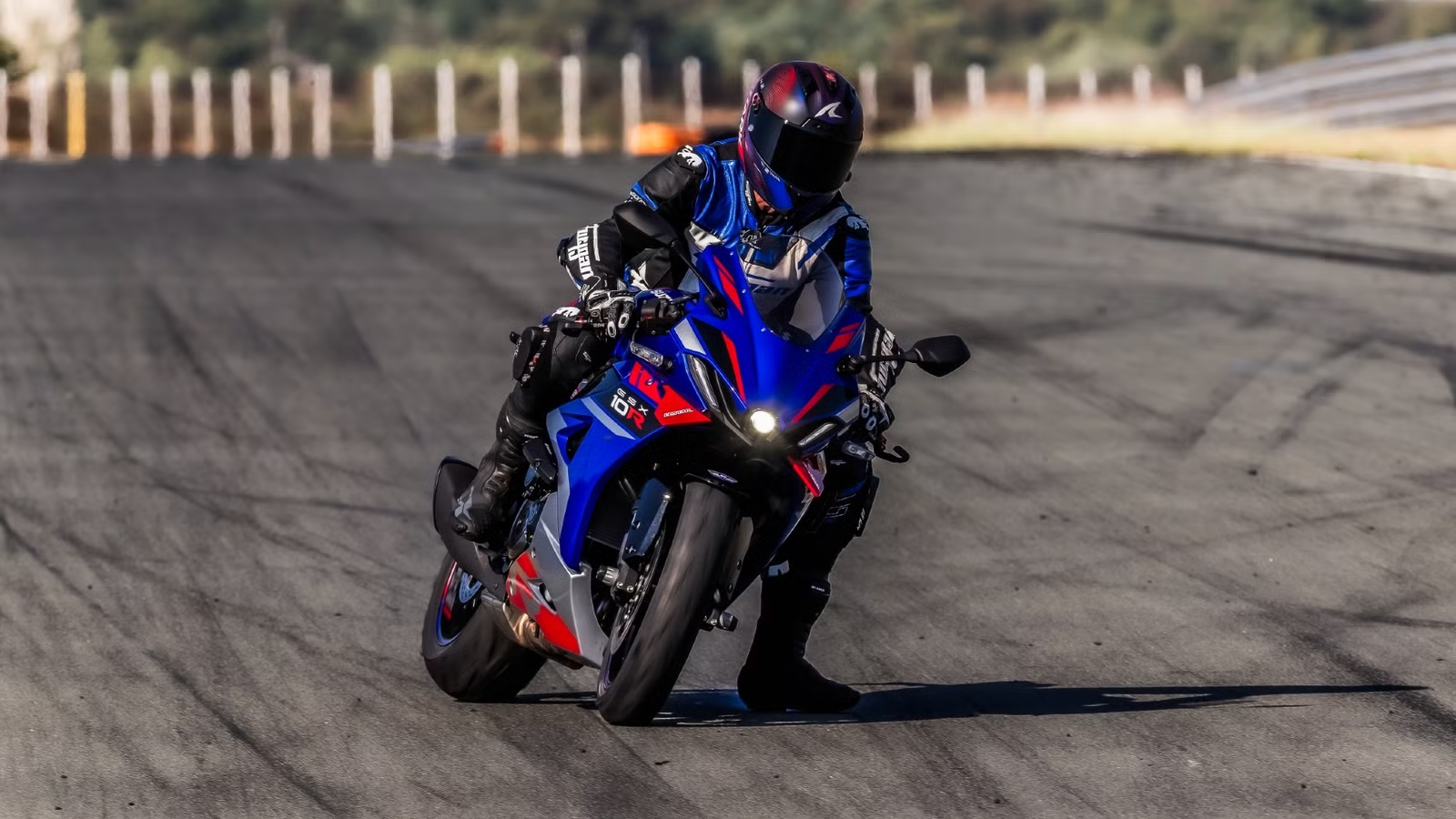
This approach of refining an existing and proven engine is a philosophy more than just decisions at various corporate levels of the OEM. With the new GSX-10R shown at EICMA this year, Suzuki’s use of the old K5 engine is proof that an older unit can be potent even decades after its original debut. The 10R’s 999cc inline-four retains the 73.4 x 59.0mm dimensions introduced on the 2005 GSX-R1000. Suzuki has continued developing the cylinder head, combustion chamber, oil routing, cam-chain control, and torque management to improve breathing, lubrication, durability, and response. Thus, this engine has now found another application as a superbike.
Yamaha And Kawasaki Use Old Engines For New Jobs

Other Japanese giants aren’t behind. Yamaha’s 689cc CP2 has powered a naked, a roadster, a sport bike, and the Ténéré 700 ADV since it debuted with the MT-07 back in 2014. Thirteen years on, it now takes a different turn with the 2027 RW700 adventure scooter. Yamaha already knows the CP2’s cooling requirements, torque characteristics, and packaging envelope, so much of the unfamiliar work lies in integrating the Y-AMT for this application, focusing on the development of a new bike.
Kawasaki’s KLE650 and Versys 900 both use older engines but display why tuning is just as important as the engine’s ancestry. The KLE develops the long-serving 649cc twin with electronic throttles and revised breathing for a rally-style tourer, while the Versys 900 adapts the 948cc Z900’s inline-four through intake, exhaust, gearing, and calibration changes aimed at smoother long-distance application. These engineering efforts change how the engines behave in a new chassis with different riding requirements.
Reusing An Engine Is Not The Same As Freezing Development

Ducati’s 2027 Panigale V4 shows how far an established engine can develop without changing its basic dimensions. The 1,103cc Desmosedici Stradale keeps its 81.0 x 53.5mm bore and stroke while Ducati improves airflow, exhaust flow, lubrication, gearing, et al., concentrating on gas exchange and mechanical efficiency rather than more displacement.

Meanwhile, Triumph’s latest Street Triple 798 is where the line gets drawn. Its lineage runs through the 765 used in the Street Triple and Moto2, but now, Triumph has redesigned the cylinder head, combustion chamber, low-inertia valvetrain, crankcases, and internal components for the 2027 Moto2 engine on which the road bike is based. Its intake position and engine mounts also require new chassis work, leaving far less of the old package. So in this case, the family connection is surely there, but this is where an old architecture has evolved far enough that calling it a carryover engine isn’t an entirely accurate description.
Buyers Get The Benefit Of A Longer Track Record

An older engine doesn’t automatically translate to more reliability, particularly after a major revision. Years of servicing, high-mileage ownership, known failures, parts replacement, and workshop experience build a clearer picture of long-term ownership and durability of the engine. Engines such as Suzuki’s 659cc V-twin and Yamaha’s CP2 also serve several motorcycles, widening the pool of parts, aftermarket support, and technicians familiar with their construction.
Using familiar engines does not make any of these 2027 motorcycles any less new either. They have proven mechanical foundations that still meet the performance prerequisite, so they focus on developments that need improvement. A rider buying them can get a different chassis, transmission, electronics package, bodywork, or even a whole different category of motorcycle. Thus, replacing proven hardware purely for the sake of including another line on the spec sheet that reads “new” would often achieve less for the end customer.
Source: OEMs

Related posts
Latest Post


No Comments