
The Toyota SUV That Keeps Running Like New After 15 Years
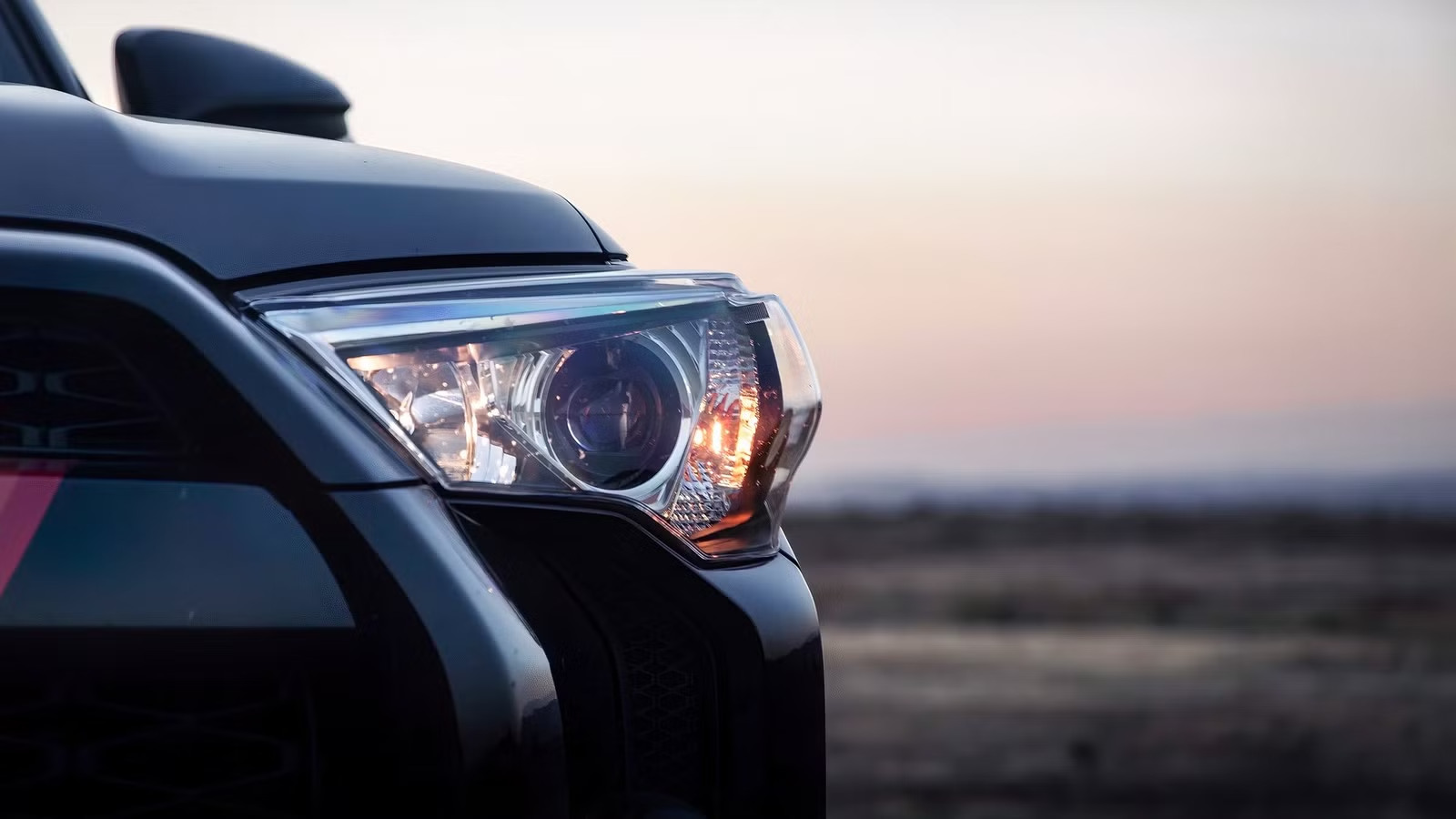
The true test of an SUV isn’t how it performs during a weekend test drive; it’s how confidently it starts every morning after 15 years of school runs, road trips, harsh winters, and countless miles. While many modern vehicles become increasingly expensive to own as they age, a select few develop a reputation for doing the exact opposite, delivering dependable performance long after their warranties have expired. For buyers who value long-term reliability over flashy technology or headline-grabbing horsepower, choosing the right SUV can mean enjoying hundreds of thousands of worry-free miles while avoiding the costly repairs that often send lesser vehicles to the scrapyard.
Why Some SUVs Age Gracefully While Others Fall Apart
The Engineering Habits That Create Long-Term Reliability

The latest technology can be fun, cool, and intriguing when it first appears on the market, but does it have staying power? Small engine parts subjected to extreme heat and constant compression are much more likely to break down sooner than the more robust components found in naturally aspirated engines. While most automakers have turned to turbocharged or hybrid engine technology to squeeze out more power and efficiency from their engines, conservative engineering often outlasts this cutting-edge technology.
Many of the vehicles expected to reach 200,000 miles or more are those with naturally aspirated V6 and V8 engines. These vehicles benefit from simpler, proven engineering that many drivers have depended on for years. Durable, proven components almost always outshine the latest technology.
What Buyers Should Look For In A Long-Term Family SUV

Once you get past the flashy new tech, there are several factors to consider, especially if you think you might want to keep your vehicle for 15 years or longer. SUVs with proven reliability should be at the top of your list, regardless of purchase price. It’s also important to compare total ownership costs over the period you intend to keep and drive your SUV. Some automakers have such strong reputations that resale value is protected, ensuring you can still receive a good return on the vehicle you’ve driven for many years.

Once you’ve got the figures sorted, the most important factor in buying a pre-owned family vehicle is its maintenance history. This is truly the biggest predictor of longevity. If a vehicle has been well-maintained and has the records to prove it, there’s a good chance it will last for 200,000 miles or more without giving you too many hassles.
Meet The Toyota 4Runner—One Of The Longest-Lasting SUVs Ever Built
Why The 4Runner Has Earned Its Legendary Reputation

While most midsize SUVs use unibody construction and are built to stay between the lines, the Toyota 4Runner goes in a completely different direction. It’s meant to be an aggressive off-road SUV, but it also has many family-friendly qualities that drivers admire, including its body-on-frame construction, which it shares with the Toyota Tacoma.
Until the recent generation and powertrain changes were implemented, the 4Runner was considered one of the oldest models of its kind. Toyota resisted change that would introduce unnecessary complexity into one of the longest-lasting vehicles on the market. Many owners have reported driving the 4Runner for 200,000 or 300,000 miles, and it ranks second on the iSeeCars list of vehicles with the greatest chance of lasting 250,000+ miles with a 32.9 percent chance, which is 6.8 times the industry average. The only vehicle to rank higher is the Toyota Sequoia at 39.1 percent.
The Components That Refuse To Quit

The previous generation of the 4Runner had one of the oldest and simplest powertrains on the market. It was powered by a 4.0-liter V6 engine attached to a five-speed automatic transmission. This sounds like a throwback powertrain from the 1990s, and it certainly is, but this proven system laid the foundation for the 4Runner’s incredible reputation. The engine and transmission were known to last indefinitely, with only regular scheduled maintenance required.
In addition to a stout powertrain, the last generation of the 4Runner also rode on a frame and suspension known for their durability and ability to take on anything. This midsize Toyota SUV was built to be an off-roader, but many families opted for the third-row seat option and turned it into their dependable family SUV. The 4Runner’s simplicity and proven longevity gave it a competitive advantage.
Real Owners Keep Them For Decades
The Mileage Numbers That Back Up The Reputation
Toyota 4Runner owners have often boasted about the high mileage these SUVs can reach without much work or worry. Some outdoor enthusiasts acquire older versions as backup vehicles or convert them into hardcore off-road machines. These actions reflect the confidence many drivers have in the 4Runner and its foundational components, which can last for 300,000 miles or more without significant changes.
In addition to the chance of reaching more than 250,000 miles, the Toyota 4Runner proves itself by holding its value better than most other vehicles. Among the vehicles with the best resale value for 2026, the Toyota 4Runner ranks third, according to Kelley Blue Book, with a projected 58 percent value after five years. This is especially impressive for a new model and an SUV powered by a turbocharged four-cylinder engine. It shows confidence in Toyota engineering, despite leaving the antiquated V6 powertrain behind.
Why The Cabin Still Feels Solid Years Later

Older 4Runner models lean heavily into engineering simplicity, even in the cabin. Mechanical controls for seats, windows, and locks can often outlast electronic components, and are typically cheaper and easier to replace when necessary. The 4Runner has always been a rugged SUV meant to tackle the trails, which means the cabin reflects this quality. The seat material in some versions is durable vinyl, and those with synthetic leather or cloth are made to last a long time. Switchgear and dashboard controls are knobs and dials that are robust and tough, made to be handled with hands covered in gloves when necessary.
The cabin and body of a well-maintained Toyota 4Runner can look and feel great, even years after its model year, but, like all vehicles, they do eventually wear down a bit. Some of the most common complaints owners have reported include the automatic transmission not shifting correctly, an EVAP system fault due to a failed charcoal canister, and a failing starter. These are expected issues with high-mileage vehicles, but they can be fairly easily corrected.
Ownership Costs Stay Predictable Long After The Warranty Ends
Maintenance Costs That Rarely Surprise Owners

The average annual repair cost for a Toyota 4Runner is $514, according to RepairPal. This is likely to seem very affordable for most owners, and it’s kept low thanks to the widespread availability of parts. Toyota parts are often affordable, making it easy to keep your 4Runner on the road.
As with any vehicle, when you have a 4Runner, routine maintenance is one of the most important things you can do for your vehicle. The old saying from Benjamin Franklin, “an ounce of prevention is worth a pound of cure,” applies not only to personal health but also to vehicle health. Preventive maintenance helps keep costs low and your 4Runner on the road where you need it.
Naturally Aspirated Versus Turbocharged Engine Logic

Many automakers have left naturally aspirated engines in favor of turbocharged models with fewer cylinders. Some brands have had great success with these smaller engines, but some have found that smaller turbocharged engines can become troublesome in larger vehicles. It really is as simple as realizing that more moving parts cause more potential issues and failure points for vehicles.
The 2026 Toyota 4Runner is one of many vehicles that have been updated to turbo and hybrid-powered versions instead of the trusty old V6. Typically, turbocharged engines are less dependable than naturally aspirated engines, but most owners never put enough miles on their vehicles to notice. Toyota 4Runner owners are a different breed, often keeping their SUVs for as long as possible.

Modern turbocharged engines are much more durable than those from previous decades, and they can be tuned to offer as much power as naturally aspirated engines while offering much better fuel economy. Still, a turbocharger is simply one more component that can break, and by using a four-cylinder engine with a turbocharger instead of a V6, the engine and turbocharger can be under much more stress than a naturally aspirated V6.
Buying One Today Could Mean Another 15 Years Of Ownership
Which Model Years Offer The Best Long-Term Value

If you’re not ready to face the unproven challenges that could await you with a turbocharged engine, the fifth-generation Toyota 4Runner makes a lot of sense. It is one of the longest generations of any vehicle, spanning 15 model years from 2010 to 2024. This generation utilized the V6 and five-speed automatic setup, giving you a proven powertrain that could last for several years. The highest-ranked model years are 2012, 2017, and 2021. These three model years scored high with J.D. Power, RepairPal, and CarEdge. It’s a good idea to avoid the 2010 model-year 4Runner. As the first year of the generation, it has some of the common first-year issues that many vehicles experience.
The modernization of the Toyota TNGA-F platform brought turbocharged and hybrid powertrains to the 4Runner lineup. Toyota’s reputation for hybrid and turbocharged durability could return several years of driving excellence in the sixth-generation 4Runner, allowing many owners to enjoy 15 years or more of driving pleasure.
Why The Toyota 4Runner Still Makes Sense After All These Years

For buyers planning to keep an SUV for the long haul, the Toyota 4Runner remains one of the safest bets on the market. Late fifth-generation models with a documented maintenance history often strike the best balance between modern features and proven durability, while examples with 100,000 to 150,000 miles still have plenty of life left if they’ve been properly cared for. Before buying, inspect the frame for corrosion, verify routine fluid changes, and look for evidence of consistent servicing rather than simply focusing on the odometer. It isn’t the most fuel-efficient or luxurious midsize SUV available today, but few competitors can match its reputation for dependable ownership. If your priority is driving the same vehicle for the next decade or more with minimal surprises, the 4Runner continues to deliver on the promise of running like new long after most SUVs have begun to show their age.
Sources: Toyota, iSeeCars, Edmunds, Kelley Blue Book, RepairPal, CarEdge, J.D. Power

Related posts





Latest Post


No Comments