
The Surprising Harley That Works Better Off-Road Than You’d Expect
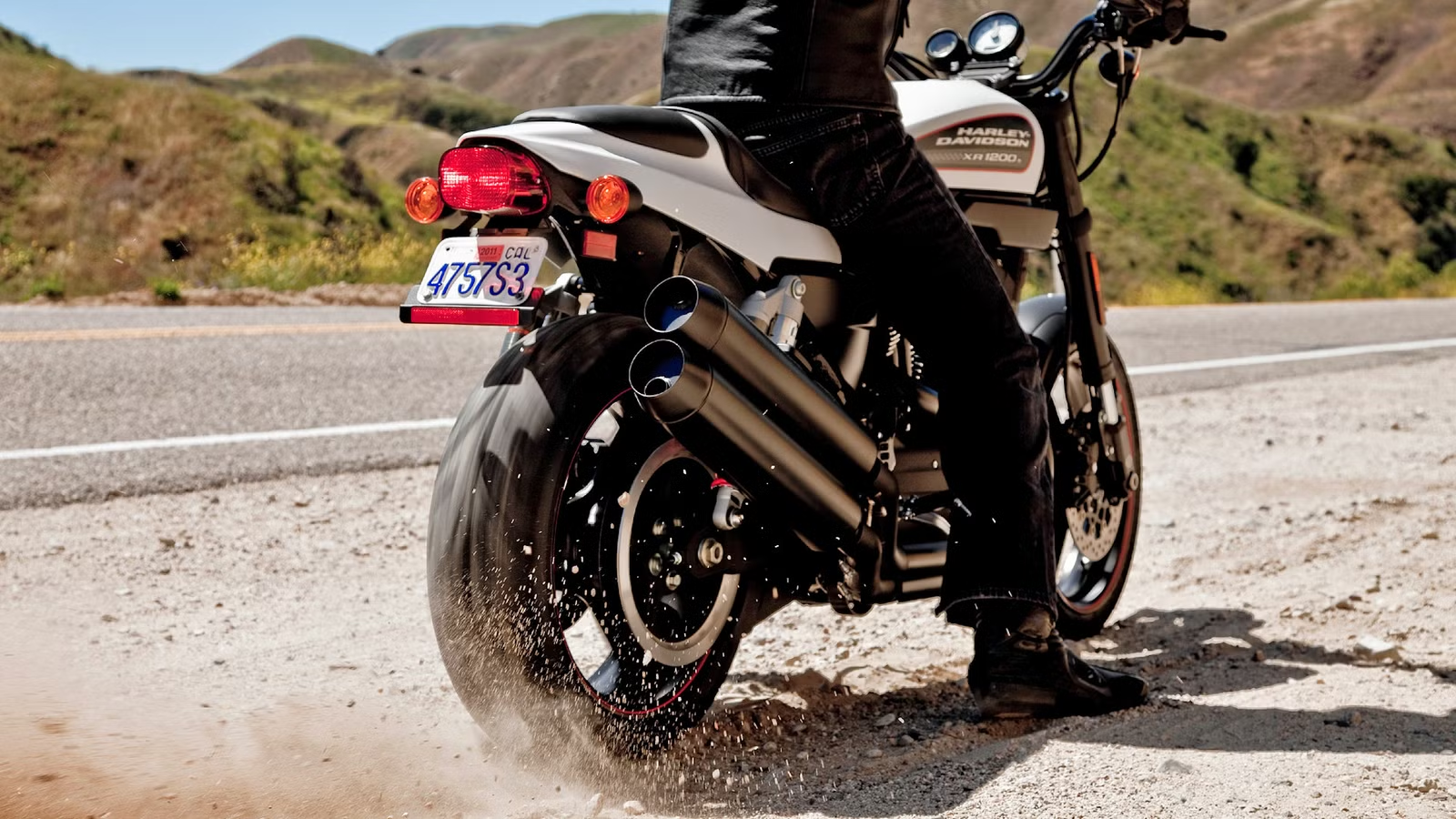
Mention an off-road Harley-Davidson and most riders will immediately think of the Pan America. That’s a reasonable assumption. After all, Harley’s adventure bike was specifically designed to tackle dirt roads, trails, and everything in between. But the Motor Company was building motorcycles capable of handling loose surfaces long before the Pan America ever appeared. The surprise lies in Harley-Davidson’s racing heritage.

Decades of success in flat-track competition and hill-climb events taught the company valuable lessons about traction, control, and durability on unpredictable terrain. Those lessons eventually found their way into a street bike that looked more at home carving back roads than kicking up dust. It wasn’t a dual-sport, and it certainly wasn’t an adventure bike. Yet thanks to its racing roots, it developed a reputation for handling gravel roads and rough terrain far better than most riders expected from a Harley-Davidson.
Harley’s Dirt-Racing Roots Run Deeper Than Most Riders Realize
The Sportster’s Racing Heritage Gave It Several Surprisingly Off-Road Traits
Most riders don’t think of Harley-Davidson when the conversation turns to off-road motorcycles, but the company’s history tells a different story. Long before adventure bikes became fashionable, Harley riders were competing in flat-track races, hill climbs, and rough-terrain events on modified Sportsters. Those machines earned a reputation for durability and traction in conditions far removed from smooth pavement.


That heritage also explains why the Sportster platform has long been misunderstood. Critics often dismiss it as a crude or outdated motorcycle, but its basic layout offers several advantages once the pavement ends. Compared to many heavyweight cruisers, a Sportster is relatively compact and easier to manage when the terrain turns loose or uneven. That’s important because every off-road rider eventually drops a bike, and picking up a smaller machine is far less exhausting than wrestling a full-size touring model out of the dirt.
Built For Control, Not Just Comfort

The riding position helps as well. With the foot controls positioned beneath the rider rather than stretched far forward, it’s easier to rise off the seat and let the motorcycle move beneath you over ruts, rocks, and washboard surfaces. The setup provides better control and balance than many riders expect from a Harley-Davidson.

None of this transforms a Sportster into a purpose-built dirt bike, but it does help explain why Harley-Davidson enjoyed success in disciplines where traction, balance, and rider control mattered more than outright horsepower. Those same traits would eventually influence a street bike that inherited far more of the company’s racing DNA than most riders realize.
The Harley-Davidson Engine That Regularly Hits 100,000 Miles
One Harley-Davidson engine earned a reputation for six-digit durability, and it wasn’t the newest or most powerful
The XR1200 Brought Harley’s Flat-Track DNA To The Street
Carried More Dirt-Track DNA Than Most Harley Street Bikes

That street bike was the XR1200. Produced from 2008 through 2012, the XR1200 family was Harley-Davidson’s road-going tribute to the legendary XR750 flat-track racer. While it was designed primarily for pavement, it retained several traits that made it more comfortable on dirt and gravel than most motorcycles wearing a Bar and Shield badge.

Power came from a 1,202 cc Evolution V-twin that delivered strong low-end torque and a satisfying rush as the revs climbed. The engine, primary drive, clutch, and transmission were packaged into a compact unit that helped keep the motorcycle relatively narrow and manageable compared to larger Harley models. That combination of torque and responsiveness proved useful on loose surfaces where smooth, controllable power often matters more than outright speed.
The XR1200 also addressed one of the traditional Sportster’s biggest shortcomings off pavement. While the front header pipe still ran low, the high-mounted dual silencers sat well clear of rocks, ruts, and other obstacles. The overall layout reflected the bike’s racing inspiration far more than its cruiser cousins.
A Chassis Built For More Than Pavement

Perhaps the biggest advantage came from the chassis. Upside-down 43 mm Showa forks and premium rear shocks gave the XR1200 a level of suspension sophistication rarely associated with Harley-Davidson at the time. The fully adjustable setup allowed riders to fine-tune compression damping, rebound damping, and preload to suit changing conditions.
Whether carving back roads or tackling washboard gravel, the suspension offered a degree of control and composure that separated the XR1200 from the average Sportster. The air-cooled Evolution engine added another practical benefit. Without radiators, coolant hoses, or other liquid-cooling hardware exposed to damage, there was less to worry about when riding beyond the pavement and farther from assistance.
2012 Harley-Davidson XR 1200X Engine And Performance Specifications
|
Engine |
Displacement |
Power |
Torque |
Transmission |
Top Speed |
|
Evolution Sportster |
1,202 cc |
91 hp |
73.8 lb-ft @ 3,700 rpm |
5-speed |
125 mph |
10 Adventure Bikes That Hold Their Value Surprisingly Well
With motorcycles of all shapes and sizes getting hit pretty hard by depreciation, it is somewhat surprising that these ADVs have escaped unscathed
Why The XR1200 Finds Grip Where Others Struggle

One reason Harley-Davidson and Indian motorcycles have historically performed so well in hill-climb competition comes down to how their V-twin engines deliver power. Unlike engines with evenly spaced firing intervals, a traditional V-twin produces uneven power pulses that briefly allow the rear tire to recover traction before the next pulse arrives. On loose dirt, gravel, and other low-grip surfaces, that characteristic can help the tire hook up more effectively than many riders expect.

The XR1200 family benefits from that same trait. Combined with the strong low-end torque of the Evolution engine, it delivers predictable drive when conditions become less than ideal. Instead of overwhelming the rear tire, the power delivery feels deliberate and manageable, which is exactly what riders want when traction is limited.
The wheel package also works in the XR1200’s favor. An 18-inch front wheel paired with a 17-inch rear offers a solid balance between pavement performance and rough-road capability. Fit a set of dual-purpose tires and the bike becomes even more comfortable on gravel roads and hard-packed dirt without sacrificing its street manners.
More Capable Than Its Weight Suggests

Despite its sporting intentions, the XR1200 retained enough ground clearance to avoid many of the problems that plague lower-slung Harley models. With 5.8 inches between the ground and the underside of the motorcycle, riders have more freedom to navigate ruts, uneven surfaces, and unexpected obstacles without constantly worrying about hard parts scraping the terrain. At 573 pounds wet, the XR1200 is no lightweight by dual-sport standards, which remains one of its biggest limitations off pavement.

Even so, its suspension, riding position, and traction characteristics help disguise that weight surprisingly well once the road turns to gravel. Strong dual front brakes provide confident stopping power, while the 3.4-gallon fuel tank offers enough range for extended exploration between fuel stops. The result is not a replacement for a modern adventure bike. Instead, it’s a motorcycle whose flat-track heritage gives it a level of confidence and capability on unpaved roads that few riders would ever expect from a Harley-Davidson.
The XR Is A Street Bike With Dirt In Its Blood

The XR1200 was never intended to compete with dual-sport motorcycles or adventure bikes, and nobody should mistake it for one. Riders looking to tackle deep mud, rocky trails, or technical single-track would be better served elsewhere. Yet judging the XR1200 by those standards misses the point. What makes the bike remarkable is how much capability Harley-Davidson managed to extract from a platform most people associate with cruising.
Its flat-track heritage delivered more than styling cues. The upright riding position, generous ground clearance, premium suspension components, tractable V-twin power delivery, and durable air-cooled design all contribute to a motorcycle that feels unexpectedly at home when the pavement gives way to gravel, hard-packed dirt, and rough back roads.
More Than A Styling Exercise

That combination helps explain why the XR1200 remains one of the most distinctive motorcycles Harley-Davidson has produced. Rather than following the cruiser formula, it borrowed heavily from the company’s racing history and translated those lessons into a street bike that rewards riders willing to venture beyond smooth asphalt. In many ways, that’s exactly what made it special. The XR1200 proved that Harley-Davidson’s dirt-racing DNA never completely disappeared.
Source: Harley-Davidson (Data is supported by experience as a certified Harley-Davidson mechanic, adding practical insight into reliability trends, service intervals, ownership patterns, and long-term durability.)

Related posts




Latest Post


No Comments