
The Motorcycle That Quietly Defines European Engineering
European motorcycles earned their reputation all these years by prioritizing performance above all else. Whether it was a razor-sharp superbike, a capable adventure tourer, or a luxurious grand tourer, the goal was always the same – more power, better handling, and cutting-edge engineering. That relentless pursuit created some of the motorcycling world’s most iconic machines. But, in recent years, the definition of engineering excellence has evolved.

The focus is no longer just on speed or impressive specifications. Instead, it’s about building motorcycles that adapt to every rider’s needs, conquering thousands of miles across varying terrain without breaking a sweat. The focus has shifted from raw, unadulterated speed to absolute, effortless capability, and this Italian motorcycle is a shining example of that.
Europe’s Best Motorcycles No Longer Chase Performance Alone
Performance remains an important part of any premium motorcycle, but outright speed is no longer enough to define engineering excellence. The elite tier of European manufacturers now value versatility more than ever before. The goal is no longer just to build the fastest machine, but to develop the most intelligent one. Riders spend far more time navigating traffic, covering long distances, or exploring unfamiliar roads than chasing lap times. As a result, the most successful motorcycles today combine performance with refinement, versatility, and usability.
The Most Advanced Technology Is The Kind You Rarely Notice


In the modern landscape, hi-tech features on a motorcycle are often misunderstood. It is easy to point out a flashy TFT display as a sign of advancement, but true engineering excellence is often invisible. The best technology does not call attention to itself every few seconds; it works in the background, reducing fatigue and making a complicated machine feel instinctive.
European manufacturers lean heavily into that idea with their flagship machines, which combine semi-active suspension, radar-based assistance, cornering electronics, cruise control, and multiple riding modes to make the bike easier to live with in real-world conditions. That approach is what separates a technically impressive bike, like this Ducati, from others.
The Ducati Multistrada V4 S Is A Masterclass In Modern Engineering
MSRP: $29,995

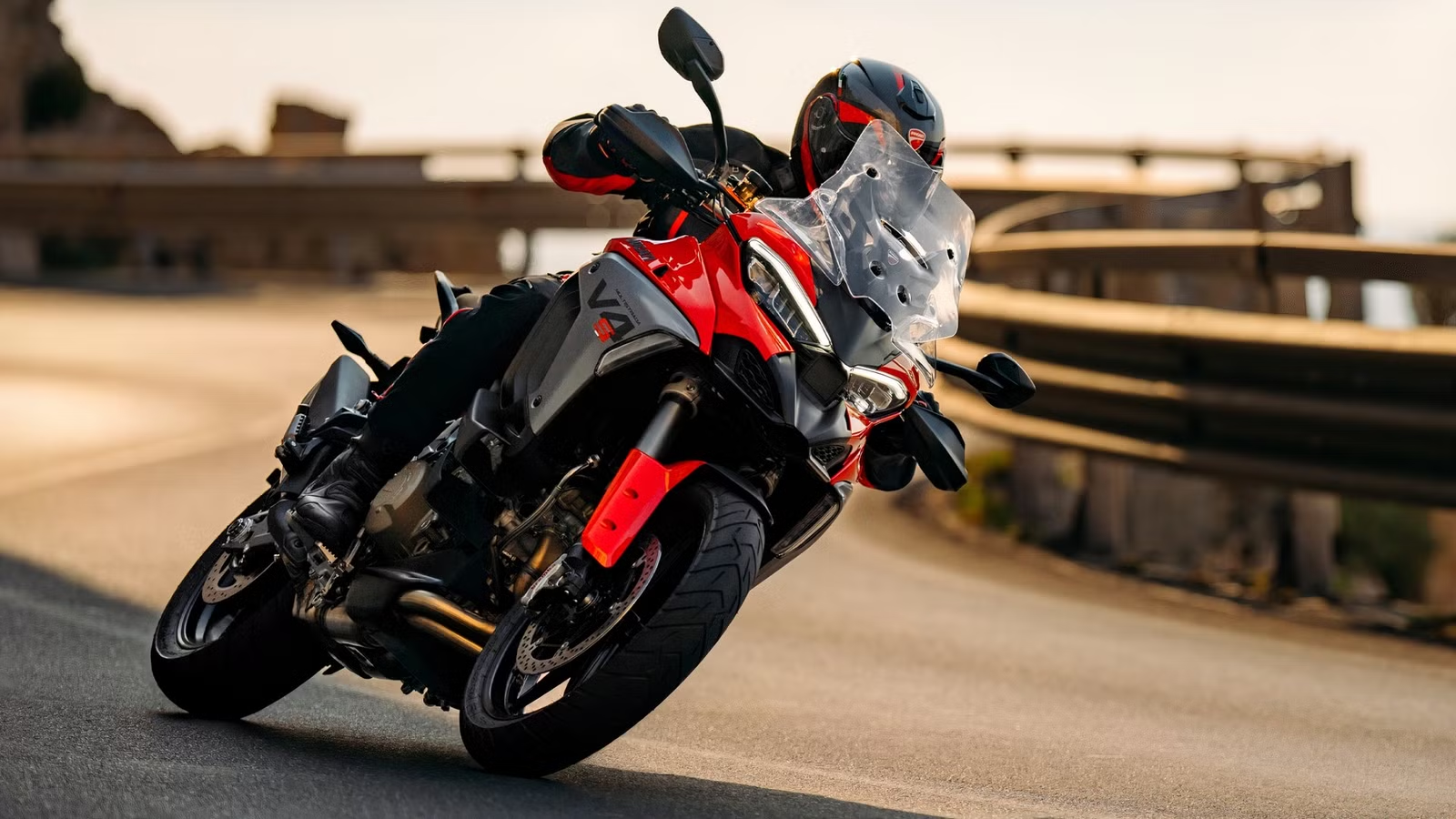
The motorcycle in context is the Ducati Multistrada V4 S. Designed as this Bologna-based manufacturer’s flagship adventure touring bike, it combines high-performance engineering with long-distance comfort, advanced rider assistance, and genuine everyday practicality. For a brand historically rooted in uncompromising, race-bred sports bikes, this flagship adventure-tourer represents the pinnacle of how far European engineering has evolved.

With a starting price of $29,995 before destination charge, the S brings together the core strengths people associate with European motorcycles, and wraps them in a package more relevant than ever. Ducati has managed to blend sportbike performance, grand-touring luxury, and genuine off-road capability into a single silhouette with the Multistrada V4 S.
MotoGP-Derived V4 Granturismo Engine Redefines Versatility

At the heart of the Multistrada V4 S is Ducati’s 1,158cc V4 Granturismo engine. This powerplant is heavily inspired by the racing technology of the Desmosedici motor engineered for Ducati’s dominant MotoGP race bikes, yet it has been completely reimagined for the demands of long-distance touring. Its counter-rotating crankshaft reduces gyroscopic inertia of the wheels, allowing the motorcycle to change direction more willingly while improving overall stability. It’s a subtle innovation that enhances handling without requiring any extra effort from the rider.

Equally important is the engine’s variable valve timing system, which optimizes valve operation across different engine speeds. Generating a massive 170 horsepower at 10,750 RPM and 91 pound-feet of torque at 9,000 RPM, the result is stronger low-end torque, smooth mid-range performance, and excellent top-end power without sacrificing rideability. It is also worth noting that benchmark service intervals such as valve clearance checks have been extended to 37,000 miles, a record-breaking figure that no other motorcycle has matched yet. Thus, instead of forcing riders to choose between excitement and practicality, the V4 Granturismo delivers both.
Technology Works Constantly So The Rider Doesn’t Have To

The electronics suite on the Multistrada V4 S reads like a showcase of aerospace-inspired technology. They, however, demonstrate how electronics can improve a motorcycle without becoming intrusive. One of its major highlights is the radar system. In fact, the Multistrada V4 S was the first production motorcycle in the world to feature front and rear radar tech, enabling Adaptive Cruise Control, Forward Collision Warning, and Blind Spot Detection. This was the first ADV bike to implement such a tech, so you have some bragging rights here, too.

Complementing the radar suite is Ducati’s Skyhook semi-active suspension with bump detection, which continuously monitors road conditions and automatically adjusts damping in real-time to keep the ride composed. Supporting it is a comprehensive electronics package that includes multiple riding modes (Sport, Touring, Urban, Enduro, Wet), cornering ABS, electronic combined braking system, traction control, wheelie control, engine brake control, hill hold control, and a six-axis IMU that seamlessly coordinates these systems. Rather than overwhelming the rider with technology, the Multistrada V4 S integrates it so naturally without constantly reminding the rider that advanced software is working behind the scenes.
Aerodynamics Play A Bigger Role Than You Might Think

Performance motorcycles have long relied on aerodynamics to squeeze out that extra mile per hour, but on an adventure tourer, aerodynamic design serves a broader purpose than simply reducing drag. The Multistrada V4 S features MotoGP-derived aerodynamic scoops and carefully sculpted fairings that manage airflow around both the motorcycle and the rider. Moreover, there is a manually adjustable windscreen which improves wind protection during long highway runs while also helping reduce rider fatigue. Less turbulence means greater comfort, allowing riders to spend more time enjoying the ride rather than battling the wind.
The Ducati Multistrada V4 S Is European Engineering At Its Finest

The premium adventure touring segment is filled with exceptionally good motorcycles, and the Ducati Multistrada V4 S isn’t the only engineering masterpiece on sale today. The BMW R 1300 GS, KTM 1390 Super Adventure S Evo, and Triumph Tiger 1200 Rally Explorer all represent the pinnacle of their respective brands’ capabilities. Each brings its own strengths to the table, whether it’s BMW’s all-round versatility, KTM’s performance-focused character, or Triumph’s long-distance touring comfort. Honestly, riders looking at any of these flagship machines are unlikely to make a wrong choice.
However, what sets the Multistrada V4 S apart is how seamlessly it integrates its technology with purpose. Every innovation is there to make the motorcycle faster, more capable, more comfortable, and easier to ride. In a class defined by engineering excellence, the Ducati Multistrada V4 S stands out not because it tries the hardest to impress, but because it makes extraordinary engineering feel completely effortless, and that’s what makes it such a compelling example of modern European engineering.
Source: Ducati

Related posts




Latest Post


No Comments