
The allnew electric CClass: 360degree Environmental Check
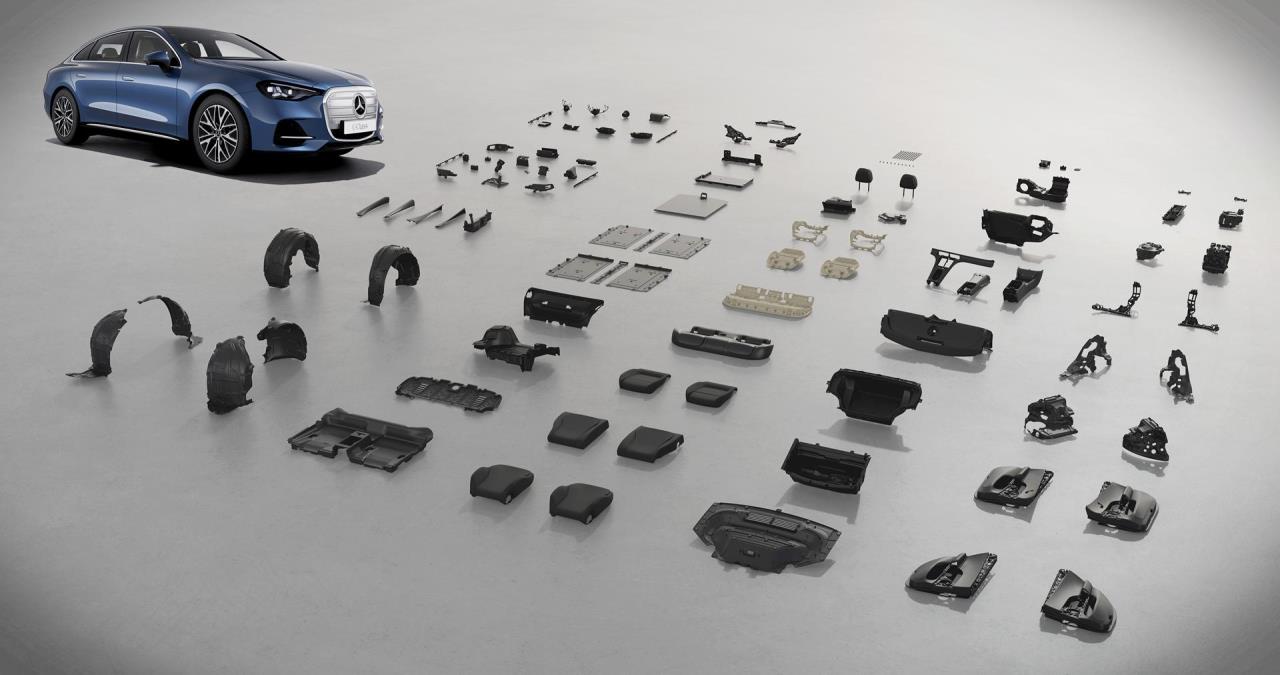
Resource efficiency, CO₂ reduction and the circular economy are already key focus areas during the development phase. Together with its suppliers, Mercedes-Benz specifically relies on CO₂-reduced materials such as aluminum, steel, plastics and battery cells. As a result, CO₂ emissions in the supply chain can be reduced by approximately 23 percent.
Key contributions to the environmental performance of the all-new electric C-Class:

• Design for Environment: Resource conservation measures are firmly embedded in the development process of the all-new electric C-Class. The ‘Design for Environment’ approach considers material efficiency, recyclability and the increased use of secondary raw materials already in the early stages of development.
• Carbon-reduced aluminum: Mercedes-Benz sources approximately two-thirds of the vehicle’s aluminum requirements from electrolysis plants powered by renewable energy or with an increased share of recycled material. In addition to the body and steering knuckles, components such as the wheels and battery housing are made of aluminum with a reduced carbon footprint.
• Carbon-reduced steel: Approximately 99 lbs of steel from electric arc furnaces powered by renewable energy are used for the steel components manufactured in-house.
• Use of secondary materials: Compared to the current combustion engine-powered C-Class, the share of secondary materials in thermoplastics has increased more than fourfold. In total, approximately 108 lbs of thermoplastic recycled plastic are used. Numerous components are partially made from recycled materials, including:
• Frunk tub with 50 percent post-consumer recycled material
• Wheel arch liners with 93 percent recycled content
• Jack mounts made from 100 percent recycled bumpers from scrap vehicles
• Bumper carriers with 83 percent recycled content
• Nonwoven fabric and yarn in seat covers with 34 and 50 percent recycled content, respectively

Reduction of carbon emissions during use phase:
• Outstanding range: The all-new electric C-Class has up to 762 kilometers (WLTP) of electric range1, which makes it ideal for both everyday commutes and long-distance driving.
• High efficiency of the electric drive: With a combined energy consumption of 18.5–14.1 kWh/100 km1 (WLTP), the all-new electric C-Class is one of the most efficient vehicles in its segment.
• 800-volt architecture: Modern 800-volt technology provides the basis for high efficiency and particularly fast DC fast charging.
• Standard multi-source heat pump: It combines efficiency with high thermal comfort. The multi-source heat pump uses waste heat from the electric drive system and the battery, as well as ambient air, to heat the interior. In doing so, it requires around one-third of the electrical energy that a comparable electric auxiliary heater would need to deliver the same heating output under the same conditions.
• High recuperation performance: The C-Class is equipped with a new One-Box braking system. For efficiency reasons, up to 99 percent of all braking processes are carried out entirely through recuperation. Recuperation up to 300 kW is possible, which helps maximize range.
Intelligent charging ecosystem with renewable charging:
• Fast charging speeds: Up to 325 kilometers of range can be charged in as little as ten minutes2.
• MB.CHARGE Public: With standard Digital Extra: MB.CHARGE Public3, customers gain access to one of the largest charging networks worldwide, currently with more than 3 million charging points.
• Renewable Charging: Renewable Charging is an integral component of MB.CHARGE Public in the U.S., Canada, Europe and China. If electricity from renewable energy sources is not yet available at the respective charging station, Renewable Charging uses Energy Attribute Certificates (including EKOenergy eco label). These ensure an equivalent amount of electricity from renewable energy sources is fed into the power grid for charging processes via MB.CHARGE Public.
Energy-efficient and resource-conserving production of the all-new electric C-Class:
• Reduction of carbon emissions: The all-new electric C-Class is produced at the Kecskemet plant, which already operates with energy-efficient technologies. Photovoltaic systems are a central component of the site’s energy supply. West of the plant, a ground-mounted solar park with an installed capacity of 27.4 MWp was built on an area of more than 2.5 million square feet. Together with the photovoltaic systems on the roofs of the new battery assembly facility, body shop and assembly halls, the plant reaches a total capacity of 42.3 MWp. This can cover approximately 25 percent of the annual energy demand.
• Innovative production technologies: In the new paint shop, optimized processes reduce energy consumption by approximately 20 percent compared to the existing facility and cut carbon emissions by approximately 80 percent. Additional investments in water efficiency and waste avoidance help conserve resources throughout the entire production process.
Measures in supply chain management:
• Responsible sourcing: Suppliers must accept the Responsible Sourcing Standards (RSS). As the company’s central contractual framework for sustainability requirements, the standards are applied internationally. Through the Responsible Sourcing Standards (RSS), the company consolidates its expectations of suppliers regarding sustainable and responsible business practices, particularly with regard to working conditions, human rights, environmental protection, business ethics and compliance. The RSS are based on internationally recognized frameworks, among other things, as well as the Mercedes-Benz Group’s Integrity Code and its Statement of Principles on Social Responsibility and Human Rights.
• Focus on CO₂-intensive materials: Binding targets for CO₂ reduction have been integrated into the sourcing processes for materials such as steel, aluminum, plastics and battery cells.
• Decarbonization of the supply chain: Mercedes-Benz works continuously with its partners to transform industrial supply chains, which includes expanding the production of low-carbon steel and aluminum.
• Systematic risk management: Mercedes-Benz continuously enhances its due diligence approach and aims to complete assessments of all material high-risk raw materials by 2028, implementing mitigation measures where necessary. Progress is reported in the company’s Raw Material Report.
Available vegan-certified interior:
• Tomorrow drives Mercedes-Benz: For interior materials, this means not only consistently increasing the share of recycled materials but also offering customers a vegan interior option.
• Vegan interior equipment: For the all-new electric C-Class, Mercedes-Benz offers an optional vegan interior independently certified by The Vegan Society. The only other vehicle in the world with this certification from The Vegan Society is the all-new electric GLC.
• Reviewed materials: Mercedes-Benz has had all soft-touch surface materials in the vehicle interior, such as microfiber fleece, textiles and MB-Tex, completely reviewed and audited.
• Animal-free materials: If there were any indications materials contained animal-based components, the materials underwent further development in cooperation with the respective supplier, and the affected components were replaced by other animal-free components.
• Holistic material concept: The optional vegan package is marked with The Vegan Society’s ‘Vegan Trademark’ and includes, among other things, seat upholstery, headliner, door and pillar trim, and carpets.
About the 360° Environmental Check
Mercedes-Benz has published product-specific environmental information since 2005. The 360° Environmental Check is based on a comprehensive lifecycle assessment of each vehicle and verified by independent auditors. This transparency initiative reflects Mercedes-Benz’s commitment to helping customers make informed purchasing decisions.
Photo credit: Mercedes-Benz
Posted on Autotech-plus.com
Related Posts

Related posts

Latest Post


No Comments