
The Only Rear-Wheel-Drive Skyline GT-R Was Built So Nissan Could Race At Le Mans
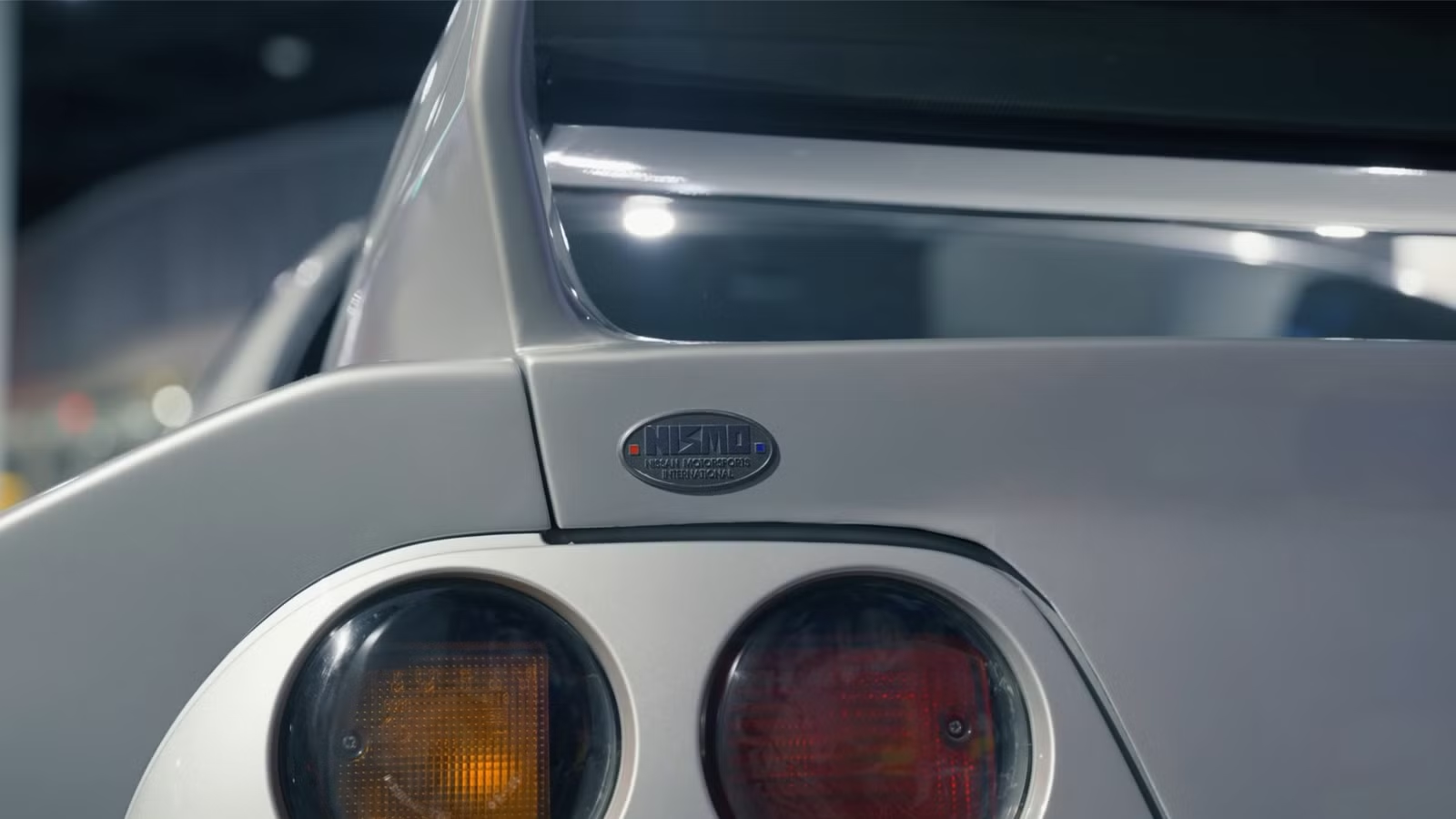
Nissan built the Skyline GT-R’s reputation on all-wheel drive. Its ATTESA E-TS system turned a heavy Japanese coupe into a giant-killer, and the R32 race car won 29 races from 29 starts across four seasons of Japanese touring car racing, earning the nickname Godzilla. So it says a lot that Nissan once built a road-going GT-R that threw that system away. It wasn’t a styling exercise or a dealer special. It existed for one reason, and that reason was a rulebook written in France.
Le Mans GT1 Rules Only Demanded A Single Road Car
A rewrite of the endurance racing rulebook in the early 1990s took a scythe to Nissan’s Group C prototypes and left them all but obsolete by 1994. New regulations favored production-based GT cars instead, and the catch was in the definition. As Nissan’s own heritage archive puts it, the only machines allowed into the GT class were cars based on vehicles approved for use on public roads, so every racer needed a road-legal twin before it could turn a wheel at La Sarthe.
For Nismo, that box was tiny. Before its race car could reach Le Mans in 1995, it had to be homologated, and that required one road-going version only. Not a production run, not a dealer allocation, just a single car with plates.
Why Nismo Took Its Skyline To Le Mans

Petersen Automotive Museum/Youtube

Most manufacturers saw the new rules as a reason to pull out and save money. Nissan went back to the drawing board instead, handing the job to its motorsport arm, Nissan Motorsports International, better known as Nismo. Rather than build a bespoke prototype from scratch, Nismo chose the obvious weapon in its arsenal: the R33 Skyline GT-R, the car Japan already treated as a national performance icon.
Le Mans asked a different question from a Japanese sprint race, though. A GT-R built to survive 24 hours at sustained high speed carried a lot of mass, and Nismo’s engineers decided the car’s signature drivetrain was part of the problem. Their fix stripped the race car to 2,535 lbs and went straight at the feature that made a Skyline GT-R famous.
The Nismo GT-R LM Road Car Nissan Built For One Rulebook

The answer was the Nismo GT-R LM, and the road car that made it legal is the only Skyline GT-R ever built with rear-wheel drive. Its RB26DETT inline-six kept the standard 2.6-liter displacement and made 301 horsepower at 6,500 rpm, with 275 lb-ft of torque at 4,500 rpm, according to Nissan’s specification sheet. It weighed in at 3,483 lbs, and drove through a five-speed manual.
The bodywork told the story better than the spec sheet. Its wheel arches swelled out about 2 inches wider at each corner than a standard R33 GT-R, with a gaping front intake, a lowered chin, and scalloped hood vents. Inside, it stayed close to stock, apart from an Alcantara Nismo steering wheel and checkerboard seats.
How Nismo Turned A Skyline GT-R Into A Rear-Wheel-Drive Car

Petersen Automotive Museum/Youtube
The conversion started with the race car. Nismo pulled the front driveshafts and modified it to 2WD (FR), which Nissan described as a better choice for heavy vehicles. The 1995 race car made around 395 hp, nearly 950 lbs lighter than its road-going twin. Unlike its sister car, that No. 22 entry also ran a Group N specification engine, which kept it closer to the showroom GT-R than the radical machines that followed a year later.
Because the road car existed to homologate the race car, it followed the same layout. That made it a genuine oddity: a GT-R that sent all its power to the rear wheels, built by the same company whose all-wheel-drive hardware had defined the nameplate for a generation.
The British Registration On Japan’s Rarest Skyline GT-R
\The strangest detail is where it was registered. This Japanese homologation special was registered in the UK, although Nissan never marketed it.
Nissan never offered it to a single customer, so the British plates were about paperwork rather than a buyer. Today it sits in Nissan’s Zama DNA garage in Japan, where it rarely moves. Even Carlos Ghosn, while running the entire company, was never allowed to drive it.
What The GT-R LM Achieved At Le Mans

Petersen Automotive Museum/Youtube
Nismo entered two cars in 1995. The No. 22 car of Hideo Fukuyama, Masahiko Kondo, and Shunji Kasuya finished 10th overall and 5th in class after 271 laps, while the faster No. 23 car retired with gearbox damage after 157 laps. For 1996, Nismo returned with a heavily upgraded car running a 2.8-liter version of the RB26DETT, rated at over 592 hp. Masahiro Hasemi, Kazuyoshi Hoshino, and Toshio Suzuki brought it home 15th overall and 5th in class, while the sister car retired after just 29 laps.
The punishing pace of purpose-built GT1 rivals cut the program short a year early, so Nissan changed course. For 1997, it fielded the R390 GT1, a dedicated mid-engine racer that finished on the podium in 1998.
The road car’s legacy carried on in a far more accessible form. Nissan built 188 examples of the R33 Skyline GT-R V-Spec LM Limited to mark the Le Mans program. Those cars kept the familiar all-wheel-drive layout, which leaves the lone LM road car as the only Skyline GT-R that ever ran without it.
Sources: Nissan, Peterson Automotive Museum YouTube Channel.

Related posts



Latest Post


No Comments