
The Most Powerful Cruiser Under $5,000 From 2024
The muscle cruiser is one of motorcycling’s most satisfying contradictions — all that brawny, low-slung attitude wrapped around an engine that can genuinely embarrass sportbikes. Think Yamaha VMax or Ducati Diavel: superbike performance dressed in cruiser clothes. At the other end of the spectrum, asking a sub-$5,000 motorcycle to be properly powerful is already a stretch. Expecting a $5,000 cruiser to lead with performance? That sounds like a punchline.

And yet, here we are. A Chinese brand that planted its flag in the American market has built a liquid-cooled 296cc V-Twin cruiser for under five grand — complete with a rumbling exhaust, a silhouette that borrows liberally from Harley-Davidson‘s greatest hits, and enough punch to make the price tag feel almost unreasonable. Keep your expectations grounded and this little machine will genuinely surprise you.
QJ Motor SRV 300 Is The Most Powerful Cruiser Under $5,000
Power: 30.3 HP
An engine under 300cc is almost always a single-cylinder unit. The QJ Motor SRV 300 is not interested in almost always. In its pursuit of a genuine cruiser experience, this surprise package deploys a 296cc liquid-cooled V-Twin that produces over 30 horsepower — a figure that puts several larger-displacement rivals to shame. For context, some competing cruisers under $5,000 carry bigger engines yet manage roughly ten fewer horses, and many of them weigh more to boot.

The SRV 300 can make a credible claim to being the world’s smallest power cruiser. Its V-Twin is tuned to deliver both low-end grunt and high-end pull, with peak torque arriving at 7,000 RPM and peak power at 9,000 RPM. The result is a broad, usable spread — a torquey bottom end that makes city riding and easy overtakes effortless, and a willing top end for occasional highway stints.
Drive goes through a 6-speed gearbox, with sixth gear clearly optimized for relaxed highway cruising. The exhaust note is a genuine highlight — a cool, burbling rumble that punches well above the bike’s price point and does real work for the cruiser character. What QJ Motor has extracted from this tiny displacement is genuinely impressive. In effect, this Chinese manufacturer has delivered the scaled-down Harley-Davidson experience that Harley itself hasn’t managed to crack for Western markets. The H-D X 350 sold in China isn’t even in the same conversation.
How Fast Does The QJ Motor SRV 300 Go?
With A Weight Of 359 Pounds, This Baby Cruiser Makes Good Use Of Its Power
The QJ Motor SRV 300 has a top speed of 87 MPH. That two-digit number might raise an eyebrow, but viewed through the lens of what this motorcycle actually is — a budget cruiser with a sub-300cc engine — it’s a legitimately impressive result. And remember: speed is supposed to be the last item on a cruiser’s priority list.
For broader perspective, the most powerful motorcycle under $5,000 tops out at around 105 MPH, and it’s a naked sports bike purpose-built for acceleration. That machine runs a larger 321cc parallel-twin and is engineered specifically for speed — yet this unhurried baby cruiser trails it by less than 20 MPH. That’s a remarkable gap to close.
Here’s How The QJ Motor SRV 300 Manages To Go Fast
- A high-revving V-Twin engine with peak power being made at 9,000 RPM.
- Commendable power-to-weight ratio for the segment.
- Gearing ratios help transmit every ounce of performance this cruiser V-Twin offers.
- Each cylinder gets a standalone exhaust for a restriction-free setup in terms of exhaust flow.
The Coolest Feature Of The QJ Motor SRV 300
A Near-Perfect Scaled-Down V-Twin Old-School Cruiser Experience

The SRV 300’s performance package is genuinely impressive, but the more remarkable achievement is how convincingly it shrinks an authentic cruiser experience into such a small package. Harley-Davidson has taken its own swings at the sub-500cc segment with the X500 and the X440 roadsters — both competent entry-level bikes, but neither feels like a true Harley-Davidson. They’re caught in an identity crisis. QJ Motor, meanwhile, appears to have quietly cracked the code of miniaturizing a Harley-Davidson Sportster Iron 883.
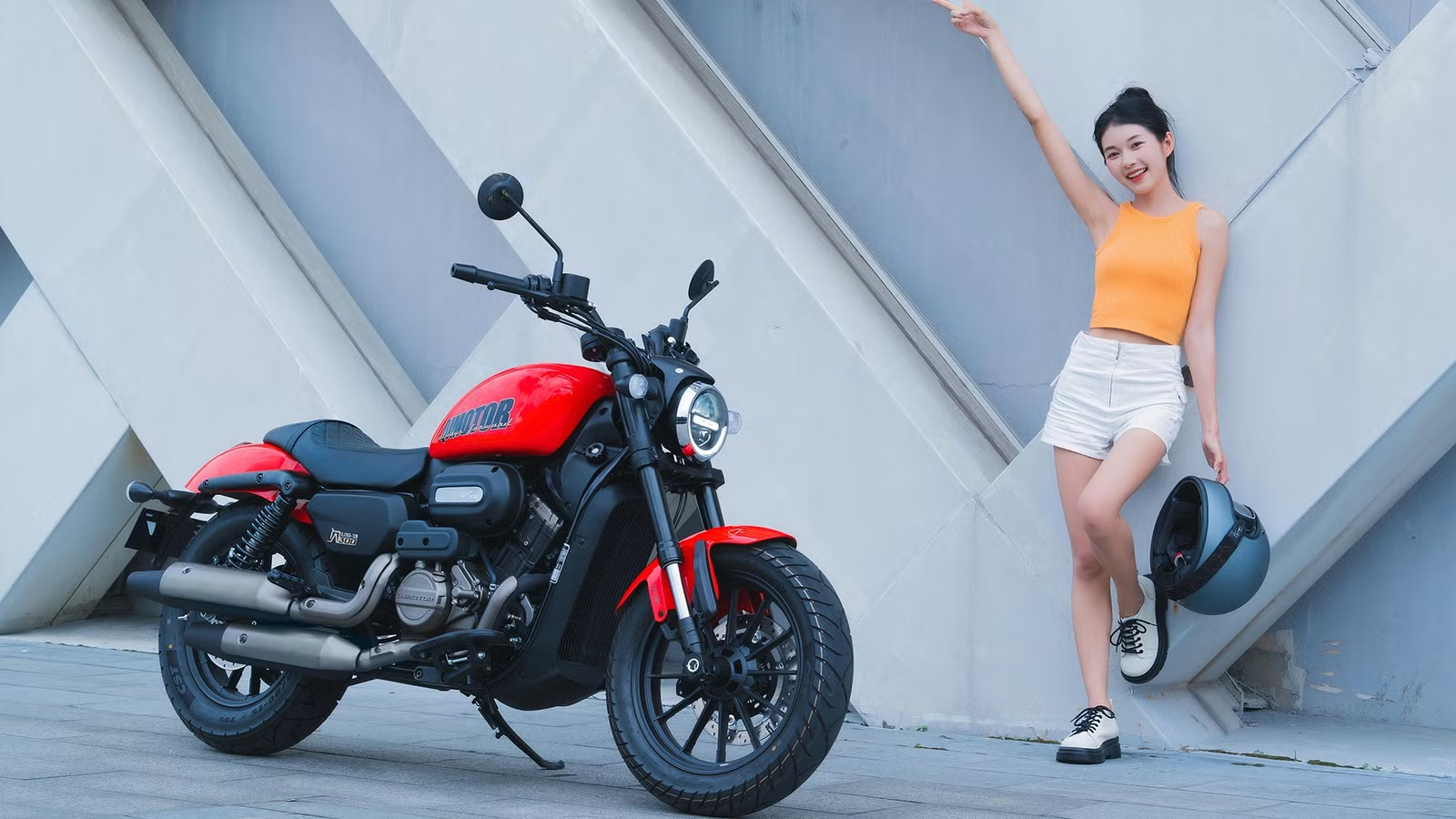
Ergonomics are the first thing that lands right. A seat height of under 28 inches makes the bike accessible to a wide range of riders, and the combination of high-set handlebars and forward-set footpegs nails the classic cruiser triangle for relaxed, long-haul comfort. The tapered peanut tank is immediately familiar and provides a natural gripping surface for the knees. The stepped, well-padded single seat offers enough room to shift around — handy if you ever feel like exploring the SRV 300’s lean angle limits.
The old-school feel is reinforced by a deliberately simple technology package. Useful features include full-LED lighting, a primary LCD instrument cluster, and USD forks. Front suspension travel measures 4.7 inches, while the rear monoshock — adjustable for spring preload and rebound — offers 2 inches of travel. Braking hardware is straightforward: a 280mm single disc up front and a 240mm disc at the rear, with dual-channel ABS fitted as standard.
QJ Motor SRV 300 Design: Inspired By ‘Many’ Harley-Davidsons
Design Cues Reminiscing Famous Harley-Davidsons

Chinese manufacturers have earned a reputation for blatant design copying. QJ Motor takes a more measured approach, drawing clear inspiration from iconic machines while stopping just short of outright imitation — though it does walk that line. The SRV 300’s side profile will immediately call to mind the Iron 883, from the tank shape to the dual exhaust layout, and the overall stance has “Sportster” written all over it. For US-spec models, QJ Motor has wisely dialed back some of the more overt references; the international version even carries a tank decal design reminiscent of the Forty-Eight.
The rear end shows traces of the V-Rod in its short fender design. The headlight is more original, featuring an illuminated “QJMotor” badge that vertically bisects the round lamp housing. Taken as a whole, the SRV 300 wears its influences openly but weaves them together into something cohesive enough to stand on its own — and to sidestep the “rip-off” label.
Notable Design Features
- Chunky 150/80 section 15-inch rear tire
- Peanut-shaped fuel tank
- A single sweeping seat
- Clean rear design with a short yet muscular rear fender
- LED lighting all around
- Contrasting black hardware shade helps hide the long radiator well
- Unique rearview mirror design
Top Cruisers Under $5,000
QJ Motor has hit a home run with the SRV 300. In terms of power, pricing, top speed, weight, and American cruiser character, nothing in this segment comes close. The V-Twin is its biggest trump card. Its closest rival is the Keeway V302 C, which is technically a rebadged SRV 300. The two share their mechanical underpinnings, but the Keeway is marginally less powerful and slightly heavier. Other differences include a 2-to-1 exhaust system, a different tank design, LED lighting, and alloy wheels. The Keeway V-Twin is a more modern-looking offering with youthful design energy, though.

The only other American V-Twin-vibing baby cruiser in this price bracket is the Yamaha V Star 250, but it’s seriously outdated and underpowered. Even being the lightest bike in this group can’t rescue it from a lethargic performance appeal. The trio of Royal Enfield cruisers are charming machines, and two of them — the Bullet 350 and the Classic 350 — hit the right notes for retro appeal. Their aesthetic, however, leans more British than American. The Meteor 350 comes closest to replicating American cruiser charm, but it’s let down by underwhelming performance and a curb weight that hurts its top speed — which doesn’t crack 75 MPH.

The one entry-level cruiser that genuinely gets it right — and earns the title of the SRV 300’s true arch-rival — is the sporty Honda Rebel 300. Despite running a single-cylinder engine, it delivers real cruiser performance. It’s also the only other bike in this group with a six-speed gearbox and a lower curb weight, both of which reflect its athletic character. And then there’s the matter of Honda’s unmatched reliability.
Sources: QJ Motor, Keeway, Honda, Yamaha, Royal Enfield.

Related posts

Latest Post


No Comments