
The Adventure Motorcycle Riders Rarely Feel The Need To Upgrade From
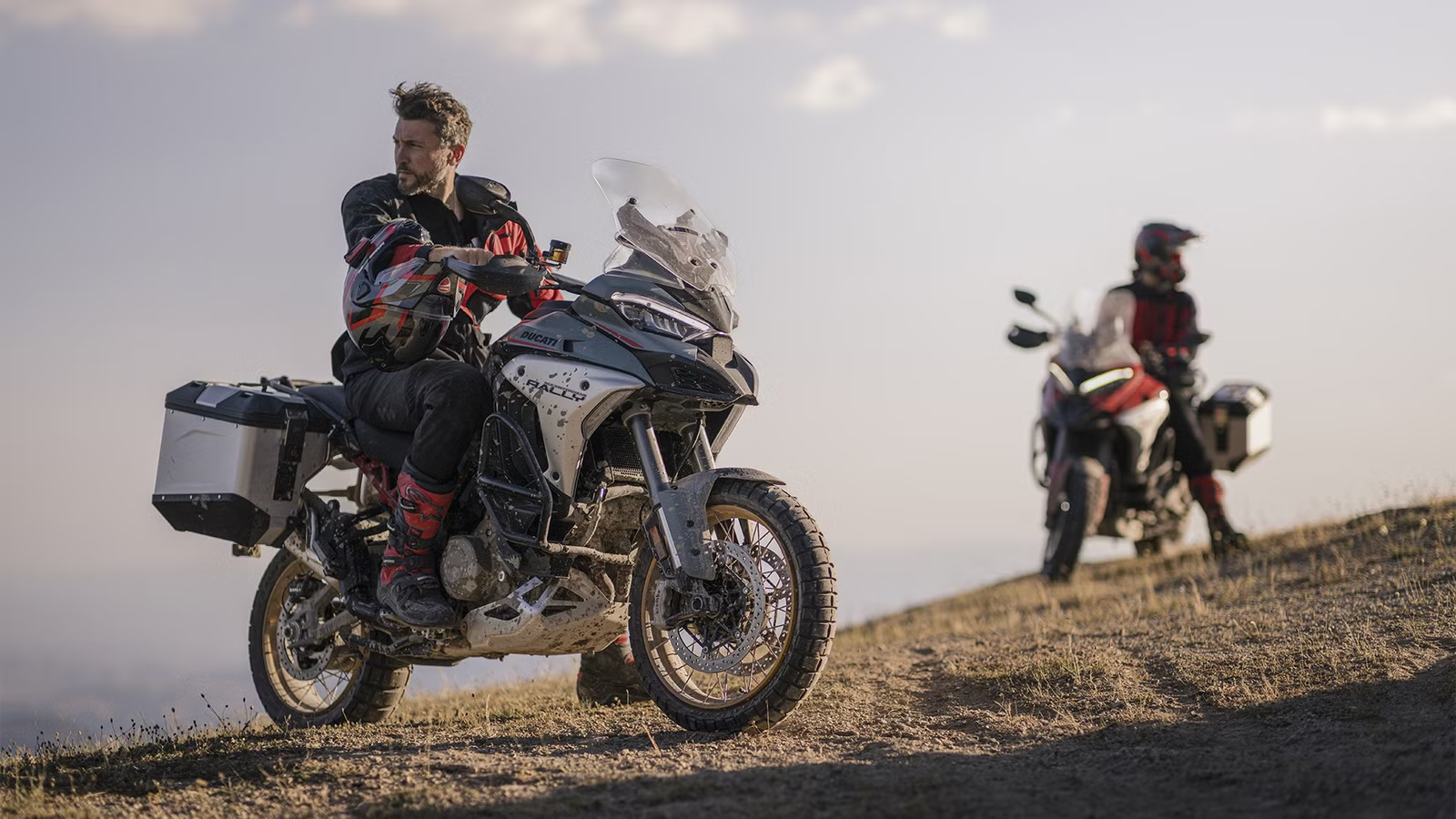
Adventure motorcycles have become the motorcycle world’s answer to a slightly unreasonable question: what if one motorcycle had to do everything? Commute all week, cross a state on Friday, carry two people and their luggage, then turn onto a road that looks like it was designed by a landslide. But there is still a question of how far you can take that idea. If money isn’t much of a concern, what happens when you simply want the motorcycle that leaves you with very little reason to want another one?
Adventure Bikes Have Become The Do-Everything Motorcycle

Adventure bikes have gotten pretty good at refusing to stay in one lane. You can start with a lighter machine that’s happy crawling down a trail, move up to a middleweight that splits its time between pavement and dirt, or go all the way to the heavyweight end, where comfort, range, and highway ability become just as important as what happens when the pavement runs out. There is no single recipe for an ADV anymore, and that’s precisely what makes the category so broad.
But Flagship ADVs Answer The True Long-Term Needs

At the top of that ladder, you get the motorcycles with the biggest engines, most sophisticated electronics, plushest suspension and longest list of standard features, and you’re paying accordingly. They’re heavy and expensive, but they also leave remarkably little on the table. You can tour for days, carry a passenger and luggage, tackle rough roads, and still have enough performance to make a Sunday morning ride. A more specialized ADV might do one of those jobs better, but when your motorcycle already ticks nearly every box, upgrading usually means giving something else up rather than gaining something you were missing.
The Ducati Multistrada V4 Rally Is Built Around Doing More


Enter the Ducati Multistrada V4 Rally. If you want the Multistrada that covers the most ground, this is the one. It gets Ducati’s 1,158cc V4 Granturismo, a 19-inch front wheel, 200 mm of suspension travel and a 30-liter fuel tank, along with the equipment needed to make long-distance, two-up travel part of the equation. Compared with the smaller V2 or the sportier Pikes Peak, the Rally is the one that asks you to make the fewest compromises.
You Need Deep Pockets For The Multistrada V4 Rally

At $31,995 before destination, the Multistrada V4 Rally is firmly in the “you better really want it” end of the adventure-bike market. That’s still quite a jump over the BMW R 1300 GS Adventure, which starts at $23,795, and it’s a long way above the Honda Africa Twin Adventure Sports ES at $17,799. Then again, this is a Ducati, so nobody is exactly walking into the showroom expecting bargain-bin pricing.
The bike isn’t particularly punishing to maintain on paper, either. Ducati calls for oil service every 9,000 miles, while the valve-clearance check doesn’t come around until 37,000 miles. The real wallet danger is what happens after you start ticking boxes on the accessories list, especially if you’re building the bike for the kind of long-distance touring it’s designed to do. Still, the price starts making more sense once you understand what the Rally actually does with that money — starting with suspension technology most motorcycles at twice the price don’t offer.
The V4 Rally’s Suspension Does The Thinking For You

If you’re spending this kind of money on a motorcycle that’s supposed to take you hundreds of miles at a time, the suspension better be doing something pretty special. The V4 Rally gets 200 mm of travel at both ends, and semi-active Marzocchi suspension with Ducati Skyhook Suspension Evolution, but the clever bit is that you don’t have to sit there manually fiddling with preload and damping every time the road changes. Everything is controlled through the TFT, and in AUTO mode, the bike can adjust the suspension for the road, your riding style, and how much weight you’re carrying.
The Automatic Lowering Device Makes Stopping Less Intimidating

Here’s one of the Rally’s cleverest tricks: Ducati calls it the Automatic Lowering Device, and it essentially lets the bike change its height depending on what you’re doing. Drop below six mph, and it electronically backs off the rear shock preload, lowering the bike by up to around 30 mm, so getting a foot down at a stop becomes a lot less dramatic. Get back above 31 mph, and it raises itself back to the proper riding height.
It’s particularly handy if you’re shorter, but it’s a pretty neat solution to the problem of making a tall, long-travel ADV easier to live with without permanently sacrificing its suspension travel. But the suspension setup is only part of the story; the rest has to do with the MotoGP-derived engineering under the tank and the premium tech that ties it all together.
The V4 Granturismo Gives The Rally The Performance To Match Its Size

A 529-pound adventure bike needs an engine that can make that weight feel like somebody else’s problem once you’re moving. The Rally gets Ducati’s 1,158cc V4 Granturismo, making 170 horsepower and 91 pound-feet of torque, with a MotoGP-derived counter-rotating crankshaft that works against the wheels’ gyroscopic inertia. Then there’s the extended cylinder deactivation, which shuts off the rear cylinder bank at idle and at low speeds when engine load is low, bringing the cylinders back online when you ask for more power.
Premium Rider Aids And Radar Are More Than A Gimmick

At this point, you expect a motorcycle like this to come loaded with electronic wizardry, and the Rally doesn’t disappoint. There’s cornering ABS, traction and wheelie control, engine-brake control, Vehicle Hold Control, a quickshifter, TPMS, navigation, and five riding modes, while the radar system adds adaptive cruise control, blind-spot detection, and forward-collision warning. Most of that is becoming familiar territory in the premium-bike world. The Rally has a couple of tricks that are less ordinary, though.
Ducati Vehicle Observer Gives The Electronics A Better Picture Of The Bike

The Ducati Vehicle Observer, or DVO, is one of them. Rather than relying only on the usual IMU data, Ducati says it effectively creates a virtual model of the motorcycle by processing information equivalent to what would come from 70 sensors. That gives the electronics a better idea of what the bike is actually doing, helping refine things like cornering ABS, traction control and wheelie control. You don’t need to understand all 70 sensors to appreciate the point: the bike is giving its safety systems more information to work with.
Optional Accessories Can Turn It Into A Long-Distance Pack Mule

Then there’s the touring hardware, which is where the Rally starts looking less like a motorcycle and more like someone’s very expensive solution to avoiding checked baggage. The current Adventure Travel & Radar package gets aluminum side cases, heated rider and passenger seats, heated grips, and a center stand, while Ducati also offers a three-case setup with a passenger cushion, tank bag, larger windscreen, aluminum-core handguards, and extra LED lights.
The Multistrada V4 Rally Still Has To Deal With Some Serious Rivals

The BMW R 1300 GS Adventure undercuts it by more than $8,000 at base MSRP; the Africa Twin Adventure Sports is even cheaper, and the Triumph Tiger 1200 Rally Explorer offers much of the same big-bike touring brief for less money. But the Rally’s trick is that none of those bikes combine this level of performance, suspension sophistication, electronics, and touring hardware quite the same way. You can buy something lighter, cheaper, or more dirt-focused, but you’ll be giving something up. The Rally is difficult to outgrow because there’s little left to ask for.
Source: Ducati

Related posts


Latest Post


No Comments