
The Most Affordable PHEV With More Than 40 Miles Of All-electric Range
Plug-in hybrid electric vehicles occupy a genuinely useful middle ground that pure EVs and conventional hybrids can’t quite match. Charge one regularly, and you get the near-silent, zero-emissions commute of an EV for everyday errands — plus the long-distance confidence of a gasoline engine whenever the road stretches beyond your battery’s reach. The catch, of course, is that last part: charge it regularly. Skip the plug, and you’re hauling around a heavy battery pack while burning more fuel than a conventional hybrid would, which defeats the purpose entirely.

If you’re already sold on the PHEV concept and want the best of both worlds — genuine all-electric range of 40 miles or more, at an affordable price — the options are surprisingly slim. A 40-mile electric range is a high bar for the segment, and the vehicle that clears it most accessibly also happens to rank among the most affordable PHEVs on sale today.
Say Hello To The Toyota Prius Plug-in Hybrid
That affordable 40-mile PHEV is the Toyota Prius Plug-in Hybrid, which also happens to be one of the most affordable PHEVs on the market, period. The Toyota Prius lineup was completely re-imagined in its latest generation, transforming it from a frumpy hybrid fastback that was the butt of enthusiast jokes into something genuinely desirable. But before we discuss the other aspects of the Prius Plug-in Hybrid, we need to establish which trim level actually achieves that 45-plus-mile EPA-estimated electric range.
You Have To Get The Base SE

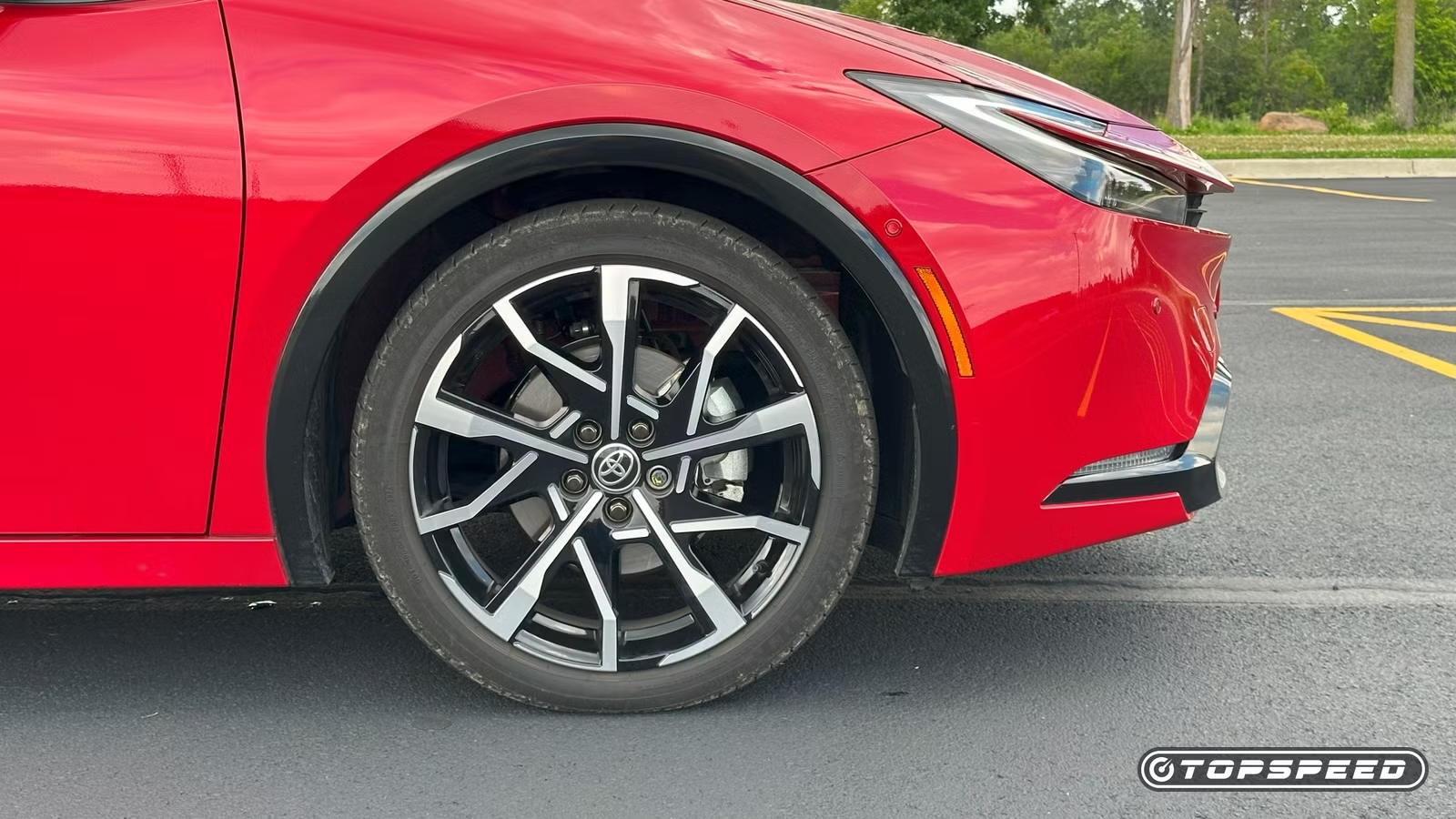
To be clear, EPA hasn’t rated the 2026 or 2027 Prius Plug-in Hybrid yet; these are ratings of the 2025 model year. With an EPA-estimated range of 45 miles, the Toyota Prius Plug-in Hybrid SE boasts one of the longest electric ranges of any PHEV on sale. Stepping up to the XSE or XSE Premium trims drops that figure to a still-respectable 40 miles — a consequence of their larger 19-inch wheels. CarBuzz found that the Prius Prime is ‘super-smooth to drive’ in electric-only mode.
Wheel size has an outsized effect on energy efficiency, which is why the SE’s smaller 17-inch wheels with aerodynamic covers are key to hitting that 45-mile figure. There’s a silver lining: the shorter sidewalls of larger wheels mean a harsher ride, so the SE’s thicker-tired 17-inchers actually deliver a more comfortable experience over broken pavement. The efficiency story doesn’t end with the wheels, either. The SE’s hybrid drivetrain pairs a 2.0-liter naturally aspirated four-cylinder engine with an electric motor driving the front wheels — a combination that keeps the system lean and effective.
The E-Four electronic on-demand all-wheel drive (AWD) system is not available on the SE, but it is still the most powerful way to get into a Prius. With 220 system horsepower, it’s the quickest Prius ever built — Toyota doesn’t publish system torque figures for its hybrids — sprinting from 0 to 60 mph in just 6.6 seconds, all while its 13.6 kWh lithium-ion battery enables that 45-mile EPA-estimated electric range.
It’s Less Aerodynamic And Efficient Than Before

Despite being the newer model, the current Prius is actually less aerodynamic than its predecessor. The older, frumpier car managed a drag coefficient of 0.24 Cd; the new one comes in at 0.27 Cd, a trade-off Toyota made deliberately in pursuit of a more striking design. That said, 0.27 Cd is still an impressive figure by any measure.
Toyota partially clawed back that aerodynamic loss through active grille shutters — which open and close based on engine cooling demands — and extensive flat underbody panels. The efficiency hit shows up in the fuel economy numbers, too: the current Prius Plug-in Hybrid SE is rated at a combined 52 MPG, while the other trims are rated at 48 MPG.
Everything Else You Get With The Prius Prime SE

Those incremental reductions in efficiency are a worthwhile trade for most buyers. The previous Prius was an appliance you bought with your head; the new one is a car you might actually want. With the Prius Plug-in Hybrid, the appeal goes beyond the spec sheet — it’s a vehicle you’d be proud to be seen in, not because it posts the quickest 0–60 time in its class, but because it’s a genuinely handsome car that drives with the urgency of a sports sedan.
Let’s Talk About That Sleek Exterior

The Toyota Prius Plug-in Hybrid SE’s sleeker shape is anchored by its signature Hammerhead shark-inspired front end. C-shaped LED headlights connected by a black trim piece create a distinctive face that Toyota is rolling out across its newer sedan lineup, including the Camry. The sportscar-like silhouette is further sharpened by more steeply raked A-pillars — a styling win that does come at the cost of slightly reduced outward visibility.
Even on 17-inch wheels — the size fitted to this 45-mile SE variant — the Prius Plug-in Hybrid looks properly contemporary. The credit goes to its enhanced proportions, which were reworked while preserving the Prius’s signature monoform shape. A set of full-width LED taillights ties the look together at the rear.
The Inside Also Counts
Like the exterior, the Prius Plug-in Hybrid SE’s interior has received a meaningful glow-up. Even at the base trim level, the feature count is solid: a seven-inch digital instrument cluster — which can be partially obscured by the steering wheel depending on your seating position — pairs with an eight-inch Toyota Audio Multimedia infotainment system.
Leather upholstery isn’t on the menu for the SE, but wireless Apple CarPlay and Android Auto are standard, as is the full Toyota Safety Sense suite of advanced driver-assistance systems (ADAS). That suite includes Pre-Collision System, Blind Spot Monitor, Dynamic Radar Cruise Control, Front and Rear Cross-Traffic Alert, and Traffic Jam Assist, among other features. The SE also includes a Cache Radio that lets you pause or rewind live broadcasts — a small but genuinely useful touch.
How The Prius Plug-in Hybrid Makes For A Great EV Compromise

EV sales growth has moderated from its earlier pace, and hybrid models have stepped into the spotlight as a result. Hybrid sales have surged as buyers recognize the format’s practicality, a trend reflected in how strongly hybrids have held their resale values compared to both EVs and conventional ICE vehicles. PHEVs sit at the top of that hierarchy, and the Prius Plug-in Hybrid SE — with its sub-$35,000 starting price and 45-mile electric range — makes the case as compellingly as any vehicle in the segment. The 2027 Toyota Prius Plug-in Hybrid range starts at $33,980 and tops out at $40,675 before options.
You Can Treat It As A Range Extender

The Prius Plug-in Hybrid SE’s 45-mile EPA-estimated electric range comfortably exceeds the average American’s daily driving distance of around 30 miles, meaning most owners could complete their daily commute without ever touching the gasoline engine. In practice, the ICE becomes a range extender for longer trips — or for those moments when you want to summon all 220 horsepower for a 6.6-second 0–60 mph run.
Charge the Prius Plug-in Hybrid daily as intended, and the fuel savings can be substantial. Whether those savings fully offset the premium over a standard hybrid depends on your driving habits and local electricity rates — but for many owners, the math works out favorably over time.
It’s Also The Best Driving Prius Ever

The driving experience is another area where the new Prius has made genuine strides. The latest TNGA-C platform brings a stiffer structure, MacPherson strut front suspension, multi-link rear suspension, and quicker steering — all of which give the Prius a more composed, engaging character than any of its predecessors.
Toyota chairman Akio Toyoda’s pledge of “no more boring cars” is clearly bearing fruit. Even the Prius — long a punchline in enthusiast circles — has been reborn as a hybrid that trades a small slice of efficiency for a significantly more attractive design and a more rewarding drive.
The Prius Plug-in Hybrid isn’t just a car you’d buy for its efficiency credentials, impressive as they remain. It’s now a vehicle you might choose because you want something that looks good, drives well, comes well-equipped, and delivers the best of both the EV and ICE worlds in one affordable package. The awards and accolades it has accumulated since its redesign reflect exactly that.
Sources: Toyota, EPA

Related posts



Latest Post


No Comments