
The JDM Honda Wagon Americans Can Finally Import And Modify To Perfection
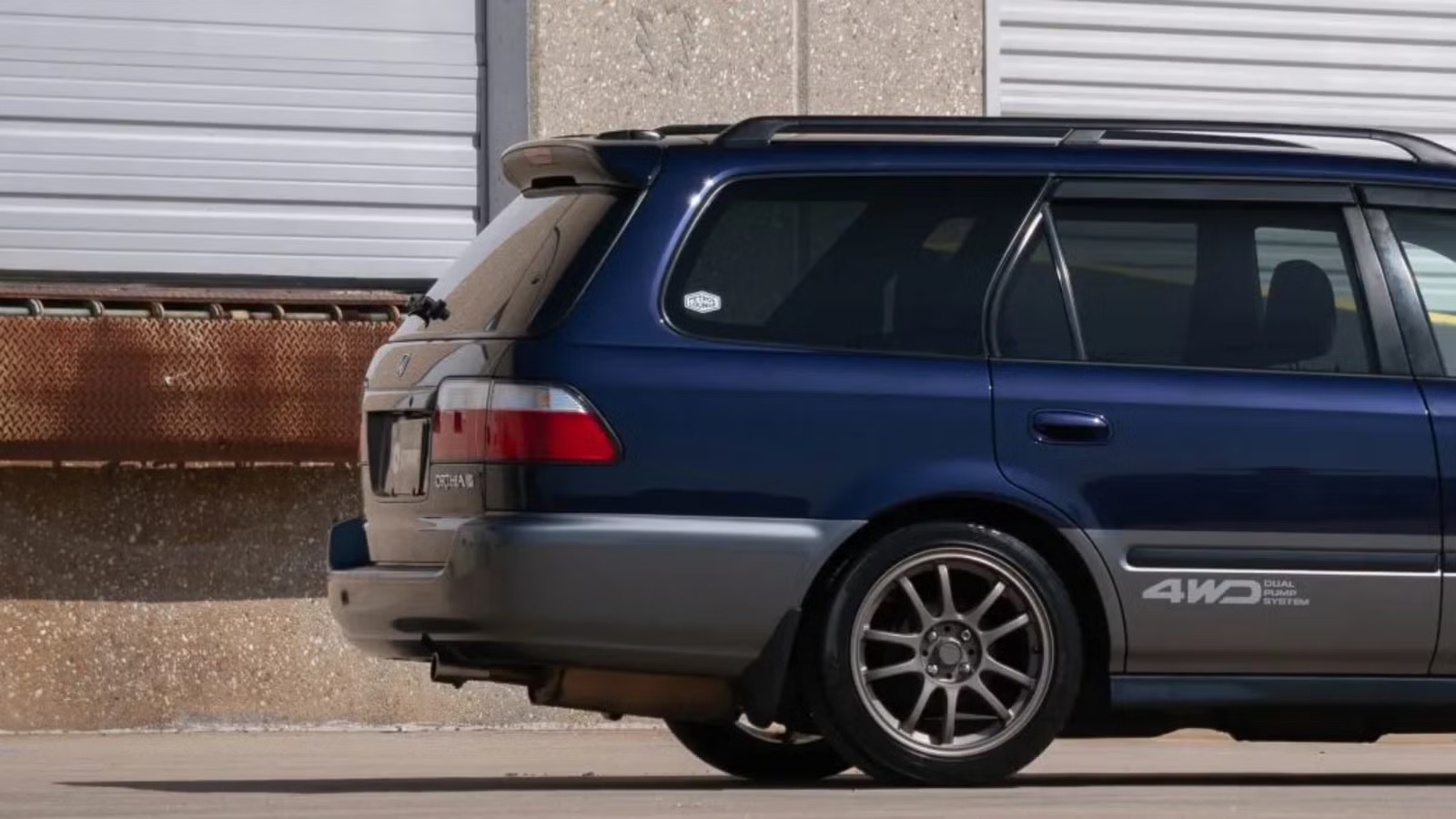
Honda built cars for Japan that American showrooms never even got the chance to offer. While U.S. buyers were stuck choosing between a Civic and a CR-V in the late ’90s, Japan got an entire secret lineup of B-series machines that stayed home. Most of them are still locked away on the other side of an ocean and a 25-year import law.

But one just slipped through. This is a boxy, all-wheel-drive wagon that shares its engine and 4WD system with the first-gen CR-V, and it’s now fully legal to bring into the US. Better yet, it’s cheap, plentiful, and one of the easiest B-series swap candidates out there. Here’s what it is, why builders love it, and which other forgotten Hondas are worth chasing next.
Honda Built A Secret Lineup Of Civic-Based Machines America Never Got
In the late 1990s, American Honda buyers had two real choices: a Civic, or a CR-V. Meanwhile, Honda’s home market in Japan was running an entirely different playbook. The Japanese domestic market, often shortened to JDM, got a whole second lineup of Civic-based machines that the U.S. never saw on a dealer lot.

The sixth-generation Civic platform, known by enthusiasts as the EK chassis, didn’t just underpin hatchbacks and sedans. Honda stretched it, raised it, and reshaped it into SUV-style wagons, compact commercial vans, and the very first CR-V. Different bodies, different names, same bones underneath.
The thread tying them all together is the B-series engine family, a lineup of four-cylinder engines that has become one of the most swapped, most documented platforms in Honda tuning culture. Parts are easy to find, the knowledge base is massive, and the upgrade path is well-worn. One of these forgotten JDM machines is now both legal to import and shockingly affordable, and it’s the perfect gateway into this entire hidden family.
The World’s First 4×4 Performance Wagon Beat The Audi RS6 By Decades
Decades before the Audi RS6, a little-known British wagon paved the way for high-performance all-wheel-drive estates.
The Honda Orthia Is The CR-V’s Forgotten Civic-Based Cousin

|
Engine |
Transmission |
Power |
Torque |
|
1.8L B18B DOHC inline-four |
5-speed manual or 4-speed automatic |
140 hp @ 6,300 rpm |
126 lb-ft @ 5,200 rpm |
|
2.0L B20B DOHC inline-four (pre-1999) |
5-speed manual or 4-speed automatic |
145 hp @ 6,200 rpm |
N/A |
|
2.0L B20B DOHC inline-four (1999 facelift onward) |
5-speed manual or 4-speed automatic |
150 hp @ 6,300 rpm |
N/A |
That wagon is the Honda Orthia, built from March 1996 through January 2002 and sold only in Japan under the chassis codes EL1, EL2, and EL3. Honda marketed it as a “Sport Utility Wagon,” and it was built on the same sixth-generation Civic platform that underpinned the cars Americans actually got to buy. The Orthia just wore a completely different body.
Honda stretched that Civic platform by 200 millimeters to free up rear cargo room, and borrowed styling cues straight from the first-generation CR-V, including roof rails and fog lamp housings. Under the hood, it shared an even more direct connection: the same 2.0-liter B20B four-cylinder engine and Dual Pump Real Time 4WD system found in that early CR-V. The B20B made 145 hp at 6,200 rpm, and Honda bumped that to 150 hp after a 1999 facelift — figures commonly converted to around 138 hp in US terms.

Top-spec 2.0GX and GX-S trims came loaded for the era, with automatic climate control, roof rails, and two-tone paint jobs that made the Orthia feel genuinely upscale. Honda also spun off a stripped-down commercial cousin called the Partner, which stuck around through 2006 with smaller D-series engines instead of the B-series setup. The Orthia, though, was always the one built for Civic-platform enthusiasts to actually want.
10 JDM Legends That Can Handle Over 1,000 HP Without Breaking A Sweat
Just a couple of upgrades can turn these JDM classics into diabolical machines.
Why The Orthia Is A B-Series Builder’s Dream Come True

For Honda builders, the Orthia’s B20B block is exactly the kind of foundation that gets attention. Dropping a B16B VTEC head onto that B20B block is a well-known recipe in B-series circles, and the Orthia gives that exact engine a chassis worth building around. This isn’t an experimental swap; it’s a proven path with plenty of documentation already out there.
That confidence comes from what’s underneath the wagon body. The Orthia rides on the same suspension, subframe, and core wiring architecture as the EK Civic, one of the most heavily supported chassis in the entire aftermarket. Because it’s mechanically a Civic wearing a wagon’s clothes, parts fitment and tuning knowledge carry over directly from a community that’s been building EK cars for decades.

The Dual Pump 4WD system adds something most Civic-based builds simply don’t have. It’s a useful setup for all-weather driving, though it does call for a fluid service roughly every 30,000 miles to stay reliable long term. Put it all together, and the Orthia offers a wagon body and real AWD practicality wrapped around a drivetrain that builders already know exactly how to push past stock output.
12 Used Japanese Sports Cars Nobody Is Buying
Not all great Japanese sports cars are celebrated, and these ten used examples are frequently overlooked by buyers.
What This JDM Wagon Actually Costs To Import Right Now

The best part of this whole story is timing. Early 1996 Orthias are now fully legal to import into the US under the 25-year rule, and that clock runs off the exact month a car was built, not its model year. A car built in March 1996 became eligible in March of this year, while a December 1996 car has to wait until December.
Real sales back up just how reasonable this market still is. A 1996 2.0GX-S 4WD Orthia sold for $9,550 on Bring a Trailer back in September 2023, and that number still holds up as a fair benchmark today. Meanwhile, current importer listings show plenty of clean examples sitting around $6,950, which means there’s real room to find a good one below that benchmark sale price.

There’s also a tariff perk built into the 25-year exemption that most buyers don’t think about. Vehicles old enough to qualify skip the steep 25 percent Section 232 import tariff entirely, paying just a 2.5 percent base duty instead. Before buying or shipping anything, confirm the exact manufacture date stamped on the door jamb plate, since eligibility comes down to that specific month, not the year printed on the title.
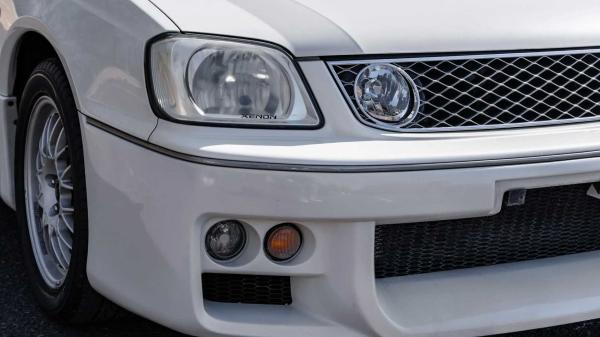
These 2001 JDM Legends Are About To Become Legal In America
New year, new import loophole: a fresh wave of 2001 JDM icons just hit the 25-year mark. Here’s what to chase and what to avoid.
More Hidden Honda B-Series Machines Worth Hunting Down

The Orthia is the easiest entry point, but it’s far from the only forgotten Honda from this era worth knowing. The first-generation CR-V is its closest relative by far, sharing the same B20B engine and Dual Pump 4WD system, and it’s already a well-known, accessible 25-year import in its own right.
For something with sharper teeth, look at the EK9 Civic Type R, built only for Japan between August 1997 and August 2000. It rides on the same EK Civic chassis family as the Orthia, but it came factory-equipped with the B16B VTEC engine that Orthia builders swap in to begin with, making it something like the wagon’s spiritual performance twin.
Then there’s the Integra Type R, known by its DC2 chassis code, which ran in Japan from October 1995 through 2001 with the high-revving B18C engine. It’s a different shape entirely, but it shares the same B-series engine family and the same swap culture that makes the Orthia so approachable for builders. As more 1996 through 2001 JDM Hondas clear the 25-year line month by month through the rest of this decade, the import window on this entire family is only going to keep getting wider.
Sources: Honda, CarFolio.com, Bring A Trailer, Classic.com

Related posts




Latest Post


No Comments