
The Mid-Engine Toyota Roadster That Costs Roughly Half A New Miata
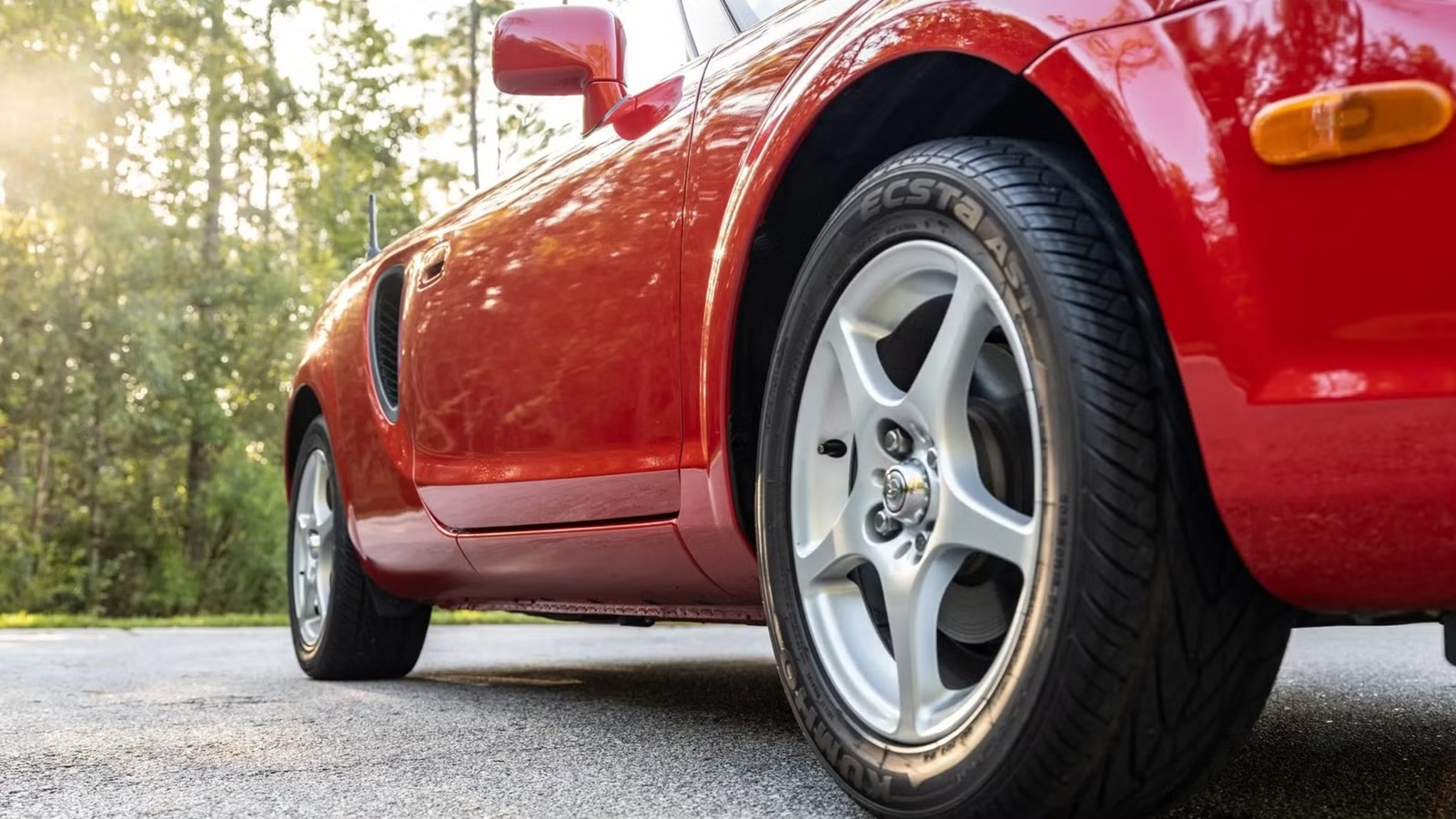
Affordable sports cars aren’t quite as… affordable as they used to be. A new two-seat convertible can still deliver the open-air thrills enthusiasts love, but buying one now takes a bigger bite out of the budget. Fortunately, an overlooked Japanese roadster from the early 2000s offers a tempting alternative. It weighs less than today’s most popular lightweight sports car, features an exotic engine layout, and costs roughly half as much.
The Mazda Miata Sets A High Bar For Affordable Sports Cars

The Mazda MX-5 Miata Sport remains the benchmark for affordable driving fun. Its $29,530 starting MSRP climbs to $30,845 with destination charges, putting it around the $30,500 mark. That buys a naturally aspirated 2.0-liter four-cylinder producing 181 horsepower and 151 lb-ft of torque. A six-speed manual sends power to the rear wheels, while the soft-top model weighs approximately 2,366 pounds. Its predictable handling and playful character explain why enthusiasts still love it.
The MX-5 Miata also makes sense beyond weekend drives. Modern safety features, warranty coverage, and relatively predictable ownership costs make it easier to live with than an aging sports car. It delivers old-school driving thrills without many of the headaches that come with owning something old enough to have a college degree.
A Forgotten Japanese Rival Took The Lightweight Formula Further

Mazda didn’t invent lightweight driving fun, and the traditional front-engine, rear-wheel-drive formula isn’t the only way to achieve it. Mid-engine sports cars position their engines behind the passengers but ahead of the rear axle. This concentrates more weight near the vehicle’s center, reducing rotational inertia and helping it respond quickly to steering inputs.
One Japanese roadster from the early 2000s took that approach surprisingly far. Despite its mid-engine layout, it weighed approximately 2,200 pounds, undercutting today’s Miata. Its horsepower output and acceleration figures were hardly impressive, but that’s part of its charm. Less weight and clever weight distribution can make a winding road more entertaining than another 100 horsepower ever could.
The Toyota MR2 Spyder Delivers Mid-Engine Fun For Around $15,000

The car in question is the third-generation Toyota MR2 Spyder, sold in the United States from 2000 through 2005. Toyota developed this two-seat convertible to compete directly with the Miata, but gave it a mid-mounted engine driving the rear wheels. Unlike previous MR2 generations, the Spyder prioritized low weight over outright performance.
Today, used examples commonly carry asking prices around $11,000 to $15,000, depending on mileage, condition, and location. Some cost considerably less, while pristine examples command premiums. Compared with the roughly $30,500 benchmark for a 2025 Miata Sport, the MR2 offers an exotic sports-car layout for about half the money. It also provides something increasingly difficult to find: a lightweight, purpose-built mid-engine convertible without a luxury badge or luxury-car price.

Depending on specification and measurement, the MR2 Spyder weighs approximately 2,195 to 2,260 pounds, making it roughly 106 to 171 pounds lighter than the manual 2025 Miata soft-top. The measured weight distribution is 43:57 front-to-rear, highlighting the Toyota‘s rear-biased layout. Together, its low weight and centralized mass give it eager turn-in and quick directional changes, although the mid-engine balance can demand care near the limit.
Sure, the MR2 isn’t necessarily a better-handling car than the modern Miata, but it offers a more uncompromising driving experience. Its naturally aspirated 1.8-liter 1ZZ-FE four-cylinder produces just 138 horsepower and 125 lb-ft of torque. Period tests recorded a 7.1-second 0–60 mph run, compared with 5.6 seconds for its tested 2024 Miata Club. The tests involved different cars and conditions, but the acceleration gap is clear. The MR2’s real strength lies in its agility, not straight-line speed.

Unfortunately, that lightweight design comes with compromises. It offers just 1.9 cubic feet of total storage, and the absence of a conventional trunk makes everyday errands and road trips challenging. Even packing for a weekend can become a game of luggage Tetris. More seriously, early MR2 Spyders have a notorious pre-catalytic-converter problem. Deteriorating ceramic material can enter the engine and damage its internals, potentially turning a cheap purchase into a major repair bill. Excessive oil consumption is another concern, particularly on earlier engines. Aging soft tops, blocked drains, and corrosion also deserve attention. Buyers should approach the optional sequential manual transmission carefully, too. Its electronically controlled hydraulic shifting system adds complexity and potentially expensive repairs. A healthy conventional manual car is generally the safer bet.
The Honda Prelude SH And Nissan 350Z Offer Two Very Different Alternatives

The fifth-generation Honda Prelude Type SH, sold from 1997 through 2001, offers a different approach to affordable handling. Its 2.2-liter VTEC four-cylinder produces approximately 195 to 200 horsepower, depending on model year. More importantly, Honda’s Active Torque Transfer System (ATTS) helps reduce understeer by directing additional power toward the outside front wheel during cornering. This gives the front-wheel-drive Prelude impressive cornering confidence. The 0–60 mph sprint takes 6.9 seconds for the 1997 Prelude SH. It also offers more usable cargo space than the MR2, but aging ATTS electronics, worn transmission synchronizers, and deteriorating weatherstripping can make ownership challenging.

The Nissan 350Z appeals to drivers who prefer horsepower over featherweight handling. Early examples sometimes cost $7,000 to $10,000, despite offering substantially more performance. The original 2003 model’s 3.5-liter VQ35 V6 produces 287 horsepower, with later versions making even more. Its conventional front-engine, rear-wheel-drive layout delivers strong acceleration, but its greater weight means it lacks the MR2’s nimble character. The VQ35 enjoys a generally solid durability reputation, although oil consumption can affect certain versions, particularly Rev-Up engines.
The MR2 Spyder Is A Bargain, But Only For The Right Buyer

The Toyota MR2 Spyder remains compelling because it combines low weight, mid-engine balance, and a price around half that of a new Miata. However, the modern Mazda is significantly quicker in the cited tests, more practical, and equipped with modern safety features. The Prelude SH offers impressive front-wheel-drive handling, while the 350Z delivers far more horsepower for the money. Each has advantages, depending on what a driver values most.
For MR2 buyers, condition matters more than finding the lowest price. A pre-purchase inspection, detailed maintenance history, and evidence of good engine health are essential. Checking oil consumption, catalytic converters, transmission operation, and corrosion could prevent expensive surprises. The same caution applies to any aging performance car, of course.
Source: Toyota, Mazda

Related posts

Latest Post


No Comments