
Volkswagen’s 328-HP Hatchback Is An AWD Sleeper With A Drift Mode
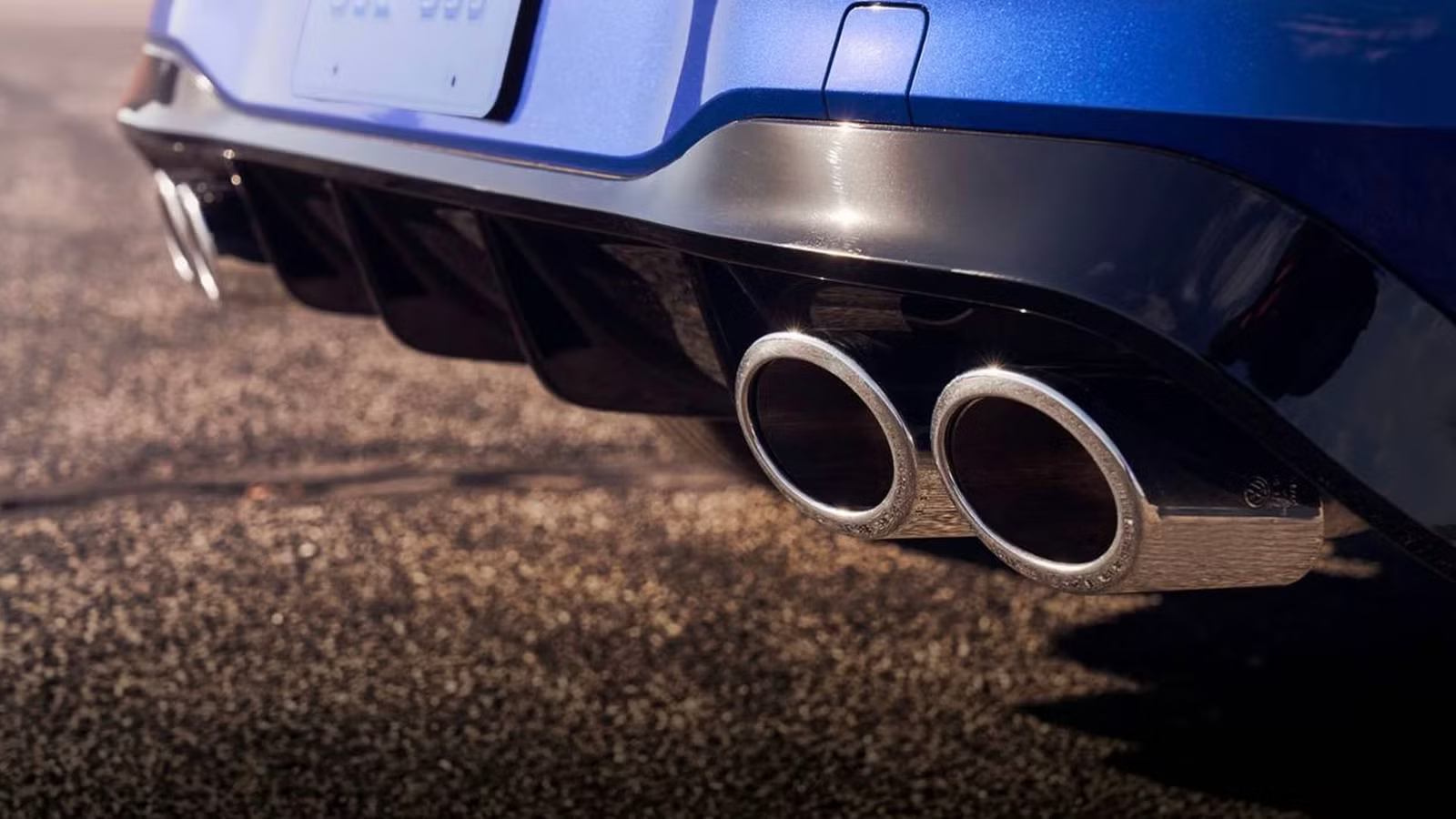
Few segments in the automotive world have proven as enduring — or as genuinely fun — as the hot hatch. Decades after the first pocket rockets began terrorizing traffic, the formula still works: take a practical, everyday hatchback, stuff in a serious engine, sharpen the chassis, and watch enthusiasts line up. What’s remarkable is how far that formula has been pushed since the early days, and nowhere is that evolution more dramatic than at Volkswagen. The Golf R is the latest proof that a five-door family car can embarrass supercars, drift on command, and still haul your groceries home.

Depending on whether you are downing a Halbe in a Wolfsburg Kneipe, or sipping a Pernod in a Paris brasserie, you will probably hear a different version of the birth of the hot hatch. The French will likely point to the Simca 1100 TI of 1973, or the Renault 5 Alpine three years later. The Germans will explain that it was the MK1 Golf GTI — which arrived shortly after the small Renault — that popularized and cemented the term, bringing those iconic three letters to the masses.
In Italy, you will probably hear someone choking on their cappuccino as they point out that it was in fact the 1971 Autobianchi A112 Abarth that got there first. Whatever your take on it, we can all agree that hot hatches are often the very starting point of automotive performance, as well as being an accessible way to go fast and enjoy everyday practicality.
The Hot Hatch Wasn’t Always Very Hot

Well, at least by today’s standards. In the ’70s, proper grown-up sedans were wheezing around with about 60 or 70 horsepower (if you were lucky), which meant you had plenty of time to appreciate the velour and fake-leather interiors. When the Golf GTI arrived it was akin to punk rock hitting the music scene — and that’s not just because its famous tartan upholstery had been influenced by the patterns designer Gunhild Liljequist saw in maverick fashion shops on London’s Carnaby Street.
The car’s red stripes and wheel-well extensions may have seemed like subtle add-ons to Giorgetto Giugiaro’s boxy shape, but they would become hot hatch staples everywhere. Making its debut at Frankfurt’s International Motor Show in September 1975, the GTI featured a four-speed gearbox and a fuel-injected four-cylinder engine. The sprint to 60 mph in around 10 seconds and a top speed of 113 mph would make it one of the slower cars on the road today, but in 1975 it was genuinely mind-blowing.
VW Took The Hot Hatch To Places It Had Never Been Before

Of course, the GTI continued to evolve, with an almost soap opera-like storyline. The MK2 version was arguably even better than the original, but the more refined, stodgier MK3 seemed to step in a different direction — redeemed by the rowdy 2.8 VR6 variant. The fourth-gen GTI felt a bit confused, before VW went back to the drawing board and made the MK5 (and every iteration since) more single-minded. Alongside the GTI, Volkswagen also took the VR6 range-topper and morphed it into the R32, and later the R versions, which are like Black Forest Gateau with a double side order of Sahne. And that’s where we find ourselves today, with a German hot hatch that can pretty much do everything, from drifting to putting the frighteners on supercars.
The Golf R Is A Totally Different Type Of Hot Hatch

The Golf R is the current range-topper for VW’s ubiquitous hatchback. It draws heavily on the DNA of the original but changes the game in almost every other respect. The subtle styling and inherent practicality remain, but so too does the shocking nature of its performance. The R is an all-wheel-drive car packed with technology. The 4MOTION system comes with R-Performance Torque Vectoring, intelligently networked through the vehicle dynamics settings. The center differential distributes power between both the front and rear axles, as well as between the two rear wheels individually, making the Golf agile and genuinely fun rather than simply grip-obsessed.
The electronic control unit monitors sensors to manage power distribution, while drive shafts and differentials transfer power from the engine to all four wheels. This keeps the car as neutral as possible and eliminates over- or understeer in normal driving. The Golf can then be customized through various drive mode settings to handle exactly how you want, when you want.
The Golf R Has Supercar Baiting Performance

Couple all of this clever chassis technology with an upgraded version of the EA888 2.0-liter turbocharged engine, and you have a genuine giant killer on your hands. That tuned four-cylinder delivers 328 hp and 310 lb-ft of torque, which means 60 mph arrives in just 4.1 seconds and 100 mph is dispatched in 10.4 seconds. The quarter mile is taken care of in 12.7 seconds. The four-cylinder unit is mated to a 7-speed DSG transmission with steering-wheel-mounted paddle shifters.
While the performance probably isn’t going to quite match modern supercars, the Golf would be neck and neck with an early V10 Lamborghini Gallardo to 60 mph, and a Ferrari 360 Modena would struggle to keep up. A V8-powered Ford Mustang GT with a manual gearbox would also get a hard time from the Golf, which sprints to 60 mph in 4.2 seconds.
The Golf R Is A Hatch That Will Drift

The latest Golf R has supercar-chasing speed, but it also has another trick up its sleeve. Like the Focus RS before it, it offers a Drift mode when you opt for the R Performance Package. This hooligan setting can be rapidly accessed by lightly pressing the R button on the steering wheel. With Drift mode engaged, you can provoke oversteer instead of neutral vehicle handling, with maximum torque directed to the wheel on the outside of the bend. The ESC kicks in late — or not at all — allowing this five-door hatchback to drift like a ’90s Nissan.
The Golf R Could Be All The Car You Ever Need

The MK8 Golf R is a long way from its spartan distant cousin, the original Golf GTI. You get 91.1 cu-ft of interior room and 19.9 cubic feet of luggage space — enough to rival midsize sedans — with a 60:40 split rear backrest that allows an almost flat cargo area of 34.5 cu-ft. The sports seats feature perforated black Nappa leather surfaces and offer 12-way power adjustment. The driver gets a floating infotainment screen, as well as a Travel Assist button to engage the standard semi-automated, hands-on driver assistance features. A host of other convenience features round out the package, including Volkswagen’s KESSY keyless access with push-button start, Wi-Fi capability when you subscribe to a data plan, and a head-up display. Gone are the days when hatchbacks were designed mainly with city driving in mind.
Buying A Golf R Is Easy

If you time-traveled from 1976 to today, you might be in for a shock — and we aren’t talking about the Golf R’s level of performance. The original VW Golf GTI was around $8,000 new, but the latest Golf R costs in the neighborhood of $50,000. Then again, $8,000 in mid-’70s money is roughly equivalent to around $46,000 today, so when you look at it that way, the R — which sits above the GTI in the lineup — represents reasonable value. If you’d rather not pay full price, used examples can be found at a meaningful discount depending on model year and mileage. Fancy another hot hatch option? You could even track down a 1977 Golf GTI MK1 for a comparable sum. Now that is an interesting price comparison.
Sources: Volkswagen

Related posts


Latest Post


No Comments