The Mazda SUV That Delivers BMW X5 Substance For $25,000 Less
10 minutes reading
Thursday, 9 Jul 2026 12:00 0 90 autotech
Mazda has spent the better part of a decade trying to convince buyers it belongs in conversations usually reserved for German luxury brands, and with the Mazda SUV in question, that argument finally has teeth. Priced from roughly $40,000 and topping out in the high $40,000s to low $50,000s even in loaded trims, the three-row Mazda undercuts a comparably equipped BMW X5, which starts north of $65,000, by something in the neighborhood of $25,000. That gap alone would be notable. What makes it remarkable is that Mazda backs it up with a turbocharged inline-six engine, rear-wheel-drive-biased architecture, and an interior that punches well above its price class.
But the Mazda nameplate covers two very different vehicles, and treating them as one blurs an otherwise clear story. The gas-powered inline-six is the genuine X5 alternative—the one that justifies every flattering comparison to German rivals. The plug-in hybrid variant, despite sharing the same sheet metal, badge, and base architecture, is the version buyers need to approach with their eyes open—because the refinement that makes the inline-six special doesn’t carry over once Mazda adds a battery and electric motor to the mix.
Why This Three-Row SUV Delivers BMW X5-Like Substance For Roughly $25,000 Less
Front 3/4 shot of 2025 BMW X5 xDrive50e parkedBMW
The value case for the Mazda starts with hardware that has no business showing up at this price point. Mazda built this SUV around a longitudinal, rear-wheel-drive-biased platform rather than the transverse, front-drive-based layouts that underpin most mainstream three-row crossovers, which is the same fundamental architecture choice BMW makes with the X5. That decision shapes everything from weight distribution to steering feel, and it’s a big part of why reviewers keep reaching for German comparisons instead of comparing the Mazda to other mainstream family haulers.
Inside, this SUV continues the trend Mazda started with the CX-50 and CX-70 of treating cabin materials as a genuine differentiator rather than an afterthought. Quilted Nappa leather, real wood and metal trim, and a relatively restrained, screen-light dashboard layout give upper trims an ambiance that feels closer to a BMW or Volvo showroom than a typical mainstream dealer lot. Reviewers who climb out of a CX-90 and into a same-priced rival from a mainstream brand consistently note how much further Mazda has pushed the cabin experience, from the stitching detail on the seats to the damped, solid feel of the switchgear.
Rear 3/4 action shot of 2025 BMW X5 xDrive50eBMW
None of this would matter if the price didn’t track with a mainstream SUV rather than a luxury one, but it does. This Mazda in the mid-$40,000s can be specified with the inline-six engine, all-wheel drive, and most of the design touches that make the range-topping Turbo S feel special, all while an equivalent X5 buyer is still working through options packages that push the German SUV well past $70,000. Even accounting for the fact that no two trims line up perfectly feature-for-feature, the gap is wide enough that it changes the calculus for a meaningful share of three-row luxury shoppers, particularly those who care more about how a vehicle drives and feels than about the badge on the hood.
How The Mazda CX-90 Turbo S Turns Premium-SUV Expectations Upside Down
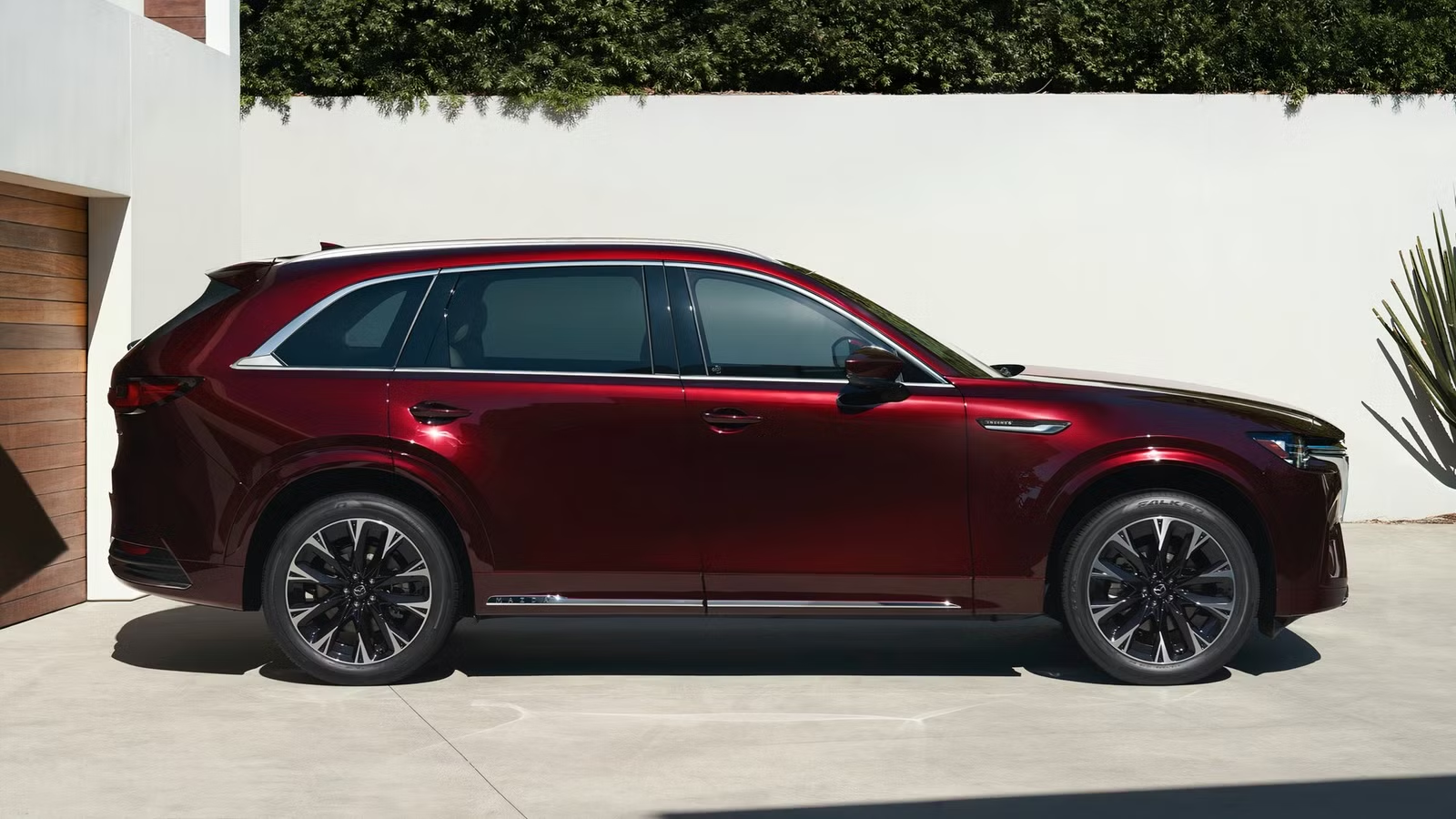
Front 3/4 shot of 2026 Mazda CX-90 parkedMazda
The Turbo S trim is where the 2026 Mazda CX-90’s value argument turns into a performance argument. With 340 horsepower and 369 pound-feet of torque on tap from its turbocharged inline-six, the Turbo S will hit 60 mph in roughly 6.3 seconds, a figure that lands the three-row Mazda in the same neighborhood as plenty of two-row luxury SUVs that cost considerably more. That kind of straight-line pace from a family-hauling three-row SUV would have been unthinkable from Mazda even five years ago, and it upends the usual assumption that mainstream brands only compete on price while luxury brands own performance.
What makes the Turbo S notable isn’t just the number on a spec sheet. It’s that Mazda achieved it with an engine layout—an inline-six—that the rest of the industry has largely abandoned in favor of smaller turbocharged fours and electrified powertrains. Most mainstream brands chasing efficiency targets have moved toward downsized engines or hybrid systems, so reviving a longitudinally mounted six in a mainstream three-row SUV was a deliberate, expensive engineering bet, one that required Mazda to develop a new rear-wheel-drive-biased platform rather than adapt an existing front-drive architecture. It’s a bet that pays off in the way the CX-90 Turbo S drives, with the kind of linear power delivery and induction noise that turbocharged four-cylinder rivals can’t replicate regardless of how cleverly they’re tuned.
Profile action shot of 2026 Mazda CX-90 driving on roadMazda
Buyers cross-shopping a base X5 against a loaded CX-90 Turbo S aren’t just saving money; they’re getting a vehicle that competes on the same performance terms while doing it for tens of thousands less. That combination, genuine six-cylinder performance and a price that undercuts the segment’s benchmark by a wide margin, is precisely the kind of value disruption that doesn’t come around often in the three-row SUV space, and it’s the reason the CX-90 Turbo S keeps showing up in comparison tests against vehicles wearing far pricier badges.
An Inline-Six Powertrain And Rear-Drive Character That Make Every Mile Feel Special
2025 Mazda CX-90 engineChris Chin | TopSpeed
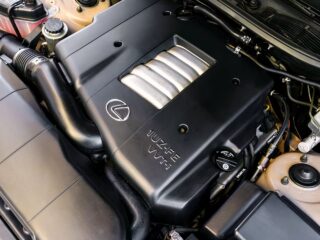
The inline-six’s appeal isn’t only about acceleration numbers. Entry-level Mazda CX-90 trims still produce 280 horsepower, which is plenty for a three-row family SUV, and the engine’s inherent smoothness—a benefit of the inline-six layout’s natural primary and secondary balance—gives the CX-90 a refinement that four-cylinder turbo rivals simply can’t match at idle or under light throttle. There’s an evenness to how the power builds, free of the surging or turbo lag that can make smaller-displacement engines feel less composed under normal driving conditions, and that smoothness is immediately noticeable to anyone stepping out of a four-cylinder competitor.
Base Trim Engine
3.3L Skyactiv-G 16
Base Trim Transmission
8-Speed Automatic
Base Trim Drivetrain
All-Wheel Drive
Base Trim Horsepower
280 hp @ 5000 rpm
Base Trim Torque
332 lb-ft @ 2000 rpm
Base Trim Fuel Economy (city/highway/combined)
24/28/25 mpg
Make
Mazda
Model
CX-90
Segment
Midsize SUV
Combined with the rear-wheel-drive-biased chassis, the CX-90 turns in with a directness and weight transfer that feels closer to a sports sedan than a tall family hauler, a trait reviewers have repeatedly singled out as the CX-90’s strongest dynamic asset. Body control through corners stays composed even when the third row is occupied and the cargo area is loaded, a scenario that exposes the compromises in most front-drive-based three-row competitors. It’s the kind of driving experience that explains why outlets keep reaching for BMW comparisons rather than measuring the CX-90 against other mainstream three-row crossovers.
Mazda Hasn’t Gotten Everything Perfect With The Gas-Engine CX-90
2025 Mazda CX-90 badgingChris Chin | TopSpeed
The same eight-speed automatic transmission shared across the lineup can exhibit some hesitation at low speeds—a minor but noticeable rough edge in stop-and-go traffic, particularly from a standstill or during slow parking maneuvers. It’s a small complaint relative to everything the inline-six powertrain gets right, and it’s worth flagging now because that same transmission becomes a much bigger problem once Mazda pairs it with the CX-90’s plug-in hybrid system.
Where The Plug-In Hybrid Falls Short Of The Refinement Buyers Expect At This Price
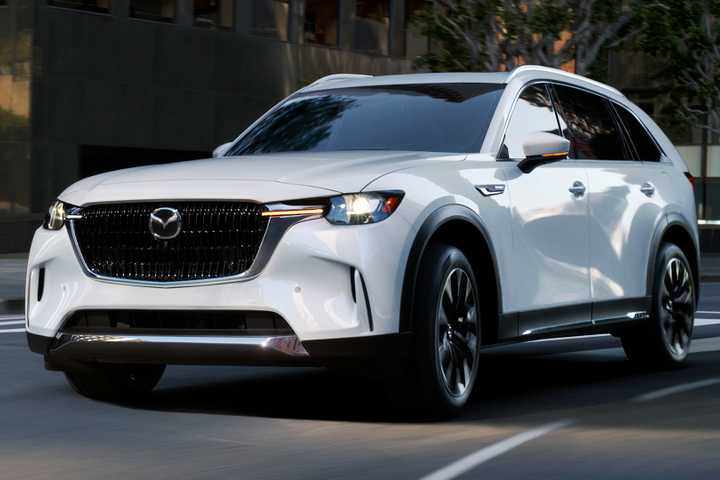
2026 Mazda CX-90 PHEV Front 3/4Mazda
The inline-six makes the case for the CX-90 as a genuine BMW X5 alternative. One variant threatens to muddy it. The CX-90 PHEV pairs a 323-horsepower hybrid powertrain with that same eight-speed automatic, and the combination has drawn consistent criticism for shudders, hiccups, and clunky, loud transitions whenever the system swaps between electric and gasoline power. The roughness isn’t subtle; it’s the kind of thing a buyer test-driving the PHEV would notice within the first few miles, particularly when accelerating from a stop or when the gasoline engine fires up mid-drive to assist the electric motor.
Mazda has issued technical service bulletins and software updates aimed at smoothing out the transmission’s low-speed behavior, and those fixes have helped, but reviewers say the PHEV still feels coarse in everyday driving compared with rivals from Toyota and Volvo that have years more experience refining hybrid-powertrain calibration.
The Numbers Compound The Problem
Mazda CX-90 PHEV engineMazda
EPA estimates put the PHEV’s all-electric range at just 27 miles from its 17.8-kWh battery, a figure that trails many of the vehicles whose buyers are most likely to cross-shop the Mazda. A shorter electric range means more frequent reliance on the gasoline engine, and therefore more frequent exposure to the very transmission roughness that defines the complaint in the first place. And despite the added electric motor, the PHEV is actually slower than the cheaper gas-only six, needing 6.8 seconds to reach 60 mph versus the standard inline-six’s 6.3-second run in Turbo S form. Paying a premium for a powertrain that’s both less refined and less quick than the model it’s meant to upgrade is a tough sell, and it’s the single biggest crack in an otherwise compelling value story.
The Simple Buying Advice: Choose The Inline-Six And Avoid The Flagship’s Biggest Compromise
2026 Mazda CX-90 third row viewMazda
2026 Mazda CX-90 interior view drivers sideMazda
None of the PHEV’s shortcomings undo what the inline-six CX-90 accomplishes. A buyer cross-shopping a BMW X5 should walk into a Mazda dealer, configure a CX-90 with the turbocharged six, and expect to drive away with a vehicle that delivers genuine luxury-SUV substance, rear-drive dynamics, six-cylinder smoothness, and a cabin that doesn’t feel like a compromise—for roughly $25,000 less than the German alternative. That’s the CX-90 most shoppers should actually buy, and it’s the version that justifies every favorable comparison Mazda has earned over the past several years of steadily climbing upmarket.
2026 Mazda CX-90 interior closeupMazda
The PHEV, meanwhile, is best treated as a separate decision entirely—one to consider only if a short electric commute and access to home charging genuinely line up with that buyer’s routine, and even then only with full knowledge of the transmission’s documented rough edges and the powertrain’s modest electric-only range. Buyers who don’t have a clear daily use case for that limited EV range are simply paying more for a slower, less polished SUV than the gas-only model sitting right next to it on the lot. For everyone else drawn in by the promise of BMW-level substance at a mainstream price, the answer is straightforward: skip the flagship plug-in hybrid, take the inline-six, and let the CX-90 do exactly what it does best.











No Comments