The Toyota SUV Families Keep Long After The Warranty Expires
9 minutes reading
Saturday, 11 Jul 2026 20:00 0 65 autotech
Every family eventually reaches the same decision point: the day the factory warranty runs out and it’s time to decide whether the SUV in the driveway is worth keeping or worth trading. For most vehicles, that decision is easy. The average SUV starts racking up repair bills right around the time coverage disappears, and owners quietly move on to something newer rather than gamble on what comes next.
But a small handful of SUVs break that pattern entirely. These are the vehicles families hang onto well past 100,000 miles, past 200,000 miles, sometimes for fifteen or twenty years without a second thought about trading them in. What separates these long-haul survivors from the rest isn’t flashy technology or interior polish, it’s mechanical simplicity, a manufacturer with a genuine track record of building things that last, and everyday usefulness that doesn’t fade with age. One full-size SUV checks every one of those boxes better than almost anything else on the market, and it belongs to a brand that’s built its entire reputation on vehicles families keep for decades rather than years. Here’s why it earns that distinction.
Why Some Family SUVs Stay In Driveways For Decades Instead Of Just A Few Years
Front 3/4 shot of 2025 Ford Expedition in white parked outside of houseFord
Walk through any suburban neighborhood and you’ll notice a pattern: some SUVs disappear after five or six years, quietly swapped for something newer, while others stick around for a decade or more, still doing school runs and road trips well past 150,000 miles. The difference rarely comes down to how good a vehicle felt on day one. Plenty of SUVs impress at the dealership with soft leather, big screens, and a smooth test drive, only to become expensive headaches once the factory warranty expires and the first serious repair bill arrives.
Front 3/4 shot of 2026 Chevrolet Tahoe driving on roadChevrolet
What actually keeps a family SUV in the driveway for the long haul is a mix of unglamorous virtues: mechanical simplicity that ages well, a manufacturer with a track record of standing behind its own engineering, and a design that keeps solving daily problems instead of creating new ones. Families don’t fall in love with spec sheets; they fall in love with vehicles that just keep working. That’s the real test of a long-term family SUV, and very few nameplates pass it consistently. One of them deserves a much closer look.
The Toyota Sequoia Delivers The Space, Capability, And Dependability Families Need For The Long Haul
Front 3/4 shot of 2010 Toyota Sequoia parkedToyota
That nameplate is the Toyota Sequoia, and it has always been built for families who need genuine capability rather than the appearance of it. Sharing its body-on-frame architecture and running gear with the Tundra pickup, it’s engineered more like a work truck than a crossover, which matters enormously once a vehicle starts racking up serious mileage. Toyota’s truck-based platforms have a long history of shrugging off the kind of abuse—trailer towing, gravel roads, overloaded cargo areas—that wears out unibody crossovers well before six figures on the odometer.
That Truck DNA Translates Into Real Numbers Families Actually Use
Rear 3/4 shot of 2010 Toyota Sequoia parkedToyota
Properly equipped, the current Sequoia can tow between 8,980 pounds on a 4WD Capstone and up to 9,520 pounds on a 2WD SR5, which covers everything from a mid-size boat to a loaded travel trailer. Seating stretches to eight passengers with the standard second-row bench, or seven with available second-row captain’s chairs, and available four-wheel drive with a two-speed transfer case means the Sequoia can handle a snowy mountain pass as easily as a gravel campsite road.
None of that would matter much if the Sequoia fell apart after the warranty ran out. Toyota’s reputation for durability isn’t marketing spin; it’s built on decades of body-on-frame trucks and SUVs that routinely outlive multiple owners, and the Sequoia inherits that same fundamental toughness, giving families a reasonable expectation that the vehicle they buy today is one they’ll still be driving in 15 years.
A Well-Engineered Hybrid Powertrain
Front 3/4 shot of 2026 Toyota Sequoia parked off-roadToyota
Every current 2026 Toyota Sequoia comes standard with Toyota’s i-FORCE MAX powertrain, a twin-turbocharged 3.4-liter V6 paired with an electric motor sandwiched between the engine and transmission. Output lands at 437 horsepower and 583 pound-feet of torque, drawing from a 48-horsepower electric motor and a 1.87-kWh sealed nickel-metal hydride battery charged by regenerative braking. That torque arrives low in the rev range, which is exactly what a heavy SUV towing a trailer needs, and fuel economy holds up surprisingly well for a vehicle this size, with EPA ratings reaching up to 19 mpg city, 22 mpg highway, and 20 mpg combined on four-wheel-drive models.
The Downsides Of Innovation
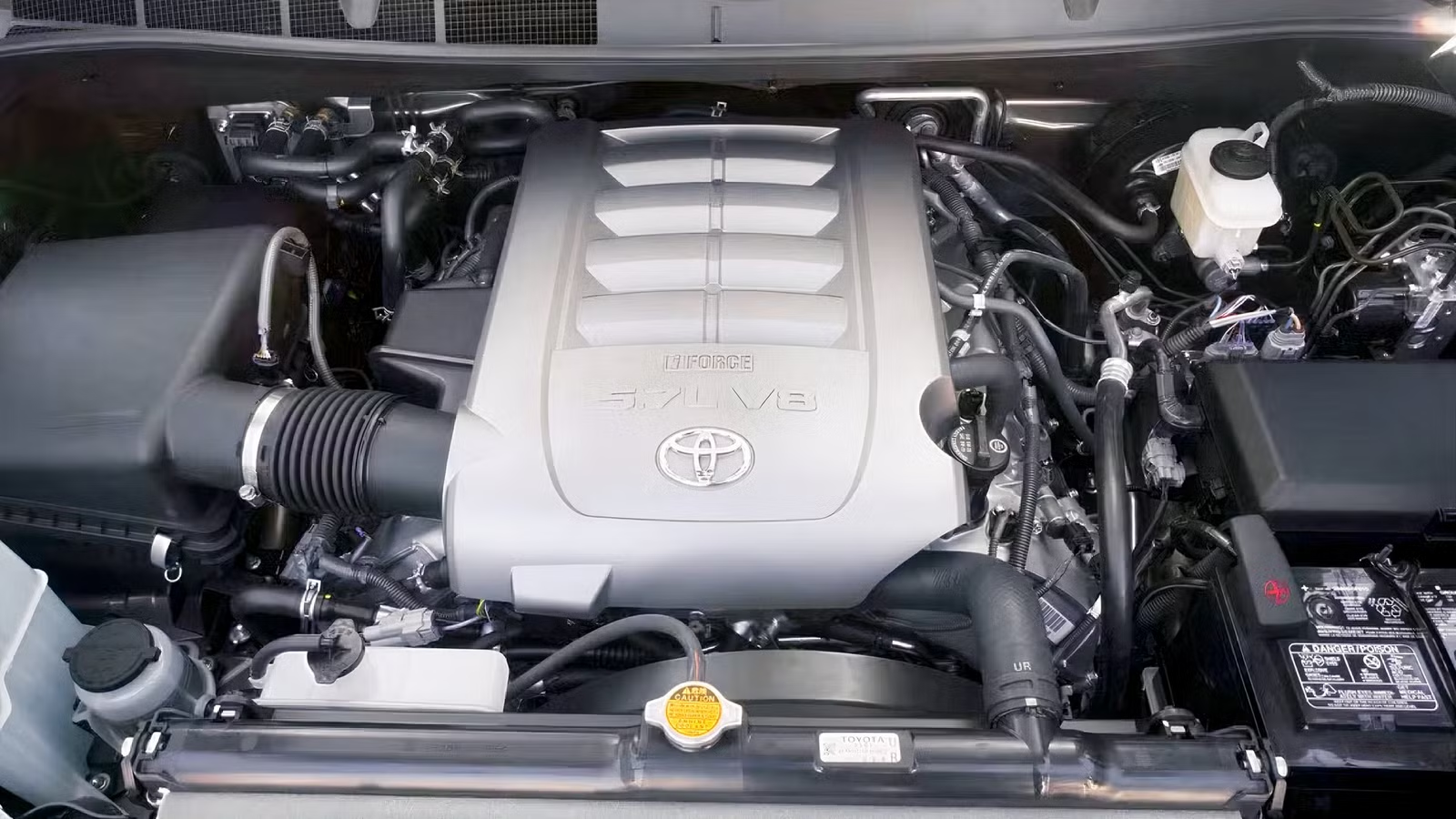
Close-up shot of 2023 Toyota Sequoia engine bay showing V35A V6Toyota
It’s worth being honest about this powertrain’s track record rather than assuming it will simply match the reputation of Toyota’s old V8. The i-FORCE MAX is still a relatively young design, having launched for the 2022 model year, and early Tundra examples experienced well-documented engine bearing and debris issues that led to recalls and warranty repairs, problems Toyota worked to address through revised components and service procedures. That’s a meaningfully shorter track record than the naturally aspirated V8 the previous-generation Sequoia used for nearly fifteen years, which built its reputation on hundreds of thousands of largely trouble-free miles.
That said, the early evidence on high-mileage durability is encouraging. One widely reported 2022 Tundra running the same i-FORCE MAX architecture reached 210,000 miles in just over two years of heavy daily use, with its owner reporting only a single non-maintenance repair, a fuel hose replacement at 162,000 miles, alongside routine service.
2025 Toyota Sequoia Top-down shot parked off-roadToyota
Toyota also backs the hybrid battery with a 10-year, 150,000-mile warranty, a strong signal of confidence in the system’s long-term durability. For families cross-shopping a Sequoia, the sensible approach is to stay current on service intervals, particularly oil changes during the engine’s break-in period, rather than assume the newer hybrid architecture is a like-for-like replacement for the old V8’s proven longevity.
Everyday Practicality Matters More Than Flashy Features
2025 Toyota Sequoia interior shot showing DashboardToyota
2025 Toyota Sequoia Front SeatsToyota
Families rarely keep a vehicle for a decade because of its ambient lighting or its infotainment graphics. They keep it because it keeps solving the same problems, week after week, without complaint. This is where the Toyota Sequoia’s unglamorous strengths actually count for more than its options list.
Start with the third row, which stays genuinely usable for actual passengers rather than becoming a cramped afterthought reserved for short trips, a meaningful difference for a family carting kids to practice, grandparents to dinner, or a full roster of carpool passengers. Then there’s the towing capacity: a rating north of 9,500 pounds isn’t just a number for boat owners, it’s headroom that covers the average family’s camping trailer, small toy hauler, or a loaded utility trailer without the vehicle straining at its limits.
2025 Toyota Sequoia Rear SeatsToyota
And when the seats aren’t needed, cargo space expands dramatically, from roughly 22.3 cubic feet behind the third row to about 49 cubic feet with that row folded, and as much as 86.9 cubic feet with both rear rows down, enough for a full run to the hardware store, a loaded moving day, or gear for a week-long camping trip.
None of these traits show up prominently in a glossy brochure, but they’re exactly what a family actually experiences every single day for years on end. A Sequoia that can swallow a soccer team’s equipment bags, tow the camper to the lake, and still fold flat enough for a dresser from Ikea earns its keep in a way that ambient lighting colors never will. That’s the practical calculus long-term owners make, whether they articulate it that way or not, and it’s precisely the kind of everyday usefulness that keeps a vehicle in the driveway long after a flashier, less capable rival has been traded in.
Strong Resale Value And Proven Longevity
Toyota Sequoia (2023), side shotToyota
Even families who plan to keep a vehicle for the long haul benefit from strong resale value, since it protects against the possibility that circumstances will change. On that front, the Sequoia performs better than almost anything else in its class. Independent analysis from iSeeCars ranks the Sequoia second for resale value among large SUVs, with the model retaining 67.7 percent of its value after five years, a figure roughly 14.6 percent higher than the segment average. Kelley Blue Book echoes that assessment, describing Sequoia resale value as the best in its segment, a distinction that reflects both strong demand for used examples and buyers’ confidence in the platform’s mechanical staying power.
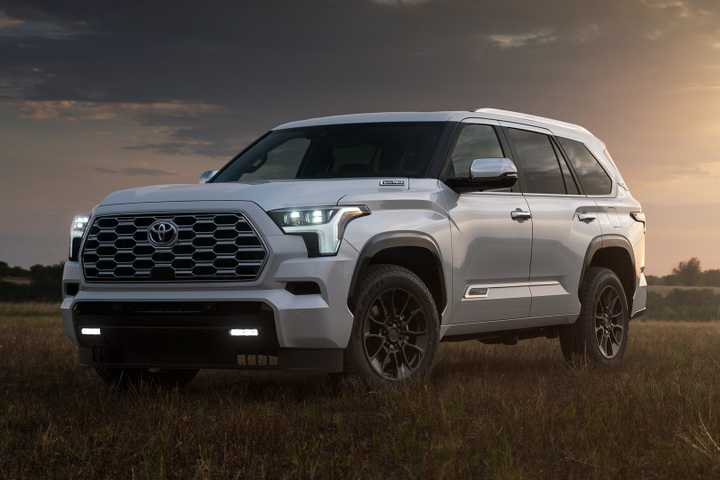
2025 Toyota Sequoia 1794 EditionToyota USA
That resale strength isn’t an accident. It’s a direct reflection of Toyota’s broader reputation, reinforced by the brand winning Kelley Blue Book’s Best Resale Value Brand award for the sixth consecutive year in 2026. Buyers shopping the used market pay a premium for vehicles they trust to keep running, and few full-size SUVs carry that trust as consistently as the Sequoia, particularly given its track record on the outgoing V8 generation, whose examples routinely traded hands well past 200,000 miles.
For a family weighing whether to keep a Sequoia once the factory warranty runs out, the math tends to favor holding on to it. Between genuine towing and hauling capability, a hybrid powertrain that’s already showing promising signs of high-mileage durability even as it builds its own track record, real everyday practicality, and resale numbers that outperform nearly every full-size rival, the Sequoia checks the boxes that actually matter over a decade of ownership. It isn’t the roomiest or the flashiest SUV in its class, but it’s built around the values that keep a vehicle earning its place in the driveway long after the paperwork on the warranty has expired.
Base Trim Engine
I-FORCE 3.4L Hybrid
Base Trim Transmission
10-speed automatic
Base Trim Drivetrain
Other
Base Trim Horsepower
437 HP @5200 RPM
Base Trim Torque
583 lb.-ft. @ 2400 RPM
Base Trim Fuel Economy (city/highway/combined)
21/24/22 MPG
Base Trim Battery Type
Nickel metal hydride (NiMH)
Make
Toyota
Model
Sequoia
Sources: Toyota U.S., The EPA, Kelley Blue Book, iSeeCars








No Comments