German auto manufacturers maintain a strong grip on the flagship luxury car market in the U.S. Models from Mercedes-Benz, BMW, and Audi establish the benchmark for high-end technology, executive prestige, and high-performance capability. Drivers view these European marques as the default standard for premium executive transportation.
Japanese engineering consistently presents a compelling direct alternative to this established dynamic. This includes the full-size flagship sedan segment, which contains a fierce long-term competitor that challenges traditional luxury assumptions through meticulous Japanese craftsmanship, low mechanical failure rates, and long-term value.
Out-of-warranty mechanical repairs cost several thousand dollars per visit due to high factory OEM part prices and specialized labor rates. Accelerated depreciation penalties hit owners who keep these full-size flagships past original lease periods. European manufacturers design components with tight operating tolerances that wear quickly under aggressive daily driving conditions. Compounding repair bills and unexpected component failures turn older German flagships into heavy financial obligations.
The Lexus LS Takes The Fight To The Germans
2026 Lexus LS 500 AWD Heritag Edition in blackLexus
The 2026 Lexus LS serves as the absolute flagship of the Lexus product lineup, representing the highest expression of brand luxury and precision assembly. Lexus sold over 160,000 total vehicles across its lineup in the U.S. through mid-2026, driven by high consumer demand for crossover and SUV models.
The LS acts as an impactful alternative to European rivals by prioritizing hassle-free vehicle ownership, durable mechanical engineering, and traditional Japanese hospitality concepts. The full-size luxury sedan disrupts the segment by offering executive cabin space and whisper-quiet road refinement without the lingering threat of catastrophic component breakdowns or severe depreciation cycles.
A True Japanese Business-Class Setting
Interior shot of the dashboard of the Lexus LSLexus
Lexus equips the 2026 LS with extensive standard features, including a 12.3-inch touchscreen infotainment display, wireless Apple CarPlay, wireless Android Auto, a 12.3-inch digital instrument cluster, a heated leather steering wheel, 28-way power-adjustable front seats, and a 23-speaker Mark Levinson reference surround sound audio system. For 2026, Lexus offers the exclusive mono-spec LS 500 AWD Heritage Edition, limited strictly to 250 units in Ninety Noir exterior paint over a Rioja Red leather interior.
2026 Lexus LS 500 AWD Heritage Edition interior layoutLexus
The 2026 Lexus LS 500 Heritage Edition features a base MSRP of $97,830, reaching $99,380 after adding the mandatory $1,550 destination fee. Because this Heritage Edition includes all equipment from the factory, buyers avoid extensive option packages. In comparison, a base 2026 Mercedes-Benz S-Class starts above $117,000 before options, while a base BMW 7 Series starts near $98,000 and rises past $115,000 when buyers add comparable executive seating and driver assistance packages.
Generous Interior Space
2026 Lexus LS 500 AWD Heritage Edition interior front rowLexus
The 2026 Lexus LS 500 features a spacious executive cabin layout with 37.3 inches of front headroom and 37.3 inches of rear headroom when equipped with the standard sunroof. Front passengers enjoy generous room to stretch out with 41.0 inches of legroom, while rear passengers benefit from 38.9 inches of legroom, offering comfortable seating positions during long journeys.
Shoulder room measures 58.8 inches in the front and 56.4 inches in the rear, paired with hip room measuring 55.5 inches up front and 55.2 inches in the back. At the rear, the power-operated trunk provides 16.95 cubic feet of dedicated cargo capacity, supplying sufficient space to accommodate multiple full-size suitcases or golf bags without compromising rear-seat comfort.
Lexus’s Punchy Twin-Turbo V-6
A detailed shot of the 2021 Lexus LS 500 F-Sport’s engine.Lexus
Powering the 2026 Lexus LS 500 is a 3.4-liter twin-turbocharged V-6 engine paired with a direct-shift 10-speed automatic transmission. This powertrain produces 416 horsepower at 6,000 RPM and 442 pound-feet of torque at 1,600 RPM. Equipped with standard all-wheel drive, the full-size sedan accelerates from 0 to 60 MPH in 4.6 seconds and reaches an electronically limited top speed of 136 MPH. The 10-speed transmission executes fast, seamless gear shifts that keep the twin-turbo V-6 inside its peak power band during hard acceleration while keeping engine revolutions minimal during high-speed highway cruising.
According to the EPA, the Lexus LS’s engine may be reliable, but the twin-turbo engine doesn’t return the best fuel efficiency estimates. You can expect this model to consume 17/27/21 MPG on the city/highway/combined cycle, while covering 456 miles on a single 21.7-gallon tank. You can expect to spend $6,250 more on fuel over the course of five years compared to the new vehicle sold in the U.S., $2,850 every year, and $4.74 to drive 25 miles.
Lexus doesn’t sell this model with the rear-wheel drive system anymore, but this model wasn’t that much more efficient, with it consuming 18/29/22 MPG, while covering 477 miles on a single tank. This would cost you $5,500 more in fuel over five years, $2,700 to refuel every year, and $4.52 to drive 25 miles.
An Adaptive Suspension Keeps Comfort In Check
2025 Lexus LS 500 rear 3/4 viewLexus
The vehicle chassis utilizes a multi-link front and multi-link rear suspension arrangement, constructed with lightweight aluminum suspension arms to lower overall unsprung weight. Lexus engineers tune the suspension geometry to emphasize vibration isolation, absorbing road surface imperfections, concrete expansion joints, and asphalt ruts.
An available adaptive variable suspension system continuously monitors real-time road conditions and driver inputs, adjusting individual shock absorber damping forces to mitigate body roll during high-speed cornering maneuvers. This suspension configuration delivers a soft, quiet ride over long distances while maintaining predictable chassis control and precise tracking through tight corners.
The LS’s High But Predictable Ownership Costs
Rear shot 2026 Lexus LS 500 AWD Heritage EditionLexus
According to Edmunds, the full cost to own a 2026 Lexus LS 500 Heritage Edition closes in at $120,295, $51,993 contributes towards depreciation. Over the first three years, you can expect it to lose $38,016 of its initial $99,280 MSRP. It’s also only going to cost you $10,707 to maintain and $1,310 to repair over five years and 60,000 miles.
You can also expect to spend $18,176 on fuel and $10,205 on taxes and fees. Kelley Blue Book indicates that you can expect to spend $5,382 on maintenance and $1,324 on repairs during the same period.
iSeeCars is a bit lighter on the model’s depreciation, indicating that you can expect it to lose 21.6 percent or $21,099 of its value after three years. This performance is almost 15 percent better than the rest of the segment and almost three percent better than the entire sedan market.
How To Keep Your LS In Showroom Condition
2026 Lexus LS 500 AWD Heritage Edition side profileLexus
Data from KBB and RepairPal highlights lower long-term operating expenses for the Lexus LS compared to its main European rivals. Average annual maintenance and repair costs for the LS range between $550 and $700, whereas German luxury flagships average over $1,200 annually. Lexus requires scheduled maintenance visits every 5,000 miles or six months, alternating between basic tire rotations and multipoint visual inspections at the 5,000-mile mark, and full synthetic engine oil and filter changes at 10,000 miles or 12 months. Major fluid service intervals occur at 30,000-mile increments, requiring fresh hydraulic brake fluid, engine air intake filters, and cabin air filtration units.
Specific repairs, as listed by RepairPal, include $252 on a stabilizer bar link kit, $517 on spark plug replacements, $1,718 for a new fuel pressure sensor, $3,124 for a new exhaust manifold, and $1,853 for new stabilizer bushings. Replacing the camshaft can set you back by as much as $3,983. iSeeCars indicates that an LS 500 will run for 13.6 years or 148,541 miles with a 23.1 percent probability of reaching 200,000 miles, which is an incredible feat for a luxury full-size sedan.
Lexus’s Warranty Has You Covered
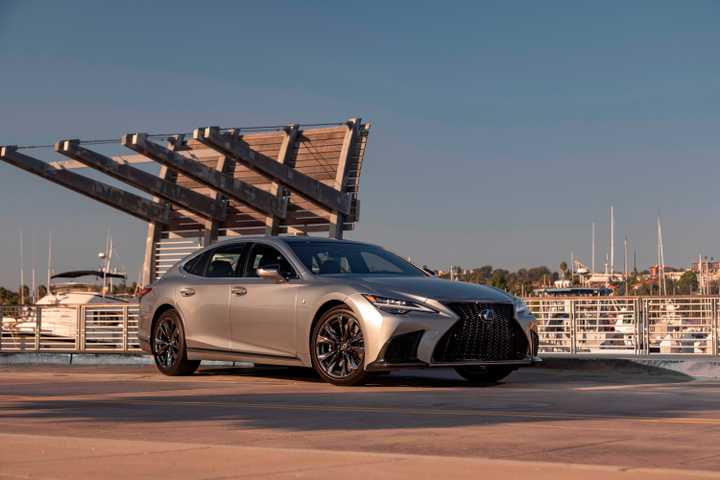
High-angle 3/4 shot of 2025 Lexus LS 500 in silver parkedLexus
The Lexus LS maintains a strong reputation for long-term reliability, placing high in annual dependability studies conducted by J.D. Power. For the 2026 model year, the LS shows zero active safety or mechanical recalls on record. Every new 2026 Lexus LS includes a comprehensive factory warranty program.
Standard bumper-to-bumper coverage lasts for four years or 50,000 miles, while the powertrain warranty extends to six years or 70,000 miles. Corrosion perforation coverage covers six years with no mileage limit, and Lexus provides complimentary maintenance for the first two factory visits at six months or 5,000 miles and 12 months or 10,000 miles.
The Future Of The LS Badge
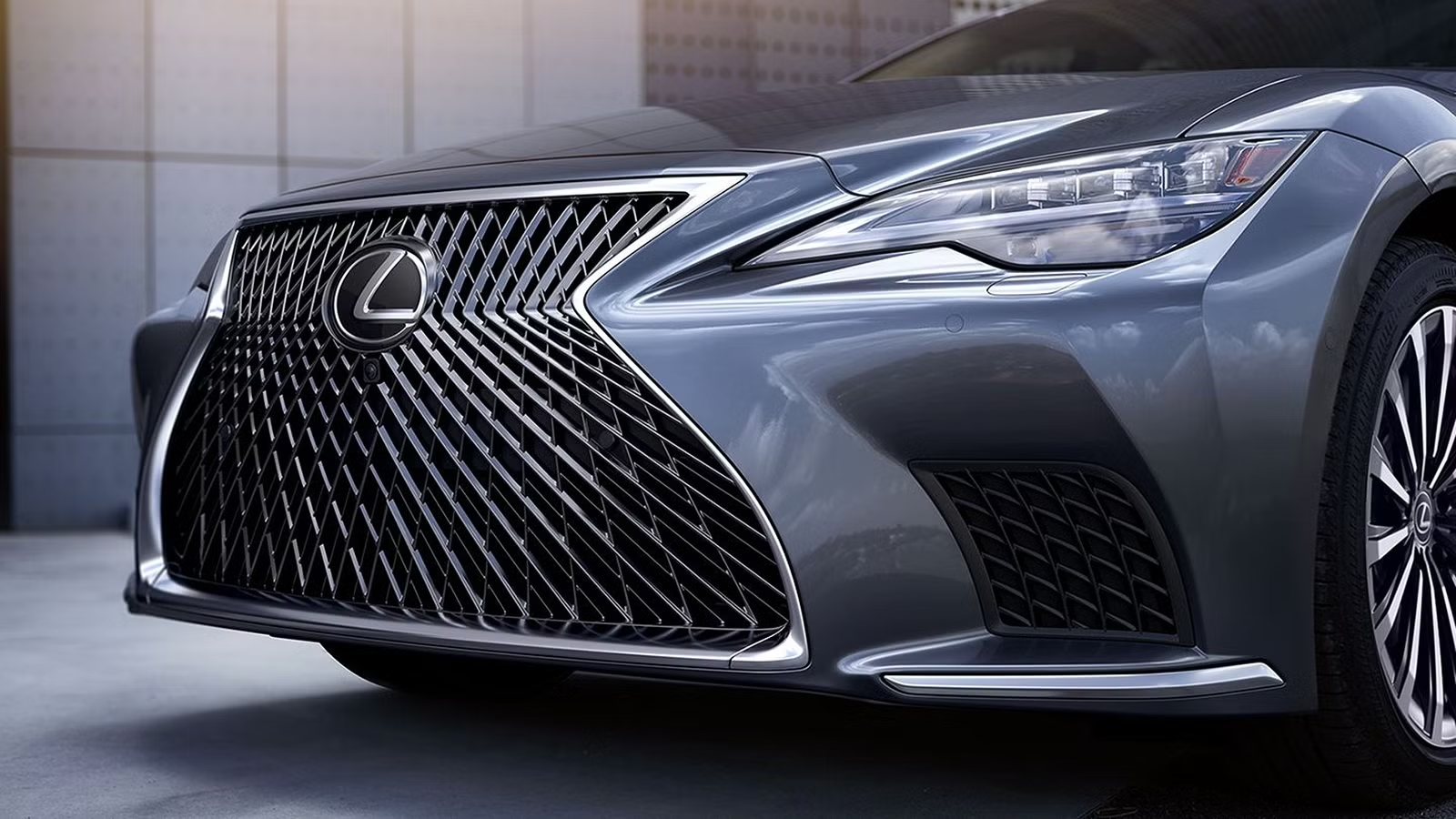
2026 Lexus LS 500 AWD Heritage Edition front fasciaLexus
Lexus concludes the current fifth-generation LS with the limited-run 2026 Heritage Edition, marking the end of traditional gas-powered LS production after a 36-year production history. Automotive industry reports indicate that Lexus intends to transform its premier luxury flagship into an advanced zero-emission electric sedan.
The next-generation Lexus flagship sedan arrives around 2028, built upon Toyota Motor Corporation’s modular software-defined electric vehicle architecture. This future model will feature high-density battery technology, automated driving systems, and ultra-quiet cabin insulation, carrying the brand’s luxury identity into an electrified era.
Base Trim Engine
3.4L V6 ICE
Base Trim Transmission
10-speed automatic
Base Trim Drivetrain
All-Wheel Drive
Base Trim Horsepower
416 HP @6000 RPM
Base Trim Torque
442 lb.-ft. @ 1600 RPM
Base Trim Fuel Economy (city/highway/combined)
17/27/21 MPG
Make
Lexus
Model
LS
Segment
Midsize Luxury Sedan
Sources: Lexus, Edmunds, the EPA, iSeeCars, RepairPal, and KBB









No Comments