
Lamborghini’s EV Delay Is A Direct Bet On Hybrid Supercars—And Here’s What That Means For The Lineup
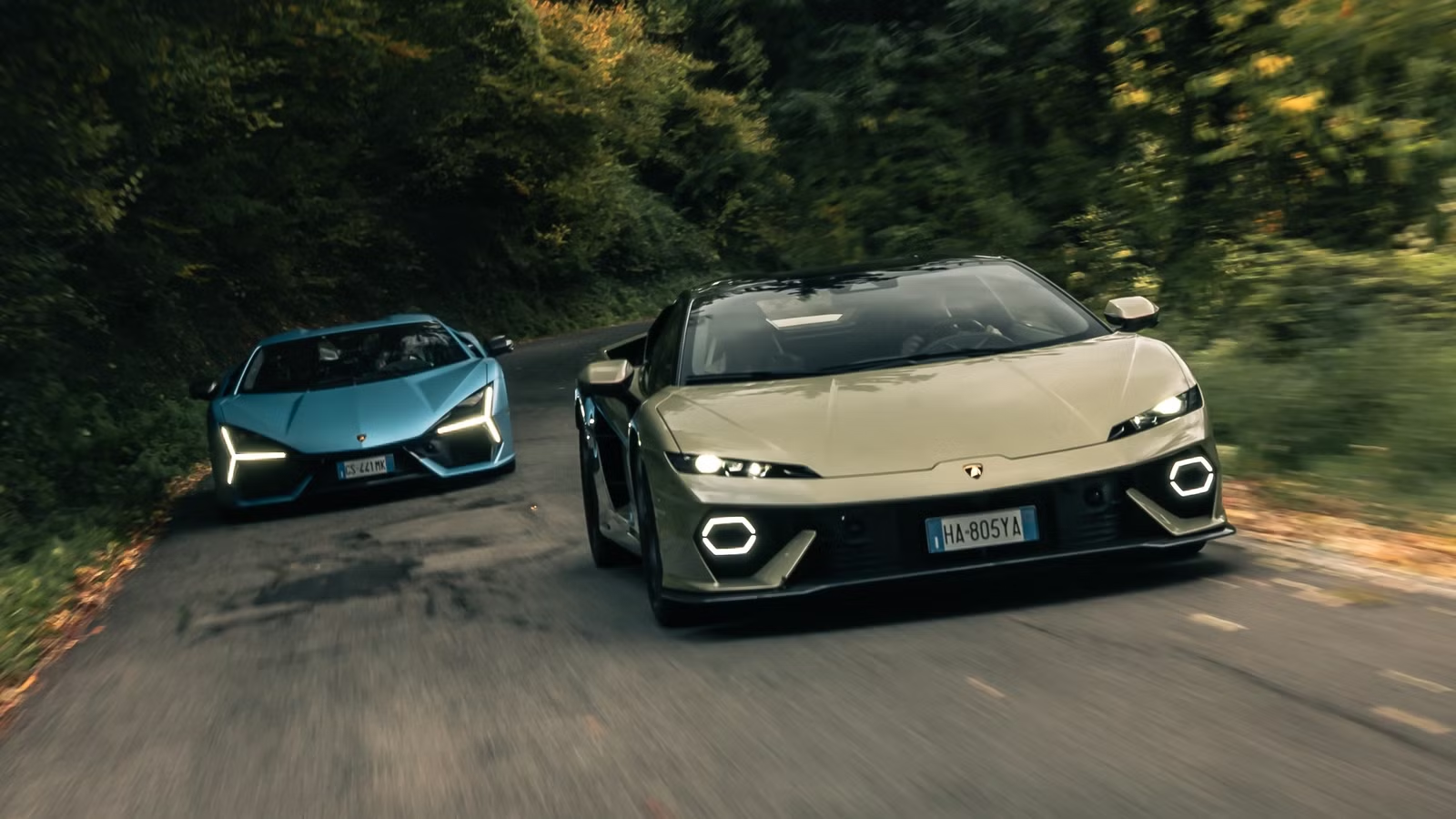
Lamborghini has officially pushed its first fully electric vehicle past 2030, and the brand isn’t framing that as a setback. Speaking publicly this week, Lamborghini executives cited battery technology as simply not mature enough to meet the performance and character standards the brand demands—and rather than wait, they’re doubling down on high-performance hybrid powertrains as the near-term path forward.

The announcement, which landed on July 15, reshapes what the next several years look like for the Sant’Agata lineup. Hybrid powertrains are moving to the center of Lamborghini’s product strategy, not as a bridge to something else, but as the performance solution for the foreseeable future. For buyers tracking the Huracán successor and the next Urus, this is the most consequential powertrain news in years.
Which Models Get Hybrid Treatment—And When
The Urus is already leading the charge. The Urus SE Performante pairs a twin-turbocharged V8 with a plug-in hybrid system, producing more combined output than the outgoing Aventador’s naturally aspirated V12—a number that underlines just how seriously Lamborghini is treating electrification as a performance tool rather than a compliance measure. That model is on sale now, and it sets the template for what comes next.

The Huracán successor is the more closely watched development. Lamborghini has not confirmed a launch date, but the hybrid architecture is expected to carry forward the brand’s commitment to a high-revving combustion core supplemented by electric motors at the axle. The Revuelto already demonstrated this formula works at the top of the range—a 6.5-liter V12 paired with three electric motors producing 1,001 combined horsepower. The Huracán’s replacement is expected to apply a similar philosophy to the V10 segment, likely with a smaller displacement engine and electric torque-fill rather than a wholesale powertrain swap.
How Hybrid Tech Lets Lamborghini Hit Emissions Targets Without Going Full EV

EU CO2 regulations are tightening through the late 2020s, and low-volume supercar makers face real pressure to bring fleet emissions down. Plug-in hybrid architecture gives Lamborghini a credible path: the electric range on a PHEV like the Urus SE counts favorably in regulatory calculations, and the combined-cycle efficiency of a hybrid system is meaningfully better than a pure combustion equivalent.
Crucially, this approach doesn’t require Lamborghini to compromise on what its buyers actually want. A hybrid V10 or V12 can still rev freely, still deliver the acoustic signature that defines the brand, and still hit 0–60 times that justify the price. The electric component adds low-end torque and launch response—things that make the cars faster, not softer. Lamborghini’s own engineers, speaking at Goodwood this week, were explicit that their in-house hybrid calibration is tuned differently from what Audi applies to its performance models, preserving the brand’s distinct driving character.
What the EV Delay Actually Means For Enthusiasts

The honest read here is that Lamborghini enthusiasts are getting more time with the powertrains they already love, with meaningful performance upgrades attached. A hybrid Huracán successor that revs to 8,500 rpm and adds instant electric torque off the line is not a compromise—it’s a faster, more capable car than what it replaces.
The concern some purists raise is weight. Hybrid systems add mass, and Lamborghinis have always been about a specific power-to-weight feel. How the engineering team manages battery placement and system weight will matter as much as the headline horsepower figure. The Revuelto’s reception suggests buyers are willing to accept some added weight when the performance numbers and driving experience back it up.

As for the full EV: post-2030 is a wide window, and battery energy density is improving. Lamborghini’s position is that it won’t launch an EV until the technology can genuinely replicate—or exceed—what a combustion supercar delivers on a track. That’s a high bar, and it’s the right one for this brand to set.
For now, the lineup direction is clear: hybrid first, electric when the tech is ready. Enthusiasts who were bracing for an abrupt shift to silent supercars have more time with the engines that made Lamborghini what it is—just with considerably more horsepower attached.

Related posts



Latest Post


No Comments