The Japanese Sedan That Refuses To Become Expensive To Own
8 minutes reading
Tuesday, 22 Sep 2026 00:30 0 43 autotech
Japanese cars, SUVs, and sedans have taken on a near-mythical status for being cheap to own. The likes of Honda, Mazda, and Toyota have spent the last couple of decades proving that trusted engineering and spot-on quality control pays off in the long run.
The big sedan has taken a bit of a beating in the U.S. market. Most people have already moved over to crossovers and SUVs, leaving models like the Chevy Impala, Ford Taurus, Nissan Maxima, and Chrysler 300 fighting for sales before most of them disappeared. While most of them aren’t available new today, there are still plenty of them on the used market, and they can be seriously cheap compared with the SUVs that replaced them.
A lot of them also came from a fairly straightforward era of engineering. You could have a big V-engine, a conventional automatic transmission, a well-packaged cabin, and a suspension designed more around soaking up miles than setting lap records. Some may not be that exciting on paper, but that is partly why they can be cheap to keep running.
Smart Engineering Can Keep Long-Term Costs Surprisingly Low
Front 3/4 shot of 2001 Ford Crown Victoria parkedFord
Sensible engineering is where some older Japanese and American sedans make a lot of sense. The market has spent years convincing everyone that newer is better, but a ten-year-old sedan with a naturally aspirated engine and regular automatic can be a much simpler thing to own than a new turbocharged crossover. There are fewer systems fighting for space under the hood, and plenty of the common repairs are well understood by mechanics.
Then there is fuel economy. A large, heavy sedan is unlikely to ever sip gas like a tiny hybrid, but plenty of them will return respectable highway mileage without needing premium gas or expensive drivetrain tech. Insurance can also be reasonable because many were bought as family cars instead of performance machines, and once depreciation has done its job, the biggest costs can simply become tires, fluids, brakes, and keeping an eye on wear items.
The 2022 Toyota Avalon Makes A Good Case For Affordable Luxury
Front 3/4 shot of 2022 Toyota Avalon parkedToyota
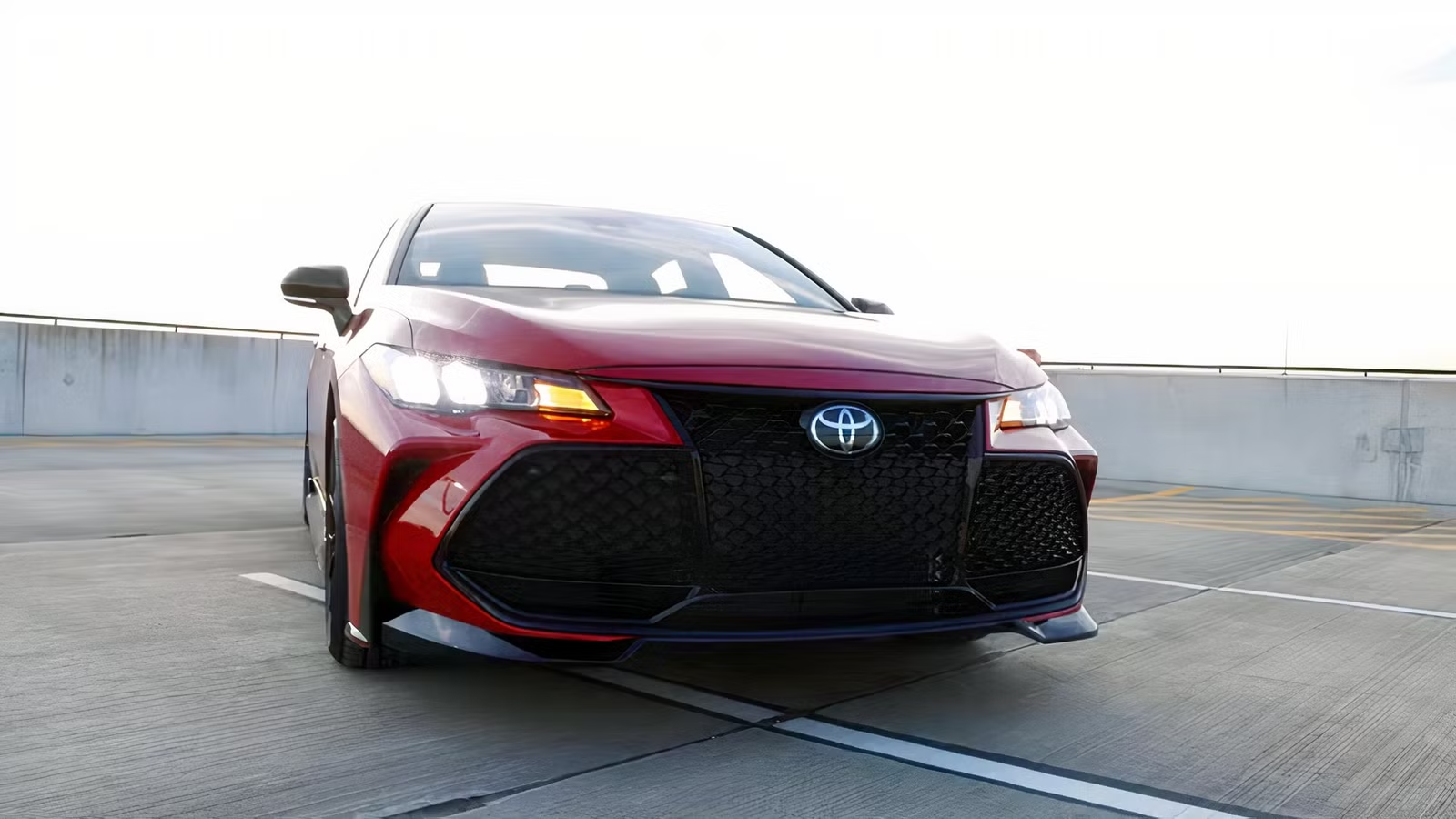
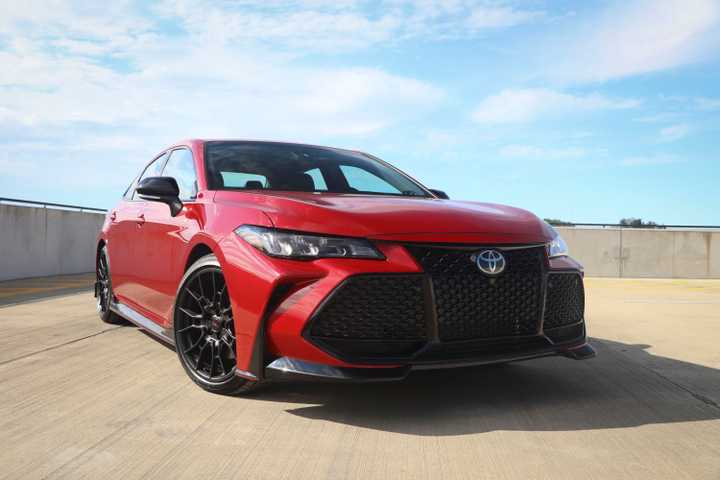
So this is where the Toyota Avalon comes in. This full-size sedan was available on the U.S. market until 2022, having been in production since 1995. It’s not the sportiest used sedan ever, but it does make for a great option if you are looking for high reliability, some understated V-engine power, a comfortable cabin, and low running costs.
The 2022 Toyota Avalon is available with average used prices of $24,800 for the XLE, $28,700 for the Limited, and $29,600 for the Touring. While Toyota models are renowned for holding their value well, the last model year of the Avalon has already dropped from its original MSRP range of between $37,820 and $44,520.
Strong Reliability Helps Keep Repair Bills In Check
Profile shot of 2022 Toyota Avalon parkedToyota
At the heart of Toyota is dependability, and the Avalon is included in the many, many reliable Toyota models list. First, iSeeCars rates the Avalon 8.5 out of 10 for reliability, and says it has an average lifespan of 202,294 miles, or around 19.3 years. They also say it has a 51.6% chance of reaching 200,000 miles during its usable lifespan. The final model year is rated on J.D. Power as 91 out of 100 for reliability, by owners on Kelley Blue Book as 4.3 out of 5 for reliability, and by RepairPal as 4 out of 5 for reliability.
According to RepairPal, it will cost you, on average, $463 a year to maintain, which is far cheaper than the $652 a year it costs to maintain the average vehicle. Edmunds True Cost To Own says it will cost you up to $2,500 for repairs over five years and up to $7,087 for maintenance over the same period. The slightly higher-than-anticipated maintenance costs mainly come from a five-year service cost of $2,391. However, if you purchase a model in 2027 that has already had this service completed, the long-term costs should look more affordable.
Fuel Prices And Insurance Make Sense
2020 Toyota Avalon Hybrid front 3/4 shotToyota
There are two powertrain options for the final model year: one V-engine and one hybrid powertrain. FuelEconomy.gov says that the hybrid Avalon can achieve between 43 and 44 combined mpg (around 43 mpg city/44 mpg highway), which will cost between $1,400 and $1,450 a year for gas. The V-powered Avalon can still achieve between 25 and 26 combined mpg (around 22 mpg city/32 mpg highway) and will cost between $2,350 and $2,450 a year for gas. Even the least fuel-efficient model means you only spend $1,250 more on gas over 5 years compared to the average modern vehicle, or $250 a year more.
The Edmunds True Cost To Own breakdown provides average five-year insurance costs for the 2022 Avalon. It says that in the first year, it will cost $1,457; in the second year, $1,501; in the third year, $1,546; in the fourth year, $1,592; and in the fifth year, $1,640. Putting that into perspective, the Nissan Maxima will cost $1,725 in the first year, $1,777 in the second, $1,830 in the third, $1,885 in the fourth, and $1,942 in the fifth.
The Avalon Is Cheap To Run Without Feeling Cheap
Shot of 2022 Toyota Avalon interior showing cockpitToyota
With insurance, maintenance, repairs, taxes, financing, depreciation, and fuel all taken into consideration, it is estimated to cost you between $55,559 and $65,758 to own an Avalon over five years, with the more expensive cost bracket reserved for the higher trims. In the luxury market, something like a ’22 BMW 5 Series will cost you just shy of $73,000 to own over five years, at a minimum.
However, despite Toyota’s mainstream reputation, the final model year of the Avalon has a few tricks up its sleeve that make it more than just a mainstream full-sized sedan.
V6 Offers Smooth Power Not Often Found In Modern Mainstream Sedans
Shot of 2022 Toyota Avalon engine bayToyota
Yes, you could opt for the hybrid powertrain, which is a 2.5-liter Dynamic Force inline-four paired with three motors and producing 215 horsepower, and get the best fuel economy. However, the last model year of the Avalon is also available with a 301-horsepower/267-pound-foot naturally aspirated 2GR-FKS V6. Peak horsepower is released at 6,600 rpm and peak torque is wound out at 4,700 rpm. It is a DOHC 60-degree V6 mated to an eight-speed Direct Shift automatic transmission. 0–60 mph times are also respectable at around 6 seconds, which isn’t bad for something that tips the scales at up to 3,715 pounds.
Thanks to the evolution of turbo tech, V-engines are becoming very rare in the modern market, especially at the mainstream level. That makes the ’22 Avalon’s V6 unusual for such a recent vehicle, and something worth preserving. There is no turbo lag or complicated boost, just a linear spread of power that builds cleanly up to the redline. For a big sedan, that smooth, effortless delivery suits the job very nicely, especially on long trips.
Spacious Cabin Gives It A Near-Luxury, Comfortable Feel
Shot of 2022 Toyota Avalon interior showing rear seatsToyota
Then there is the space you get in the cabin. There is up to 104.3 cubic feet of passenger space, with seating for up to five people. Up front, you get up to 38.5 inches of headroom and 42.1 inches of legroom, and in the back, you get 37.1 inches of headroom and a very spacious 40.4 inches of legroom.
The trunk capacity is 16.1 cubic feet, and, this being a Toyota, you get a wide-opening trunk lid, 60:40 split-folding rear seats, underfloor storage, and an oversized center console armrest.
The Avalon Is An Increasingly Rare Kind Of Used Sedan
Front 3/4 shot of 2022 Toyota Avalon parkedToyota
Front-wheel-drive only might not sound that exciting, but it works for what kind of sedan the Avalon is. The V6 has enough shove to make merging and overtaking easy, while MacPherson struts up front and a multi-link independent rear give the big sedan a settled feel. The suspension is tuned more for soaking up miles than chasing corners, but there is enough control to keep it from floating around when the road gets fun. Inside, it feels more expensive than the badge on the hood suggests, with quality materials throughout, while a 9-inch touchscreen, a 7-inch driver display, available wireless charging, and a JBL audio system are found in higher trims. All for under $30K.
Full-size sedans have, for the most part, been pushed away by crossovers, while the few remaining models are increasingly turbocharged, electrified, or aimed at a more expensive part of the market. That makes the now-discontinued Avalon an interesting used buy. It is big without being difficult to manage, powerful without needing forced induction, and simple enough that ownership costs don’t spiral out of control as it ages. For a sedan that has already left Toyota’s lineup, that is becoming a useful set of pros.
Base Trim Engine
3.5L V6 Gas
Base Trim Transmission
8-Speed Automatic
Base Trim Drivetrain
Front-Wheel Drive
Base Trim Horsepower
301 hp
Base Trim Torque
267 lb-ft @ 4700 rpm
Fuel Economy
22/32 MPG
Make
Toyota
Model
Avalon
Segment
Full-Size Sedan
Sources: Toyota, Edmunds, Kelley Blue Book, iSeeCars, FuelEconomy.gov, and J.D. Power.










No Comments