The Hybrid SUV That Makes High Mileage Feel Like A Non-Issue
10 minutes reading
Wednesday, 22 Jul 2026 12:00 0 69 autotech
For decades, car buyers have operated under a universally accepted psychological barrier: the 100,000-mile mark. On a traditional internal combustion vehicle, crossing into six-figure odometer territory is often viewed as the moment a car transitions from a reliable asset into a ticking financial time bomb. Drivers begin listening a little closer to strange engine ticks, bracing themselves for the inevitable failure of complex automatic transmissions, turbochargers, or cooling systems.
When hybrids first entered the mainstream, consumers feared that combining a gas engine with a complex electrical network, an electric motor, and a massive battery pack was simply adding more points of failure. The common narrative assumed that while you might save money at the pump, you would eventually hand those savings right back to a dealership when the high-voltage battery inevitably failed at 120,000 miles.
Over the last decade, real-world data from high-mileage drivers, delivery fleets, and high-intensity ride-share operators began to paint a completely different picture. Certain hybrid SUVs aren’t just matching the longevity of conventional gas vehicles; they are vastly outlasting them. By stepping away from the anxiety of the odometer and focusing instead on how these vehicles are mechanically engineered, high-mileage car shopping shifts from a nerve-wracking gamble into a brilliant financial value play.
To understand why a hybrid can treat a 200,000-mile odometer like a gentle warm-up, you have to look past the marketing badges and dive under the hood. The durability of a truly great hybrid stems from an intentional lack of mechanical complexity in areas where traditional cars are most vulnerable.
The Planetary Gear e-CVT Vs. Traditional Transmissions
2026 Toyota RAV4 Plug-in Hybrid GR Sport engine shotChris Chin | TopSpeed
Ask any mechanic what the most common catastrophic failure point is on a modern gas-powered SUV at 130,000 miles, and they will likely point to the transmission. Modern multi-speed torque-converter automatics, dual-clutch gearboxes (DCTs), and traditional belt-driven Continuously Variable Transmissions (CVTs) are incredibly complex. They rely on high hydraulic pressures, intricate valve bodies, friction clutches, or steel belts riding under immense tension against variable pulleys. Over time, these parts wear down, slip, and fail.
The electronic CVT (e-CVT) found in the industry’s most robust hybrids shares nothing but the name with a standard CVT. There are no belts to slip, no chains to snap, and no clutches to burn out. Instead, it is an incredibly simple planetary gear set. The gasoline engine and two electric motor-generators are permanently meshed to different components of this single-gear cluster. By electronically adjusting the speed and rotational direction of the electric motors, the vehicle seamlessly alters the drive ratio. It is a solid-state piece of mechanical engineering with almost no wearing parts, making it practically un-killable over hundreds of thousands of miles.
The Under-Stressed Atkinson-Cycle Engine
2.5-liter Series Parallel Plug-in Hybrid System (A25A-FXS)Toyota
The second secret to high-mileage endurance lies in how the internal combustion engine is treated. To meet modern emissions and fuel economy standards, most conventional SUVs now use small-displacement, highly stressed four-cylinder engines fitted with turbochargers. Turbochargers introduce immense heat, pressure, and intricate plumbing, which can drastically reduce the lifespan of head gaskets, bearings, and oil seals.
The benchmark hybrid powertrain takes the exact opposite approach. It utilizes a larger, naturally aspirated four-cylinder engine designed specifically to run on the high-efficiency Atkinson cycle. While the Atkinson cycle reduces outright low-end torque, it is incredibly efficient at highway cruising. The brilliant engineering workaround here is that electric motors provide instant, maximum torque from a dead stop. Because the electric motors take care of the heavy lifting during high-strain, stop-and-go acceleration, the gasoline engine experiences a fraction of the wear and tear it would face in a standard vehicle. It is never forced to work up a sweat.
The Undisputed Benchmark: Toyota RAV4 Hybrid
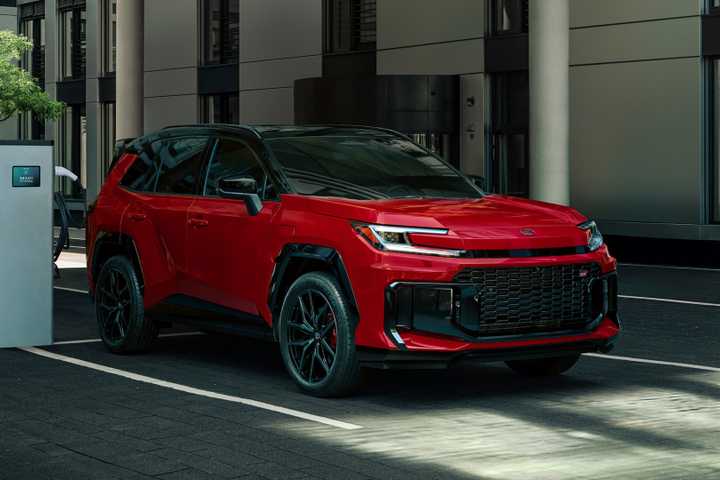
Front 3/4 shot of 2026 Toyota RAV4 in red parkedToyota
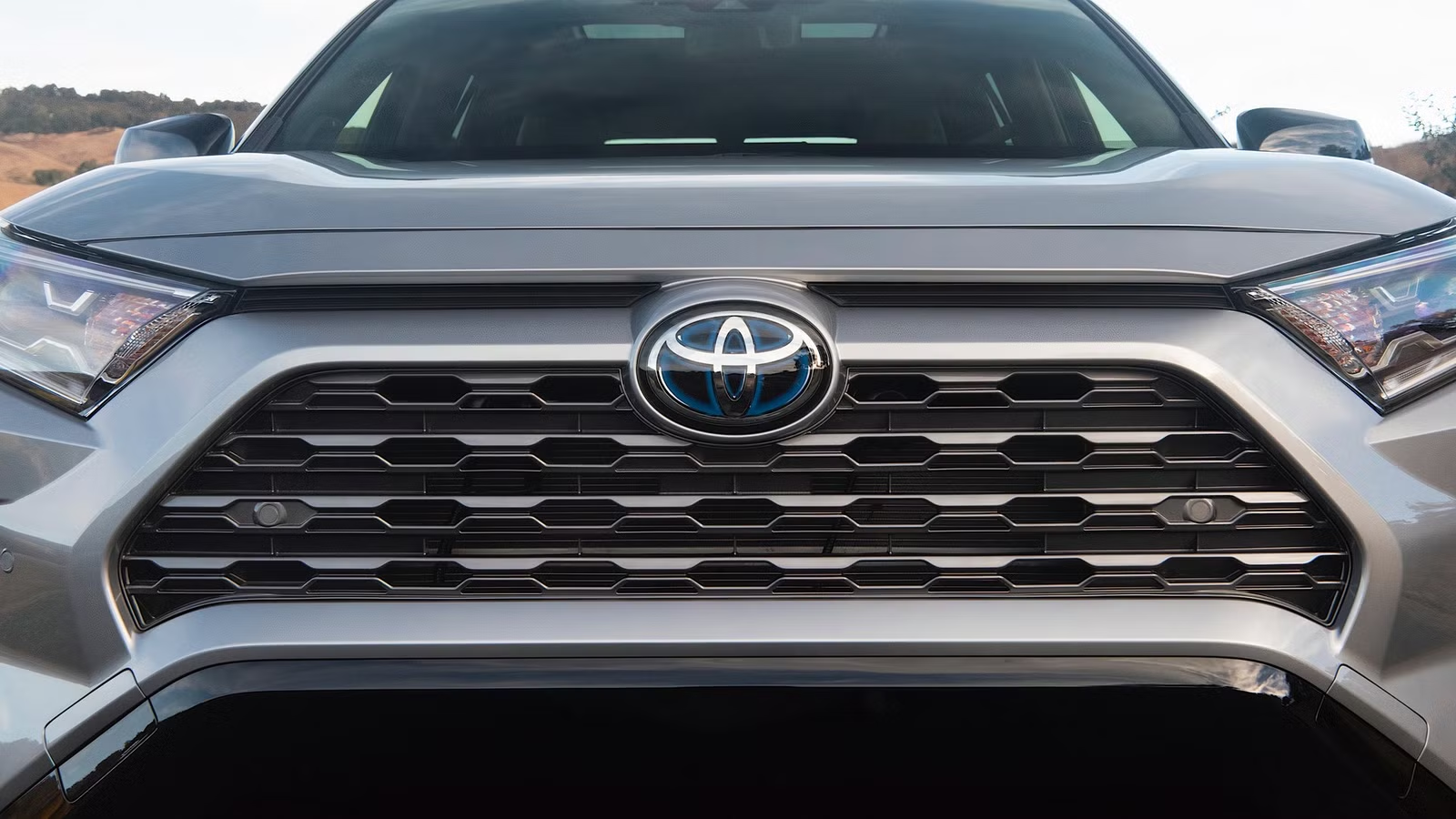
When you apply this engineering philosophy to a real-world vehicle, one undisputed champion emerges in the American market: the Toyota RAV4 Hybrid. Specifically, the fifth-generation model (introduced for the 2019 model year and built on the rigid TNGA platform) has become the gold standard for high-mileage peace of mind.
A Legacy Of Bulletproof Reliability
2026 Toyota RAV4 PHEV GR Sport rear 3/4 shot parkedToyota
The RAV4 Hybrid does not need to defend its reputation on paper; the data is already out there on the roads. Look at any high-odometer owner forum, hotshot delivery network, or urban ride-share fleet, and you will find an army of fifth-generation RAV4 Hybrids operating flawlessly with 200,000 to 300,000 miles on the clock.
Because the mechanical layout is so thoroughly sorted, the day-to-day ownership experience at high mileages is remarkably boring. Owners routinely report that beyond basic, predictable preventive maintenance, such as oil changes, spark plugs, and coolant flushes, the vehicle simply refuses to break down. Even the mechanical all-wheel-drive system is simplified; there is no physical driveshaft running to the back of the car. Instead, Toyota uses a dedicated, independent electric motor on the rear axle (e-AWD) to provide traction instantly without adding mechanical complexity or fluid-filled differentials that require service.
The Financial Equation Of A High-Mileage RAV4
A White 2019 Toyota RAV4 Hybrid ParkedToyota
For a second-hand buyer, stepping into a RAV4 Hybrid that has already traveled 100,000 miles unlocks a massive financial advantage. You let the original owner absorb the steepest part of the vehicle’s depreciation curve, allowing you to secure a highly optioned, modern, and safe crossover at a steep discount.
Once you take ownership, the cost-to-run metrics remain staggeringly low. Returning a consistent high-30 MPG in mixed driving means a high-mileage commuter can comfortably cut their monthly fuel bill in half compared to an older V6 or turbocharged gas SUV. Furthermore, because the vehicle relies heavily on regenerative braking, which uses the electric motors to slow the vehicle down and capture energy, the physical brake pads and rotors experience minimal wear. It is highly common for a RAV4 Hybrid to travel over 100,000 miles on its factory set of brake pads.
The Luxury Alternative: Lexus RX Hybrid Series
Front 3/4 shot of a 2016 Lexus RX Hybrid DrivingLexus
While the Toyota RAV4 Hybrid is the ultimate utilitarian tool, it is not the only vehicle built on this bulletproof platform. For buyers who want high-mileage peace of mind wrapped in a premium package, the American second-hand market offers an exceptional sibling: the Lexus RX Hybrid series.
To understand where the Lexus RX fits, it helps to view it not as a competitor, but as the luxurious evolution of the same engineering philosophy. However, navigating the RX used market requires knowing which generation, and which powertrain, sits under the hood.
Elevating The Formula: The Legacy V6 Vs. The Modern Four-Cylinder
2015 Lexus RX 450h front 3/4 shotLexus
Front 3/4 shot of 2025 Lexus RX 350h Premium in red parked on shoreLexus
If you are shopping for a brand-new Lexus RX Hybrid (such as the RX 350h), you will find a highly efficient 2.5-liter four-cylinder hybrid system. It is exceptionally reliable and shares its basic DNA with the RAV4. However, if you are looking to maximize your value on the second-hand market, the sweet spot is the previous-generation Lexus RX 450h (produced from 2016 through 2022).
The retired RX 450h paired a silky-smooth, naturally aspirated 3.5-liter V6 engine with a heavy-duty planetary e-CVT. It delivers a combined 308 horsepower with an effortless, whisper-quiet highway stride that a four-cylinder simply cannot replicate. For long-distance road warriors, tracking down a used, high-mileage RX 450h offers a rare combination: a premium, heavy-chassis luxury cruiser that still returns close to 30 MPG without the complex turbochargers or multi-speed gearboxes that plague its European luxury rivals.
Interior Resiliency And Component Longevity
2015 Lexus RX 450h dashLexus
A luxury vehicle’s true longevity isn’t just about whether the engine turns over; it’s about whether the cabin can withstand years of daily use without falling apart. This is where Lexus’s obsessive build quality shines.
While a budget crossover’s interior might start to rattle, fade, or wear thin past 100,000 miles, the Lexus RX cabin is built like a vault. Lexus’s proprietary NuLuxe synthetic leather and genuine leather upholstery are highly resistant to cracking and bolster wear. The switchgear remains tight, the acoustic glass continues to seal out wind noise, and the physical climate and audio controls are engineered to operate flawlessly for decades. Buying a high-mileage RX 450h means stepping into a cabin that still feels, looks, and smells like a luxury vehicle, regardless of what the odometer says.
Debunking The Battery Replacement Boogeyman
2022 Toyota RAV4 Hybrid Engine BayToyota
Despite all the mechanical evidence pointing to 200,000-mile reliability, the single biggest hurdle for most buyers remains the high-voltage hybrid battery pack. It is the classic “boogeyman” of the hybrid world. But when you look at the actual data, that fear quickly dissolves.
Advanced Thermal Management And State-Of-Charge Logic
A red Toyota RAV4 Prime small plug-in hybrid SUV is chargingToyota
The reason a hybrid vehicle’s battery outlasts the battery in your smartphone comes down to sophisticated software management. Consumer electronics constantly push batteries to their absolute limits, charging them to 100 percent and draining them to zero percent to maximize daily runtime. This extreme cycling is what causes rapid chemical degradation.
Toyota and Lexus handle their hybrid battery cells with extreme caution. The vehicle’s engine control units (ECUs) strictly regulate the battery’s state of charge, keeping it locked in a safe “buffer zone” between roughly 40 percent and 80 percent capacity. The battery is never fully exposed to the stress of a true maximum charge or a deep discharge. Combined with dedicated air filtration and cooling systems, these packs are engineered to last the entire design life of the vehicle.
The Rise Of The Affordable Hybrid Aftermarket
2022 Toyota RAV4 SE Hybrid Front 3/4 ShotToyota
Front 3/4 shot of 2026 Toyota RAV4 HEV Limited StormCloud parkedToyota
But let’s address the worst-case scenario: what happens if the battery does eventually fail outside of warranty? For fifth-generation RAV4 Hybrids (2019+), Toyota provides a stellar 10-year or 150,000-mile hybrid battery warranty (whichever comes first). For 2018 and older models, the warranty was eight years or 100,000 miles. If you purchase a vehicle outside of these windows and the pack eventually degrades, you are no longer at the mercy of a $6,000 dealership replacement bill.
The automotive market is undergoing a massive shift in how we define value. For years, buyers willingly traded mechanical simplicity for the promise of low displacement and complex engine technology, only to find themselves facing steep repair bills as the miles piled up. By prioritizing robust, proven mechanical architecture over fleeting drivetrain trends, vehicles like the Toyota RAV4 Hybrid and the Lexus RX Hybrid have fundamentally rewritten the rules of vehicle longevity.
Front 3/4 action shot of a 2021 Lexus RX Hybrid in white driving along lake roadLexus
They prove that when a powertrain is fundamentally under-stressed and stripped of traditional mechanical weak points, high mileage ceases to be a warning sign. Instead, a long odometer history becomes a badge of proven durability. For the smart-money shopper, choosing one of these hybrid benchmarks isn’t just a way to beat the depreciation game; it is a ticket to dependable, highly efficient daily transport for hundreds of thousands of miles to come.
Base Trim Engine
2.5L Inline 4 Hybrid
Base Trim Transmission
CVT
Base Trim Drivetrain
Front-Wheel Drive
Base Trim Horsepower
183 HP @6000 RPM
Base Trim Torque
163 lb.-ft. @ 3600 RPM
Make
Toyota
Model
RAV4
Segment
Compact SUV
Sources: Toyota, Lexus, Edmunds, J.D. Power











No Comments