
The 2026 Nissan Rogue PHEV Is Essentially A Rebadged Version Of A Hybrid You’ve Already Seen—Here’s What Consumer Reports Found
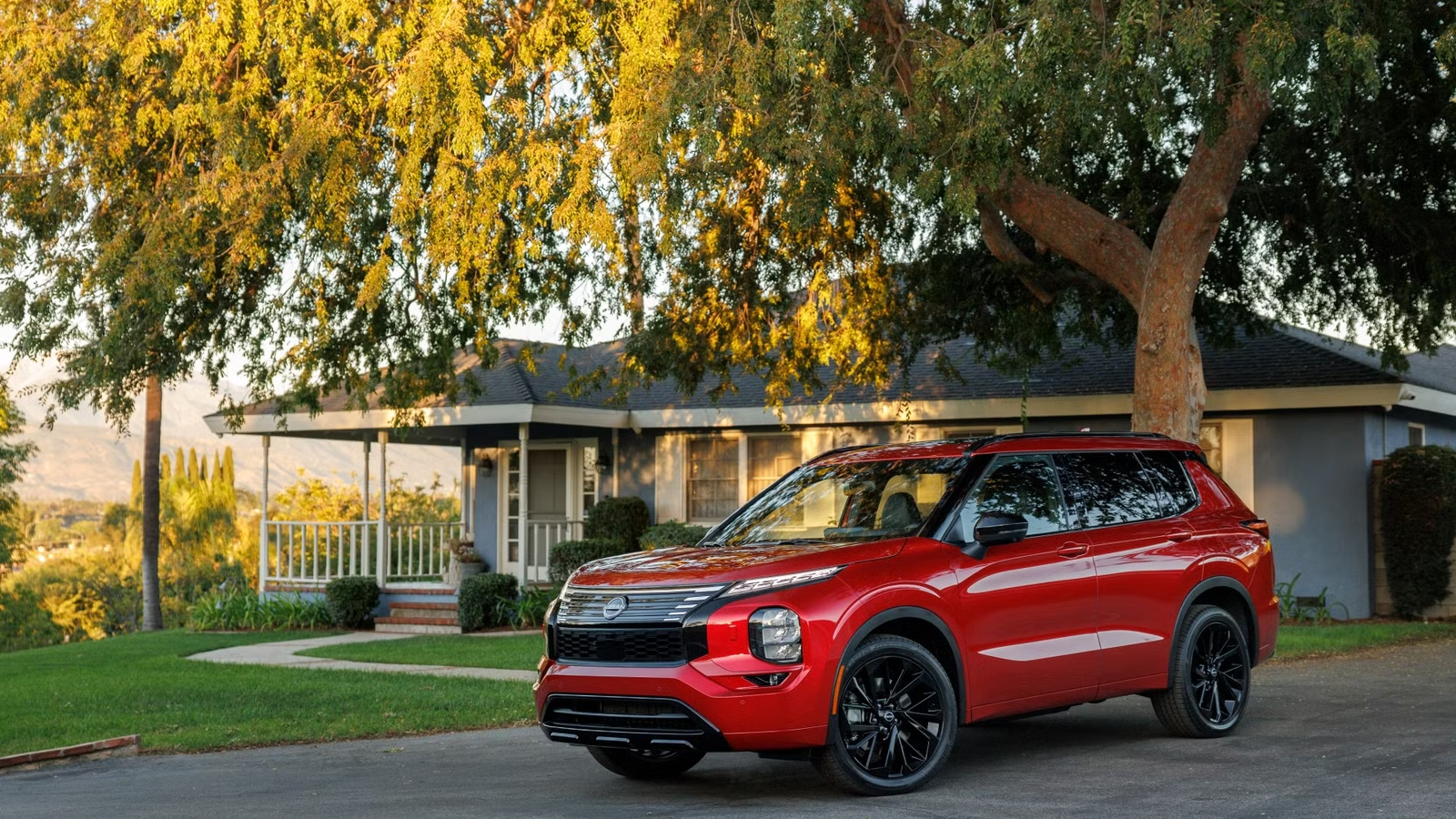
When Nissan announced a plug-in hybrid version of its best-selling Rogue, the natural assumption was a ground-up powertrain designed to compete with the Toyota RAV4 Prime. Consumer Reports’ early preview told a different story. The publication flagged that the 2026 Rogue PHEV’s architecture isn’t new—it’s a familiar system wearing fresh sheet metal, a detail that has real implications for anyone weighing the PHEV against the standard hybrid Rogue or the segment’s stronger competitors.

That platform-sharing strategy isn’t automatically a dealbreaker. Badge engineering can work when the donor system is genuinely capable and the pricing makes sense. The question for Rogue PHEV shoppers is whether Nissan has threaded that needle—or whether the PHEV badge is asking buyers to pay a premium for a powertrain that was already in the market.
What Consumer Reports Actually Found Under The Hood
Consumer Reports’ February 2026 preview carried a pointed headline: “We’ve Seen the 2026 Nissan Rogue Plug-in Hybrid Before.” The implication is straightforward—the PHEV’s core powertrain architecture is shared with an existing Nissan hybrid platform rather than developed specifically for this application. Nissan’s own product page confirms the Rogue PHEV is built around an AWD configuration with a combined system producing power from both a gasoline engine and an electric motor, with Nissan claiming up to 420 miles of total range (combining electric and gasoline driving) for the U.S. market.

The platform-sharing detail matters because it shapes expectations. A bespoke PHEV system—like what Toyota engineered for the RAV4 Prime—is typically optimized specifically for plug-in duty: larger battery pack, stronger electric motor, better thermal management. A carried-over architecture may not have been designed with the same priorities, which can show up in real-world electric range, charging behavior, and how the system transitions between power sources.
The Highest-MPG SUV You Can Buy Without Going Electric
This SUV has the most wallet-friendly fuel economy figures around without going hybrid or fully electric
What Drivers Will Actually Feel: Range, Power, And The Electric Window

Nissan’s U.S. spec sheet lists up to 420 miles of total range combining electric and gasoline operation, with the Canadian market spec citing up to 687 km on the same combined basis. Those figures sound compelling on paper, but total range is a composite number—the more relevant figure for PHEV buyers is the usable electric-only range, which determines how many daily commutes you can complete without burning gasoline at all.
For context, the RAV4 Prime delivers around 42 miles of EPA-rated electric range, which covers the average American commute with room to spare. The Jeep Wrangler 4xe manages roughly 21 miles of electric range — enough for short errands but not a daily commute substitute. Where the Rogue PHEV lands on that spectrum will define its value case. A platform not originally designed for plug-in duty often carries a smaller battery than a purpose-built PHEV, which can compress that electric window significantly. MotorWeek’s early first drive described the Rogue PHEV as “making badge engineering cool again”—a characteristically optimistic framing that still acknowledges the engineering lineage isn’t a secret.
The Price Premium Question: Does The PHEV Math Add Up?

The standard 2026 Rogue hybrid—built around Nissan’s third-generation e-Power system, which Carbuzz notes is confirmed for additional Nissan models—already delivers strong fuel economy without the added complexity of a plug-in system. The PHEV adds a larger battery, charging hardware, and the ability to run on electricity alone, but it also adds cost and weight.
For the PHEV premium to justify itself, buyers need enough electric range to meaningfully reduce fuel costs, and the charging infrastructure to use it regularly. If the Rogue PHEV’s electric range lands in the low-to-mid 20s—a plausible outcome given the platform’s origins—the math gets harder. The RAV4 Prime’s 42-mile electric range is the benchmark that makes its premium feel earned; a PHEV with half that range is essentially a more expensive hybrid with an outlet. Nissan’s seven-seat configuration and AWD standard fitment are genuine differentiators, but they don’t change the fundamental equation: electric range is what separates a compelling PHEV from an expensive one.
What Nissan’s Engineering Choice Says About The Rogue’s Competitive Position

Platform sharing isn’t inherently a flaw—it’s a cost management tool, and when it works, buyers get a proven system at a lower development cost. The risk is that a carried-over architecture may not keep pace with purpose-built competitors in a segment that’s moving fast. The RAV4 Prime has a multi-year head start and a powertrain designed from the ground up for plug-in duty. The Wrangler 4xe targets a different buyer entirely. The Rogue PHEV is aiming squarely at mainstream compact-SUV families who want the PHEV badge without committing to a full EV.
That’s a real and sizable audience. But those buyers will comparison-shop on electric range and total cost of ownership, and the platform’s origins will matter if they constrain the battery size. Nissan’s move to bring a PHEV Rogue to market is the right instinct—the segment demands one. Whether the execution matches the ambition is the question the first independent long-term tests will answer.
For now, the clearest advice for Rogue PHEV shoppers is to wait for EPA electric-range certification before committing to the premium. That single number will tell you more about whether this powertrain justifies its price than any spec sheet total-range figure can.

Related posts



Latest Post


No Comments