
The Honda Adventure Bike That Makes Exploring Easier Than Ever
Look at Honda’s ADV lineup, and you’ll notice most of them are heavy with complex elements rather than bash-friendliness. The XL750 Transalp and Africa Twin are prime examples, as they promise high-end tech and large-capacity twin-cylinder engines. Meanwhile, the NX500 is well over 400 pounds and just 30-odd pounds down on the Transalp.
It also has a 19-inch front wheel, with alloys at each end. We all know that isn’t suitable for hardcore exploration. So what do you do if you want a Honda that lets you explore with ease without any stress of the tech going kaput or any worry of all the extra heft? Well, there’s a CRF that checks that box.
Why True Explore-Friendly ADVs Are A Rare Breed In 2026
Exploring on an adventure bike used to be a piece of cake. After all, these bikes were essentially dual-sports with large fuel tanks and more bodywork earlier. This approach let you ride on the freeway, then take whatever detour you wanted on your tours. Today, though, things have changed. ADVs are heavier, larger, and more complex than ever before.

Off-road focus has taken a back seat, and on-road comfort is more important. This makes sense from the market perspective. Off-road riding isn’t a piece of cake, and things can get hairy pretty quickly. Plus, it requires a different kind of skill compared to road riding, which takes years to master. Most of us aren’t committed enough to put in that work. So you have to think twice about taking the detour.

What makes it worse is the ability to strike a balance. Hardcore ADVs rarely perform well on the road, and road-biased ADVs rarely do road riding well. Finding a balance means years and millions spent on R&D. Not all brands want to go down that rabbit hole, especially with the current dip in motorcycle sales worldwide.
We can’t blame the brands, either. Half the ADV buyers don’t even hit the trails, let alone explore uncharted territories. Accordingly, nearly all bikemakers have jumped aboard the versatile ADV idea, including Honda. However, the CBR-maker still has something explore-friendly in the lineup, which harks back to the original ADV idea.
The CRF300L Rally Is Honda’s Weapon For True Exploration

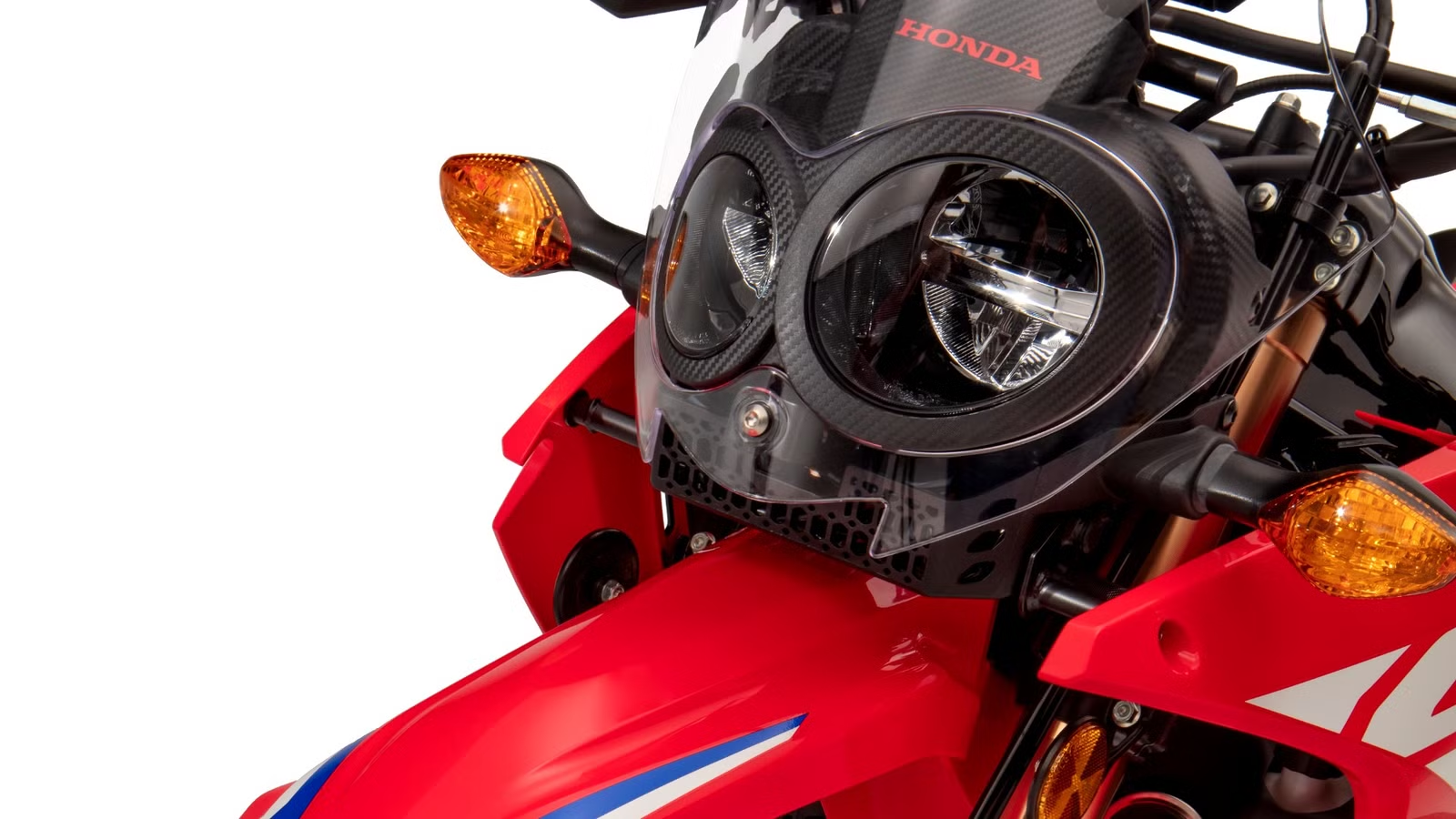
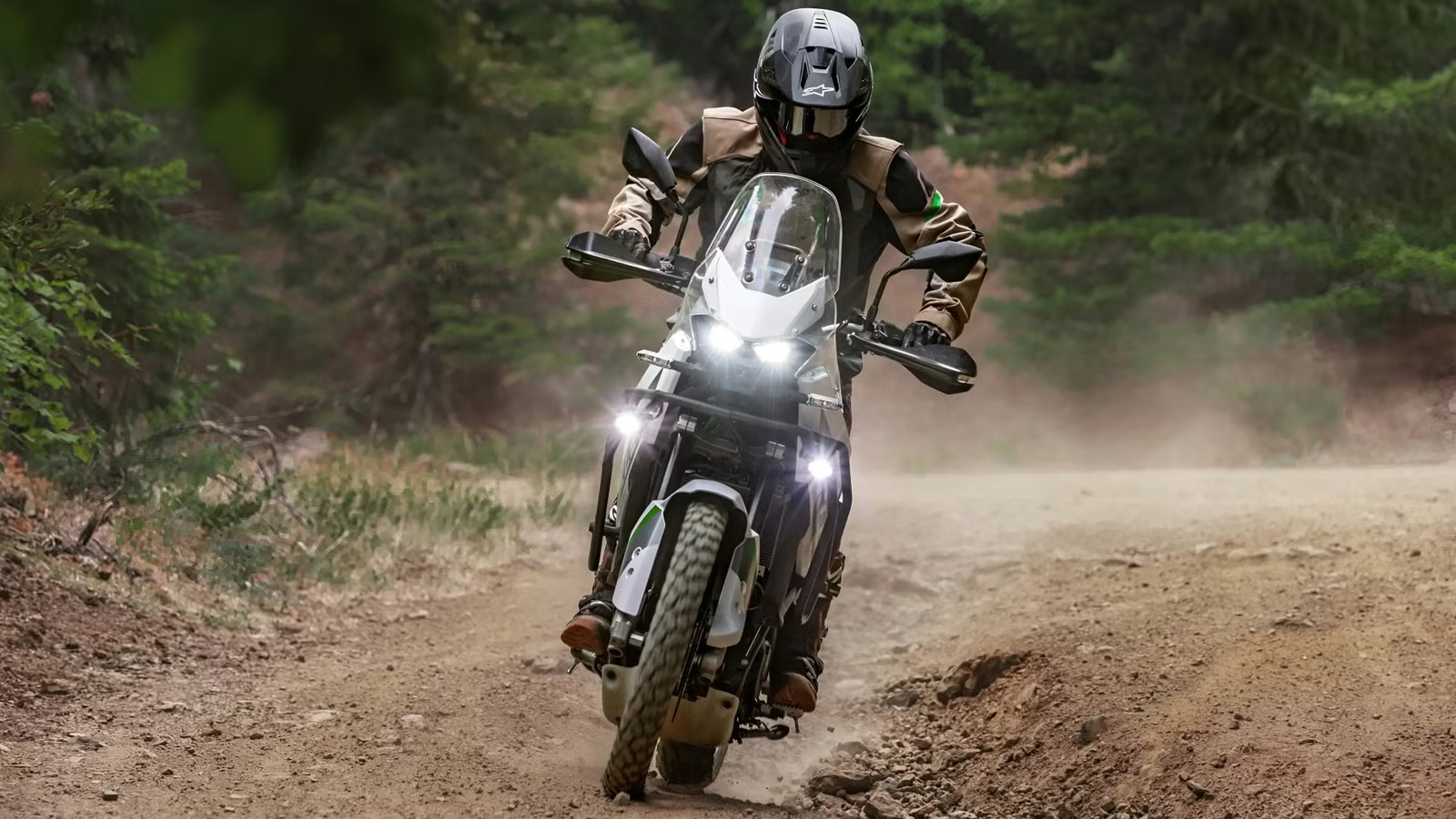
We’re talking about the CRF300L Rally. You might argue it’s a dual-sport, but this is essentially an ADV version of the actual CRF300L dual-sport. That’s evident from the front bodywork with side fairings and a windscreen to limit windblast, along with a massive engine cover down low. This is topped with a larger fuel tank that promotes occasional touring stints.
Owing to all that, the CRF300L Rally is the perfect candidate for exploring. The fairings will let you sit on the freeway, while the dual-sport-origins will let you exit into unexplored forest trails or mountain passes without a second thought. This has been backed up by owners across platforms, claiming the fairings can work wonders during long-distance riding, and the bigger tank over the non-Rally version promises decent riding range (over 250 miles, as tested by Honda). The extra weight also helps with highway stability.
The CRF300L Rally Is Slightly Pricey By Segment Standards

Honda has priced the CRF300L Rally at $6,499. That is a bit pricey when you look at other ADVs in the 300-450cc segment, especially since bigger bikes like the Royal Enfield Himalayan 450 and Kawasaki KLE500 either under it or cost around that figure. Honda’s own parallel-twin NX500 is just $400 pricier than the Rally. However, neither of these is as capable for exploration, and that’s what the money gets you. Let’s dive into the details.
Armed With Off-Road-Spec Long-Travel Suspension, Wheels, And Chassis

The underpinnings are the biggest giveaway of the CRF’s serious off-road focus. The double-cradle chassis is the centerpiece, with Honda claiming that it’s “engineered to balance lightweight agility with off-road durability.” This frame also had slight revisions a few years ago, with optimized lateral rigidity to allow better maneuverability. Then, there’s the long-travel suspension. You get Showa 43 mm USD forks and a Pro-Link monoshock, with 10.2 inches of travel at each end. Adjustability is limited to preload at the rear, though.

Coming to wheels, you get a serious 21/18-inch aluminum spoke wheel setup, built by the specialists at Excel. This will give it a serious advantage in tricky terrain, compared to 21/17-inch or 19/17-inch setups. These hoops also house hydraulic disc brakes (296 mm front, 220 mm rear). Likable details like a hollow rear axle, integrated rear brake reservoir, and an aluminum lower triple clamp round things off.
High Ground Clearance And Low Curb Weight Increase Exploration Abilities

Those underpinnings pay dividends in the dimension side of things. The wheelbase is compact at 57.2 inches, while the ground clearance is over 10 inches. The latter does come at the cost of saddle height, though, as this measures 35.2 inches. So if you’re short, the Rally might feel hard to get onto or balance at slow speeds.
What does help manage things is the impressively low 333-pound curb weight. That is around 100 pounds less than your usual 400-450cc adventure bike and just 30 pounds more than a proper dual-sport like a Kawasaki KLX300. Picking it up after a tumble during exploration should be pretty easy, then.
A Frugal Single-Cylinder Engine Rounds Things Off

Lastly, there’s the powerhouse. The CRF300L Rally uses a credible and foolproof single-cylinder 286cc engine we’ve repeatedly seen on entry-level Hondas. It’s good for 26.8 horsepower and 19.6 pound-feet, both of which are tuned to kick in at 8,500 and 6,500 RPM, respectively. This engine is also highly efficient. Honda claims around 76 miles per gallon with regular usage, equating to a theoretical range of over 250 miles.

All the power reaches the wheel via a six-speed transmission. Here, the top gears are spaced out to enable freeway abilities, while the first three are shorter for ample punch during off-road stints. During the shenanigans, you’ll also enjoy the unadulterated experience. There are no rider aids limiting your power at any point, and the only safety aid is dual-channel ABS. It can be switched off at the rear should you want to slide around.
Source: Honda Powersports

Related posts


Latest Post


No Comments