
Lancia Thema 8.32: The First Production Car With Active Aerodynamics
Cars weren’t always as streamlined as we see them today. In fact, the earliest automobiles looked more like horse carriages with an internal combustion engine bolted underneath. That wasn’t much of a problem at first, because those cars were slow. But as engines became more powerful and top speeds kept climbing, engineers ran into an invisible enemy: air.

Engineers soon realized that pushing a boxy car through the air at a high speed created excessive air drag, robbing it of speed and efficiency. The solution was simple in theory but revolutionary in practice, making cars slice through the air instead of fighting it. That’s when the concept of aerodynamics was born for cars.
It all started with a prototype called the Alfa Romeo 40/60 Aerodinamica Prototype in 1914, in Italy. A car so well designed in those times that its streamlined silhouette helped it achieve improved speed without extra power. That’s when engineers grasped the principle, and car design started to evolve. Later in 1934, we saw cars like the Chrysler Airflow and Tatra 77, which were the first aerodynamically designed mass-production cars. Fast-forward to today, every modern car is designed keeping in mind efficiency and speed; hence, aerodynamics has now become a basic necessity.
But that’s not all. In 1986, the Italian brand Lancia decided to go beyond fixed aero styling and employed a technology on its luxury sedan known as active aerodynamics.

Lancia Didn’t Just Make Another Luxury Sedan In 1986

Imagine asking engineers in the 1980s to build a sedan as luxurious as a Mercedes-Benz W116, with the pace of an exotic sports car, all while retaining its 4-door, family-friendly attributes. It sounds a little difficult, but Lancia was bold enough to take it on.
What emerged from the house of an Italian carmaker wasn’t just another executive sedan with an impressive engine, but a car that quietly challenged the way performance sedans were engineered. Beneath its understated styling lay an innovation few could have imagined at the time, making it the first production car to feature active aerodynamics.
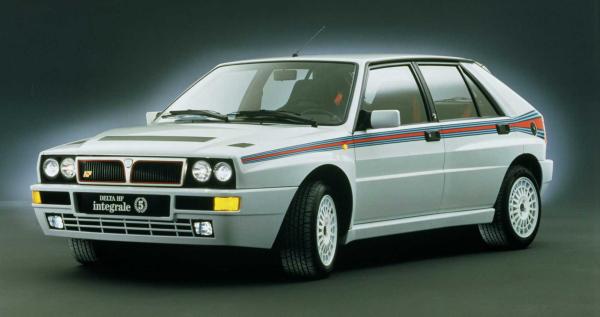
How The Lancia Delta Integrale Became The God-Father Of Hot-Hatches
Rally legend Lancia produced one of the most important hot hatches of all time, the Delta Integrale. It is the reason why we have pocket rockets today
The Active Aero Tech That Made Thema A 1980s Icon

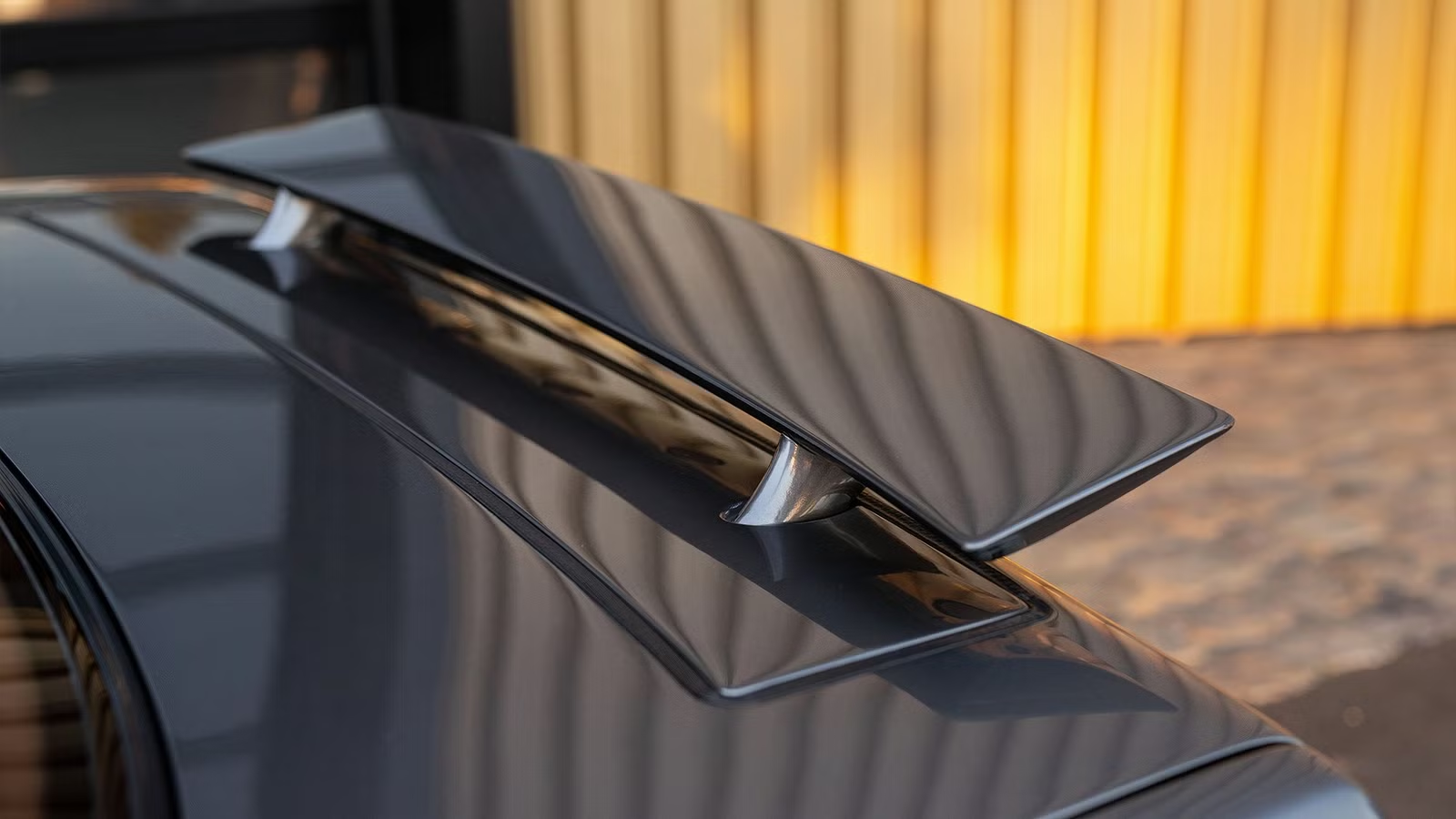
The Lancia Thema 8.32 may have faded into the history books, but it was well ahead of its time and already an icon. Its electronically retractable rear spoiler stayed neatly flattened on the trunk lid until deployed. Drivers could raise it using a switch on the steering-column stalk whenever the need for stability arose. It was an unusual piece of engineering for a 4-door sedan during those times, and it raises an obvious question: did a family car really need a functional rear spoiler?
A Lancia With A Heart Of Ferrari

If you think the Thema 8.32 is just another 4-door sedan from the ’80s, think again. Under its understated sheet metal lies a Ferrari-sourced naturally aspirated V8, giving this unassuming sedan a seriously exotic heart.
Engine Specifications
|
Engine |
2.9-liter naturally-aspirated V8 |
|
Power |
212 HP @ 6,750 rpm |
|
Torque |
210 LB-FT @ 4,500 rpm |
|
Acceleration (0–60 mph) |
6.6 seconds |
|
Top Speed |
149 mph |
The Thema 8.32 struck a rare balance between luxury and performance. It looked like a conventional executive sedan, but the Ferrari-derived V8 gave it a level of performance that was impressive for a four-door of its era. And the electronically retractable rear spoiler wasn’t just a gimmick; it was the perfect complement to its dual personality.
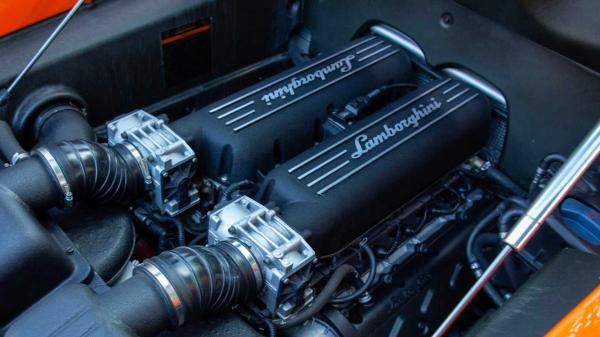
10 Factory Sleepers That Came With Engines From Supercars
These carmakers shoehorned their very powerful supercar engines into average family haulers.
Inside The Cabin Of A Ferrari-Powered Executive Sedan

Although this Ferrari-engined sedan had a rather understated exterior design, the cabin felt genuinely plush. It came with Alcantara upholstery (seat and steering wheel) or optional Poltrona Frau leather. The briar wood touches on the dashboard and door panels gave it a premium ambience. It also featured automatic climate control, a modern-day amenity that was still far from common in the late 1980s, along with everyday conveniences like a cigarette lighter and ashtrays.
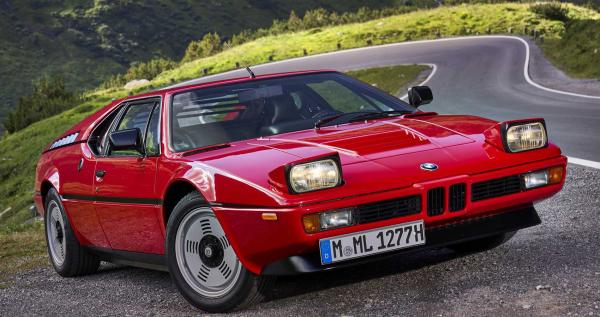
The 10 Most Underrated Classic Car Features You Don’t See Anymore
While modern cars are packed with technology, we miss these underrated classic car features.
Modern Performance Cars Owe More To The Thema Than You Think

The Lancia Thema 8.32 arrived years before active aerodynamics became a mainstream feature on performance cars. Instead of wearing a permanently raised wing, it used a spoiler that stayed hidden during everyday driving and could be raised at higher speeds to improve stability. It was a simple idea, but one that inspired the design of many performance sedans and even supercars. While technology has become far more advanced, the fundamentals behind it haven’t changed much.

One of the great examples is the Ferrari F50, which had an auto-retractable rear spoiler that increased downforce for stability. And how can we forget the Bugatti Veyron, which uses its rear spoiler as an air brake system, much as we have seen on aircraft.
Beyond that, some Audi models came with retractable spoilers, such as the S5 and RS7. Today, active aerodynamics has evolved beyond just spoilers to include grille shutters and front splitters, not just in modern ICE models but also in EVs.
Source: Stellantis Heritage

Related posts





Latest Post


No Comments