
The Highest-MPG SUV You Can Buy Without Going Electric
Gas prices have a way of turning an eagerly planned road trip into a reluctant math problem. Whether you’re mapping out a cross-country summer drive or just tired of wincing at the pump every week, the case for a fuel-efficient SUV has never been stronger. The good news: you don’t have to plug anything in to get genuinely impressive mileage. A handful of conventional, gasoline-powered SUVs deliver economy figures that would have seemed implausible a decade ago — and one stands above the rest.

You could, of course, go electric. An EV SUV like the Genesis Electrified GV70 or the Rivian R1S makes a compelling case. But even with the continued advancement of EVs, you still have to account for factors like charging infrastructure and range anxiety — and that’s not for everyone. Then there are hybrid SUVs like the Honda CR-V Hybrid or Toyota Grand Highlander Hybrid, which offer the best of both worlds. But if you want the SUV with the lightest thirst at the pumps and no battery considerations whatsoever, there’s only one name worth knowing.
A Market Full Of Hybrids And EVs
There are a couple of ways to beat the scourge of the fuel pumps. For starters, you could go fully electric. A battery electric vehicle (BEV) ditches the gas-powered engine entirely, instead using lithium-ion battery architecture to power electric motors for propulsion — no gasoline required. The other option, a favorite among American buyers, is a hybrid. Hybrids split the difference, marrying a gasoline-powered internal combustion engine with a battery and at least one electric motor. But hybrids and EVs aren’t everyone’s cup of tea. That’s where an efficient ICE SUV comes in. Rather than leaning on a lithium-ion battery and electric motors for driving power, some SUVs make it work with a small turbocharged engine and a continuously variable transmission.
Efficiency Without Electricity

So, how do you extract real efficiency from a five-seater SUV without the help of a battery and electric motors? A small, turbocharged engine is a good start. The reduced drivetrain resistance of front-wheel drive versus all-wheel drive can also meaningfully improve overall fuel economy. Get the formula right, and a roughly 3,500-pound SUV can post economy figures once reserved for compact sedans. As it turns out, you can have a traditional ICE SUV with seating for five and up to 32 MPG combined — you just need to know where to look.
2026 Nissan Rogue: A Battery-Free Fuel Sipper
Starting Price: $29,490

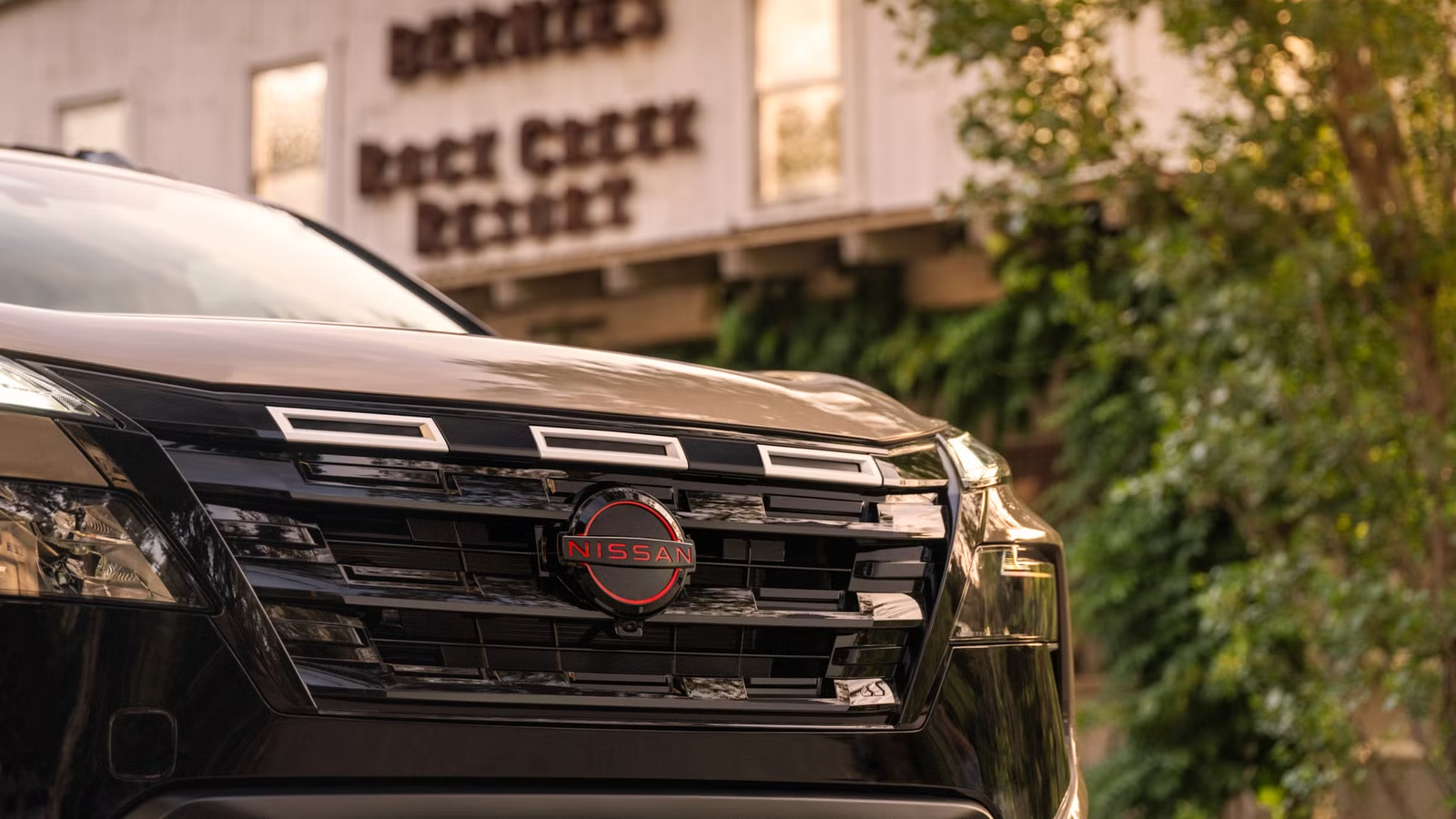
The Nissan Rogue returns for 2026 without sweeping changes from the previous model year. Nissan added a Dark Armor trim that will appeal to fans of blacked-out styling packages, but beyond that, the compact SUV carries on largely unchanged. And though you won’t find a hybrid platform in the standard Rogue’s lineup, its fuel economy figures still put it ahead of its closest competition.
A turbocharged 1.5-liter inline three-cylinder engine is the standard powertrain. Nissan rates the three-cylinder at 201 horsepower and 225 pound-feet of torque. That engine pairs exclusively with a continuously variable automatic transmission. Front-wheel drive is standard — and that’s where you’ll find the best fuel economy figures. All-wheel drive is available as an option, as is the Rock Creek trim with its knobbier off-road tires. Both of those choices come at a cost to pump performance.
32 MPG Combined, According To The EPA

According to the Environmental Protection Agency (EPA), the front-wheel-drive 2026 Nissan Rogue is rated at 29 MPG in the city and 36 MPG on the highway. That works out to a combined 32 MPG — a figure that lets the Nissan SUV cover around 464 miles on a single tank of gas when driven carefully. Not bad at all for a conventional ICE SUV operating without any hybrid assistance.
As expected, adding all-wheel drive trims the efficiency estimates. The penalty is modest, though: the AWD model drops just one MPG in each category, earning an EPA rating of 28 MPG city and 35 MPG highway for a combined 31 MPG. The Rock Creek edition, with its all-terrain tires, posts the lowest figures of the lineup at 27 MPG city and 32 MPG highway, for a combined average of 29 MPG.
More Efficient Than Its Rivals


The standard front-wheel-drive Rogue is efficient enough to make some of its principal competition look positively thirsty. Take the non-hybrid 2026 Honda CR-V, for example. The EPA estimates the front-wheel-drive CR-V, with its turbocharged 1.5-liter inline four-cylinder engine, at 28 MPG city and 33 MPG highway — a combined 30 MPG, two fewer than the Rogue. Then there’s the four-wheel-drive-only Ford Bronco Sport, which the EPA rates at 25 MPG city and 30 MPG highway for a combined 27 MPG. That’s well short of the Rogue’s benchmark.
2026 Nissan Rogue Pricing
|
Nissan Rogue S |
$29,490 |
|
Nissan Rogue SV |
$30,490 |
|
Nissan Rogue Dark Armor |
$33,340 |
|
Nissan Rogue Rock Creek |
$34,390 |
|
Nissan Rogue Platinum |
$39,390 |
*Prices don’t include delivery fees
The admittedly more spirited Volkswagen Tiguan also falls short of the Nissan Rogue’s fuel economy, with an EPA rating of 26 MPG city and 34 MPG highway. Without a hybrid platform, the front-wheel-drive Tiguan averages a combined 29 MPG — three fewer than the Rogue’s 32 MPG combined.
So, Should You Buy It?

With a starting price of $29,490, the base 2026 Nissan Rogue S undercuts much of its compact SUV competition, including the Honda CR-V, Ford Bronco Sport, Volkswagen Tiguan, and Toyota RAV4. That means savings at both the dealership and the pump. The Rogue’s 32 MPG combined with standard front-wheel drive is the segment’s best non-hybrid figure. The trade-off is driving engagement: the Rogue isn’t as rewarding to hustle as rivals like the CR-V or Tiguan. But if you can live with its more relaxed driving character, you won’t find a more efficient non-hybrid SUV in the 2026 compact segment.
Long-term ownership estimates are also competitive, even if slightly higher than those of the Toyota and Honda rivals, according to CarEdge. Based on the publication’s findings, it will cost around $7,987 for maintenance and repairs during the first ten years of ownership — $525 less than the industry average. The Rogue carries a 22.95 percent chance of requiring a major repair during that same period, which is 1.02 percent better than the SUV segment average.

CarEdge’s five-year cost estimate for the Rogue sits at $43,454 total, compared to the Honda CR-V’s $36,935 and the Toyota RAV4’s $35,894 over the same period. It’s worth noting that the Rogue’s higher ownership costs are driven primarily by depreciation. When it comes to maintenance, fuel, insurance, and financing, the three models are fairly evenly matched.
Sources: Nissan, EPA, Edmunds, CarEdge

Related posts



Latest Post


No Comments