
The Motorcycle That’s Making Riders Rethink Harley-Davidson
American motorcycles have always carried more meaning than simple transportation. They represent freedom, craftsmanship, and the idea that the journey itself deserves as much attention as the destination. For decades, many riders automatically associated this idea with one iconic name, and for good reason. Tradition, unmistakable styling, and generations of loyal customers built a reputation that became difficult to challenge. But the landscape changed. Buyers expected heritage but with cutting-edge engineering, premium tech, and exceptional comfort alongside long-distance touring capability.

Competition was always a thorn in Harley-Davidson’s side, one that they only just barely pushed aside. Their touring rivals don’t just rely on nostalgia anymore; they focus more on modern performance, rider-focused electronics, and innovative engineering. There is one rival, however, that has always been H-D’s biggest competitor because it didn’t just evolve; it kept things the same. You’ll see what we are talking about in a bit.
Harley-Davidson Does Not Stand Alone
H-D Wrote The Blueprint To Freedom
Only a few manufacturers have influenced American motorcycling the way Harley-Davidson has. For over a century, the company has defined what many riders picture when they imagine an American V-Twin. Massive fairings, chrome accents, relaxed ergonomics, and rumbling engines. Their touring lineup, like the Road Glide and Street Glide, became benchmarks that competitors measured themselves up against. This success also created an unusual fan following, with many owners staying committed to the brand and passing this love on to their children.
Indian Motorcycle Has A Legacy Just As Rich


While Harley-Davidson often receives most of the attention, Indian Motorcycle actually traces its roots back to 1901, making it America’s first motorcycle company. The brand is just as steeped in legacy as H-D is, and over the decades, it has done everything from board-track racers to military motorcycles and luxurious touring machines. Indian’s attention to modern engineering, however, is far more pronounced than it is with Harley. While still focused on retro, nostalgic designs, their engines, frames, electronics, and finishes all stayed in sync with the changing era.
Full-Dress Touring Has Become An Engineering Showcase

Modern full-dress touring motorcycles represent the pinnacle of what manufacturers can achieve on two wheels, and with reason. These bikes are expected to carry two people in absolute luxury for hundreds of miles. They offer weather protection, integrated luggage, premium infotainment systems, and powerful engines.
Of course, Harley-Davidson’s bikes are brilliant on their own terms, but Indian motorcycles have been pulling away so much market share from the company because they can stand on their own merits without relying solely on nostalgia.But what does that actually look like in practice? One bike makes the case better than any other — and its specs are harder to dismiss than Harley loyalists would like to admit.
The Indian Pursuit 112 Is Changing The Conversation
The Pursuit Proves You Don’t Have To Choose Between Legacy And Innovation

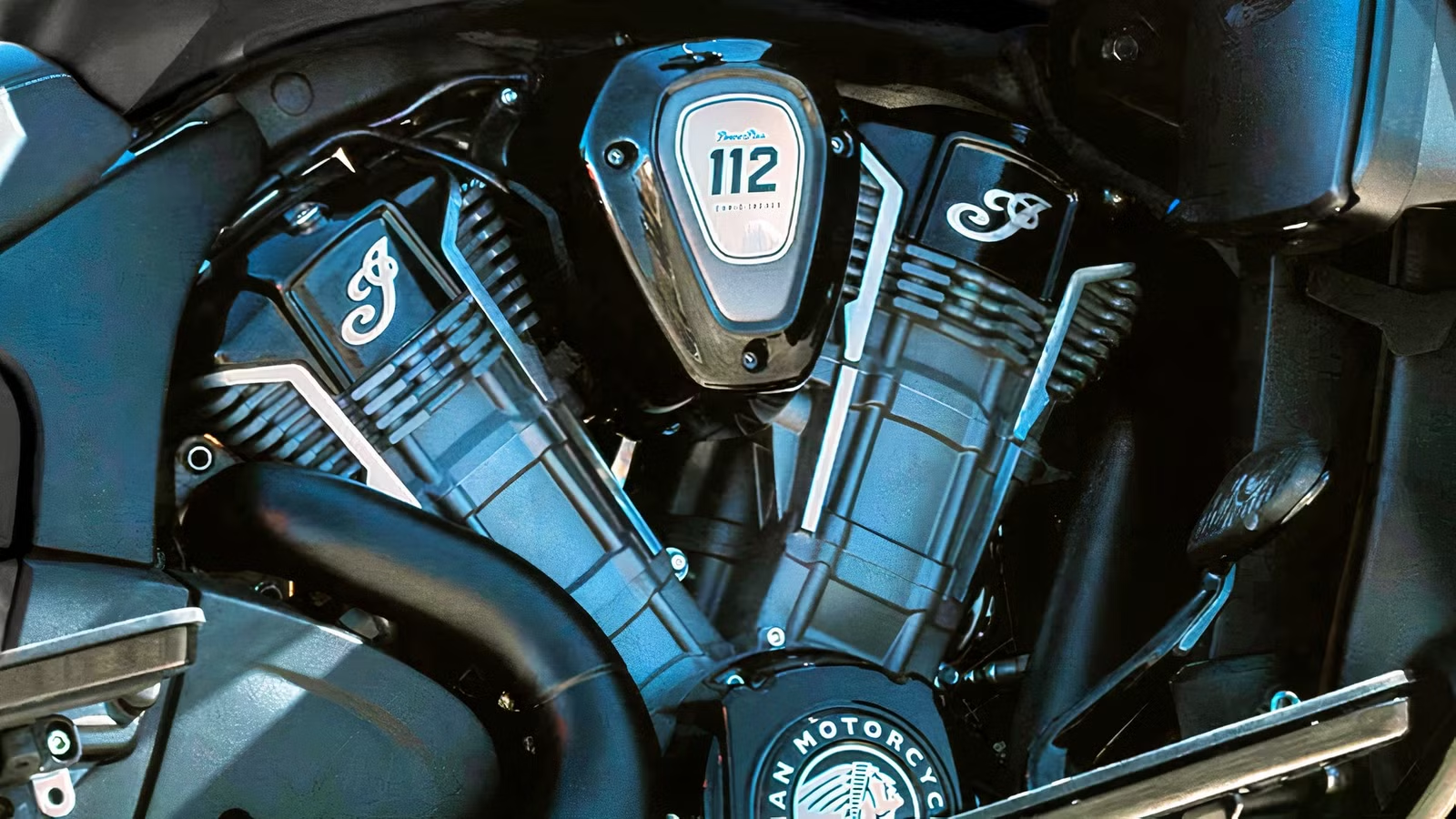
The Indian Pursuit 112 represents one of the clearest examples of how far American touring has come. From its frame-mounted fairing to its liquid-cooled V-twin, electronically adjustable suspension, and extensive rider aids, the bike demonstrates that heritage can coexist with innovation. This is also at a time when it’s becoming clear that buyers are increasingly willing to cross traditional brand lines in search of the best overall motorcycle. The Indian Pursuit isn’t just dwelling on tradition and legacy; the brand has been optimizing its bikes for the new generation, proving that old dogs can always learn new tricks.
The New PowerPlus 112 Delivers Serious Muscle

The Indian Pursuit is available with two engine options. The one we are talking about is the PowerPlus 112, Indian’s 1,834 cc liquid-cooled V-twin. The company claims 126 horsepower and 133 pound-feet of torque, figures that immediately place it among the strongest American touring motorcycles available. Now, this power arrives over a broad spectrum of the rev range. So whether it’s overtaking traffic on the highway or climbing mountain passes with luggage and a passenger, the Pursuit delivers smooth, consistent power throughout.
Complementing this engine is the six-speed transmission paired with a hydraulically actuated clutch that reduces lever effort, thereby reducing the fatigue a rider might feel in stop-and-go traffic. It’s not a full DCT system like Honda’s Gold Wing, but it does its job well on its own. There are different ride modes to tailor the experience to your situation, be it wet weather, balanced performance in urban areas, or sporty characteristics in the mountain passes.
For The Pursuit, Touring Comfort Was Clearly The Priority

The cast-aluminum frame is engineered specifically for high-speed touring. Fork-mounted fairings often increase steering weight, so the Pursuit’s frame-mounted fairing keeps things a lot more balanced. Straight-line stability is key in any cruiser-derived segment like the touring category, but the 25-degree rake and 5.9-inch trail give the Pursuit a respectable ability to corner. It’s not sport-bike levels of carving, but better than most other tourers.
The suspension package includes 43 mm inverted front forks and a monoshock at the rear with electronically adjustable preload, allowing the rider to adjust for passenger and luggage without reaching for tools. Braking duties are handled by dual radial-mounted Brembo calipers up front and a single floating rotor in the back. At 901 pounds in running order, the Pursuit is not a light motorcycle, but, thanks to its frame and chassis, it is an easy bike to maneuver when on the move.
Modern Luxury Wrapped In American Style
The Pursuit Is Designed To Feel Premium Without Losing Character

The Pursuit strikes a careful balance between tradition and modernity. It remains unmistakably American while avoiding looks that feel trapped in the past. There’s no over-embellishment of chrome. There are no glaring gaps in components. The design feels compact, yet large at the same time. The integrated saddlebags and trunk give you confidence in its touring aesthetic, and the LED lighting gives it a modern identity. Attention to detail is evident in the switchgear, panel gaps, and paint finishes, all of which are designed with long-term ownership in mind.
The Technology Even Rivals Premium Touring Bikes

Of course, modern touring bikes need modern technology. The whole point is creature comfort with these vehicles, and the Pursuit doesn’t disappoint. At the center sits Indian’s seven-inch Ride Command touchscreen, which provides navigation, Bluetooth connectivity, Apple CarPlay compatibility, vehicle information, ride statistics and audio controls. Keyless ignition, tire-pressure monitoring, cruise control, USB charging, and extensive diagnostics all come standard. The 112 also gets advanced rider aids such as rear collision warning, bike hold control, an electronic combined braking system, and lean-sensitive ABS and traction control, all as standard.
How Indian Pursuit Rewrote The American Touring Conversation

For decades, Harley-Davidson represented the unquestioned destination for riders who were looking for a premium American touring motorcycle. The Pursuit’s greatest achievement, however, was in changing the way riders thought about this kind of touring. They stopped asking which bike competes with Harley and instead asked which bike suits their needs better. This combination of a high-output liquid-cooled engine, sophisticated electronics, and American styling is becoming the norm, and the Indian Pursuit 112 is a genuine competitor worth considering.
Source: Indian Motorcycles

Related posts

Latest Post


No Comments