
Chrysler’s First Station Wagon Was A Wood-Bodied Luxury Hauler Built In Under 1,000 Units
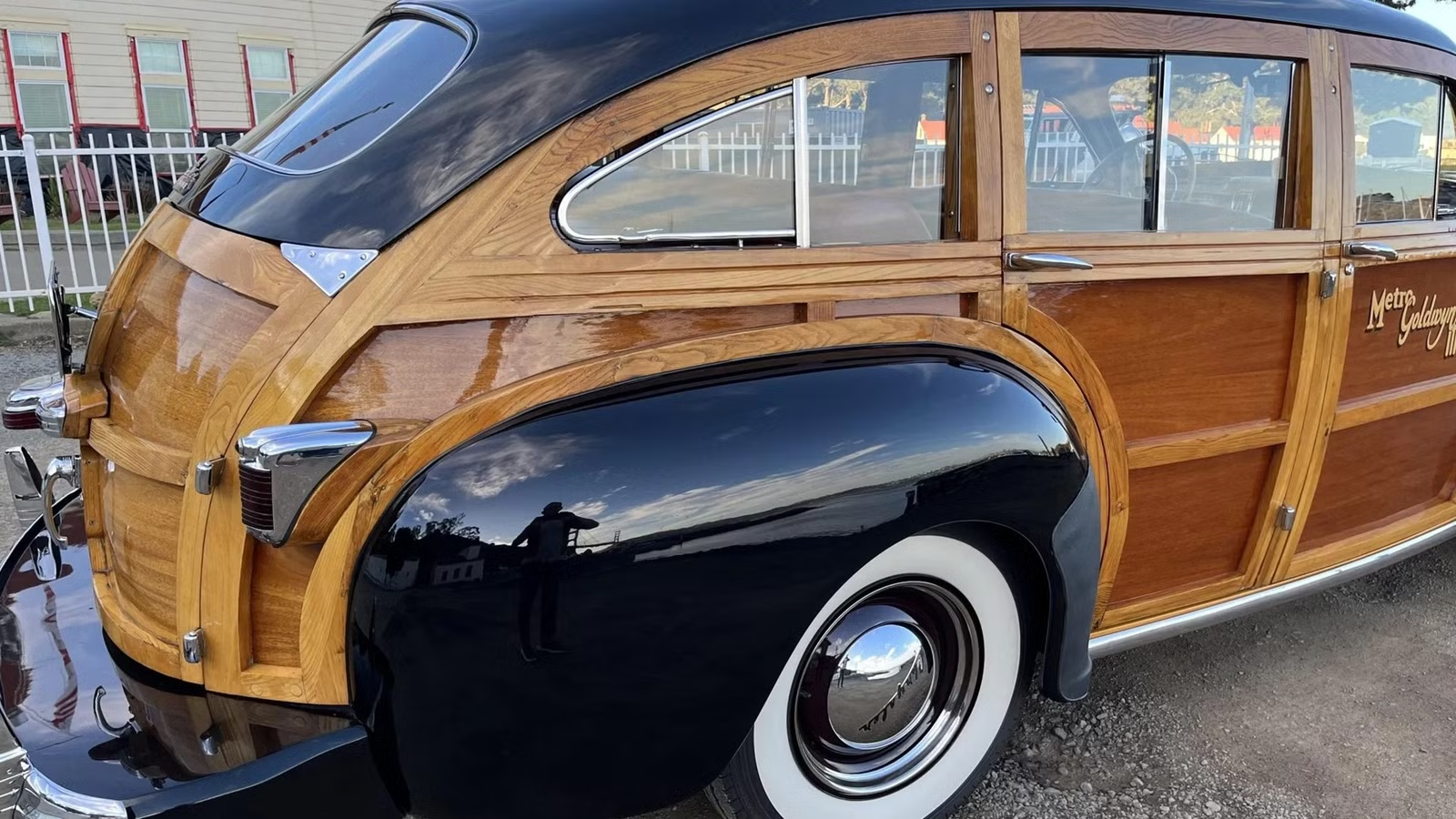
Long before SUVs became the family default, American automakers had a problem. Drivers wanted room for kids, guests, and luggage, but most station wagons looked better suited to hauling trunks than turning heads. Chrysler decided a wagon could handle family duty without making its owner give up style—it added genuine hardwood, sedan-like comfort, and a shape that stood apart from anything at the train station. The gamble produced fewer than 1,000 vehicles, and surviving examples now draw serious collector money.
Station Wagons Weren’t Always Built For Luxury

Early station wagons did exactly what their name suggested. They carried passengers and bags to and from railroad stations, hotels, and resorts. Country estates used them for guests, workers, and supplies. Coachbuilders often mounted boxy wooden bodies on existing car chassis, giving owners plenty of room without much polish. Think shuttle bus, not country-club showpiece.
Wood was practical because small builders could cut and assemble it without expensive steel presses. Basic seats, exposed timber, and fabric roofs got the job done, but they hardly matched the comfort of a modern sedan. By the late 1930s, families wanted more from their cars. They needed luggage space and extra seats, plus a quieter ride and a cabin worth showing off. Could a wagon offer both?
Turning A Practical Wagon Into A Status Symbol Wasn’t Simple


Traditional woodies came with trade-offs. Straight planks made roomy bodies easy to build, but their upright shapes looked dated beside the sleek sedans arriving in showrooms. Rain, heat, and vibration also punished exposed wood joints. A fresh coat of varnish helped, but it could not disguise a wagon’s workhorse roots.
An upscale version called for curved hardwood panels fitted neatly against stamped steel, plus a solid metal roof instead of the usual fabric covering. That was tricky work – a press could turn out matching steel parts all day; craftsmen had to shape and fit wood piece by piece. The most unusual touch would sit at the back, where a rounded body and twin rear doors inspired an unforgettable nickname.
The 1941 Chrysler Town & Country Was A Wood-Bodied Luxury Wagon

That vehicle was the 1941 Chrysler Town & Country, Chrysler’s first production station wagon. Chrysler Division President David A. Wallace pushed the idea of a wagon with genuine passenger-car comfort and room for a family getaway. Introduced during the 1941 model year, it borrowed its underpinnings and front-end styling from the Windsor. A 241.5-cubic-inch flathead straight-six made about 110 horsepower, and Chrysler’s Fluid Drive system helped make driving easier. Nobody bought this wagon to win a drag race. The point was to arrive in comfort, with the luggage along for the ride.
The body was the star. White ash framed panels of Honduras mahogany, creating sweeping lines that looked closer to custom coachwork than a typical depot wagon. Chrysler paired that wood with a steel roof, a striking departure from fabric-topped woodies. At the rear, the roof curved down toward a rounded tail, earning the car its Barrelback nickname. Two side-hinged doors opened to the luggage area. They looked lovely, though owners still had to wrestle their suitcases into place. The wood also demanded upkeep. Period guidance reportedly called for fresh varnish every six months, so owning one came with a little homework.

Inside, leather upholstery, an electric clock, and other passenger-car touches made the Town & Country feel expensive. Buyers could choose six seats or a nine-passenger layout with an extra bench. The rarer six-passenger version had wood-paneled rear quarters; the larger model added side glass. Prices started at roughly $1,412 and $1,492, respectively. Most published accounts put 1941 production at 997 vehicles: 797 nine-passenger wagons and 200 six-passenger models.
Surviving Barrelbacks Can Be Worth Hundreds Of Thousands

Finding a six-passenger Barrelback today takes luck and a healthy budget. Only about 200 were built, and nobody has a definitive 2026 count of survivors. A 2013 account cited five known six-passenger cars, while RM Sotheby’s identified four in its 2015 auction description. Those dated figures show how difficult these cars are to track, not how many exist today.
The auction results are just as striking. Gooding sold a restored 1941 Barrelback for $385,000 at Pebble Beach in 2012. In 2015, RM Sotheby’s sold a six-passenger example for $440,000. Values depend on body style, originality, history, and restoration quality. Wood adds another wrinkle: replacing rotten or poorly fitted panels takes specialized skill, and a shiny finish can hide expensive problems. These prices are not promises for every car, but they show what collectors will pay for a well-presented survivor of Chrysler’s bold experiment.
From The Original Woodie To The 2027 Pacifica Copperline

The Town & Country name continued long after the original wagon. Chrysler used it on wood-trimmed sedans and convertibles, then on later wagons. For the 1990 model year, it moved to an upscale minivan, bringing the old mix of family space and premium touches into a new era. The hardwood was gone, but the pitch was familiar: practical transportation need not feel plain.
Chrysler revisited that idea this year, announcing the 2027 Pacifica Copperline package for Limited and Pinnacle trims in November 2026. It adds copper-tinted 20-inch wheels, mirror caps, and exterior details. Inside, the Limited gets black Nappa leather with copper stitching; the Pinnacle uses Blue Agave Nappa leather with parquet-style perforations and copper stitching. The U.S. package costs $1,995 on Limited and $995 on Pinnacle.
The modern van skips the complicated hardwood, thank goodness for its maintenance bill. But the idea remains the same: give a family vehicle enough style that nobody minds being the designated driver.
Source: Chrysler, RM Sotheby’s

Related posts



Latest Post


No Comments