
The High-Revving Motorcycle Engine That Rewrote The Rulebook
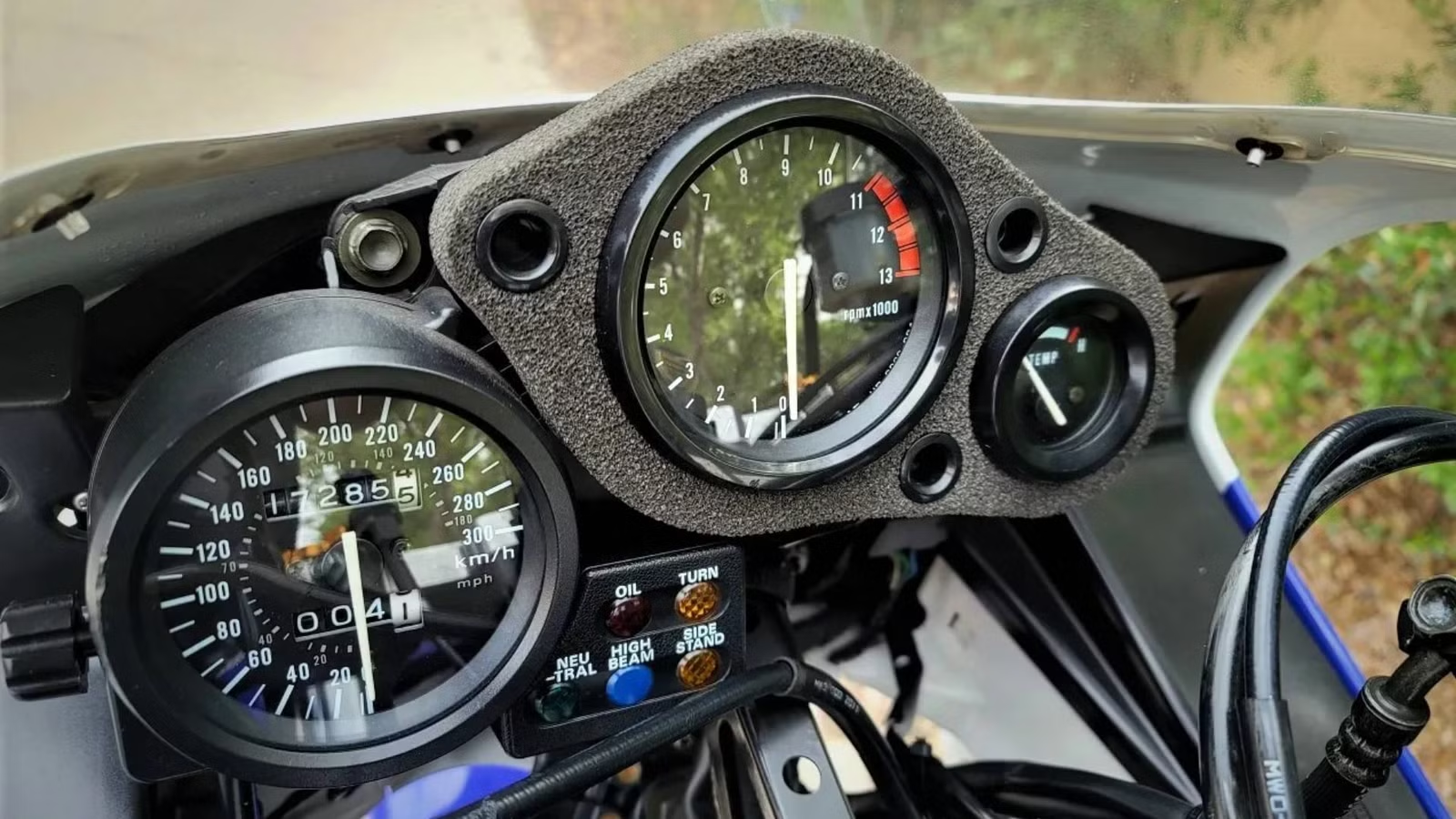
In the early 1990s, the superbike world had a very clear idea of what progress looked like. You took the biggest engine you could fit in a chassis, you tuned it until it produced the most power the regulations or engineering tolerances allowed, and you called it done. The result was a generation of machines that were genuinely impressive in a straight line and genuinely intimidating everywhere else. Weight was an afterthought. Agility was a compromise. If you wanted to go fast, you accepted that the bike would be heavy, and if you wanted to corner, you bought a 600. That was the deal. For almost a decade, nobody had seriously questioned it. Then Honda sent a man named Tadao Baba into a development program with a brief to build the ultimate sportbike, and Baba decided the deal was wrong.
When Every Manufacturer Was Building the Wrong Bike

The superbike class of the early 1990s was dominated by machines that prioritized displacement and outright power above everything else. The Yamaha FZR1000 and Kawasaki ZX-7R were the benchmarks: powerful, fast, and heavy enough that their performance advantage over smaller bikes disappeared the moment the road turned. The FZR1000 weighed 239 kg wet, the ZX-7R was in similar territory, and both demanded a level of physical commitment that kept them at arm’s length from all but experienced riders. That weight was not incidental. It was the price of making those engines fit, of cooling systems large enough to manage the heat, of chassis strong enough to handle the stress. Nobody questioned it because nobody had found another way.
The manufacturers competing at the sharp end of the market were locked in an arms race with well-established rules. More displacement meant more power. More power meant more sales. More sales justified the engineering investment. The entire logic was circular and self-reinforcing, and it had produced a category of motorcycle that was getting progressively faster, progressively heavier, and progressively more difficult to use on real roads in real conditions. The rider who could genuinely extract a FZR1000’s potential on a challenging public road was a much rarer commodity than the ones buying the bikes. Nobody in the mainstream had stopped to ask whether the whole approach was wrong.
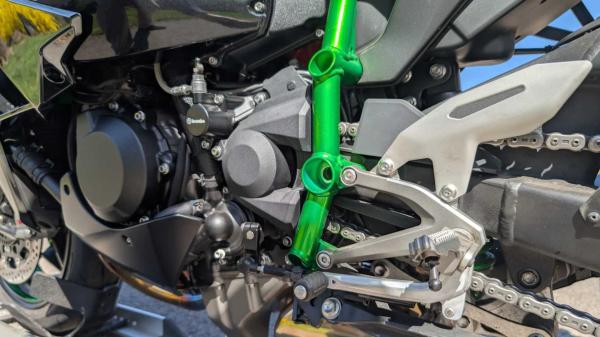

The First Production Motorcycle To Make 200 Horsepower
Kawasaki’s aerospace division built a custom supercharger that made the this the first production bike to hit 200 horsepower.
The Engineer Who Decided to Start From a Different Question

Tadao Baba had been at Honda since he was eighteen years old. He had raced motorcycles, won the 1970 Japanese 125cc championship, and spent decades translating his understanding of what a fast bike actually felt like into engineering decisions. By the late 1980s, he had been handed the brief for Honda’s next flagship sportbike with one instruction: make the ultimate sportbike. What he chose to do with that instruction was to ignore almost everything the competition was doing and start from a different question. Not how much power can we extract, but how light can we make the whole package while still delivering competitive performance.
Baba set a weight target that most of the engineering team considered impossible: the new bike had to be lighter than Honda’s existing CBR600. In a large-displacement sportbike. With an engine almost 300cc larger. To achieve it, every component was scrutinized for mass rather than for convention. The chassis was designed around the engine rather than around existing templates. The suspension was specified for lightness as well as performance. Even the decision to use conventional forks rather than the inverted units that were becoming fashionable was a weight decision: the conventional units Baba specified were lighter, and he designed them to look like upside-down forks from a distance so nobody would know the difference. The development program ran for three years. When Baba was finished, the bike was lighter than a CBR600.
The Honda CBR900RR Fireblade: When Japan Changed Everything

|
Model |
Engine |
Power |
Torque |
0-60 mph |
Top Speed |
|---|---|---|---|---|---|
|
1992 Honda CBR900RR Fireblade |
893cc inline-4 |
122 hp |
65 lb-ft |
3.5 sec |
164 mph |
|
1992 Yamaha FZR1000 |
1,002cc inline-4 |
126 hp |
70 lb-ft |
3.7 sec |
165 mph |
|
1992 Kawasaki ZX-7R |
748cc inline-4 |
108 hp |
55 lb-ft |
3.7 sec |
162 mph |
The motorcycle was the 1992 Honda CBR900RR, known in most markets as the Fireblade. Honda showed it at the 1991 Cologne Motorcycle Show and put it on sale in spring 1992. The development team had started from a 750cc prototype, bored and stroked the engine to 893cc because that displacement gave them the performance they needed within the weight envelope Baba had set, and produced a machine that weighed 408 pounds dry, just 4 pounds more than the CBR600F2 of the same year, while the next-lightest large-displacement machine, the Yamaha FZR1000, was 76 pounds heavier. The Suzuki GSX-R1100 and Kawasaki ZX-11 were heavier still, by 115 and 143 respectively. Those numbers did not describe a marginal advantage. They described a different kind of machine entirely.
The Fireblade matched the FZR1000 in top speed and bettered it to 60 mph, with 75 pounds less motorcycle to haul. Against the ZX-7R, Honda’s 893cc unit produced 14 more horsepower from 145 cc less displacement, in a chassis that weighed considerably less. The power figures were not what the press expected from a near-liter Honda sportbike. What they found when they rode it was something the numbers could not capture: a large-displacement machine that steered, changed direction, and communicated with its rider the way a 600 did.
Tadao Baba and the Brief That Nobody Else Was Brave Enough to Write

The three-year development program that produced the CBR900RR was built on a philosophy Baba called Total Control: the idea that no single component should outshine any other, that the whole machine had to work as an integrated system rather than as a collection of impressive parts. The 893cc engine was chosen not because it was the most powerful option available but because it was the largest displacement that fit inside the weight target Baba had set without requiring structural compromises elsewhere. An all-aluminum twin-spar frame was designed with the engine as a structural element, keeping dimensions compact. The 16-inch front wheel, controversial at the time and mocked by some in the press, was a weight-saving decision that also sharpened steering response.
As Bennetts documented in their Fireblade history, Baba insisted on conventional forks over inverted units because they were lighter, then had them styled to look like upside-down units so the bike would not appear compromised at a glance. That level of thought, applied to every component, is what produced a 185 kg large-displacement sportbike in 1992.
How the Industry Responded and Why That Proves the Point

The most convincing evidence that the Fireblade rewrote the rulebook is what happened in the years immediately after its arrival. Yamaha spent four years developing an answer and unveiled it in 1998: the YZF-R1, a 998cc machine that matched the Fireblade’s compact dimensions and lightweight philosophy while adding considerably more power. Every major manufacturer’s response to the Fireblade was to adopt Baba’s brief, not to counter it with a heavier, more powerful alternative.
Every superbike sold today owes something to the original Fireblade, from the Ducati Panigale V4 to the Kawasaki ZX-10RR. The mass centralization, the compact packaging, the obsessive weight management: those ideas came from Tadao Baba’s brief, validated on the road in 1992, and adopted by the entire industry within a decade. When a single motorcycle causes every competitor to abandon what they were doing and start again, that is not influence. That is a rulebook being rewritten.
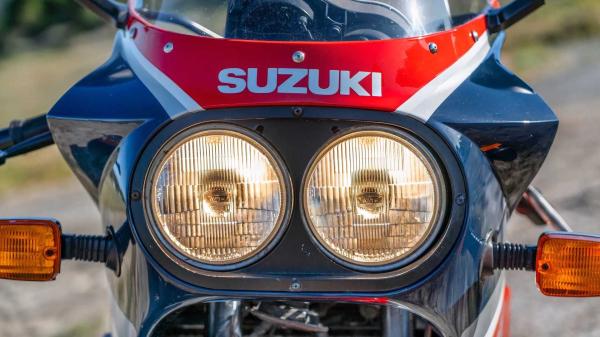
10 Big-Bore Vintage Superbikes Real Riders Worship Forever
These legendary machines from motorcycling’s golden era continue to command massive respect and serious auction money decades later.
What a Honda CBR900RR Fireblade Costs Today

|
Model |
Fair |
Good |
Excellent |
Concours |
|---|---|---|---|---|
|
1993-95 Honda CBR900RR |
$4,000 |
$8,000 |
$18,000 |
$52,000 |
The CBR900RR did not reach American showrooms until the 1993 model year, which makes the US collector pool smaller than the global one but no less active. The highest recorded US auction result sits at $52,000 for a 1993 example sold in December 2021, a figure that reflects what a genuinely pristine, numbers-correct early Fireblade commands when the right buyer finds it. Driver-quality examples with honest miles trade considerably lower, with good-condition bikes moving in the $8,000 to $12,000 range depending on specification and documentation. Clean, unmodified survivors with original paint and exhaust are the ones pushing toward the upper end.
What drives value is originality above everything else. The CBR900RR was the kind of bike that enthusiastic owners modified immediately, because the aftermarket had answers for every part of it and the temptation to improve things was always present. Finding one with the original exhaust, undamaged paint, and a documented service history from new is the collector’s challenge. The 1993 and 1994 round-eye machines attract the most attention from serious US buyers, with the 1995 Fox Eye models following closely behind. As the first generation approaches its mid-30s, the supply of genuinely unmodified survivors is only going in one direction.
12 Japanese Motorcycles That Practically Last Forever
These ten Japanese motorcycles have one thing in common: with basic maintenance, they just keep going. Some owners have even seen six-figure mileage.
Why the Fireblade Still Matters

The 1992 Honda CBR900RR is the most consequential production sportbike ever built. That is a large claim, but the evidence for it is specific and documented. Before 1992, the superbike category was defined by an arms race between displacement and power. After 1992, it was defined by the balance between performance, weight, and agility that Tadao Baba had argued for in his three-year development program. Every serious sportbike produced in the three decades since has been designed to answer the brief that Baba wrote, not the brief that existed before him.
The Fireblade’s engine, a 122 hp 893cc inline-four revving to 10,500 rpm, was not the most powerful unit available in 1992. It was not the highest-revving. But attached to the Fireblade, it changed how the entire industry thought about what a sportbike should be. The 122 hp number tells you very little about what the Fireblade actually was. The 408-pound dry weight tells you everything. Baba built a near-liter sportbike that weighed the same as a 600, and in doing so proved that the consensus was wrong. The bikes that came after it, every single one of them, are the industry’s acknowledgment that he was right.
Sources: Bennetts, Classic.com, Mecum, Honda.

Related posts

Latest Post


No Comments